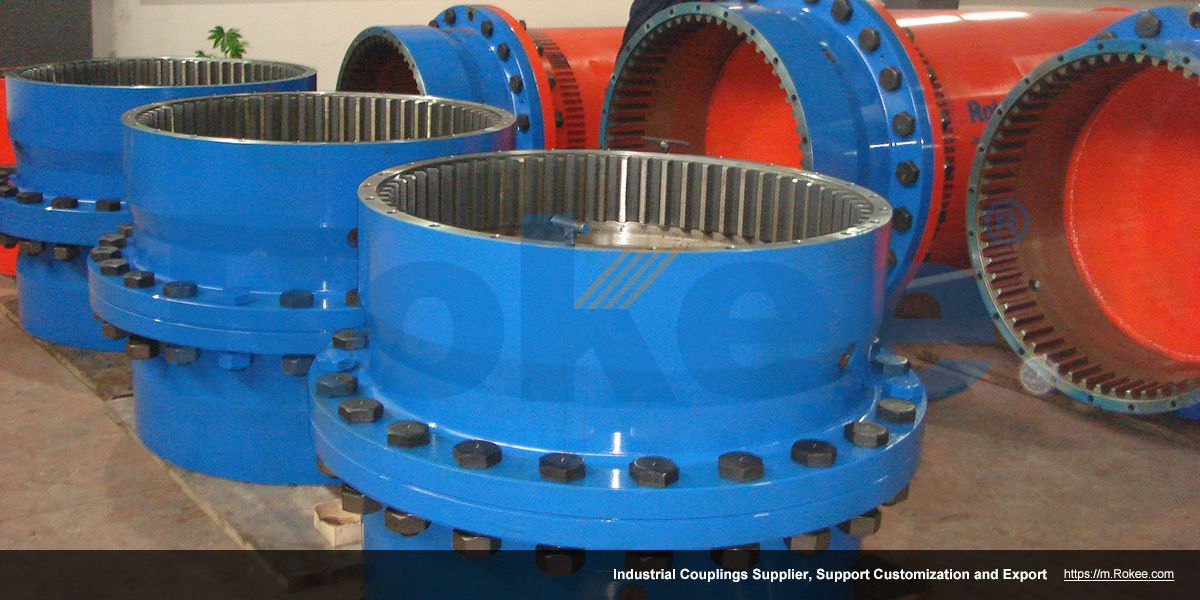
Curved Tooth Couplings
Rokee is a chinese Curved Tooth Couplings Manufacturer, provide Curved Tooth Couplings processing and customization services, Over the years, with excellent quality, we have been continuously providing many coupling products of various categories and uses complying with multiple standards and a full range of services, from the Curved Tooth Couplings selection to final installation and operation, for the industry fields of ferrous metallurgy, nuclear power, gas turbine, wind power, ropeway construction, lifting transportation, general equipment, etc. We strictly comply with quality system requirements and implement the whole process control to become a reliable and trustworthy partner of customers.
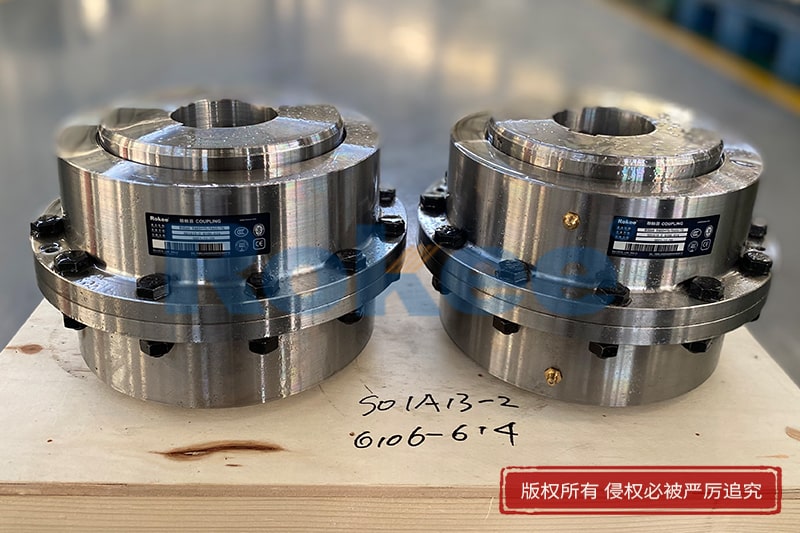
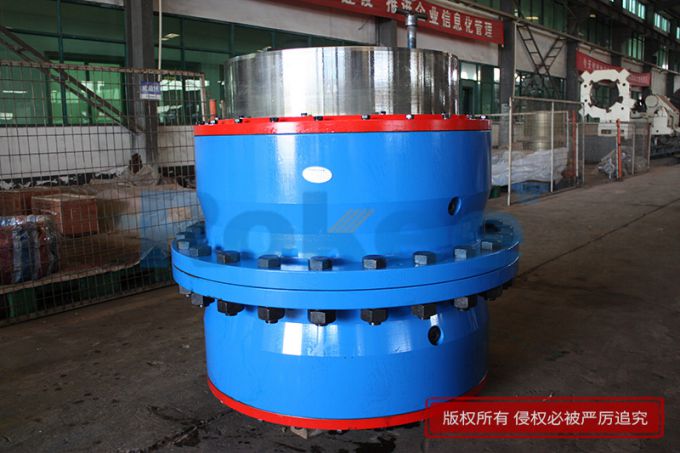
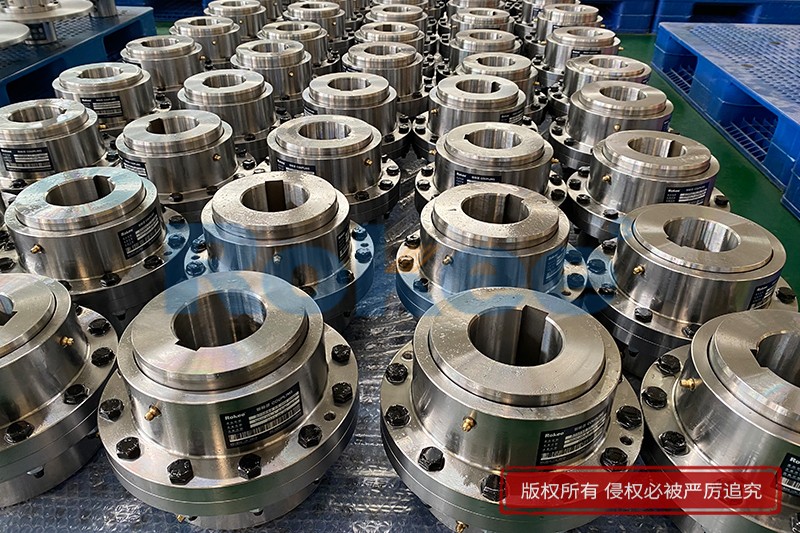
Providing customers with better Curved Tooth Couplings is always our driving force. Our aim is to transmit power for you and generate value for both of us. We look forward to joining you and becoming your partner for common progress.
-
![RODA Curved Tooth Couplings,RODA Basic Drum Gear Coupling]()
RODA Basic Drum Gear Coupling
The RODA Drum Gear Coupling is the basic type of ROD series coupling, suitable for most situations where the compensation of transmission distance and motion position does not require special increase.View More -
![RODT Curved Tooth Couplings,RODT Drum Gear Coupling With Intermediate Tube]()
RODT Drum Gear Coupling With Intermediate Tube
The RODT Drum Gear Coupling is an extended type of ROD series coupling, suitable for increasing transmission distance.View More -
![RODX Curved Tooth Couplings,RODX Drum Gear Coupling With Intermediate Shaft]()
RODX Drum Gear Coupling With Intermediate Shaft
RODX Drum Gear Coupling is an extended type of ROD series coupling with a floating shaft design in the middle, suitable for increasing transmission distance.View More -
![RODP Curved Tooth Couplings,RODP Drum Gear Coupling With Brake Disc]()
RODP Drum Gear Coupling With Brake Disc
The RODP Drum Gear Coupling is a type of ROD series coupling with a brake disc, suitable for transmission situations where braking needs to be used in conjunction with disc brakes.View More -
![RODF Curved Tooth Couplings,RODF Drum Gear Coupling With Split Brake Discs]()
RODF Drum Gear Coupling With Split Brake Discs
The RODF Drum Gear Coupling is a type of ROD series coupling with split brake discs, suitable for transmission situations where there is braking demand and the braking position changes when used in conjunction with disc brakes.View More -
![RODW Curved Tooth Couplings,RODW Drum Gear Coupling With Brake Wheel]()
RODW Drum Gear Coupling With Brake Wheel
The RODW Drum Gear Coupling is a type of ROD series coupling with brake wheels, suitable for transmission situations where braking needs to be used in conjunction with wheel brakes.View More -
![RODU Curved Tooth Couplings,RODU Drum Gear Coupling With Brake Wheel]()
RODU Drum Gear Coupling With Brake Wheel
The RODU Drum Gear Coupling is another type of ROD series coupling with brake wheels, suitable for transmission situations where braking needs to be used in conjunction with wheel brakes and applied to one end of the axle, achieving smoother and more reliable braking performance.View More -
![RODV Curved Tooth Couplings,RODV Vertical Installation Drum Gear Coupling]()
RODV Vertical Installation Drum Gear Coupling
The RODV Drum Gear Coupling is a vertical installation type of the ROD series coupling, suitable for transmission situations that require vertical transmission torque.View More -
![RODM Curved Tooth Couplings,RODM Torsion Protection Drum Gear Coupling]()
RODM Torsion Protection Drum Gear Coupling
The RODM Drum Gear Coupling is a torque setting form of the ROD series coupling. By adjusting relevant components, the maximum transmission torque can be easily set within a certain range. Suitable for shafting transmission situations that require safe torque operation to protect important machine components from excessive damage.View More -
![GICL Curved Tooth Couplings,GICL Wide Type Drum Gear Coupling]()
GICL Wide Type Drum Gear Coupling
GICL Drum Gear Coupling has larger inner teeth width, which can transfer torque while compensating for larger axial displacement.View More -
![GICLZ Curved Tooth Couplings,GICLZ Drum Gear Coupling With Intermediate Shaft]()
GICLZ Drum Gear Coupling With Intermediate Shaft
Half of the GICLZ Drum Gear Coupling adopts a non-toothed semi-coupling sleeve structure, which is usually connected in pairs or used in occasions with small angular displacement.View More -
![GIICL Curved Tooth Couplings,GIICL Narrow Type Drum Gear Coupling]()
GIICL Narrow Type Drum Gear Coupling
GIICL Drum Gear Coupling has small inner teeth width, which can transfer torque while compensating for small axial displacement. Also, its structure is compact and the moment of inertia is low.View More -
![GIICLZ Curved Tooth Couplings,GIICLZ Drum Gear Coupling With Intermediate Shaft]()
GIICLZ Drum Gear Coupling With Intermediate Shaft
Half of the GIICLZ Drum Gear Coupling adopts a non-toothed semi-coupling sleeve structure, which is usually connected in pairs or used in occasions with small angular displacement. Also, its structure is compact and the moment of inertia is low.View More -
![GCLD Curved Tooth Couplings,GCLD Drum Gear Coupling For Motor]()
GCLD Drum Gear Coupling For Motor
GCLD Drum Gear Coupling is generally used for direct connection with the motor, so it generally has a higher speed and compact structure.View More -
![NGCL Curved Tooth Couplings,NGCL Drum Gear Coupling With Brake Wheel]()
NGCL Drum Gear Coupling With Brake Wheel
NGCL Drum Gear Coupling is designed with a brake wheel, suitable for situations where braking is required.View More -
![NGCLZ Curved Tooth Couplings,NGCLZ Drum Gear Coupling With Brake Wheel]()
NGCLZ Drum Gear Coupling With Brake Wheel
NGCLZ Drum Gear Coupling is designed with a brake wheel, suitable for situations where braking is required. Half of its structure adopts a semi-coupling sleeve design, with smaller angular displacement compensation but more stable braking.View More -
![WG Curved Tooth Couplings,WG Drum Gear Coupling]()
WG Drum Gear Coupling
The overall characteristics of WG Drum Gear Coupling are similar to those of other drum gear couplings, but with a larger modulus design, which can generally transmit greater torque.View More -
![WGZ Curved Tooth Couplings,WGZ Drum Gear Coupling With Brake Wheel]()
WGZ Drum Gear Coupling With Brake Wheel
WGZ Drum Gear Coupling is designed with a brake wheel, suitable for shoe type braking.View More -
![WGP Curved Tooth Couplings,WGP Drum Gear Coupling With Brake Discs]()
WGP Drum Gear Coupling With Brake Discs
WGP Drum Gear Coupling is designed with a brake disc, suitable for disc type braking.View More -
![WGT Curved Tooth Couplings,WGT Drum Gear Coupling With Indirect Tube]()
WGT Drum Gear Coupling With Indirect Tube
WGT Drum Gear Coupling is designed with indirect tube, suitable for long distance torque transfer.View More -
![WGC Curved Tooth Couplings,WGC Vertical Installation Drum Gear Coupling]()
WGC Vertical Installation Drum Gear Coupling
WGC Drum Gear Coupling is specially designed for situations where vertical transmission is required, suitable for some vertical transmission systems.View More -
![WGJ Curved Tooth Couplings,WGJ Drum Gear Coupling With Intermediate Shaft]()
WGJ Drum Gear Coupling With Intermediate Shaft
WGJ Drum Gear Coupling is designed with intermediate shaft, suitable for long distance torque transmission, and some are equipped with axial buffers.View More
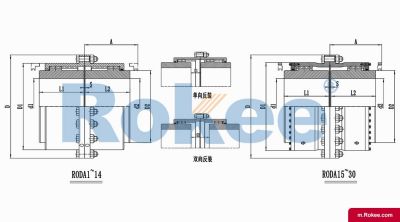
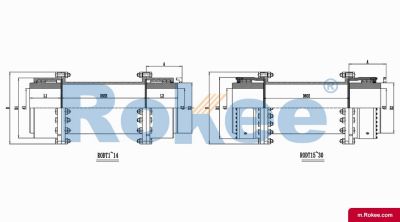
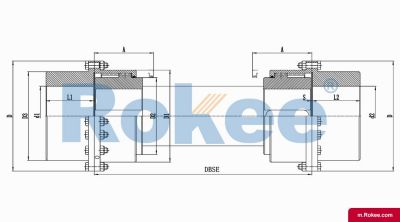
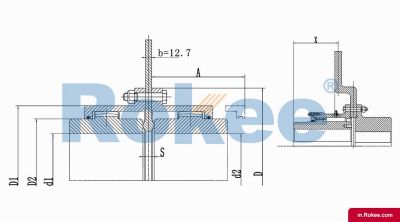
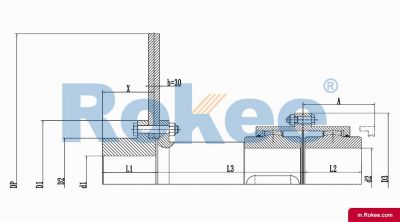
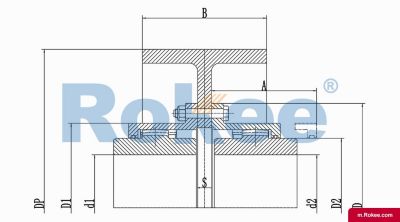
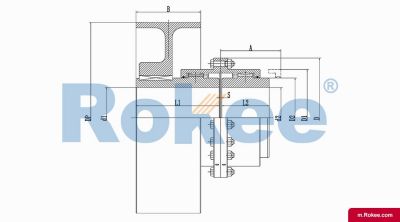
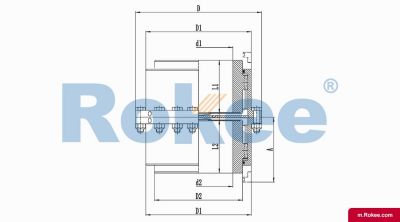
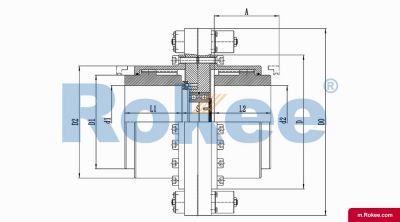
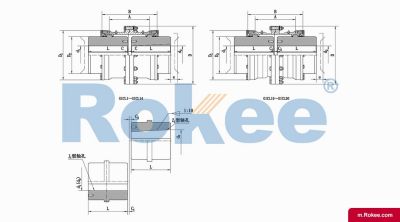
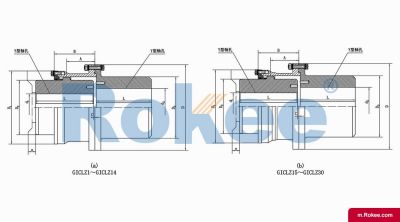
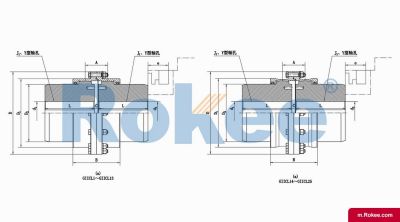
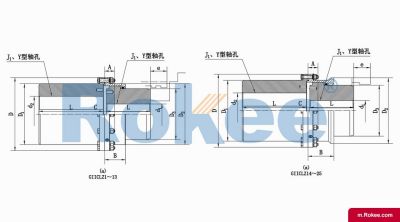
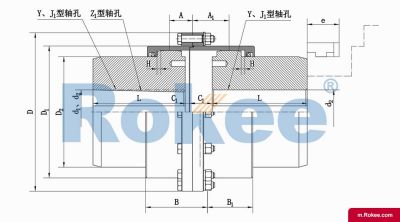
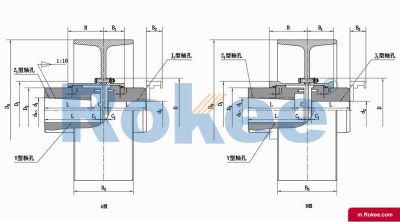
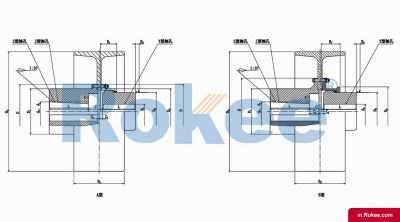
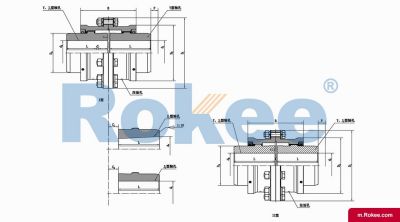
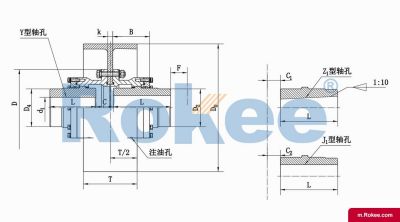
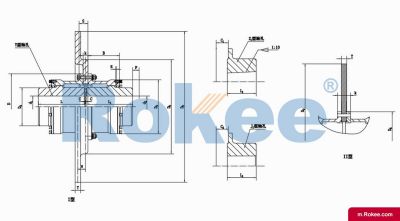
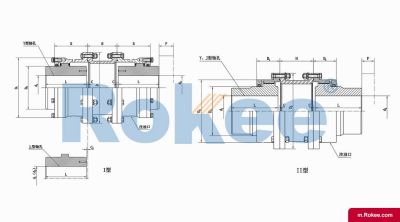
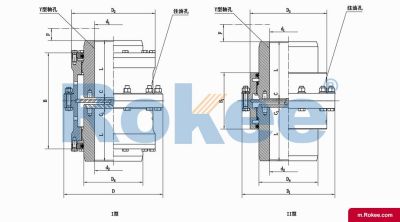
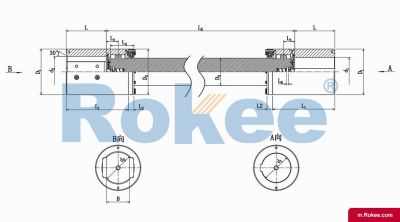
The Curved Tooth Coupling is mainly composed of an inner gear ring, an outer gear shaft sleeve, an end cover, a sealing device, and other parts. Its core lies in the fact that the tooth tips of the outer gear shaft sleeve are made into a drum shape, and the tooth surface is in a circular arc shape, which distinguishes it from other gear couplings. The inner gear ring meshes with the outer gear shaft sleeve, transmitting torque through the contact of the tooth surface. The end cap is used to fix and protect internal components, while the sealing device can effectively prevent dust, impurities, etc. from entering the interior of the coupling, ensuring its normal operation.
The working principle of the Curved Tooth Coupling is relatively simple. During operation, the torque of the driving shaft is transmitted to the inner gear ring through the outer gear shaft sleeve, which in turn drives the driven shaft to rotate. Due to the presence of drum shaped teeth, when there is relative displacement between the two shafts, the contact point between the tooth surface of the drum shaped teeth and the tooth surface of the inner ring gear will change, which enables the coupling to adapt to displacement compensation at certain angles, radial and axial directions. This displacement compensation capability enables the Curved Tooth Coupling to maintain stable transmission performance under complex working conditions.
Performance characteristics
High torque transmission capability: The tooth profile design of the Curved Tooth Coupling is reasonable, with a large contact area on the tooth surface, which can withstand large torque and is particularly suitable for heavy-duty transmission applications.
Good displacement compensation capability: Curved Tooth Couplings can effectively compensate for angular displacement, radial displacement, and axial displacement between two shafts, reduce additional loads caused by misalignment of the shaft system, and improve equipment reliability and service life.
Smooth operation and low noise: The meshing process of the drum shaped teeth is relatively smooth, and compared to other couplings, the noise generated during operation is lower, making it suitable for work environments with strict noise requirements.
Easy installation and maintenance: The structure of the Curved Tooth Coupling is relatively simple, and the alignment requirements for the two shafts during installation are not as strict as those for rigid couplings. In terms of maintenance, the sealing device is easy to replace, and the maintenance of internal components is also relatively convenient.
Curved Tooth Couplings have been widely used in various industrial fields due to their unique structure and excellent performance
Metallurgical industry: In large equipment such as rolling mills and blast furnaces, Curved Tooth Couplings are used to connect motors and reducers, reducers and working machines, etc., to meet their heavy-duty and high impact working conditions.
Mining machinery, such as crushers, ball mills, and other equipment, work in harsh environments and are prone to shaft displacement. The Curved Tooth Coupling, with its excellent displacement compensation capability and high reliability, ensures the stable operation of the equipment.
Petrochemical industry: Curved Tooth Couplings are used to transmit power in equipment such as pumps and compressors. Their corrosion resistance and stable transmission performance ensure the continuity and safety of chemical production.
Power industry: Curved Tooth Couplings have also been widely used in equipment such as steam turbine generators and fans, providing reliable power transmission for power production.
The manufacturing process of Curved Tooth Couplings includes two methods: machining and enveloping machining. In terms of lubrication, some models are equipped with forced thin oil lubrication systems or segmented grease lubrication structures to reduce tooth wear and extend service life. For high-speed Curved Tooth Couplings, lubricating oil is usually used for lubrication, and the smooth discharge of lubricating oil is ensured to avoid the temperature rise of the tooth surface and the accumulation of moisture and dirt.
In the realm of mechanical power transmission, shaft coupling components play an irreplaceable role in connecting driving and driven shafts, transferring torque efficiently, and compensating for various forms of misalignment that inevitably occur in industrial machinery systems. Among the diverse range of coupling types available, the curved tooth coupling stands out as a highly versatile and robust solution, widely adopted across heavy-duty and precision-driven engineering fields due to its unique structural design, exceptional load-bearing capacity, and reliable misalignment compensation performance. Unlike conventional straight tooth couplings or flexible elastic couplings, the curved tooth coupling integrates the advantages of rigid torque transmission and moderate flexibility, striking a delicate balance between strength and adaptability that makes it suitable for the most demanding operating conditions.
To grasp the functional essence of a curved tooth coupling, it is essential to first analyze its basic structural composition, which is engineered to optimize torque transmission and misalignment accommodation simultaneously. At its core, a standard curved tooth coupling consists of two key hub assemblies and an outer sleeve assembly, with precision-machined curved teeth serving as the core meshing components. Each hub is designed with a central bore to fit tightly onto the corresponding driving and driven shafts, secured via keyways or interference fits to prevent slippage during high-torque operation and ensure stable power transfer. The outer circumference of each hub features a set of specially profiled curved teeth, also known as crowned teeth, which are meticulously machined with a smooth arc-shaped contour along the tooth length. These curved teeth mesh seamlessly with matching internal curved teeth formed on the inner surface of the outer sleeve, creating a continuous and uniform contact surface between the hub and sleeve components. This curved tooth geometry is a defining feature that distinguishes it from straight tooth couplings; instead of linear tooth contact, the curved profile allows for distributed load distribution across the tooth surface, eliminating stress concentrations that often lead to premature wear and failure in rigid coupling designs.
Complementing the core tooth and hub structure are auxiliary components that enhance the coupling’s durability, sealing performance, and operational stability. Sealing elements, typically made of high-performance elastomeric materials, are integrated at both ends of the outer sleeve to form a closed internal cavity, effectively preventing the leakage of lubricating medium and blocking the ingress of external contaminants such as dust, moisture, and abrasive particles. This sealed design is critical for maintaining optimal lubrication conditions within the coupling, reducing friction between meshing teeth, and extending the service life of the entire assembly. Additionally, some curved tooth coupling variants incorporate lubrication ports or channels, enabling convenient replenishment of lubricating grease or oil to sustain smooth meshing and minimize wear under continuous operation. The structural materials used for curved tooth couplings are predominantly high-strength alloy steels, selected for their excellent mechanical properties including high tensile strength, toughness, and wear resistance; the tooth surfaces often undergo specialized heat treatment processes such as carburizing, quenching, and tempering to further enhance hardness and fatigue resistance, ensuring the coupling can withstand repeated cyclic loads and heavy torsional forces without deformation or fracture.
The exceptional performance of curved tooth couplings stems directly from their optimized structural design, manifesting in several key attributes that set them apart from other coupling categories. Foremost among these is their outstanding torque transmission capacity, which far exceeds that of many flexible couplings of similar dimensions. The full-tooth meshing mechanism of curved teeth ensures that torque is distributed evenly across multiple tooth surfaces simultaneously, enabling the coupling to handle extremely high static and dynamic torque loads, as well as sudden shock loads and torsional vibrations commonly encountered in heavy machinery. This high torque density allows curved tooth couplings to deliver robust power transfer in compact physical dimensions, making them ideal for applications where installation space is limited but load-bearing requirements are stringent. Another pivotal performance advantage is the coupling’s ability to compensate for multiple forms of shaft misalignment, a critical capability in real-world industrial settings where perfect shaft alignment is rarely achievable. Curved tooth couplings can effectively accommodate angular misalignment, parallel misalignment, and axial displacement between connected shafts, either individually or in combination, without imposing excessive additional stress on the shafts, bearings, or adjacent machinery components. The curved tooth profile allows for slight angular deflection and radial movement during meshing, maintaining smooth power transmission even when misalignment occurs due to thermal expansion, mechanical settling, installation errors, or operational load fluctuations.
Beyond high torque capacity and misalignment compensation, curved tooth couplings exhibit remarkable operational stability and longevity, contributing to reduced maintenance requirements and enhanced overall system reliability. The distributed load contact of curved teeth minimizes localized wear and pitting, significantly prolonging the service life of the coupling compared to straight tooth designs that suffer from concentrated stress and rapid tooth wear. The sealed and lubricated internal structure reduces friction losses, ensuring high transmission efficiency with minimal energy dissipation in the form of heat or vibration, which is particularly beneficial for high-speed rotating machinery. Additionally, curved tooth couplings demonstrate strong adaptability to harsh operating environments, including high-temperature conditions, heavy dust exposure, and moderate corrosive atmospheres, thanks to their rugged alloy steel construction and effective sealing. Unlike elastic couplings that rely on vulnerable polymer or rubber components prone to degradation under extreme conditions, curved tooth couplings maintain consistent performance and structural integrity over extended periods, reducing downtime and replacement costs in industrial operations. It is important to note that while curved tooth couplings offer moderate flexibility, they are not designed for excessive vibration damping or shock absorption like highly flexible couplings; their core strength lies in rigid, efficient torque transmission with controlled flexibility for misalignment compensation, making them a preferred choice for applications prioritizing load capacity and precision.
Curved tooth couplings are categorized into various types based on structural modifications, application-specific design features, and functional requirements, each tailored to address distinct operational needs in different machinery systems. The most fundamental classification distinguishes between single-stage curved tooth couplings and double-stage curved tooth couplings, differentiated by the number of meshing tooth sets and misalignment compensation capabilities. Single-stage curved tooth couplings feature a single pair of curved tooth meshes between one hub and the outer sleeve, offering a compact structure and basic misalignment compensation suitable for applications with minimal shaft offset and moderate torque loads. These couplings are valued for their simplicity, ease of installation, and cost-effective performance in light to medium-duty machinery, where space constraints and basic alignment needs are the primary considerations. Double-stage curved tooth couplings, by contrast, incorporate two sets of independent curved tooth meshes (one on each end of the outer sleeve, connecting both driving and driven hubs), providing significantly enhanced misalignment compensation range and torsional stability. This dual-mesh design allows for greater angular, parallel, and axial displacement accommodation, making it the preferred choice for heavy-duty applications with severe misalignment challenges and high torque transmission demands, such as large industrial pumps, compressors, and heavy machinery drives.
Further classification of curved tooth couplings is based on specialized structural adaptations to meet unique operational scenarios, including spacer-type curved tooth couplings, brake wheel-integrated curved tooth couplings, and vertical installation curved tooth couplings. Spacer-type curved tooth couplings feature an extended central spacer sleeve between the two hub assemblies, designed to bridge larger distances between driving and driven shafts while retaining the core curved tooth meshing performance. This design is indispensable in applications where shafts are separated by significant gaps, such as long-distance transmission lines in mining, material handling, and marine propulsion systems, enabling efficient torque transfer without compromising misalignment compensation. Brake wheel-integrated curved tooth couplings combine the standard curved tooth coupling structure with a built-in brake wheel or brake disc on the outer sleeve or hub, creating a unified component that fulfills both torque transmission and braking functions. This integrated design eliminates the need for separate braking components, streamlining machinery assembly, reducing space occupancy, and ensuring synchronized operation of power transmission and braking systems, commonly used in hoisting equipment, conveyor systems, and machine tools requiring precise stopping control. Vertical installation curved tooth couplings are engineered with modified sealing and lubrication systems to suit vertical shaft arrangements, preventing lubricant leakage and ensuring uniform lubrication of meshing teeth under vertical operating conditions, making them suitable for vertical pumps, mixers, and tower-mounted machinery.
Additional specialized variants include torsion-limiting curved tooth couplings and corrosion-resistant curved tooth couplings, developed to address specific operational challenges. Torsion-limiting curved tooth couplings incorporate adjustable torque-limiting mechanisms within the curved tooth assembly, designed to disengage or slip momentarily when torque loads exceed a preset threshold, protecting critical machinery components such as motors, gearboxes, and shafts from damage caused by overloads or jams. This overload protection feature enhances system safety and reduces the risk of catastrophic failure in high-risk applications. Corrosion-resistant curved tooth couplings are fabricated from stainless steel or other corrosion-resistant alloys, with specialized surface coatings to withstand exposure to corrosive chemicals, moisture, and saltwater environments, making them suitable for use in chemical processing plants, marine engineering, and food processing equipment where standard alloy steel couplings would succumb to rust and degradation. Each classification of curved tooth couplings retains the core advantages of curved tooth meshing—high torque capacity, misalignment compensation, and durability—while integrating targeted design modifications to cater to the unique demands of specific industrial sectors and operating conditions.
The exceptional structural and performance attributes of curved tooth couplings have led to their widespread adoption across a vast spectrum of industrial sectors, serving as a critical component in countless mechanical power transmission systems. In the power generation industry, curved tooth couplings are extensively used in gas turbines, steam turbines, generators, and wind turbine drive trains, where they facilitate efficient torque transmission between turbine shafts and generator shafts while compensating for misalignment caused by thermal expansion during operation and high-speed rotational forces. Their high torque capacity and thermal stability make them indispensable for reliable power generation, ensuring uninterrupted operation in both conventional and renewable energy facilities. In the heavy machinery and manufacturing sector, curved tooth couplings are employed in rolling mills, extruders, presses, and large conveyor systems, enduring extreme torsional loads, shock vibrations, and continuous heavy-duty operation. The ability to handle high torque and compensate for misalignment in these rugged environments ensures stable production flow and minimizes equipment downtime in steel, automotive, and general manufacturing plants.
The mining and mineral processing industry relies heavily on curved tooth couplings for its most demanding equipment, including crushers, ball mills, bucket elevators, and long-distance material conveyors. Operating in harsh conditions characterized by heavy dust, abrasive particles, and extreme loads, these couplings deliver robust torque transmission and exceptional durability, withstanding the rigorous operational stresses of mining operations and reducing maintenance frequency in remote and challenging work sites. In the petrochemical and chemical processing industry, curved tooth couplings are integrated into centrifugal pumps, compressors, agitators, and reactor drives, where they provide reliable power transmission while resisting corrosion and maintaining sealing integrity to prevent contamination of process fluids. The sealed, rugged design ensures compliance with strict operational safety and hygiene standards in chemical and petrochemical facilities, making them a trusted choice for critical process equipment. Marine and offshore engineering also extensively utilizes curved tooth couplings in ship propulsion systems, deck machinery, and offshore drilling equipment, where they endure saltwater exposure, vibration, and variable load conditions, delivering consistent performance for marine propulsion and auxiliary machinery.
Beyond these core industrial sectors, curved tooth couplings find application in transportation engineering, agricultural machinery, and precision mechanical equipment, highlighting their universal adaptability. In rail and heavy vehicle transportation, they are used in locomotive drive systems and heavy-duty vehicle transmissions, providing reliable torque transfer and misalignment compensation under dynamic load conditions. Agricultural machinery such as tractors, harvesters, and irrigation equipment employs curved tooth couplings to connect power take-off shafts and implement drives, enduring outdoor field conditions, variable loads, and terrain-induced misalignment. Even in precision engineering fields, specialized compact curved tooth couplings are used in high-precision machine tools, robotic arms, and metrology equipment, where they balance precise torque transmission with minimal backlash and controlled misalignment compensation, supporting high-precision machining and automated manufacturing processes. Across all these applications, the common thread is the curved tooth coupling’s ability to deliver consistent, high-performance power transmission in diverse and often challenging operating environments, solidifying its status as a cornerstone component in modern mechanical engineering.
In summary, the curved tooth coupling represents a pinnacle of practical mechanical design, merging robust structural engineering with high-performance functional capabilities to meet the evolving demands of industrial power transmission. Its unique curved tooth geometry, durable alloy steel construction, and sealed lubricated design endow it with exceptional torque transmission capacity, multi-directional misalignment compensation, and long service life, addressing the key challenges of shaft connection in industrial machinery. The diverse classification of curved tooth couplings—ranging from basic single-stage and double-stage variants to specialized spacer, brake-integrated, and corrosion-resistant models—ensures a tailored solution for every operational scenario, from light-duty precision equipment to heavy-duty industrial machinery. Its widespread adoption across power generation, manufacturing, mining, petrochemical, marine, and agricultural sectors underscores its versatility and reliability as a critical transmission component. As industrial technology continues to advance toward higher loads, greater precision, and more extreme operating conditions, the curved tooth coupling will remain an essential and evolving solution, adapting to new engineering challenges while retaining its core strengths of efficiency, durability, and adaptability in mechanical power transmission systems.
« Curved Tooth Couplings » Update Date: 2026/3/6
URL: https://m.rokee.com/tags/curved-tooth-couplings.html