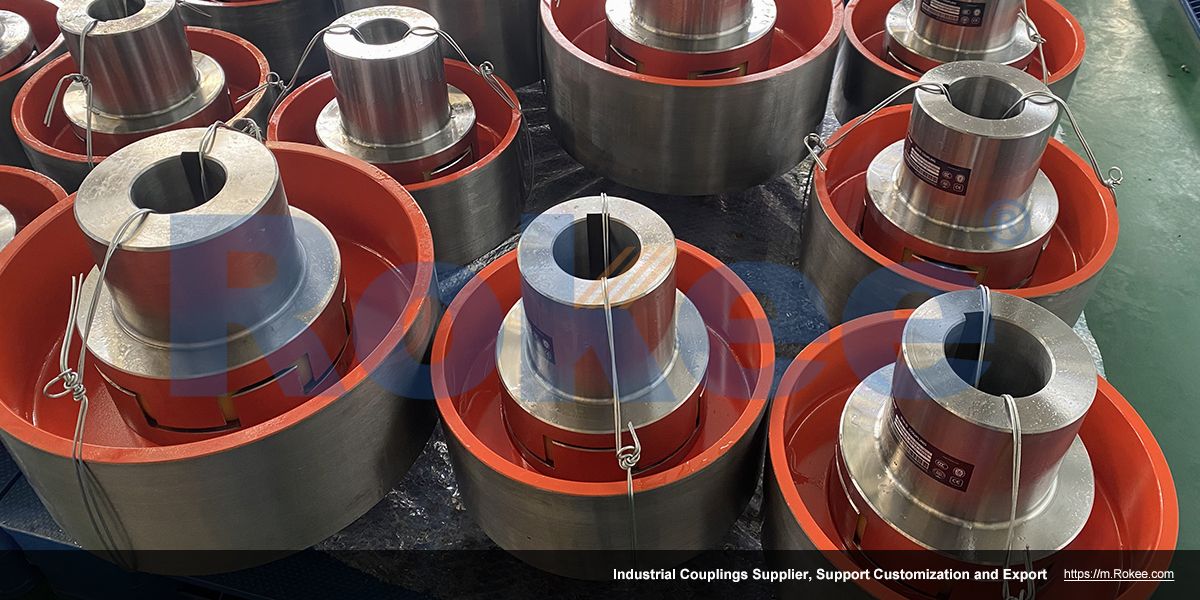
Curved Jaw Couplings
Rokee is a chinese Curved Jaw Couplings Manufacturer, provide Curved Jaw Couplings processing and customization services, Over the years, with excellent quality, we have been continuously providing many coupling products of various categories and uses complying with multiple standards and a full range of services, from the Curved Jaw Couplings selection to final installation and operation, for the industry fields of ferrous metallurgy, nuclear power, gas turbine, wind power, ropeway construction, lifting transportation, general equipment, etc. We strictly comply with quality system requirements and implement the whole process control to become a reliable and trustworthy partner of customers.
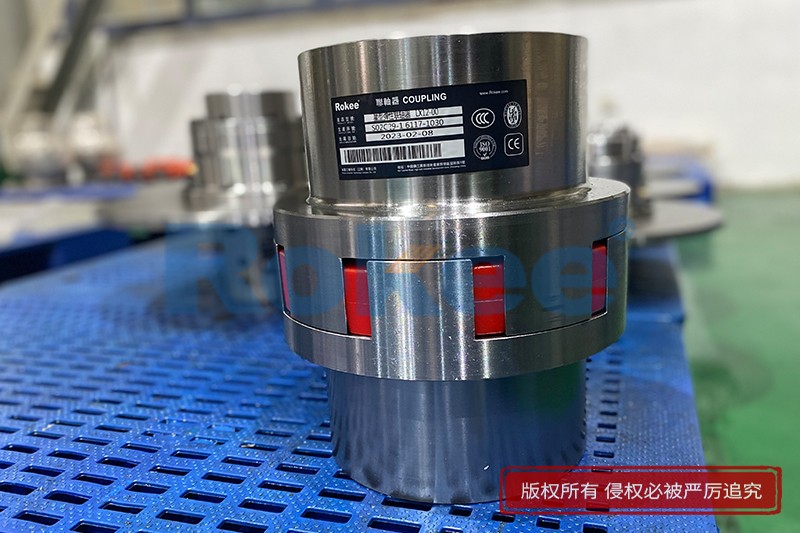
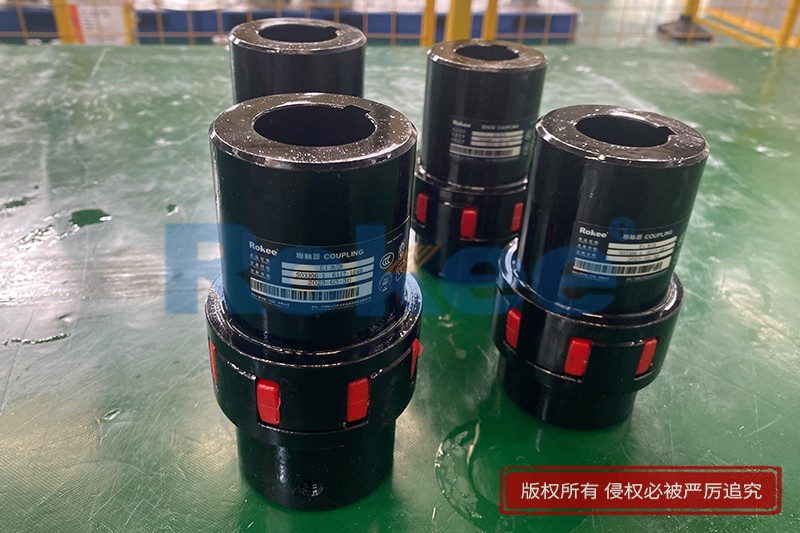
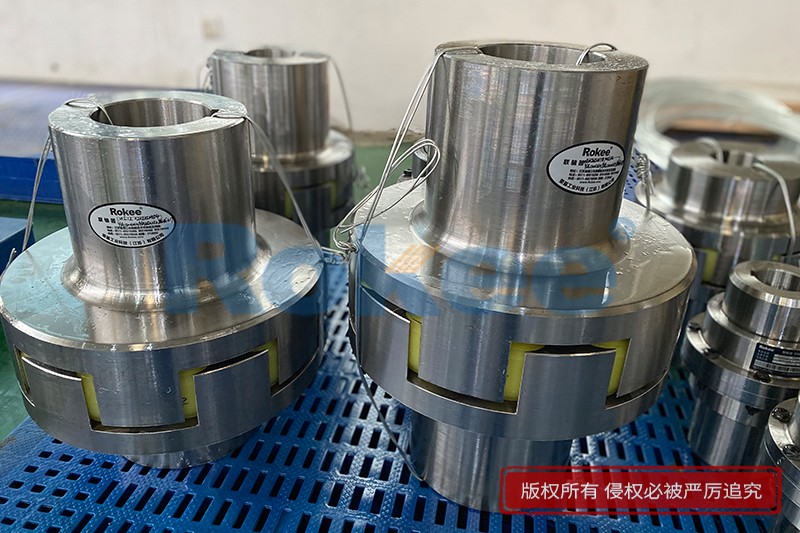
Providing customers with better Curved Jaw Couplings is always our driving force. Our aim is to transmit power for you and generate value for both of us. We look forward to joining you and becoming your partner for common progress.
-
![LM Curved Jaw Couplings,LM/ML Flexible Plum Jaw Coupling]()
LM/ML Flexible Plum Jaw Coupling
LM Plum-shaped Flexible Coupling is the basic form of this series of couplings.View More -
![LMD Curved Jaw Couplings,LMD/MLZ Flexible Plum Jaw Coupling With Single Flange]()
LMD/MLZ Flexible Plum Jaw Coupling With Single Flange
LMD Plum-shaped Flexible Coupling is added with transition connection, which eliminates the need of axially moving the semi-coupling when replacing the elastomer.View More -
![LMS Curved Jaw Couplings,LMS/MLS Flexible Plum Jaw Coupling With Double Flange]()
LMS/MLS Flexible Plum Jaw Coupling With Double Flange
LMS Plum-shaped Flexible Coupling adopts double transition flange connection, which eliminates the need of axially moving the semi-coupling when replacing the elastomer.View More -
![LMZ-I Curved Jaw Couplings,LMZ-I/MLL-I Flexible Plum Jaw Coupling With Split Brake Wheel]()
LMZ-I/MLL-I Flexible Plum Jaw Coupling With Split Brake Wheel
LMZ-I Plum-shaped Flexible Coupling adopts split brake wheel design, suitable for situations where braking is required.View More -
![LMZ-II Curved Jaw Couplings,LMZ-II/MLL-II Flexible Plum Jaw Coupling With Integral Brake Wheel]()
LMZ-II/MLL-II Flexible Plum Jaw Coupling With Integral Brake Wheel
LMZ- II Plum-shaped Flexible Coupling adopts integral brake wheel design, suitable for situations where braking is required.View More -
![LMPK Curved Jaw Couplings,LMPK/MLPK Flexible Plum Jaw Coupling With Split Brake Disc]()
LMPK/MLPK Flexible Plum Jaw Coupling With Split Brake Disc
LMPK Plum-shaped Flexible Coupling adopts split brake disc design, suitable for situations where braking is required and eliminating the need of axially moving the semi-coupling when replacing the elastomer.View More
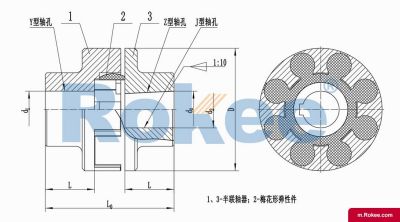
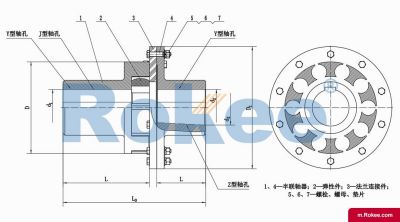
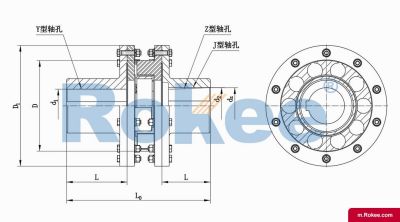
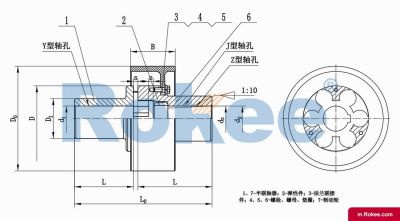
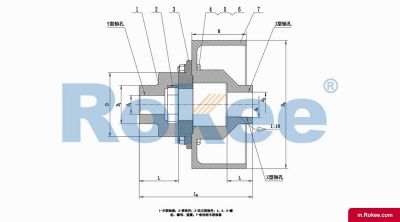
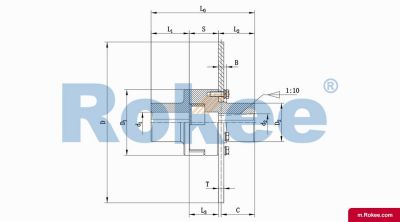
The Curved Jaw Coupling is mainly composed of two metal claw plates and an elastic body. Two metal claw plates are generally made of 45 steel, but in cases where load sensitivity is required, aluminum alloy or stainless steel materials may also be used. Elasticity is usually made of materials such as engineering plastics, rubber, or high-strength wear-resistant polyurethane, responsible for transmitting torque and compensating for axial, radial, and angular displacement.
The working principle of the Curved Jaw Coupling is to use a plum blossom shaped elastic element placed between the two halves of the coupling claws, and compensate for the relative displacement between the two shafts through the deformation of the elastic body, while achieving torque transmission. When there is a relative offset between the two axes, the elastic element will undergo corresponding elastic deformation, playing an automatic compensation role, thereby ensuring the smoothness and reliability of the transmission.
Main Features
Strong compensation capability: Curved Jaw Couplings have significant axial, radial, and angular compensation capabilities, which can adapt to various complex shaft transmission requirements under various working conditions.
Vibration reduction and buffering: Due to the presence of elastomers, Curved Jaw Couplings have good vibration reduction and buffering performance, which can reduce the vibration and noise of the transmission system.
Simple structure: Curved Jaw Coupling has a compact structure, light weight, and small moment of inertia, suitable for medium and high-speed applications.
No lubrication required: Curved Jaw Couplings do not require lubrication, require less maintenance, and can operate continuously for a long time.
Electrical insulation: Some claw type couplings also have electrical insulation properties, suitable for situations that require electrical isolation.
Curved Jaw Couplings are widely used in various fields such as metallurgy, mining, petroleum, chemical, lifting, transportation, light industry, textile, water pumps, fans, etc. Especially in working environments with frequent starting, forward and reverse rotation, medium high speed, moderate torque, and high reliability requirements, Curved Jaw Couplings perform well.
The installation of claw type couplings is relatively simple, but the following points should be noted:
Before installation, check whether the two shafts are concentric, and whether there are any debris or damage on the surfaces of the two shafts and the inner holes of the coupling.
Suitable tools and methods should be used during installation to avoid damage to the coupling or shaft.
After positioning is completed, the coupling should be tightened and fixed according to the specified tightening torque to ensure its stability and reliability.
In terms of maintenance, Curved Jaw Couplings do not require special maintenance. They only need to regularly check the wear of the elastic body and replace damaged elastic bodies in a timely manner.
Precautions
When choosing a claw type coupling, the appropriate model and specification should be selected according to the actual working conditions and requirements.
Avoid exceeding the rated torque and speed range of the coupling to avoid damaging the coupling or affecting the transmission effect.
When used in high temperature, low temperature, or corrosive environments, Curved Jaw Couplings with corresponding temperature and corrosion resistance properties should be selected.
Curved Jaw Couplings play an important role in the field of industrial transmission due to their unique structure and excellent performance. The correct selection and use of Curved Jaw Couplings are of great significance for ensuring the smooth operation of the transmission system and improving the service life of equipment.
In the realm of mechanical power transmission, flexible couplings play an indispensable role in bridging driving and driven shafts, mitigating operational stresses, and ensuring the stable transfer of torque across diverse industrial systems. Among the wide array of flexible coupling designs, the curved jaw coupling stands out as a versatile, reliable, and widely adopted solution, blending structural simplicity with exceptional functional performance. Unlike rigid couplings that offer no tolerance for shaft misalignment or vibration, curved jaw couplings are engineered to address common mechanical challenges such as angular, radial, and axial shaft offsets, torsional vibrations, and sudden shock loads, making them a staple in countless light, medium, and heavy-duty industrial applications.
At its core, the curved jaw coupling features a streamlined, three-piece modular structure that prioritizes ease of assembly, disassembly, and maintenance, eliminating the need for complex installation tools or specialized technical expertise. The fundamental components consist of two symmetrically designed metal hubs and a central elastic spider insert, each engineered to work in tandem to deliver optimal power transmission and flexibility. The metal hubs, typically crafted from high-strength materials such as carbon steel, aluminum alloy, stainless steel, or cast iron, are precision-machined with curved, arc-shaped jaw profiles on their inner faces—this curved geometry is the defining characteristic that sets this coupling apart from traditional straight jaw couplings. Each hub is fitted with a bore designed to securely mount onto the corresponding driving and driven shafts, secured via standard fastening methods such as keyways, set screws, or clamping mechanisms to prevent slippage and ensure efficient torque transfer under varying load conditions. The central elastic spider, positioned snugly between the two curved jaw hubs, is the heart of the coupling’s flexibility and damping capabilities; it is commonly manufactured from durable elastomeric materials including polyurethane, nitrile rubber, or other high-performance polymer compounds, with lobes shaped to perfectly mate with the curved jaws of the metal hubs. This precise mating design ensures uniform contact between the jaws and the spider, distributing stress evenly across the contact surfaces and eliminating the edge pressure and stress concentration that plague straight jaw coupling designs. Notably, the curved jaw and spider configuration also creates a fail-safe operational mechanism: in the event of elastomer wear or failure, the interlocking curved jaws can still maintain limited torque transmission, preventing sudden system shutdowns and reducing the risk of catastrophic equipment damage in critical operations.
The structural design of the curved jaw coupling directly translates to a suite of exceptional performance characteristics that make it suitable for demanding industrial environments, balancing torque transmission efficiency, misalignment compensation, vibration damping, and durability. One of the most prominent performance advantages is its superior ability to accommodate multiple forms of shaft misalignment, a common issue in real-world mechanical setups caused by manufacturing tolerances, installation errors, thermal expansion, or operational wear. The curved profile of the jaws and the elastic nature of the spider allow the coupling to compensate for moderate angular misalignment, radial offset, and axial endplay simultaneously, without compromising torque transfer efficiency or imposing excessive bearing loads on connected equipment. This misalignment tolerance not only extends the service life of shafts and bearings but also simplifies installation requirements, reducing the need for ultra-precise shaft alignment during setup. Equally important is the coupling’s exceptional torsional damping and shock absorption properties: the elastic spider acts as a natural cushion, absorbing sudden impact loads, reducing torsional vibrations generated by prime movers such as electric motors or internal combustion engines, and minimizing noise transmission throughout the power transmission system. This damping effect is particularly valuable in applications involving frequent start-stop cycles, rapid direction reversals, or fluctuating load conditions, as it stabilizes system operation and protects sensitive mechanical components from fatigue damage.
Additional performance benefits of curved jaw couplings include zero-backlash operation in precision-tuned variants, maintenance-free design, and broad environmental resistance. High-precision curved jaw couplings, paired with stiff elastomer spiders, can achieve near-zero backlash, making them ideal for motion control and precision positioning systems where positional accuracy is paramount. Unlike gear couplings or chain couplings that require regular lubrication to prevent wear and corrosion, curved jaw couplings operate without lubrication, eliminating ongoing maintenance tasks, reducing operational downtime, and avoiding contamination risks in clean or sensitive environments. The elastomer spiders and metal hub materials are engineered to resist common environmental stressors, including oil, grease, moisture, dust, and moderate temperature fluctuations, ensuring consistent performance in both indoor industrial facilities and harsh outdoor operating conditions. The torque transmission capacity of curved jaw couplings is also highly adaptable, spanning a wide range from small-scale light-duty applications to heavy-duty industrial systems, with the modular design allowing for easy scaling of hub size and spider material to match specific torque requirements. Furthermore, the compact, lightweight footprint of these couplings makes them suitable for installations with limited spatial constraints, offering a practical power transmission solution without sacrificing performance or durability.
Curved jaw couplings are categorized into distinct types based on multiple functional and structural criteria, including hub material, spider elastomer properties, design configuration, and application-specific features, allowing engineers to select the optimal variant for unique operational demands. The primary classification revolves around hub material, as the choice of metal directly impacts the coupling’s strength, weight, corrosion resistance, and load-bearing capacity. Standard carbon steel hubs are the most common option, offering exceptional tensile strength, durability, and cost-effectiveness for general industrial applications with moderate to high torque loads; they are ideal for heavy-duty machinery, conveyor systems, and large pump units where robust load handling is critical. Aluminum alloy hubs, by contrast, are lightweight and offer excellent thermal conductivity, making them perfect for high-speed, low-to-medium torque applications such as precision automation equipment, small CNC machinery, and portable power tools, where reduced inertia and minimal weight are key design considerations. Stainless steel hubs are engineered for corrosive or hygienic environments, such as food and beverage processing, pharmaceutical manufacturing, marine operations, and chemical processing plants, as they resist rust, chemical degradation, and contamination, complying with strict hygiene and durability standards without compromising performance. Cast iron hubs are favored for heavy industrial settings requiring high vibration damping and shock resistance, such as mining equipment, large compressors, and industrial fan systems, where their rugged build can withstand extreme operational stresses.
Classification by elastic spider material and hardness is equally critical, as the elastomer properties dictate the coupling’s damping ability, misalignment tolerance, temperature resistance, and load response. Polyurethane spiders are the most widely used, available in varying shore hardness ratings to suit different operational needs: soft polyurethane spiders offer enhanced vibration damping and greater misalignment compensation, ideal for systems with high vibration or significant shaft offset, while hard polyurethane spiders deliver stiffer torque transmission, minimal backlash, and higher load capacity, suitable for precision motion control and high-torque applications. Nitrile rubber spiders provide excellent oil and chemical resistance, making them a preferred choice for industrial environments with exposure to lubricants, fuels, or mild chemicals, while other specialized polymer spiders are engineered for extreme temperature conditions, whether high-heat industrial furnaces or low-temperature refrigeration systems, maintaining elasticity and performance outside the range of standard elastomers. Beyond material-based classifications, curved jaw couplings are also grouped by design configuration, including standard single-flex couplings for general-purpose use, double-flex couplings for enhanced misalignment compensation in long shaft spans, and brake wheel-integrated couplings for applications requiring combined power transmission and braking functionality. Additionally, miniaturized curved jaw couplings are designed for compact precision instruments, small medical devices, and lightweight automation systems, offering all the performance benefits of full-size couplings in a scaled-down package.
The unique combination of structural simplicity, versatile performance, and customizable design makes curved jaw couplings one of the most widely utilized flexible couplings across nearly every industrial sector, with applications spanning light-duty precision equipment to heavy-duty industrial machinery. In general manufacturing and industrial machinery, they are extensively employed to connect electric motors and internal combustion engines to a vast range of driven equipment, including centrifugal pumps, axial fans, air compressors, gearboxes, mixers, and conveyor systems. Their ability to absorb shock and compensate for misalignment ensures reliable operation in these high-volume, continuous-use applications, reducing maintenance frequency and extending equipment lifespan. In the automation and precision engineering sector, zero-backlash curved jaw couplings are integral to CNC machine tools, robotic arms, linear motion systems, and packaging machinery, where precise torque transfer and positional accuracy are essential for maintaining production quality and operational efficiency; the lightweight aluminum variants minimize inertial load, enabling faster response times and smoother motion control.
In specialized industrial sectors, curved jaw couplings are tailored to meet unique operational demands, proving their adaptability and engineering versatility. In food processing and pharmaceutical manufacturing, stainless steel curved jaw couplings with hygienic, non-contaminating elastomer spiders are used to drive processing equipment, filling machines, and conveying systems, complying with strict industry hygiene standards while resisting corrosion from cleaning agents and moisture. In the energy and power generation industry, these couplings are employed in small to medium-scale generator sets, wind turbine auxiliary systems, and hydraulic power units, providing reliable power transmission in remote or demanding energy production environments. In the automotive and transportation sector, curved jaw couplings are integrated into vehicle auxiliary systems, material handling equipment, and marine propulsion accessories, offering durable performance under variable load and vibration conditions. They are also widely used in agricultural machinery, connecting tractors and power sources to tillers, harvesters, and irrigation equipment, withstanding the harsh dust, vibration, and fluctuating loads of agricultural operations. Furthermore, in mining, metallurgy, and heavy construction equipment, rugged carbon steel and cast iron curved jaw couplings deliver the high torque capacity and shock resistance needed to operate crushers, screens, and heavy conveyors in extreme working conditions, ensuring uninterrupted performance in high-stress environments.
Beyond these core industrial applications, curved jaw couplings continue to find new uses in emerging technological fields, thanks to their scalable design and adaptable performance. In renewable energy systems, such as solar tracking mechanisms and small-scale hydroelectric generators, they provide reliable power transmission with minimal maintenance requirements, aligning with the long-term durability goals of green energy infrastructure. In medical and laboratory equipment, miniaturized, precision-engineered curved jaw couplings drive diagnostic devices, testing instruments, and laboratory automation systems, offering quiet, vibration-free operation and precise torque control for sensitive scientific applications. Even in consumer and commercial HVAC systems, curved jaw couplings connect motors to fans and compressors, reducing noise and vibration while ensuring efficient, reliable climate control operation.
In summary, the curved jaw coupling represents a pinnacle of practical mechanical engineering, merging a straightforward, modular structure with outstanding performance versatility to address the diverse challenges of modern power transmission. Its carefully designed curved jaw profile, durable metal hubs, and elastic spider insert work in harmony to deliver superior misalignment compensation, effective vibration damping, reliable torque transfer, and long-term durability, while its diverse classifications ensure a tailored solution for every conceivable operational requirement. From precision automation equipment to heavy industrial machinery, from hygienic food processing systems to harsh mining operations, the curved jaw coupling remains a foundational component in mechanical power transmission, valued for its reliability, adaptability, and cost-effective performance. As industrial technology continues to evolve and demand for efficient, durable power transmission solutions grows, the curved jaw coupling will maintain its status as a vital and irreplaceable element in global manufacturing and engineering, adapting to new challenges while upholding its core principles of simplicity, performance, and reliability.
« Curved Jaw Couplings » Update Date: 2026/3/6
URL: https://m.rokee.com/tags/curved-jaw-couplings.html