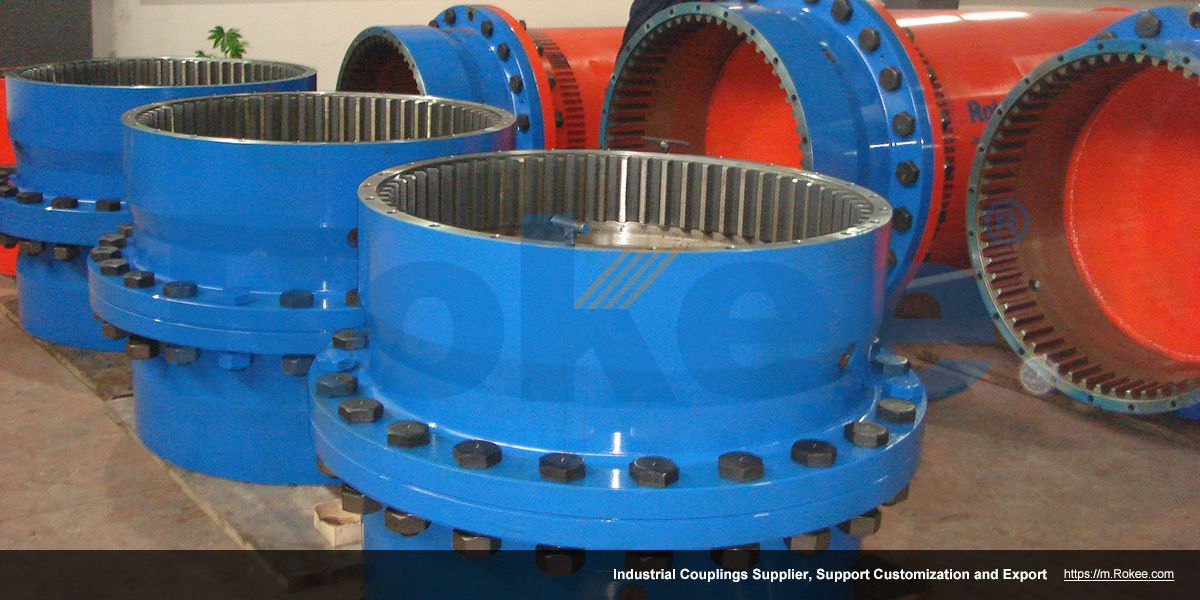
Toothed Couplings
Rokee is a chinese Toothed Couplings Manufacturer, provide Toothed Couplings processing and customization services, Over the years, with excellent quality, we have been continuously providing many coupling products of various categories and uses complying with multiple standards and a full range of services, from the Toothed Couplings selection to final installation and operation, for the industry fields of ferrous metallurgy, nuclear power, gas turbine, wind power, ropeway construction, lifting transportation, general equipment, etc. We strictly comply with quality system requirements and implement the whole process control to become a reliable and trustworthy partner of customers.
Providing customers with better Toothed Couplings is always our driving force. Our aim is to transmit power for you and generate value for both of us. We look forward to joining you and becoming your partner for common progress.
-
![RODA Toothed Couplings,RODA Basic Drum Gear Coupling]()
RODA Basic Drum Gear Coupling
The RODA Drum Gear Coupling is the basic type of ROD series coupling, suitable for most situations where the compensation of transmission distance and motion position does not require special increase.View More -
![RODT Toothed Couplings,RODT Drum Gear Coupling With Intermediate Tube]()
RODT Drum Gear Coupling With Intermediate Tube
The RODT Drum Gear Coupling is an extended type of ROD series coupling, suitable for increasing transmission distance.View More -
![RODX Toothed Couplings,RODX Drum Gear Coupling With Intermediate Shaft]()
RODX Drum Gear Coupling With Intermediate Shaft
RODX Drum Gear Coupling is an extended type of ROD series coupling with a floating shaft design in the middle, suitable for increasing transmission distance.View More -
![RODP Toothed Couplings,RODP Drum Gear Coupling With Brake Disc]()
RODP Drum Gear Coupling With Brake Disc
The RODP Drum Gear Coupling is a type of ROD series coupling with a brake disc, suitable for transmission situations where braking needs to be used in conjunction with disc brakes.View More -
![RODF Toothed Couplings,RODF Drum Gear Coupling With Split Brake Discs]()
RODF Drum Gear Coupling With Split Brake Discs
The RODF Drum Gear Coupling is a type of ROD series coupling with split brake discs, suitable for transmission situations where there is braking demand and the braking position changes when used in conjunction with disc brakes.View More -
![RODW Toothed Couplings,RODW Drum Gear Coupling With Brake Wheel]()
RODW Drum Gear Coupling With Brake Wheel
The RODW Drum Gear Coupling is a type of ROD series coupling with brake wheels, suitable for transmission situations where braking needs to be used in conjunction with wheel brakes.View More -
![RODU Toothed Couplings,RODU Drum Gear Coupling With Brake Wheel]()
RODU Drum Gear Coupling With Brake Wheel
The RODU Drum Gear Coupling is another type of ROD series coupling with brake wheels, suitable for transmission situations where braking needs to be used in conjunction with wheel brakes and applied to one end of the axle, achieving smoother and more reliable braking performance.View More -
![RODV Toothed Couplings,RODV Vertical Installation Drum Gear Coupling]()
RODV Vertical Installation Drum Gear Coupling
The RODV Drum Gear Coupling is a vertical installation type of the ROD series coupling, suitable for transmission situations that require vertical transmission torque.View More -
![RODM Toothed Couplings,RODM Torsion Protection Drum Gear Coupling]()
RODM Torsion Protection Drum Gear Coupling
The RODM Drum Gear Coupling is a torque setting form of the ROD series coupling. By adjusting relevant components, the maximum transmission torque can be easily set within a certain range. Suitable for shafting transmission situations that require safe torque operation to protect important machine components from excessive damage.View More -
![GICL Toothed Couplings,GICL Wide Type Drum Gear Coupling]()
GICL Wide Type Drum Gear Coupling
GICL Drum Gear Coupling has larger inner teeth width, which can transfer torque while compensating for larger axial displacement.View More -
![GICLZ Toothed Couplings,GICLZ Drum Gear Coupling With Intermediate Shaft]()
GICLZ Drum Gear Coupling With Intermediate Shaft
Half of the GICLZ Drum Gear Coupling adopts a non-toothed semi-coupling sleeve structure, which is usually connected in pairs or used in occasions with small angular displacement.View More -
![GIICL Toothed Couplings,GIICL Narrow Type Drum Gear Coupling]()
GIICL Narrow Type Drum Gear Coupling
GIICL Drum Gear Coupling has small inner teeth width, which can transfer torque while compensating for small axial displacement. Also, its structure is compact and the moment of inertia is low.View More -
![GIICLZ Toothed Couplings,GIICLZ Drum Gear Coupling With Intermediate Shaft]()
GIICLZ Drum Gear Coupling With Intermediate Shaft
Half of the GIICLZ Drum Gear Coupling adopts a non-toothed semi-coupling sleeve structure, which is usually connected in pairs or used in occasions with small angular displacement. Also, its structure is compact and the moment of inertia is low.View More -
![GCLD Toothed Couplings,GCLD Drum Gear Coupling For Motor]()
GCLD Drum Gear Coupling For Motor
GCLD Drum Gear Coupling is generally used for direct connection with the motor, so it generally has a higher speed and compact structure.View More -
![NGCL Toothed Couplings,NGCL Drum Gear Coupling With Brake Wheel]()
NGCL Drum Gear Coupling With Brake Wheel
NGCL Drum Gear Coupling is designed with a brake wheel, suitable for situations where braking is required.View More -
![NGCLZ Toothed Couplings,NGCLZ Drum Gear Coupling With Brake Wheel]()
NGCLZ Drum Gear Coupling With Brake Wheel
NGCLZ Drum Gear Coupling is designed with a brake wheel, suitable for situations where braking is required. Half of its structure adopts a semi-coupling sleeve design, with smaller angular displacement compensation but more stable braking.View More -
![WG Toothed Couplings,WG Drum Gear Coupling]()
WG Drum Gear Coupling
The overall characteristics of WG Drum Gear Coupling are similar to those of other drum gear couplings, but with a larger modulus design, which can generally transmit greater torque.View More -
![WGZ Toothed Couplings,WGZ Drum Gear Coupling With Brake Wheel]()
WGZ Drum Gear Coupling With Brake Wheel
WGZ Drum Gear Coupling is designed with a brake wheel, suitable for shoe type braking.View More -
![WGP Toothed Couplings,WGP Drum Gear Coupling With Brake Discs]()
WGP Drum Gear Coupling With Brake Discs
WGP Drum Gear Coupling is designed with a brake disc, suitable for disc type braking.View More -
![WGT Toothed Couplings,WGT Drum Gear Coupling With Indirect Tube]()
WGT Drum Gear Coupling With Indirect Tube
WGT Drum Gear Coupling is designed with indirect tube, suitable for long distance torque transfer.View More -
![WGC Toothed Couplings,WGC Vertical Installation Drum Gear Coupling]()
WGC Vertical Installation Drum Gear Coupling
WGC Drum Gear Coupling is specially designed for situations where vertical transmission is required, suitable for some vertical transmission systems.View More -
![WGJ Toothed Couplings,WGJ Drum Gear Coupling With Intermediate Shaft]()
WGJ Drum Gear Coupling With Intermediate Shaft
WGJ Drum Gear Coupling is designed with intermediate shaft, suitable for long distance torque transmission, and some are equipped with axial buffers.View More
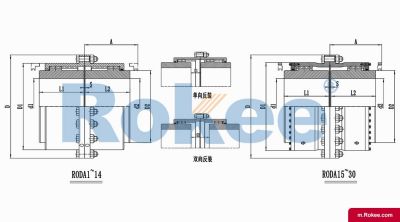
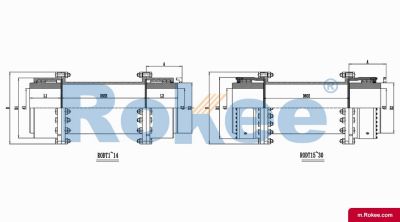
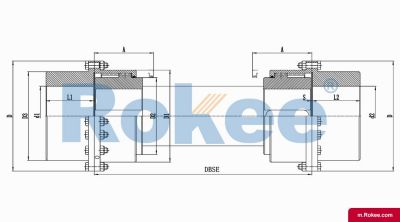
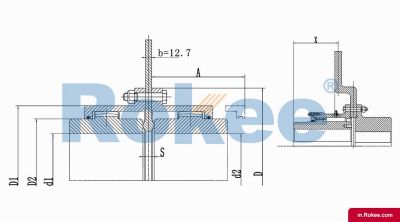
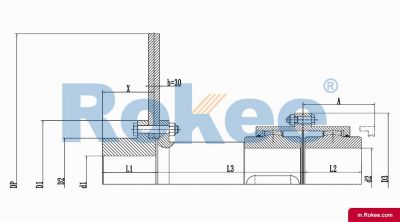
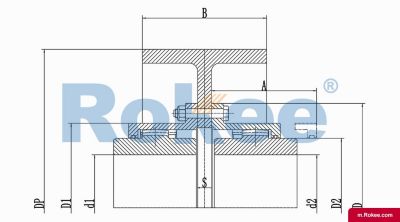
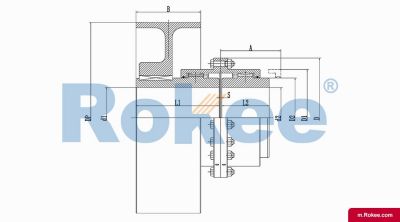
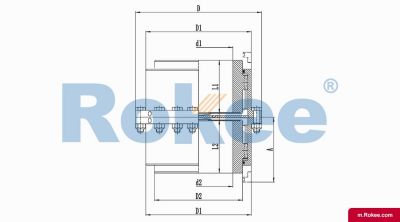
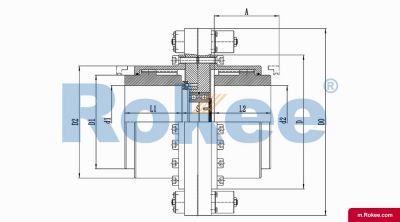
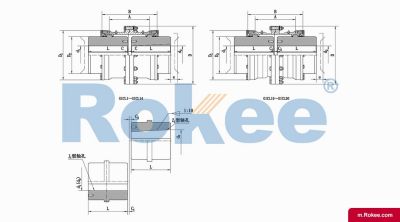
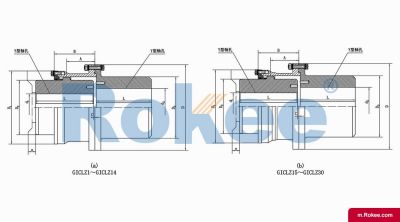
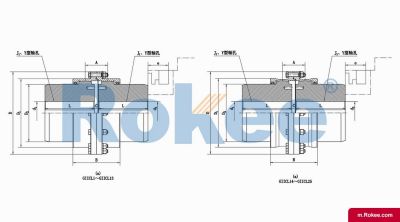
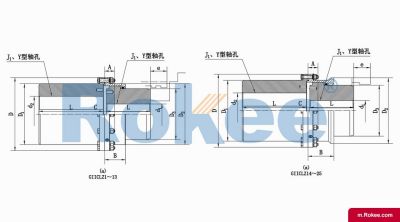
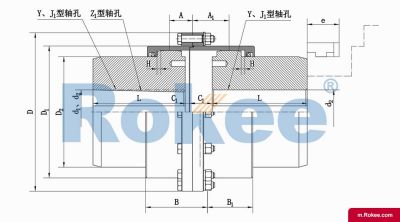
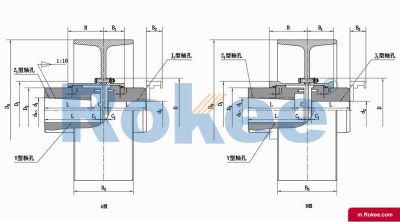
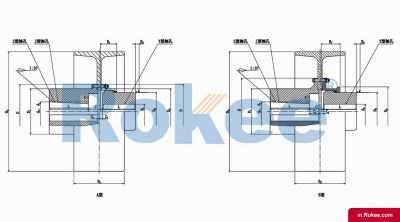
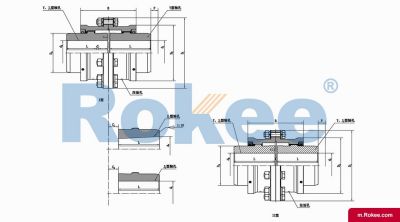
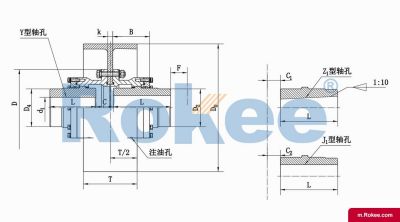
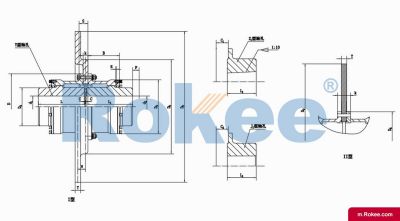
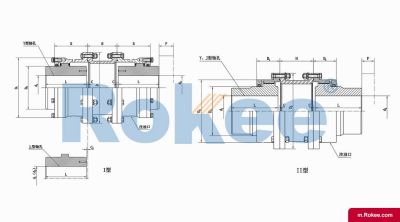
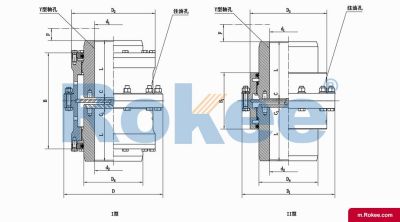
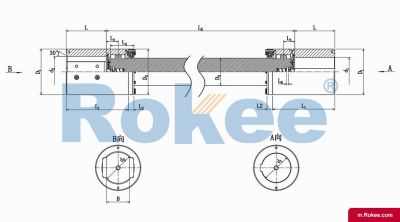
A toothed coupling is a movable rigid coupling composed of internal gear rings with the same number of teeth and flange half couplings with external teeth. It utilizes the meshing of internal and external teeth to achieve the transmission of torque and rotational motion between the two halves of the coupling, and has a certain ability to compensate for the relative displacement of the two shafts. The toothed coupling is mainly composed of internal gear rings, gear shaft sleeves (external gear shaft sleeves), end caps, and sealing devices. Among them, small-sized toothed coupling end caps and inner gear rings usually form an integral structure. toothed couplings can be divided into straight toothed couplings, drum toothed couplings, and special drum toothed couplings according to the different axial tooth profiles of their outer gear shaft sleeves. toothed couplings also have advantages such as small radial size and wide range of operating speeds. High precision and dynamically balanced toothed couplings can also be used for high-speed transmission, such as shaft transmission in gas turbines.
When the toothed coupling is in operation, the torque of the driving shaft is transmitted to the inner gear ring through the outer gear sleeve, which in turn drives the driven shaft to rotate. Due to the meshing of the inner and outer teeth, when there is relative displacement between the two shafts, the tooth surfaces of the inner and outer teeth will periodically slide axially relative to each other. This sliding allows the coupling to adapt to certain angular, radial, and axial displacement compensation, thereby maintaining stable transmission performance. toothed couplings are widely used in metallurgy, mining, lifting and transportation, petroleum, chemical, general machinery, and power industries. Especially under heavy loads, large impacts, or conditions where the shaft system is prone to displacement, the toothed coupling ensures stable operation of the equipment due to its high load-bearing capacity and good displacement compensation capability.
In terms of maintenance, toothed couplings need to maintain good lubrication and sealing conditions to avoid tooth wear and power loss. At the same time, the meshing condition of the coupling teeth should be regularly checked to ensure that its contact area and meshing accuracy meet the specified requirements. If it is necessary to remove the ring gear, special tools must be used and not knocked to avoid damaging the shaft or coupling components.
When selecting a toothed coupling, the selection should be based on the actual working conditions and requirements of the transmission system to ensure that the performance of the coupling meets the usage requirements. Installation should be carried out according to the prescribed installation methods and steps to ensure the installation accuracy and alignment requirements of the coupling. During use, the coupling should be regularly inspected and maintained to promptly identify and address potential problems and malfunctions.
In the intricate network of industrial power transmission systems, toothed couplings stand out as indispensable components that bridge the gap between rotating shafts, ensuring efficient torque transfer while accommodating inevitable misalignments. These mechanical devices, characterized by their gear meshing mechanism, have become a cornerstone in heavy-duty and precision machinery across diverse sectors, from metallurgy and mining to power generation and transportation. Unlike other coupling types that may prioritize simplicity or low maintenance, toothed couplings are engineered to handle high torque loads and complex operational conditions, making them a preferred choice in applications where reliability and performance are non-negotiable.
At the core of a toothed coupling's functionality lies its carefully crafted structure, which is optimized for both torque transmission and misalignment compensation. The basic configuration of a typical toothed coupling consists of four primary components: outer gear sleeves, inner gear rings, end caps, and sealing devices. The outer gear sleeves, often referred to as flanged half-couplings, are cylindrical components with external teeth machined on their circumferential surface. These sleeves are designed to be mounted directly onto the shafts of the driving and driven machinery, usually via keyway connections that ensure a secure fit and prevent relative rotation between the shaft and the sleeve. The inner gear rings, on the other hand, are annular parts with internal teeth that precisely match the external teeth of the sleeves. Two outer gear sleeves (one for each shaft) fit into a corresponding inner gear ring, creating a meshing pair that forms the torque-transmitting interface. In smaller-sized toothed couplings, the end cap and inner gear ring are often integrated into a single unit to streamline the structure and reduce overall size, making them suitable for applications with limited installation space.
The end caps and sealing devices play a crucial role in protecting the internal gear meshing mechanism from external contaminants and ensuring the retention of lubricants. End caps are mounted on the axial ends of the coupling, providing structural support and preventing the ingress of dust, debris, and moisture that could cause premature wear or corrosion of the gear teeth. Sealing devices, which can be in the form of rubber O-rings, lip seals, or gasket seals, are installed between the end caps and the gear sleeves to create a tight barrier. This sealing not only safeguards the internal components but also maintains the integrity of the lubrication system, which is essential for reducing friction and extending the coupling's service life. The design of these components varies depending on the operational environment; for example, in dusty or corrosive settings, heavy-duty seals with enhanced resistance to abrasion and chemical attack are employed to ensure long-term reliability.
The working principle of a toothed coupling revolves around the meshing of internal and external gear teeth to transmit torque and accommodate shaft misalignments. When the driving shaft rotates, torque is first transferred to the outer gear sleeve via the keyway connection. As the sleeve rotates, its external teeth engage with the internal teeth of the inner gear ring, causing the ring to rotate in synchronization. This rotational motion is then transmitted to the second outer gear sleeve (mounted on the driven shaft) through the same meshing action, ultimately driving the driven machinery. What distinguishes toothed couplings from rigid couplings is their ability to compensate for three types of shaft misalignments: radial, angular, and axial. Radial misalignment occurs when the axes of the two shafts are parallel but offset from each other; angular misalignment happens when the axes intersect at an angle; and axial misalignment is the result of relative movement along the shaft axes, often caused by thermal expansion or contraction.
The misalignment compensation capability of toothed couplings is primarily achieved through three design features: tooth backlash, crowned tooth profiles, and major diameter fits. Backlash refers to the slight gap between the meshing teeth, which provides the necessary space for the gear sleeves to move relative to the inner gear rings without binding. This gap also serves as a reservoir for lubricants, ensuring that the tooth surfaces remain adequately lubricated during operation. Crowned tooth profiles, a key innovation in modern toothed coupling design, involve machining the external teeth of the sleeves with a spherical or curved surface (the crown), with the center of the sphere aligned with the shaft axis. This design broadens the contact area between the teeth when misalignment occurs, reducing the contact pressure and minimizing wear. Unlike straight teeth, which tend to make edge contact under misaligned conditions (leading to premature failure), crowned teeth distribute the torque evenly across the tooth flank, enhancing both the coupling's durability and its misalignment capacity. Major diameter fits, where the tip diameter of the outer gear teeth closely matches the root diameter of the inner gear ring's tooth spaces, further improve the coupling's ability to handle misalignments by providing additional stability during relative movement.
The performance and durability of toothed couplings are heavily dependent on the selection of appropriate materials and the implementation of precise manufacturing processes. Given the high torque loads and potential for wear, the primary components (outer gear sleeves and inner gear rings) are typically fabricated from high-strength steels that offer excellent mechanical properties. One of the most commonly used materials is 42CrMo alloy steel, an ultra-high-strength steel known for its exceptional combination of strength, toughness, and hardenability. This material exhibits minimal temper brittleness, small quenching deformation, and high fatigue resistance when subjected to neuromodulator treatment followed by surface quenching. The surface hardness of 42CrMo components can reach 50-55 HRC, ensuring excellent wear resistance, while the core remains tough enough to withstand impact loads. For applications with moderate torque requirements and cost constraints, 45-grade carbon steel forgings are often used. These forgings undergo neuromodulator treatment to enhance their mechanical properties, achieving a hardness of 220-250 HB, which is sufficient for less demanding industrial environments.
In extreme operating conditions, such as high-temperature environments, corrosive media, or heavy shock loads, specialized alloy steels are employed. For example, 34Cr2Ni2Mo alloy steel is commonly used in applications requiring resistance to high temperatures and corrosion. This material is subjected to carburizing and quenching processes, which harden the tooth surfaces to 58-62 HRC while maintaining a tough core (30-35 HRC) that can absorb shocks. The carburization process also improves the material's resistance to wear and fatigue, making it suitable for use in metallurgical, petrochemical, and power generation applications where the coupling is exposed to harsh conditions. In addition to the base materials, the surface treatment of the gear teeth is a critical manufacturing step. Processes such as carburizing, nitriding, and induction hardening are used to enhance the surface hardness and wear resistance of the teeth, while precision grinding ensures that the tooth profiles meet strict dimensional tolerances, reducing noise and improving meshing efficiency.
Toothed couplings find widespread application across a diverse range of industries, each with unique operational requirements that leverage the coupling's core advantages. In the metallurgical industry, where heavy-duty machinery such as rolling mills and conveyor rollers operate under high torque and frequent shock loads, toothed couplings (particularly drum-shaped tooth varieties) are the preferred choice. Rolling mills, for instance, require couplings that can transmit massive torques while accommodating the slight misalignments caused by thermal expansion of the shafts and the dynamic loads generated during the rolling process. The drum-shaped tooth design of these couplings ensures that the tooth contact remains uniform even under angular misalignment, reducing wear and extending the service life of both the coupling and the connected machinery.
The mining industry presents another challenging environment for power transmission components, with machinery such as crushers, ball mills, and conveyor systems operating in dusty, abrasive conditions. Toothed couplings used in mining applications are equipped with robust sealing devices to prevent the ingress of dust and debris, which can cause rapid tooth wear. The high torque capacity of toothed couplings makes them ideal for driving crushers and ball mills, which require large amounts of power to process hard materials. Additionally, the ability to compensate for misalignments caused by foundation settling or bearing wear ensures that the machinery operates smoothly and reliably, minimizing downtime in mining operations where productivity is critical.
In the power generation sector, toothed couplings are used in applications such as steam turbines and gas turbines, where high-speed rotation and precise torque transmission are essential. Turbine systems operate at extremely high speeds, requiring couplings that have undergone rigorous dynamic balancing to minimize vibration. Toothed couplings, when properly balanced, can operate at high rotational speeds without generating excessive vibration, ensuring the stability of the turbine system. The ability to compensate for axial misalignments caused by thermal expansion of the turbine shafts is also crucial in these applications, as temperature variations during operation can lead to significant shaft movement.
The transportation and port machinery sectors also rely on toothed couplings for power transmission. Bridge cranes, port container cranes, and ship propulsion systems require couplings that can handle heavy loads and intermittent shock loads while ensuring precise control of movement. Toothed couplings used in these applications are designed to be compact, allowing them to fit within the limited space available in crane and ship machinery. The high reliability of toothed couplings ensures that these critical systems operate safely, reducing the risk of mechanical failure that could lead to costly accidents or downtime.
Proper maintenance is essential to ensure the long-term performance and reliability of toothed couplings, with lubrication and sealing being the two most critical aspects of maintenance. Lubrication plays a vital role in reducing friction between the meshing teeth, minimizing wear, and dissipating heat generated during operation. The type of lubricant used depends on the operating conditions, including temperature, load, and rotational speed. For most industrial applications, high-pressure gear oils or greases with extreme pressure additives are recommended, as these lubricants can withstand the high contact pressures between the teeth and provide effective protection against wear. It is important to ensure that the lubricant is applied in the correct quantity, as insufficient lubrication can lead to metal-to-metal contact between the teeth, causing rapid wear and potential failure. Conversely, excessive lubrication can lead to overheating and the formation of sludge, which can clog the lubrication channels and compromise the sealing system.
Regular inspection of the sealing devices is another key maintenance task. Seals that are damaged, worn, or cracked should be replaced immediately to prevent lubricant leakage and the ingress of contaminants. In addition to checking the seals, regular visual inspections of the gear teeth should be conducted to look for signs of wear, pitting, or chipping. If excessive wear is detected, the coupling should be disassembled for further inspection and, if necessary, repaired or replaced. The frequency of maintenance inspections depends on the operating conditions; couplings operating in harsh environments such as mining or metallurgy may require more frequent inspections than those operating in clean, controlled environments.
When comparing toothed couplings with other types of power transmission couplings, it is important to consider their relative advantages and disadvantages to determine the most suitable coupling for a given application. One of the primary advantages of toothed couplings is their high power density, meaning they can transmit larger torques than many other coupling types of the same size. This makes them ideal for applications where space is limited and high torque transmission is required. Another key advantage is their excellent misalignment compensation capability, particularly for angular and axial misalignments. This versatility allows toothed couplings to be used in a wide range of applications where shaft misalignments are inevitable.
However, toothed couplings also have some disadvantages that must be considered. Unlike flexible disc couplings or rubber sleeve couplings, toothed couplings require regular lubrication and maintenance, which can increase the overall operating cost and downtime. The meshing of gear teeth can also generate noise and vibration, particularly when the coupling is not properly lubricated or when the teeth are worn. Additionally, toothed couplings are generally heavier than some other coupling types, which can be a disadvantage in applications where weight is a critical factor.
Flexible disc couplings, for example, offer the advantage of being maintenance-free, as they do not require lubrication and have no sliding parts. These couplings use thin, flexible metal discs to compensate for misalignments, generating less noise and vibration than toothed couplings. However, flexible disc couplings have a lower torque capacity than toothed couplings and are more susceptible to damage from shock loads. Rubber sleeve couplings are another alternative, offering good shock absorption and misalignment compensation at a lower cost. However, rubber sleeves are prone to wear and degradation over time, requiring frequent replacement, and they are not suitable for high-temperature or high-torque applications.
In recent years, advancements in toothed coupling design have aimed to address some of these disadvantages, with innovations such as variable crowning of the tooth profiles and improved sealing systems. Variable crowning involves varying the curvature radius along the tooth flank, which maintains a larger contact area between the teeth during misalignment compared to standard crowning. This reduces the stress on the teeth, minimizing wear and extending the coupling's service life. Improved sealing systems, such as double-lip seals and labyrinth seals, have enhanced the ability of toothed couplings to resist contamination, reducing the frequency of maintenance required.
Another area of innovation is the development of toothed safety couplings, which integrate the torque transmission capabilities of standard toothed couplings with safety features such as shear pins. These couplings are designed to break the shear pin when the torque exceeds a predetermined limit, disconnecting the driving and driven shafts and protecting the machinery from damage due to overload. Toothed safety couplings are particularly useful in applications where sudden overloads are a risk, such as in material handling and processing machinery.
In conclusion, toothed couplings remain a vital component in modern industrial power transmission systems, offering a unique combination of high torque capacity, excellent misalignment compensation, and reliability. Their design, which leverages the meshing of gear teeth to transmit power, has been refined over decades to meet the diverse needs of industries such as metallurgy, mining, power generation, and transportation. The selection of appropriate materials and the implementation of proper maintenance practices are critical to ensuring the long-term performance of toothed couplings, with lubrication and sealing being the key maintenance priorities. While toothed couplings have some disadvantages, such as the need for regular maintenance and the potential for noise generation, ongoing innovations in design are addressing these issues, enhancing their performance and expanding their range of applications. As industrial machinery continues to evolve, with increasing demands for higher power, greater efficiency, and improved reliability, toothed couplings will undoubtedly remain a key solution for meeting the challenges of power transmission in the modern industrial landscape.
« Toothed Couplings » Update Date: 2026/1/10
URL: https://m.rokee.com/tags/toothed-couplings.html