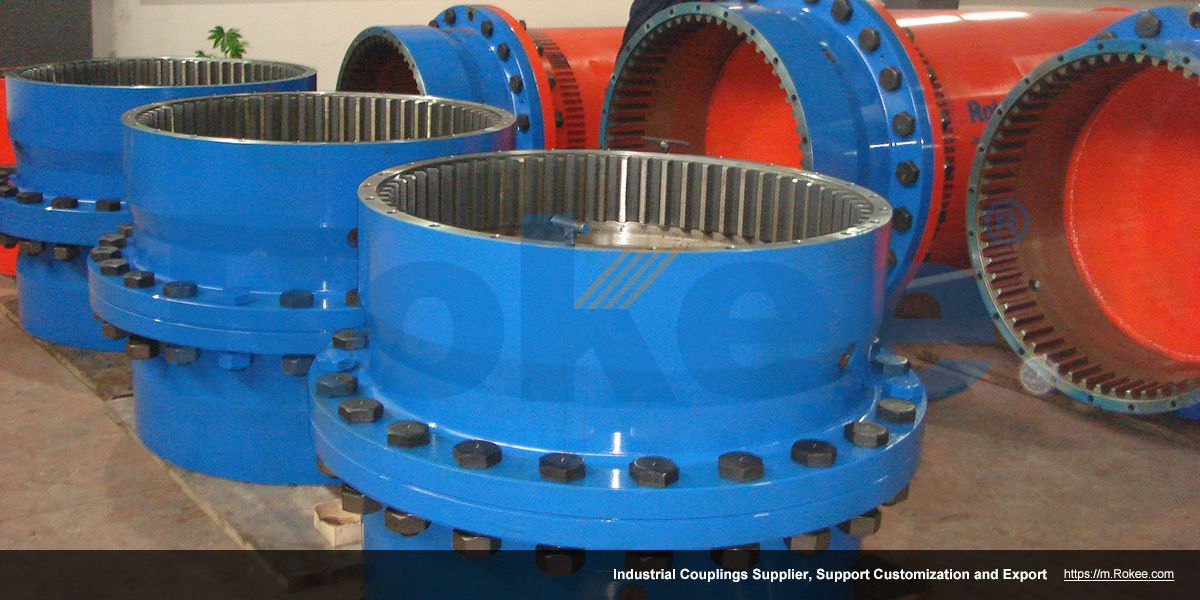
Flexible Gear Couplings
Rokee is a chinese Flexible Gear Couplings Manufacturer, provide Flexible Gear Couplings processing and customization services, Over the years, with excellent quality, we have been continuously providing many coupling products of various categories and uses complying with multiple standards and a full range of services, from the Flexible Gear Couplings selection to final installation and operation, for the industry fields of ferrous metallurgy, nuclear power, gas turbine, wind power, ropeway construction, lifting transportation, general equipment, etc. We strictly comply with quality system requirements and implement the whole process control to become a reliable and trustworthy partner of customers.
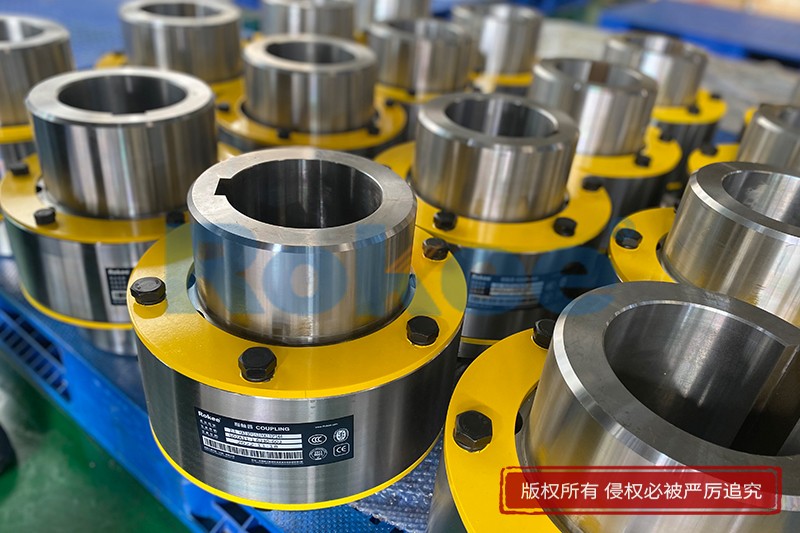
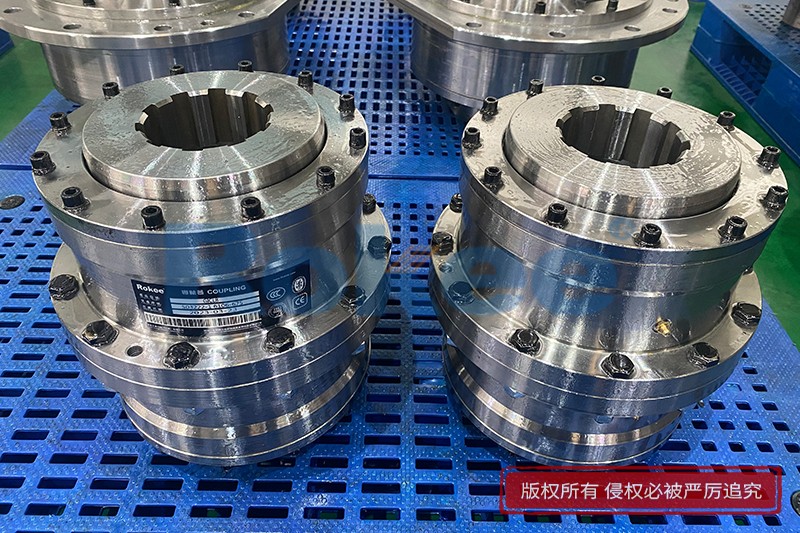
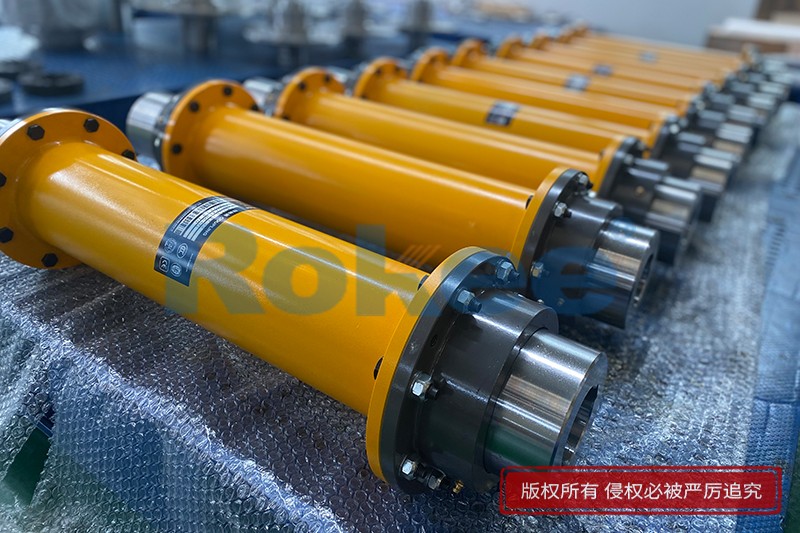
Providing customers with better Flexible Gear Couplings is always our driving force. Our aim is to transmit power for you and generate value for both of us. We look forward to joining you and becoming your partner for common progress.
-
![RODA Flexible Gear Couplings,RODA Basic Drum Gear Coupling]()
RODA Basic Drum Gear Coupling
The RODA Drum Gear Coupling is the basic type of ROD series coupling, suitable for most situations where the compensation of transmission distance and motion position does not require special increase.View More -
![RODT Flexible Gear Couplings,RODT Drum Gear Coupling With Intermediate Tube]()
RODT Drum Gear Coupling With Intermediate Tube
The RODT Drum Gear Coupling is an extended type of ROD series coupling, suitable for increasing transmission distance.View More -
![RODX Flexible Gear Couplings,RODX Drum Gear Coupling With Intermediate Shaft]()
RODX Drum Gear Coupling With Intermediate Shaft
RODX Drum Gear Coupling is an extended type of ROD series coupling with a floating shaft design in the middle, suitable for increasing transmission distance.View More -
![RODP Flexible Gear Couplings,RODP Drum Gear Coupling With Brake Disc]()
RODP Drum Gear Coupling With Brake Disc
The RODP Drum Gear Coupling is a type of ROD series coupling with a brake disc, suitable for transmission situations where braking needs to be used in conjunction with disc brakes.View More -
![RODF Flexible Gear Couplings,RODF Drum Gear Coupling With Split Brake Discs]()
RODF Drum Gear Coupling With Split Brake Discs
The RODF Drum Gear Coupling is a type of ROD series coupling with split brake discs, suitable for transmission situations where there is braking demand and the braking position changes when used in conjunction with disc brakes.View More -
![RODW Flexible Gear Couplings,RODW Drum Gear Coupling With Brake Wheel]()
RODW Drum Gear Coupling With Brake Wheel
The RODW Drum Gear Coupling is a type of ROD series coupling with brake wheels, suitable for transmission situations where braking needs to be used in conjunction with wheel brakes.View More -
![RODU Flexible Gear Couplings,RODU Drum Gear Coupling With Brake Wheel]()
RODU Drum Gear Coupling With Brake Wheel
The RODU Drum Gear Coupling is another type of ROD series coupling with brake wheels, suitable for transmission situations where braking needs to be used in conjunction with wheel brakes and applied to one end of the axle, achieving smoother and more reliable braking performance.View More -
![RODV Flexible Gear Couplings,RODV Vertical Installation Drum Gear Coupling]()
RODV Vertical Installation Drum Gear Coupling
The RODV Drum Gear Coupling is a vertical installation type of the ROD series coupling, suitable for transmission situations that require vertical transmission torque.View More -
![RODM Flexible Gear Couplings,RODM Torsion Protection Drum Gear Coupling]()
RODM Torsion Protection Drum Gear Coupling
The RODM Drum Gear Coupling is a torque setting form of the ROD series coupling. By adjusting relevant components, the maximum transmission torque can be easily set within a certain range. Suitable for shafting transmission situations that require safe torque operation to protect important machine components from excessive damage.View More -
![GICL Flexible Gear Couplings,GICL Wide Type Drum Gear Coupling]()
GICL Wide Type Drum Gear Coupling
GICL Drum Gear Coupling has larger inner teeth width, which can transfer torque while compensating for larger axial displacement.View More -
![GICLZ Flexible Gear Couplings,GICLZ Drum Gear Coupling With Intermediate Shaft]()
GICLZ Drum Gear Coupling With Intermediate Shaft
Half of the GICLZ Drum Gear Coupling adopts a non-toothed semi-coupling sleeve structure, which is usually connected in pairs or used in occasions with small angular displacement.View More -
![GIICL Flexible Gear Couplings,GIICL Narrow Type Drum Gear Coupling]()
GIICL Narrow Type Drum Gear Coupling
GIICL Drum Gear Coupling has small inner teeth width, which can transfer torque while compensating for small axial displacement. Also, its structure is compact and the moment of inertia is low.View More -
![GIICLZ Flexible Gear Couplings,GIICLZ Drum Gear Coupling With Intermediate Shaft]()
GIICLZ Drum Gear Coupling With Intermediate Shaft
Half of the GIICLZ Drum Gear Coupling adopts a non-toothed semi-coupling sleeve structure, which is usually connected in pairs or used in occasions with small angular displacement. Also, its structure is compact and the moment of inertia is low.View More -
![GCLD Flexible Gear Couplings,GCLD Drum Gear Coupling For Motor]()
GCLD Drum Gear Coupling For Motor
GCLD Drum Gear Coupling is generally used for direct connection with the motor, so it generally has a higher speed and compact structure.View More -
![NGCL Flexible Gear Couplings,NGCL Drum Gear Coupling With Brake Wheel]()
NGCL Drum Gear Coupling With Brake Wheel
NGCL Drum Gear Coupling is designed with a brake wheel, suitable for situations where braking is required.View More -
![NGCLZ Flexible Gear Couplings,NGCLZ Drum Gear Coupling With Brake Wheel]()
NGCLZ Drum Gear Coupling With Brake Wheel
NGCLZ Drum Gear Coupling is designed with a brake wheel, suitable for situations where braking is required. Half of its structure adopts a semi-coupling sleeve design, with smaller angular displacement compensation but more stable braking.View More -
![WG Flexible Gear Couplings,WG Drum Gear Coupling]()
WG Drum Gear Coupling
The overall characteristics of WG Drum Gear Coupling are similar to those of other drum gear couplings, but with a larger modulus design, which can generally transmit greater torque.View More -
![WGZ Flexible Gear Couplings,WGZ Drum Gear Coupling With Brake Wheel]()
WGZ Drum Gear Coupling With Brake Wheel
WGZ Drum Gear Coupling is designed with a brake wheel, suitable for shoe type braking.View More -
![WGP Flexible Gear Couplings,WGP Drum Gear Coupling With Brake Discs]()
WGP Drum Gear Coupling With Brake Discs
WGP Drum Gear Coupling is designed with a brake disc, suitable for disc type braking.View More -
![WGT Flexible Gear Couplings,WGT Drum Gear Coupling With Indirect Tube]()
WGT Drum Gear Coupling With Indirect Tube
WGT Drum Gear Coupling is designed with indirect tube, suitable for long distance torque transfer.View More -
![WGC Flexible Gear Couplings,WGC Vertical Installation Drum Gear Coupling]()
WGC Vertical Installation Drum Gear Coupling
WGC Drum Gear Coupling is specially designed for situations where vertical transmission is required, suitable for some vertical transmission systems.View More -
![WGJ Flexible Gear Couplings,WGJ Drum Gear Coupling With Intermediate Shaft]()
WGJ Drum Gear Coupling With Intermediate Shaft
WGJ Drum Gear Coupling is designed with intermediate shaft, suitable for long distance torque transmission, and some are equipped with axial buffers.View More
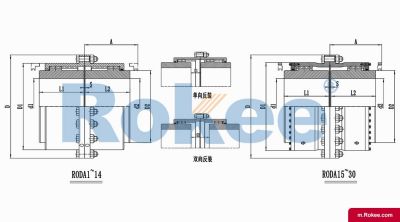
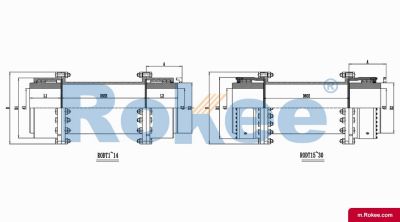
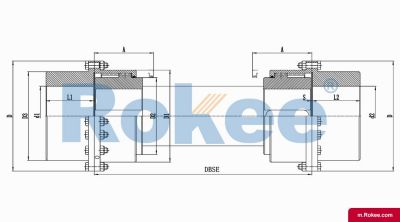
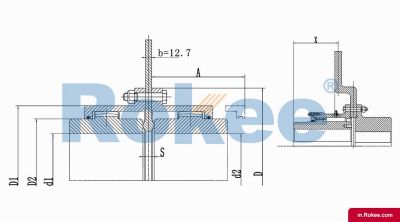
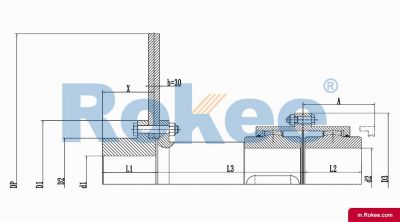
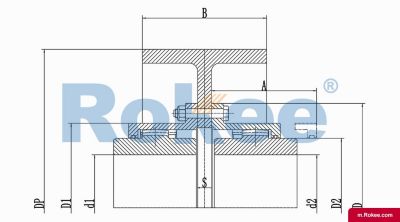
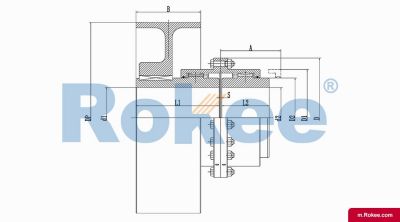
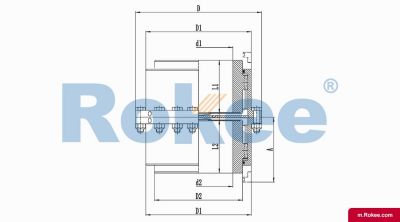
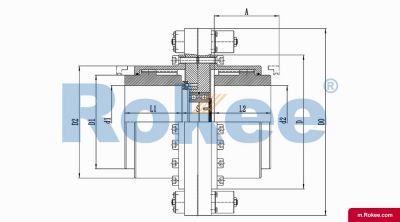
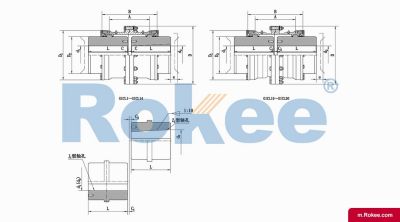
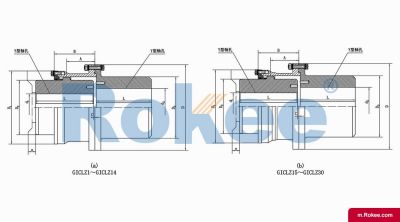
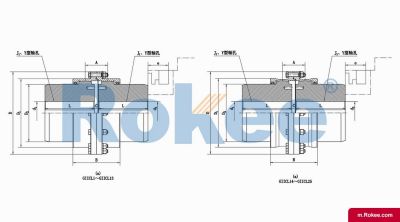
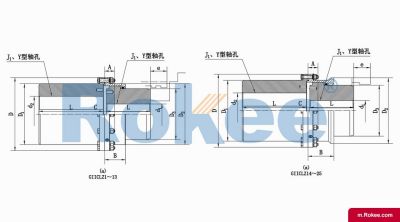
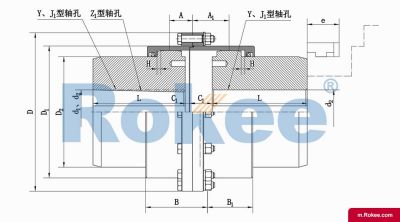
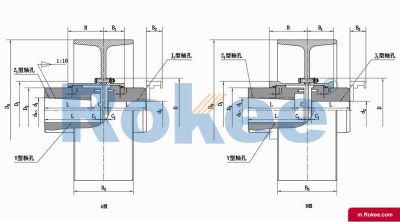
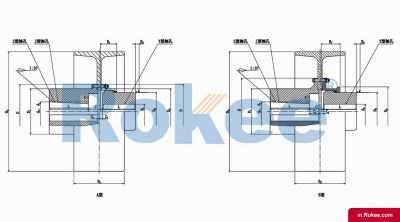
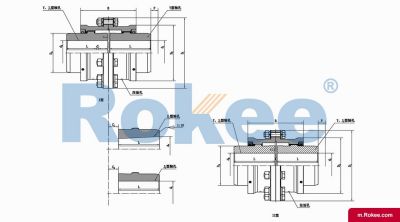
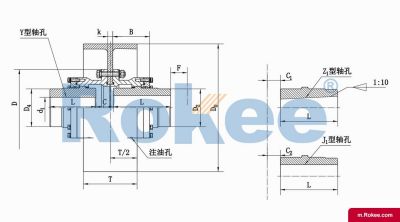
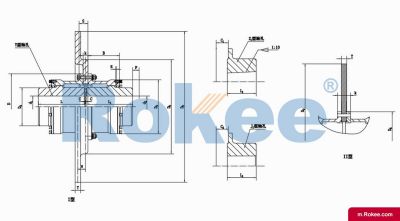
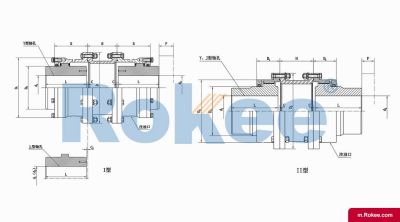
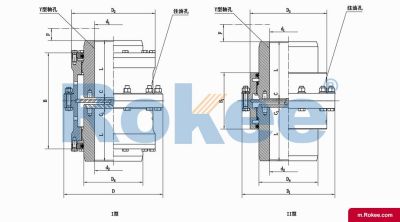
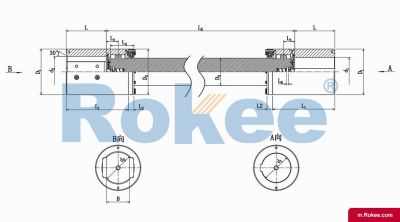
Flexible gear coupling is a type of flexible coupling that transmits torque through gear meshing and allows for a certain relative displacement between the two shafts. This type of coupling combines the displacement compensation capability of flexible couplings with the high torque transmission characteristics of toothed couplings, and is therefore widely used in various situations that require compensation for inter shaft displacement and high torque transmission.
Flexible toothed couplings typically consist of two inner sleeves with external teeth, two outer sleeves with internal teeth and flanges, and connecting bolts. The number of teeth on the inner and outer sleeves is equal, and the tooth profile is involute. In order to achieve compensation performance for the axis offset of the two connected shafts, the gear pair has a large backlash. In addition, in order to improve the performance of the gear coupling, a drum shaped gear coupling has been designed, which can avoid edge contact in the case of offset between the two axes, make the load distribution uniform, and increase the compensation ability for the deviation angle.
Function Characteristics
Displacement compensation capability: Flexible gear couplings have excellent displacement compensation capabilities, including axial, radial, and angular displacements. This enables it to maintain stable power transmission in transmission systems with inter axis offset.
High torque transmission: Due to the use of gear meshing to transmit torque, flexible gear couplings can withstand large torques and are suitable for heavy-duty and high-speed operation.
Good lubrication performance: The design of drum shaped teeth improves the contact state of the tooth surface, which is conducive to the distribution and storage of lubricating oil, thereby improving the service life and transmission efficiency of the coupling.
Compact structure: The flexible toothed coupling has a relatively compact structure, occupies less space, and is easy to install and maintain.
Flexible gear couplings are widely used in various transmission systems that require compensation for inter shaft displacement and high torque transmission, such as wind turbines, heavy machinery, ships, automobiles, etc. Especially in the field of wind power generation, flexible toothed couplings are used to connect the main shaft and gearbox, ensuring the stability and reliability of power transmission.
Precautions
Lubrication: In order to ensure the normal operation and prolong the service life of the flexible gear coupling, it is necessary to lubricate it regularly. The type and replacement cycle of lubricating oil should be determined according to the specific usage environment and working conditions.
Installation accuracy: Although the flexible toothed coupling has a certain displacement compensation capability, it is still necessary to ensure that the axes of the two shafts are aligned as much as possible during installation to reduce unnecessary wear and vibration.
Regular inspection: Regularly inspecting and maintaining flexible gear couplings to promptly identify and address potential issues can help ensure their long-term stable operation.
Flexible gear coupling is a powerful, compact, and widely applicable transmission device. Under the premise of correct selection, installation, and maintenance, it can effectively improve the performance and reliability of the transmission system.
In the realm of mechanical power transmission, flexible gear couplings stand as indispensable components that bridge the gap between driving and driven shafts, addressing the universal challenge of shaft misalignment while ensuring efficient torque delivery across diverse industrial systems. Unlike rigid couplings that demand flawless shaft alignment and offer no tolerance for operational deviations, flexible gear couplings combine the robust torque-carrying capacity of gear mechanisms with engineered flexibility, making them a cornerstone of heavy-duty and precision-driven machinery alike.
At its core, the flexible gear coupling relies on a meticulously crafted mechanical structure that balances strength, flexibility, and wear resistance, with every component engineered to work in tandem to transmit torque and accommodate misalignment simultaneously. The fundamental assembly consists of two hub units, each fitted with external gear teeth, and one or two sleeve components equipped with internal gear teeth that mesh seamlessly with the external teeth on the hubs. The hubs are securely mounted onto the driving and driven shafts via keyways, interference fits, or clamping mechanisms, creating a stable connection that prevents slippage even under extreme torsional loads. The defining feature that grants flexibility to this coupling type lies in the tooth profile design: most high-performance flexible gear couplings feature crowned external teeth on the hubs, a curved profile that replaces the traditional straight-tooth configuration. This crowned tooth design creates a larger contact area between the meshing internal and external teeth, allowing for controlled angular, radial, and axial movement between the shafts without compromising torque transmission efficiency. Additionally, the coupling is often enclosed within a protective housing or sealed with gaskets to retain lubrication, prevent the ingress of dust, moisture, and abrasive contaminants, and shield the internal gear components from premature wear and corrosion. The structural simplicity of flexible gear couplings belies their engineering sophistication; there are no fragile elastic elements or complex linkages, meaning the assembly can withstand heavy shock loads and prolonged operational stress without catastrophic failure, a trait that sets them apart from many other flexible coupling variants.
The performance characteristics of flexible gear couplings are a direct product of their structural design, making them uniquely suited for demanding operational environments where reliability and durability are non-negotiable. Foremost among these traits is exceptional torque transmission capability: the gear-to-gear meshing mechanism enables these couplings to handle extremely high torque loads, even in compact physical dimensions, making them ideal for heavy machinery where space is limited but power transfer demands are intense. Unlike elastomeric flexible couplings that rely on rubber or plastic components to absorb misalignment, flexible gear couplings use metal-on-metal contact, which delivers exceptional torsional stiffness and minimal backlash. This low backlash ensures precise rotational synchronization between shafts, a critical attribute for applications requiring consistent speed and positional accuracy, such as industrial conveyors, milling equipment, and power generation turbines. Another key performance advantage is superior misalignment compensation; the crowned tooth design allows the coupling to accommodate angular misalignment, parallel radial offset, and axial end float simultaneously, addressing issues that arise from manufacturing tolerances, thermal expansion, operational vibration, and foundation settlement. This ability to mitigate misalignment not only maintains efficient power transmission but also reduces excessive stress on connected shafts, bearings, and gearboxes, significantly extending the service life of the entire drive system.
Flexible gear couplings also exhibit remarkable resilience to harsh operating conditions, withstanding wide temperature fluctuations, heavy mechanical shock, and continuous high-speed rotation. The all-metal construction (typically high-grade alloy steel or carbon steel, heat-treated for enhanced hardness and wear resistance) ensures stability under extreme thermal loads, avoiding the degradation and failure common to couplings with non-metallic components. While regular lubrication is required to maintain smooth meshing and minimize friction between gear teeth, this maintenance demand is offset by the coupling’s long service life and resistance to fatigue. Furthermore, these couplings offer consistent performance across a broad range of rotational speeds, from low-speed, high-torque heavy machinery to high-speed turbomachinery, adapting seamlessly to variable operational demands without compromising efficiency or structural integrity. Unlike some flexible coupling types that suffer from reduced performance under fluctuating loads, flexible gear couplings maintain stable torque delivery and misalignment tolerance regardless of load variations, making them a versatile choice for dynamic industrial processes.
Classifying flexible gear couplings is primarily based on structural variations, misalignment compensation capabilities, and application-specific design modifications, with each category tailored to address unique operational requirements. The most fundamental distinction is between single-engagement and double-engagement flexible gear couplings. Single-engagement models feature a single internal gear sleeve meshing with two external gear hubs, offering compact dimensions and moderate misalignment compensation, suitable for applications with limited installation space and minor shaft deviations. Double-engagement configurations incorporate two separate internal gear sleeves connected by a central spacer or flange, providing enhanced flexibility and greater misalignment tolerance, making them the preferred choice for heavy-duty systems with significant shaft offset or angular deviation. This dual-sleeve design also simplifies installation and maintenance, as it allows for easy access to gear teeth for lubrication and inspection without full disassembly of the drive system.
Another key classification is based on tooth profile and load-bearing design, distinguishing between standard straight-tooth and crowned-tooth flexible gear couplings. Straight-tooth models feature a simpler manufacturing process and lower production complexity, with adequate performance for light to moderate loads and minimal misalignment; however, their limited contact area and restricted movement make them less suitable for heavy-duty or high-precision applications. Crowned-tooth couplings, by contrast, are engineered for maximum performance, with the curved tooth profile distributing load evenly across the meshing surfaces, reducing contact stress and enabling greater misalignment accommodation. This design also minimizes edge wear and pitting, common failure modes in straight-tooth couplings under heavy loads, further boosting durability and operational longevity. Additionally, flexible gear couplings can be categorized by specialized design adaptations, such as spacer-type couplings for long shaft spans, brake wheel-integrated couplings for applications requiring braking functionality, and flanged couplings for enhanced axial stability. Each variant retains the core gear-based flexibility and torque capacity of the standard design while incorporating targeted modifications to meet the unique demands of specific industrial scenarios, ensuring versatility across countless mechanical setups.
The versatility and robust performance of flexible gear couplings translate to an extensive range of industrial applications, spanning nearly every sector that relies on mechanical power transmission. In heavy manufacturing and metallurgy, these couplings are widely used in rolling mills, forging presses, extrusion machines, and metal processing equipment, where they handle extreme torque loads, absorb operational shock, and compensate for the significant shaft misalignment common in large-scale industrial machinery. Their ability to withstand continuous heavy use and harsh workshop conditions makes them irreplaceable in these high-stress environments, where downtime due to component failure can result in substantial production losses. In the mining and quarrying industry, flexible gear couplings power crushers, conveyors, hoists, and drilling equipment, operating reliably in dusty, abrasive, and high-vibration settings that would quickly damage less durable coupling types. The sealed, rugged construction prevents contamination from mining debris and ensures consistent performance even in the most demanding off-site operational conditions.
The energy and power generation sector also heavily relies on flexible gear couplings, integrating them into turbines, generators, compressors, and pump systems. Whether in thermal power plants, hydroelectric facilities, or wind energy installations, these couplings facilitate efficient power transfer between rotating components, compensate for thermal expansion-induced shaft movement, and maintain operational stability under variable load conditions. Their high-speed compatibility and torsional precision make them ideal for turbomachinery, where even minor power loss or misalignment can reduce energy efficiency and compromise system performance. In marine and offshore engineering, flexible gear couplings are employed in ship propulsion systems, deck machinery, and offshore drilling equipment, where they resist saltwater corrosion, withstand dynamic marine vibrations, and accommodate shaft movement caused by wave action and vessel hull flexing. The corrosion-resistant alloy materials and sealed design ensure reliable performance in harsh marine environments, meeting the stringent durability requirements of maritime operations.
Beyond heavy industry, flexible gear couplings find critical use in general manufacturing, transportation, and material handling systems, powering conveyor belts, packaging machinery, printing presses, and automotive assembly lines. Their compact design and precise torque delivery make them suitable for both large-scale production lines and smaller precision machinery, offering a balance of strength and flexibility that adapts to diverse operational needs. In agricultural machinery, these couplings drive tractors, harvesters, and irrigation equipment, enduring outdoor exposure, variable load conditions, and the mechanical stress of farm operations. Additionally, they are utilized in construction machinery, such as excavators, mixers, and lifting equipment, where they provide reliable power transmission while accommodating the frequent movement and vibration inherent to construction site operations.
The enduring popularity of flexible gear couplings stems from their unique ability to merge the strength of rigid gear connections with the practical flexibility needed to address real-world mechanical challenges. Unlike specialized couplings that excel in only one area—whether high torque, misalignment tolerance, or high-speed operation—flexible gear couplings deliver a holistic performance profile that meets the multifaceted demands of modern industrial machinery. Their sturdy construction minimizes maintenance requirements and reduces the risk of unexpected failure, lowering long-term operational costs and enhancing overall system reliability. While they require periodic lubrication to preserve gear tooth integrity and smooth operation, this routine upkeep is minimal compared to the maintenance demands of more complex flexible coupling designs, making them a cost-effective and practical choice for engineers and maintenance teams alike.
As mechanical engineering continues to evolve toward more efficient, durable, and adaptable power transmission systems, the role of flexible gear couplings remains as vital as ever. Ongoing advancements in material science, tooth profile optimization, and sealing technology are further enhancing their performance, increasing load capacity, extending service life, and expanding their applicability to even more extreme operational environments. From small-scale precision equipment to massive industrial heavy machinery, flexible gear couplings continue to serve as a reliable, high-performance solution for connecting rotating shafts, compensating for misalignment, and ensuring seamless power transmission. Their enduring relevance in the industrial landscape is a testament to their superior design, exceptional performance, and unparalleled versatility, solidifying their status as a foundational component in the field of mechanical power transmission.
« Flexible Gear Couplings » Update Date: 2026/3/6
URL: https://m.rokee.com/tags/flexible-gear-couplings.html