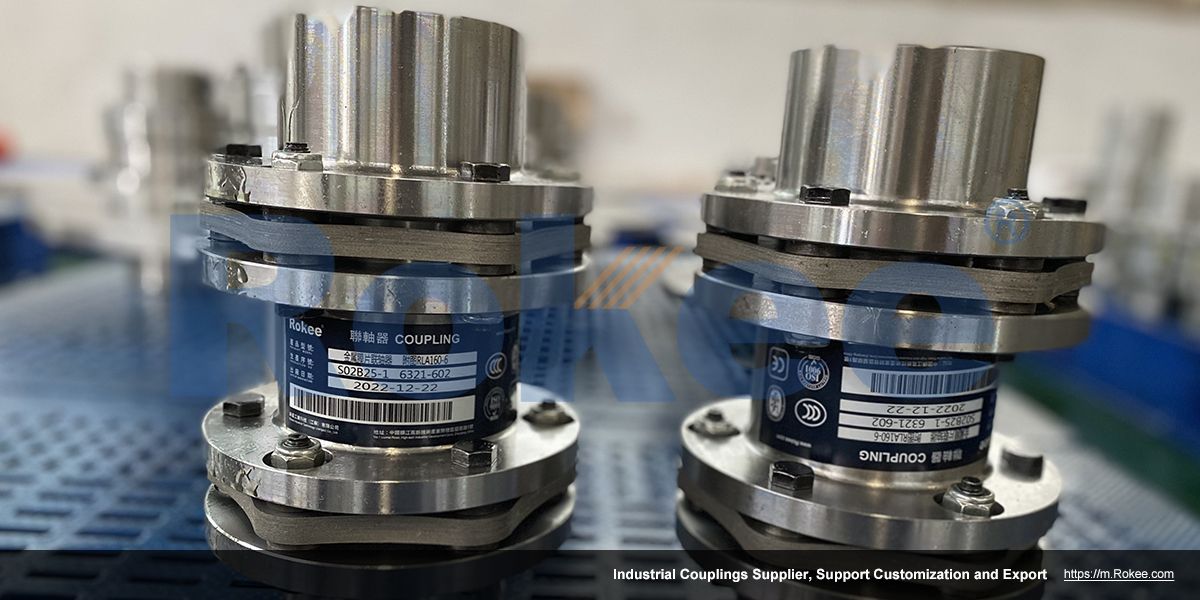
Single Diaphragm Couplings
Rokee is a chinese Single Diaphragm Couplings Manufacturer, provide Single Diaphragm Couplings processing and customization services, Over the years, with excellent quality, we have been continuously providing many coupling products of various categories and uses complying with multiple standards and a full range of services, from the Single Diaphragm Couplings selection to final installation and operation, for the industry fields of ferrous metallurgy, nuclear power, gas turbine, wind power, ropeway construction, lifting transportation, general equipment, etc. We strictly comply with quality system requirements and implement the whole process control to become a reliable and trustworthy partner of customers.
Providing customers with better Single Diaphragm Couplings is always our driving force. Our aim is to transmit power for you and generate value for both of us. We look forward to joining you and becoming your partner for common progress.
-
![RLM Single Diaphragm Couplings,RLM Standard Single Section Small Metal Diaphragm Coupling]()
RLM Standard Single Section Small Metal Diaphragm Coupling
The RLM standard single section small metal diaphragm coupling is suitable for various industrial process pumps and small torque working situations with a working speed not exceeding 5000rpm, and cannot compensate for radial errors.View More -
![RLMD Single Diaphragm Couplings,RLMD Standard Double Section Small Metal Diaphragm Coupling]()
RLMD Standard Double Section Small Metal Diaphragm Coupling
The RLMD standard double section small metal diaphragm coupling is suitable for various industrial process pumps and small torque working occasions with a working speed not exceeding 5000rpm.View More -
![RLA Single Diaphragm Couplings,RLA Standard Single Section Metal Diaphragm Coupling]()
RLA Standard Single Section Metal Diaphragm Coupling
The classic design of metal flexible diaphragm couplings,reliable choice for medium to low speed applications,but it cannot compensate for radial deviation.View More -
![RLAD Single Diaphragm Couplings,RLAD Standard Double Section Metal Diaphragm Coupling]()
RLAD Standard Double Section Metal Diaphragm Coupling
The classic design of metal flexible diaphragm couplings is a reliable choice for medium to low speed applications.View More -
![RLAR Single Diaphragm Couplings,RLAR Single Shaft Sleeve Reverse-mounting Metal Diaphragm Coupling]()
RLAR Single Shaft Sleeve Reverse-mounting Metal Diaphragm Coupling
Single side shaft sleeve reverse installation design, suitable for occasions with limited shaft head distance.View More -
![RLARD Single Diaphragm Couplings,RLARD Double Shaft Sleeve Reverse-mounting Metal Diaphragm Coupling]()
RLARD Double Shaft Sleeve Reverse-mounting Metal Diaphragm Coupling
The double-sided shaft sleeve reverse installation design is also applicable in situations where the distance from the shaft head is limited or the additional bending moment is smaller.View More -
![RLAF Single Diaphragm Couplings,RLAF Large & Small Shaft Mounted Metal Diaphragm Coupling]()
RLAF Large & Small Shaft Mounted Metal Diaphragm Coupling
The size difference design of the bilateral shaft sleeve is suitable for situations where the diameter difference between the two ends of the shaft is significant.View More -
![RLAT Single Diaphragm Couplings,RLAT Super Long Wheelbase Metal Diaphragm Coupling]()
RLAT Super Long Wheelbase Metal Diaphragm Coupling
Adopting an intermediate shaft design, suitable for ultra long shaft spacing power transmission applications.View More -
![RLQA Single Diaphragm Couplings,RLQA No Flange Quick Installation Metal Diaphragm Coupling]()
RLQA No Flange Quick Installation Metal Diaphragm Coupling
Suitable for various industrial process pumps, fans, and other medium to low speed applications, with a maximum speed generally not exceeding 25000 rpm. It meets the requirements of API610/ISO14691 and is one of the first products for API applications.View More -
![RLQF Single Diaphragm Couplings,RLQF Flange Type Quick Installation Metal Diaphragm Coupling]()
RLQF Flange Type Quick Installation Metal Diaphragm Coupling
Suitable for drum pressure fans, turbine compressors, and other high speed applications, with a maximum speed of up to 35000rpm.View More -
![RLQU Single Diaphragm Couplings,RLQU Improved Flange Quick Installation Metal Diaphragm Coupling]()
RLQU Improved Flange Quick Installation Metal Diaphragm Coupling
The improved RLQF has smaller additional bending moments and better performance. Suitable for drum pressure fans, turbine compressors, and other high speed applications.View More -
![RLHD Single Diaphragm Couplings,RLHD High Speed Metal Diaphragm Coupling]()
RLHD High Speed Metal Diaphragm Coupling
Suitable for higher speed applications, it also adopts a flexible component integrated assembly design, with a maximum speed of up to 42000rpm.View More -
![JMI Single Diaphragm Couplings,JMI Single Diaphragm Coupling With Counterbore]()
JMI Single Diaphragm Coupling With Counterbore
JMI metal diaphragm coupling adopts the single-piece design, suitable for short distance transmission. Besides, the semi-coupling sleeve at one end has a counterbore, facilitating the fixing of the shaft end.View More -
![JMIJ Single Diaphragm Couplings,JMIJ Double Diaphragm Coupling With Intermediate Shaft]()
JMIJ Double Diaphragm Coupling With Intermediate Shaft
JMIJ metal diaphragm coupling is designed with intermediate shaft, suitable for long distance transmission. Besides, the semi-coupling sleeve at one end has a counterbore, facilitating the fixing of the shaft end.View More -
![JMII Single Diaphragm Couplings,JMII Single Diaphragm Coupling Without Counterbore]()
JMII Single Diaphragm Coupling Without Counterbore
JMII metal diaphragm coupling also adopts the single-piece design but has no counterbore, suitable for short distance transmission, with more compact structure.View More -
![JMIIJ Single Diaphragm Couplings,JMIIJ Double Diaphragm Coupling With Intermediate Shaft]()
JMIIJ Double Diaphragm Coupling With Intermediate Shaft
JMIIJ Diaphragm Coupling is designed with intermediate shaft, suitable for long distance transmission. Besides, the semi-coupling sleeve at both ends have no counterbore.View More
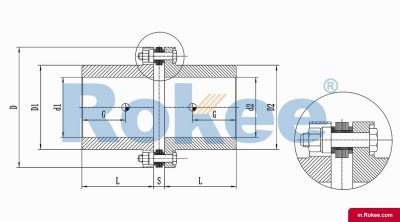
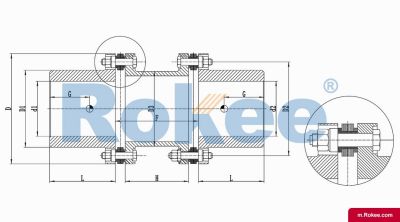
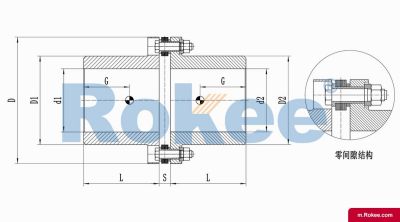
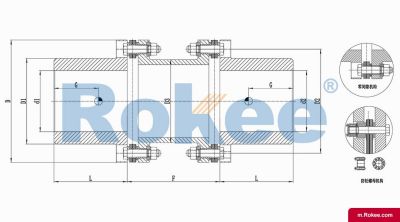
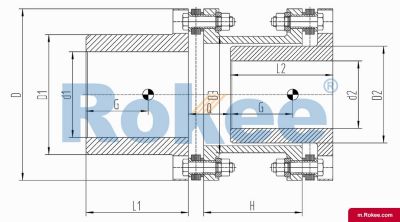
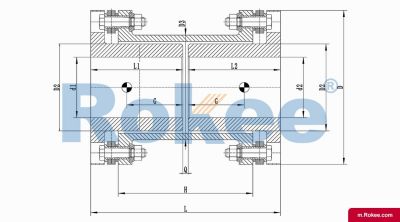
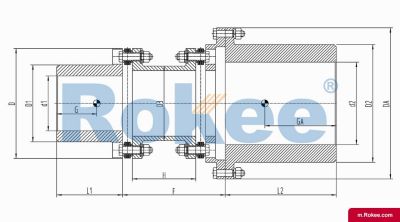
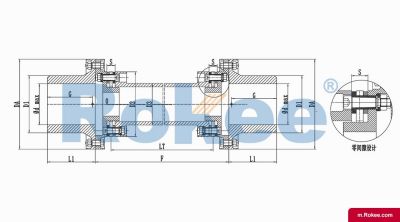
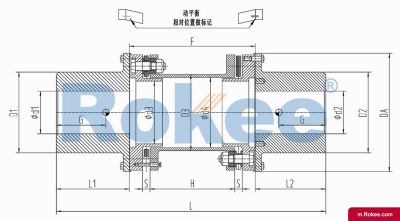
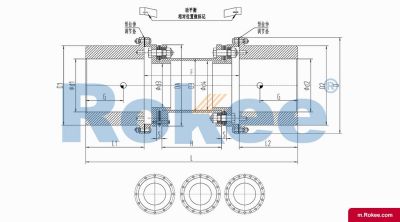
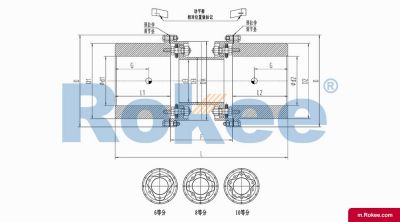
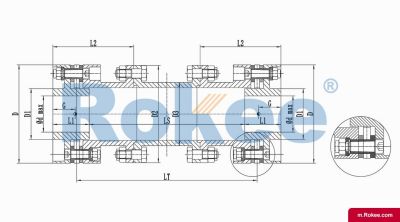
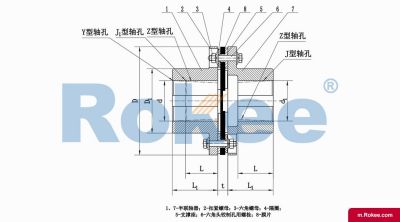
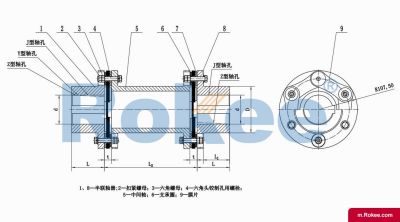
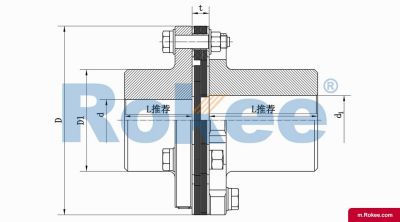
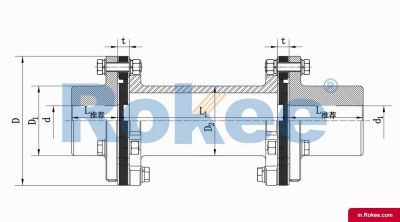
Single diaphragm coupling is a high-performance metal elastic element flexible coupling that plays an important role in modern industrial transmission systems. As a precision mechanical component connecting two shafts, it compensates for various deviations between the shafts through the elastic deformation of metal diaphragms, while transmitting torque and motion.
The core structure of a single diaphragm coupling is relatively simple but intricately designed:
Basic composition: It mainly consists of an elastic diaphragm component and two shaft sleeves (or hubs). The diaphragm is usually made of high-strength stainless steel sheet and is fixed to the two halves of the coupling through precision bolts staggered.
Diaphragm design: Diaphragm can be divided into linkage type and integral pieces of different shapes. Each group of diaphragms is composed of several ultra-thin metal sheets stacked together, which ensures flexibility and provides sufficient strength. The membrane is usually processed into a special petal shape or with hollow patterns, which can optimize stress distribution and improve fatigue life.
Connection method: The connection between the shaft sleeve and the equipment shaft can take various forms, including keyway connection, clamping connection, or cone sleeve connection, to meet different installation requirements and shaft end forms. In terms of material selection, shaft sleeves are often made of aluminum alloy or steel, balancing lightweight and high-strength requirements.
Compared with the double diaphragm coupling, the single diaphragm type has a more compact structure and fewer parts, which makes it more advantageous in space limited applications. However, its ability to compensate for complex deviations is relatively weak.
The single diaphragm coupling achieves its core function through the elastic deformation of the metal diaphragm:
Torque transmission: When the driving shaft rotates, the torque is transmitted to the diaphragm through one shaft sleeve, and then transmitted to the other shaft sleeve through the diaphragm, ultimately driving the driven shaft to rotate. During the transmission of torque, the diaphragm will undergo slight shear deformation, which is a recoverable elastic deformation.
Deviation compensation: It can effectively compensate for three basic types of shaft system deviations:
Axial deviation: When there is displacement between the two axes in the axial direction, the diaphragm will undergo conical deformation
Radial deviation: Faced with the situation where the two axis centerlines are parallel but not overlapping, the diaphragm exhibits a bending deformation state
Angular deviation: When the two axis centerlines form an angle, one side of the diaphragm is under tension while the other side is under pressure
It is worth noting that the ability of a single diaphragm coupling to compensate for composite deviations (with multiple deviations present simultaneously) is relatively limited. It is generally recommended to control angular deviations within 1.5 degrees and small axial/radial deviations. When the deviation exceeds the allowable range, excessive alternating stress will be generated in the diaphragm, significantly reducing its service life.
The single diaphragm coupling has a series of outstanding performance characteristics, making it the preferred choice in many industrial applications:
Gap free transmission: The direct connection between metals ensures zero rotational clearance, which is crucial for servo systems that require precise positioning and can achieve seamless motion transmission.
Maintenance free design: There are no relative sliding parts in the entire transmission process, no need for lubrication and regular maintenance, saving maintenance costs and avoiding lubrication pollution, especially suitable for industries with high cleanliness requirements such as food and medicine.
Environmental adaptability: It can work stably within the extreme temperature range of -80 ℃ to+300 ℃ (depending on the specific material), and is corrosion-resistant and oil resistant, suitable for harsh environments such as chemical and marine industries.
Efficient transmission: The transmission efficiency is as high as 99.86%, with almost no power loss, which is particularly important for high-power transmission and energy-saving applications.
Dynamic performance: Although the shock absorption performance is not as good as that of rubber elastic couplings, it still has certain vibration damping characteristics and can effectively suppress high-frequency vibration transmission.
Precision: It can accurately transmit speed and operate without any slip, and is widely used in precision machinery fields such as CNC machine tools and semiconductor equipment.
In terms of technical parameters, the nominal torque transmission range of a single diaphragm coupling is usually 25-1250N · m, and the allowable speed can reach 15300-1900r/min, which can adapt to various transmission requirements from micro servo motors to large industrial equipment.
With its excellent performance, single diaphragm couplings have been widely used in multiple industrial fields:
General industrial equipment: including shaft connections for rotating equipment such as pumps (especially high-power chemical pumps), fans, compressors, generators, etc. It performs particularly well in key equipment such as boiler feed pumps and turbine drive devices.
Precision machinery: widely used in CNC machine tools, laser processing equipment, precision measuring instruments and other applications that require high-precision transmission to ensure the accuracy of motion control.
Process industry: Production line equipment in industries such as petrochemicals, pharmaceuticals, and food processing is highly favored due to its corrosion resistance and maintenance free characteristics.
Special environment: In special occasions such as nuclear power plants, ship propulsion systems, aerospace auxiliary equipment, etc., their reliability and environmental adaptability are fully utilized.
Automation equipment: The connection between servo motors, stepper motors, ball screws, encoders, especially for robots, automated production lines, etc. that require high-frequency response and high positioning accuracy.
Selection considerations
Torque requirement: Calculate the rated torque and peak torque that the system needs to transmit, ensuring that the coupling capacity has an appropriate safety margin
Speed range: Check if the allowable speed of the coupling covers the operating speed of the equipment, paying special attention to the critical speed area
Deviation situation: Evaluate the possible axial, radial, and angular deviations of the shaft system, and select a model that matches the compensation capability
Environmental conditions: Consider the influence of environmental factors such as temperature, corrosive media, dust, etc. on material selection
Space limitation: The outer diameter and length of the coupling are determined based on the size of the installation space, and the single diaphragm type is usually more compact
Inertia matching: High dynamic response systems need to pay attention to the impact of the rotational inertia of the coupling on the acceleration performance of the system
Installation precautions
Centering adjustment: even if flexible coupling is used, the shafting centering accuracy should be improved as far as possible, and the deviation should be controlled within 1/3 of the allowable range
Bolt tightening: Use a cross symmetrical method to tighten the bolts in stages, and use a torque wrench to ensure even pre tightening force
Protective measures: Install protective covers for rotating components to ensure safe operation
Trial operation inspection: After the initial operation, the machine should be stopped to check the bolt tightening status, and regular inspections should be conducted during the initial operation
Special treatment: Solid lubricants such as molybdenum disulfide can be applied between the membranes to reduce micro motion wear
Although single diaphragm couplings are generally maintenance free, the following potential issues still need to be addressed:
Abnormal vibration: usually caused by poor alignment, loose bolts, or damaged diaphragms, and should be promptly investigated
Abnormal noise: Possible causes include excessive axial spacing, excessive angular deviation, or speed fluctuations
Diaphragm fracture: often caused by long-term overload or fatigue accumulation, it is necessary to check the load condition and alignment status
Loose connection: Regularly check the fit between the shaft sleeve and the shaft to prevent wear caused by looseness
In terms of maintenance, it is recommended to conduct the following checks regularly:
Visually inspect the membrane for cracks or plastic deformation
Check all fasteners for looseness
Monitor vibration and temperature changes during operation
Regularly review the alignment of the shaft system
Compared to other types of couplings, single diaphragm couplings have unique advantages:
Compared with gear couplings: no relative sliding, no need for lubrication and sealing, no noise and maintenance, can partially replace gear couplings
Compared with elastic couplings, it has higher torsional rigidity, no creep aging problems, and a wider temperature resistance range
Compared with double diaphragm couplings: the structure is simpler and more compact, but the ability to compensate for composite deviations is weaker
Compared with bellows couplings: slightly less torque rigidity but usually stronger load-bearing capacity
The single diaphragm coupling represents the high-performance development direction of modern coupling technology, and its exquisite design and excellent mechanical performance make it occupy an important position in the field of industrial transmission. With the advancement of materials science and manufacturing technology, single diaphragm couplings will continue to develop towards higher torque density, longer lifespan, and more intelligent monitoring in the future, providing reliable shaft connection solutions for mechanical equipment in various industrial fields.
« Single Diaphragm Couplings » Post Date: 2024/5/6
URL: https://m.rokee.com/tags/single-diaphragm-couplings.html