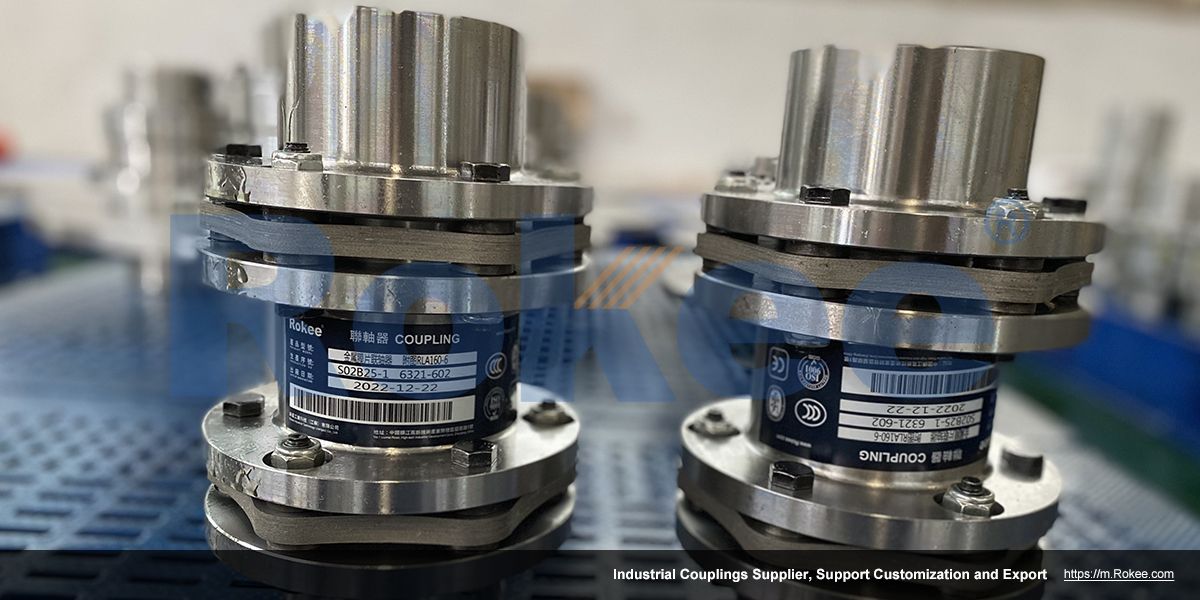
Lamina Couplings
Rokee is a chinese Lamina Couplings Manufacturer, provide Lamina Couplings processing and customization services, Over the years, with excellent quality, we have been continuously providing many coupling products of various categories and uses complying with multiple standards and a full range of services, from the Lamina Couplings selection to final installation and operation, for the industry fields of ferrous metallurgy, nuclear power, gas turbine, wind power, ropeway construction, lifting transportation, general equipment, etc. We strictly comply with quality system requirements and implement the whole process control to become a reliable and trustworthy partner of customers.
Providing customers with better Lamina Couplings is always our driving force. Our aim is to transmit power for you and generate value for both of us. We look forward to joining you and becoming your partner for common progress.
-
![RLM Lamina Couplings,RLM Standard Single Section Small Metal Diaphragm Coupling]()
RLM Standard Single Section Small Metal Diaphragm Coupling
The RLM standard single section small metal diaphragm coupling is suitable for various industrial process pumps and small torque working situations with a working speed not exceeding 5000rpm, and cannot compensate for radial errors.View More -
![RLMD Lamina Couplings,RLMD Standard Double Section Small Metal Diaphragm Coupling]()
RLMD Standard Double Section Small Metal Diaphragm Coupling
The RLMD standard double section small metal diaphragm coupling is suitable for various industrial process pumps and small torque working occasions with a working speed not exceeding 5000rpm.View More -
![RLA Lamina Couplings,RLA Standard Single Section Metal Diaphragm Coupling]()
RLA Standard Single Section Metal Diaphragm Coupling
The classic design of metal flexible diaphragm couplings,reliable choice for medium to low speed applications,but it cannot compensate for radial deviation.View More -
![RLAD Lamina Couplings,RLAD Standard Double Section Metal Diaphragm Coupling]()
RLAD Standard Double Section Metal Diaphragm Coupling
The classic design of metal flexible diaphragm couplings is a reliable choice for medium to low speed applications.View More -
![RLAR Lamina Couplings,RLAR Single Shaft Sleeve Reverse-mounting Metal Diaphragm Coupling]()
RLAR Single Shaft Sleeve Reverse-mounting Metal Diaphragm Coupling
Single side shaft sleeve reverse installation design, suitable for occasions with limited shaft head distance.View More -
![RLARD Lamina Couplings,RLARD Double Shaft Sleeve Reverse-mounting Metal Diaphragm Coupling]()
RLARD Double Shaft Sleeve Reverse-mounting Metal Diaphragm Coupling
The double-sided shaft sleeve reverse installation design is also applicable in situations where the distance from the shaft head is limited or the additional bending moment is smaller.View More -
![RLAF Lamina Couplings,RLAF Large & Small Shaft Mounted Metal Diaphragm Coupling]()
RLAF Large & Small Shaft Mounted Metal Diaphragm Coupling
The size difference design of the bilateral shaft sleeve is suitable for situations where the diameter difference between the two ends of the shaft is significant.View More -
![RLAT Lamina Couplings,RLAT Super Long Wheelbase Metal Diaphragm Coupling]()
RLAT Super Long Wheelbase Metal Diaphragm Coupling
Adopting an intermediate shaft design, suitable for ultra long shaft spacing power transmission applications.View More -
![RLQA Lamina Couplings,RLQA No Flange Quick Installation Metal Diaphragm Coupling]()
RLQA No Flange Quick Installation Metal Diaphragm Coupling
Suitable for various industrial process pumps, fans, and other medium to low speed applications, with a maximum speed generally not exceeding 25000 rpm. It meets the requirements of API610/ISO14691 and is one of the first products for API applications.View More -
![RLQF Lamina Couplings,RLQF Flange Type Quick Installation Metal Diaphragm Coupling]()
RLQF Flange Type Quick Installation Metal Diaphragm Coupling
Suitable for drum pressure fans, turbine compressors, and other high speed applications, with a maximum speed of up to 35000rpm.View More -
![RLQU Lamina Couplings,RLQU Improved Flange Quick Installation Metal Diaphragm Coupling]()
RLQU Improved Flange Quick Installation Metal Diaphragm Coupling
The improved RLQF has smaller additional bending moments and better performance. Suitable for drum pressure fans, turbine compressors, and other high speed applications.View More -
![RLHD Lamina Couplings,RLHD High Speed Metal Diaphragm Coupling]()
RLHD High Speed Metal Diaphragm Coupling
Suitable for higher speed applications, it also adopts a flexible component integrated assembly design, with a maximum speed of up to 42000rpm.View More -
![JMI Lamina Couplings,JMI Single Diaphragm Coupling With Counterbore]()
JMI Single Diaphragm Coupling With Counterbore
JMI metal diaphragm coupling adopts the single-piece design, suitable for short distance transmission. Besides, the semi-coupling sleeve at one end has a counterbore, facilitating the fixing of the shaft end.View More -
![JMIJ Lamina Couplings,JMIJ Double Diaphragm Coupling With Intermediate Shaft]()
JMIJ Double Diaphragm Coupling With Intermediate Shaft
JMIJ metal diaphragm coupling is designed with intermediate shaft, suitable for long distance transmission. Besides, the semi-coupling sleeve at one end has a counterbore, facilitating the fixing of the shaft end.View More -
![JMII Lamina Couplings,JMII Single Diaphragm Coupling Without Counterbore]()
JMII Single Diaphragm Coupling Without Counterbore
JMII metal diaphragm coupling also adopts the single-piece design but has no counterbore, suitable for short distance transmission, with more compact structure.View More -
![JMIIJ Lamina Couplings,JMIIJ Double Diaphragm Coupling With Intermediate Shaft]()
JMIIJ Double Diaphragm Coupling With Intermediate Shaft
JMIIJ Diaphragm Coupling is designed with intermediate shaft, suitable for long distance transmission. Besides, the semi-coupling sleeve at both ends have no counterbore.View More
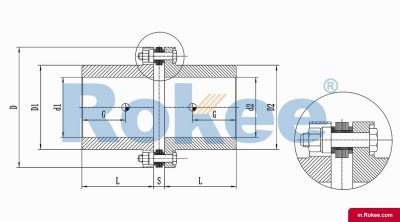
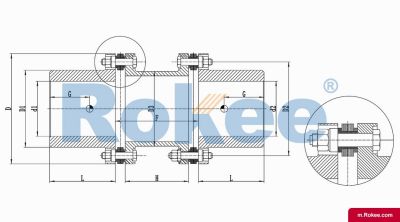
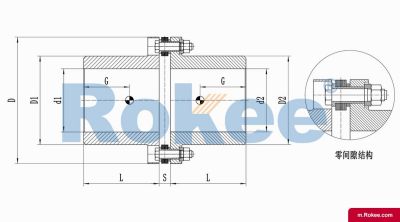
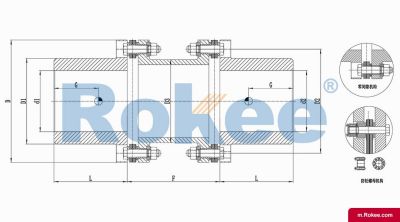
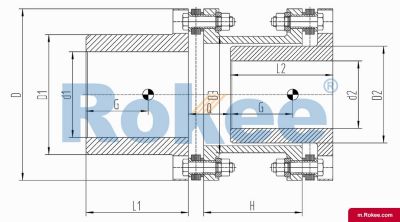
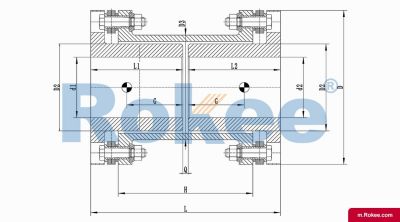
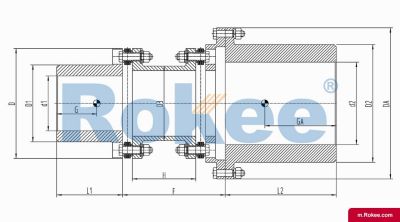
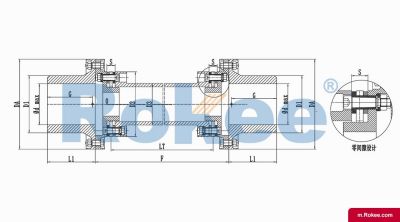
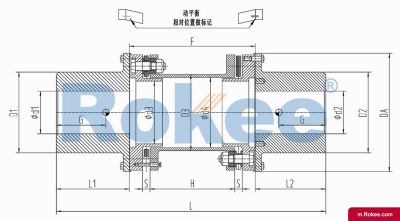
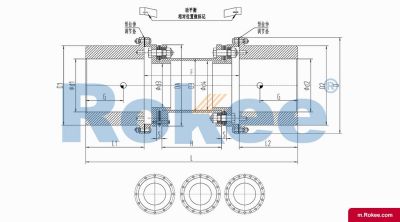
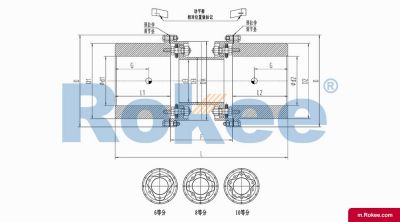
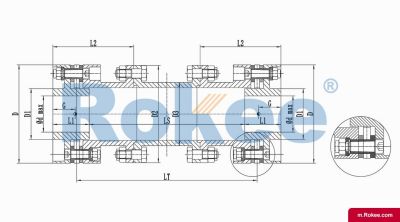
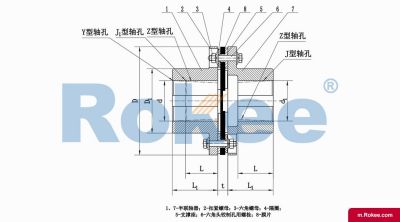
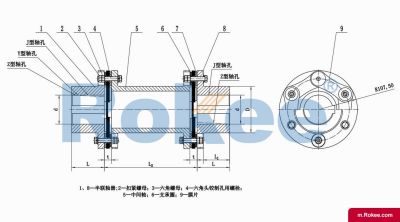
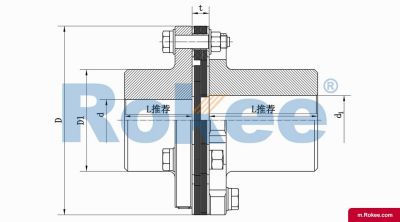
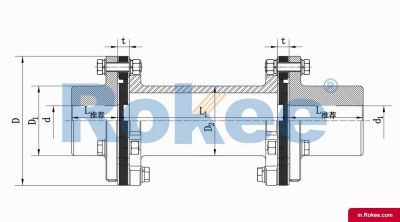
A lamina coupling is a flexible coupling that uses elastic elements to transmit torque, and its core structure consists of multiple metal laminations. These laminations are usually made of high-strength alloy steel or stainless steel materials, which have excellent elasticity and fatigue life. The laminated assembly is carefully arranged and fixed between the two halves of the coupling, forming an elastic connection system capable of withstanding complex loads.
From the perspective of working principle, lamina couplings achieve power transmission and displacement compensation through the elastic deformation of the laminated plates. When the driving shaft rotates, torque is transmitted to the driven shaft through the laminated assembly; When there is radial, axial, or angular deviation between the two axes, the laminations will produce corresponding elastic deformation to absorb these displacements, thereby reducing the additional load on the bearings and equipment. This design enables the lamina coupling to operate stably with a certain degree of centering error, while effectively isolating vibration and impact.
The lamina coupling has several outstanding performance characteristics, making it widely popular in industrial applications:
High torque transmission capability: The metal laminated structure enables it to withstand extremely high torque loads, making it particularly suitable for high-power transmission scenarios. Compared to couplings with rubber or plastic elastic components, lamina couplings can transmit greater torque at the same size.
Excellent displacement compensation capability: Standard lamina couplings allow for radial displacement of 0.5-1.3mm, as well as certain axial and angular deviations. This compensation capability enables it to adapt to issues such as installation errors, displacement caused by thermal expansion, and foundation settlement.
Maintenance free design: Stacked couplings typically do not require lubrication, reducing maintenance needs and downtime. Metal laminates have excellent aging resistance and long service life, making them particularly suitable for installation positions that are difficult to access or maintain.
Zero rotation clearance: Unlike gear couplings and other types with meshing clearance, lamina couplings can provide seamless power transmission, which is particularly important for servo systems that require high-precision positioning.
Good dynamic performance: The lamina coupling has excellent damping characteristics, which can effectively absorb vibration and impact loads, and protect other components of the transmission system from damage.
Resistant to harsh environments: Stainless steel laminations can resist harsh working conditions such as corrosion, high temperatures, and oil stains. The working temperature range can usually reach -80 ℃ to+300 ℃, with strong adaptability.
With the above excellent characteristics, lamina couplings have been widely used in multiple industrial fields:
Energy and power industry: used for shaft connection of large rotating equipment such as steam turbines, generators, water pumps, fans, etc., which can compensate for displacement caused by thermal expansion and transmit huge torque.
Petrochemical equipment: suitable for compressors, pumps and other equipment, with corrosion-resistant design to cope with harsh chemical environments.
Ship propulsion system: Connect the engine and propeller shaft to compensate for axis deviation caused by hull deformation and reduce vibration transmission.
Steel metallurgical machinery: provides reliable power transmission and can withstand impact loads in heavy equipment such as rolling mills and straightening machines.
High speed precision machinery: Semiconductor equipment, machine tool spindles, and other applications that require high transmission accuracy, utilize their gapless characteristics to achieve precise motion control.
Rail transit: applied to the transmission system of locomotives and high-speed trains, adapted to dynamic loads under high-speed operating conditions.
Although lamina couplings and diaphragm couplings are both metal elastic element couplings, there are significant differences in their structure and performance
Structural difference: The lamina coupling is composed of multiple sets of independent spring plates, with each set of spring plates embedded between cylindrical pins with grooves; The diaphragm coupling adopts an integral metal diaphragm group (usually stainless steel sheet) connected by bolts in a staggered manner.
Load bearing characteristics: lamina couplings are more suitable for high torque and impact load applications, while diaphragm couplings are better at high-precision small and medium torque transmission.
Compensation capability: The lamina coupling can withstand greater radial displacement, while the diaphragm coupling performs better in angular compensation.
Maintenance requirement: The lamina coupling requires regular inspection of the laminated status, while the diaphragm coupling is basically maintenance free.
Cost factor: The structure of lamina couplings is relatively complex, and the manufacturing cost is usually higher than that of diaphragm couplings.
As an efficient and reliable mechanical transmission component, lamina couplings play an irreplaceable role in modern industry. Its excellent torque transmission capability, displacement compensation performance, and durability make it an ideal choice for heavy equipment and high-precision machinery. By gaining a deeper understanding of its working principle, performance characteristics, and application scenarios, engineers can select and configure lamina couplings more reasonably, thereby optimizing the performance of the transmission system, improving equipment reliability, and service life. With the advancement of materials science and manufacturing technology, lamina couplings will continue to evolve to meet increasingly demanding industrial application requirements.
« Lamina Couplings » Post Date: 2024/5/6