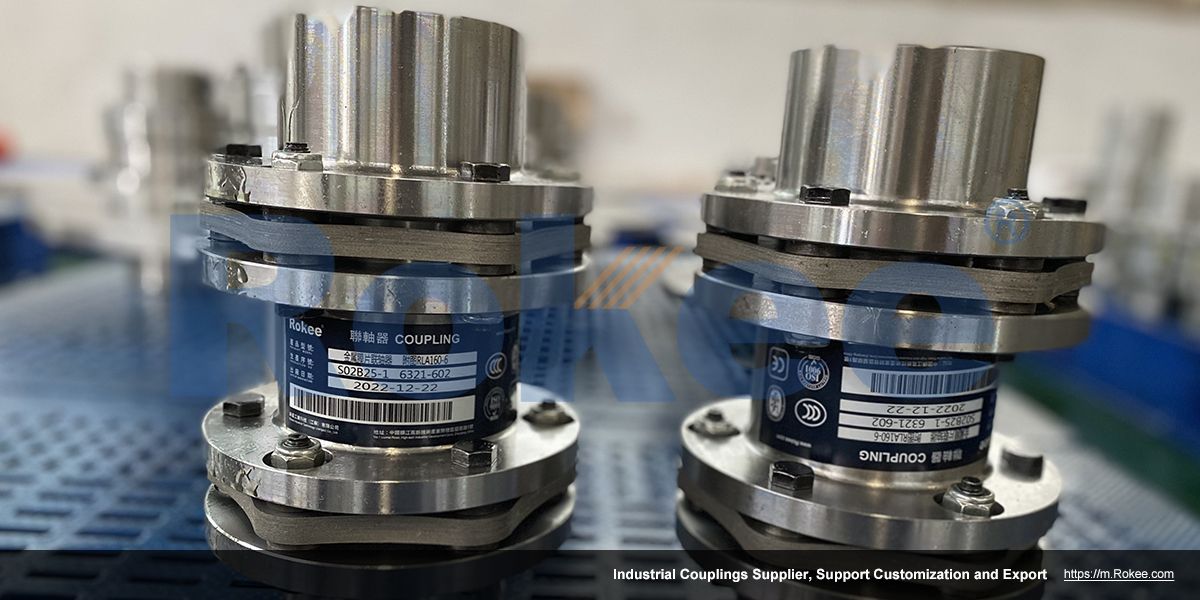
Diaphragm Type Couplings
Rokee is a chinese Diaphragm Type Couplings Manufacturer, provide Diaphragm Type Couplings processing and customization services, Over the years, with excellent quality, we have been continuously providing many coupling products of various categories and uses complying with multiple standards and a full range of services, from the Diaphragm Type Couplings selection to final installation and operation, for the industry fields of ferrous metallurgy, nuclear power, gas turbine, wind power, ropeway construction, lifting transportation, general equipment, etc. We strictly comply with quality system requirements and implement the whole process control to become a reliable and trustworthy partner of customers.
Providing customers with better Diaphragm Type Couplings is always our driving force. Our aim is to transmit power for you and generate value for both of us. We look forward to joining you and becoming your partner for common progress.
-
![RLM Diaphragm Type Couplings,RLM Standard Single Section Small Metal Diaphragm Coupling]()
RLM Standard Single Section Small Metal Diaphragm Coupling
The RLM standard single section small metal diaphragm coupling is suitable for various industrial process pumps and small torque working situations with a working speed not exceeding 5000rpm, and cannot compensate for radial errors.View More -
![RLMD Diaphragm Type Couplings,RLMD Standard Double Section Small Metal Diaphragm Coupling]()
RLMD Standard Double Section Small Metal Diaphragm Coupling
The RLMD standard double section small metal diaphragm coupling is suitable for various industrial process pumps and small torque working occasions with a working speed not exceeding 5000rpm.View More -
![RLA Diaphragm Type Couplings,RLA Standard Single Section Metal Diaphragm Coupling]()
RLA Standard Single Section Metal Diaphragm Coupling
The classic design of metal flexible diaphragm couplings,reliable choice for medium to low speed applications,but it cannot compensate for radial deviation.View More -
![RLAD Diaphragm Type Couplings,RLAD Standard Double Section Metal Diaphragm Coupling]()
RLAD Standard Double Section Metal Diaphragm Coupling
The classic design of metal flexible diaphragm couplings is a reliable choice for medium to low speed applications.View More -
![RLAR Diaphragm Type Couplings,RLAR Single Shaft Sleeve Reverse-mounting Metal Diaphragm Coupling]()
RLAR Single Shaft Sleeve Reverse-mounting Metal Diaphragm Coupling
Single side shaft sleeve reverse installation design, suitable for occasions with limited shaft head distance.View More -
![RLARD Diaphragm Type Couplings,RLARD Double Shaft Sleeve Reverse-mounting Metal Diaphragm Coupling]()
RLARD Double Shaft Sleeve Reverse-mounting Metal Diaphragm Coupling
The double-sided shaft sleeve reverse installation design is also applicable in situations where the distance from the shaft head is limited or the additional bending moment is smaller.View More -
![RLAF Diaphragm Type Couplings,RLAF Large & Small Shaft Mounted Metal Diaphragm Coupling]()
RLAF Large & Small Shaft Mounted Metal Diaphragm Coupling
The size difference design of the bilateral shaft sleeve is suitable for situations where the diameter difference between the two ends of the shaft is significant.View More -
![RLAT Diaphragm Type Couplings,RLAT Super Long Wheelbase Metal Diaphragm Coupling]()
RLAT Super Long Wheelbase Metal Diaphragm Coupling
Adopting an intermediate shaft design, suitable for ultra long shaft spacing power transmission applications.View More -
![RLQA Diaphragm Type Couplings,RLQA No Flange Quick Installation Metal Diaphragm Coupling]()
RLQA No Flange Quick Installation Metal Diaphragm Coupling
Suitable for various industrial process pumps, fans, and other medium to low speed applications, with a maximum speed generally not exceeding 25000 rpm. It meets the requirements of API610/ISO14691 and is one of the first products for API applications.View More -
![RLQF Diaphragm Type Couplings,RLQF Flange Type Quick Installation Metal Diaphragm Coupling]()
RLQF Flange Type Quick Installation Metal Diaphragm Coupling
Suitable for drum pressure fans, turbine compressors, and other high speed applications, with a maximum speed of up to 35000rpm.View More -
![RLQU Diaphragm Type Couplings,RLQU Improved Flange Quick Installation Metal Diaphragm Coupling]()
RLQU Improved Flange Quick Installation Metal Diaphragm Coupling
The improved RLQF has smaller additional bending moments and better performance. Suitable for drum pressure fans, turbine compressors, and other high speed applications.View More -
![RLHD Diaphragm Type Couplings,RLHD High Speed Metal Diaphragm Coupling]()
RLHD High Speed Metal Diaphragm Coupling
Suitable for higher speed applications, it also adopts a flexible component integrated assembly design, with a maximum speed of up to 42000rpm.View More -
![JMI Diaphragm Type Couplings,JMI Single Diaphragm Coupling With Counterbore]()
JMI Single Diaphragm Coupling With Counterbore
JMI metal diaphragm coupling adopts the single-piece design, suitable for short distance transmission. Besides, the semi-coupling sleeve at one end has a counterbore, facilitating the fixing of the shaft end.View More -
![JMIJ Diaphragm Type Couplings,JMIJ Double Diaphragm Coupling With Intermediate Shaft]()
JMIJ Double Diaphragm Coupling With Intermediate Shaft
JMIJ metal diaphragm coupling is designed with intermediate shaft, suitable for long distance transmission. Besides, the semi-coupling sleeve at one end has a counterbore, facilitating the fixing of the shaft end.View More -
![JMII Diaphragm Type Couplings,JMII Single Diaphragm Coupling Without Counterbore]()
JMII Single Diaphragm Coupling Without Counterbore
JMII metal diaphragm coupling also adopts the single-piece design but has no counterbore, suitable for short distance transmission, with more compact structure.View More -
![JMIIJ Diaphragm Type Couplings,JMIIJ Double Diaphragm Coupling With Intermediate Shaft]()
JMIIJ Double Diaphragm Coupling With Intermediate Shaft
JMIIJ Diaphragm Coupling is designed with intermediate shaft, suitable for long distance transmission. Besides, the semi-coupling sleeve at both ends have no counterbore.View More
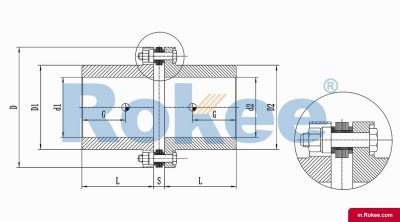
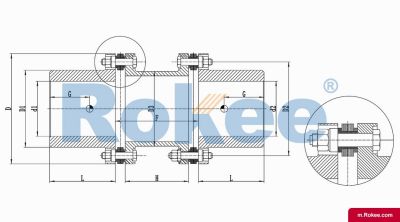
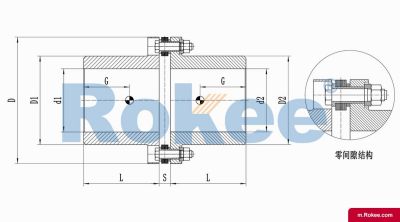
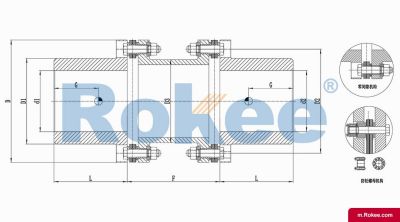
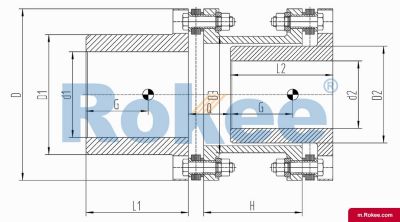
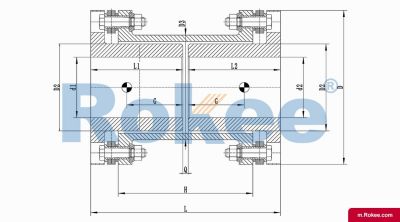
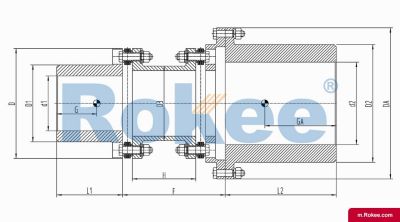
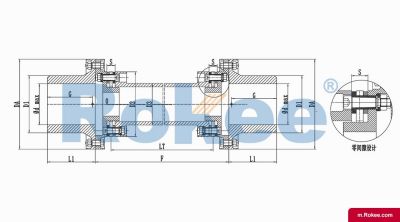
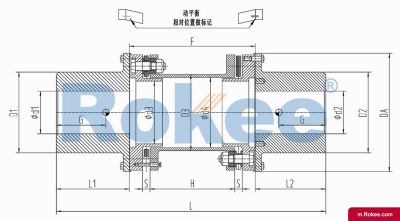
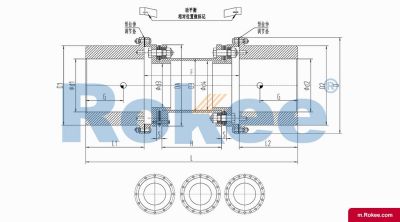
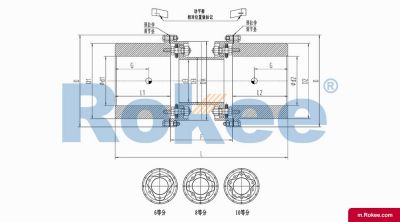
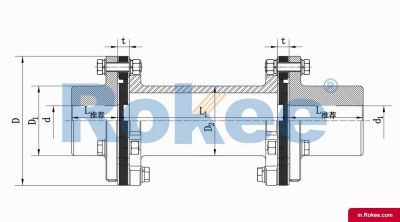
In the realm of mechanical power transmission, diaphragm type couplings stand out as a high-performance, versatile solution that bridges the gap between rigid and highly flexible coupling designs, catering to the evolving demands of modern industrial machinery. Unlike conventional coupling types that rely on lubricated components, elastomeric elements, or meshed gears to transmit torque and accommodate misalignment, diaphragm couplings utilize thin, precision-engineered metallic diaphragms as the core flexible medium, delivering a unique blend of torsional stiffness, misalignment compensation, and long-term durability. This class of couplings has become indispensable across countless industrial sectors, thanks to its ability to operate reliably in high-speed, high-temperature, heavy-load, and precision-critical environments, addressing pain points that other coupling configurations struggle to resolve.
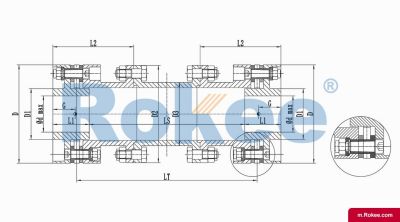
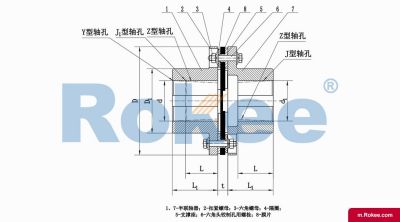
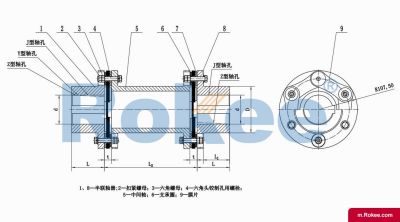
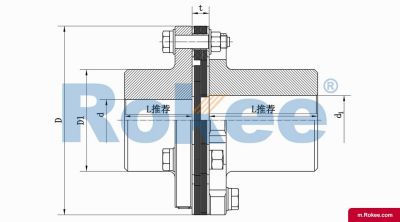
At its core, the structure of a diaphragm type coupling is elegantly simple yet mechanically robust, consisting of three primary functional components: drive and driven hubs, flexible diaphragm assemblies, and fastening hardware. The hubs, typically forged from high-strength carbon steel or alloy steel, are precision machined to fit snugly onto the driving and driven shafts, with connection interfaces tailored to suit different shaft mounting requirements—common designs include keyway connections for standard torque transmission, clamping hubs for keyless, non-damaging shaft fixation, and tapered sleeve connections for enhanced concentricity and ease of installation. The heart of the coupling lies in the flexible diaphragm, a thin, circular or contoured metal component crafted from high-grade alloy steel, stainless steel, or other heat-treated metallic materials with exceptional fatigue resistance and tensile strength. These diaphragms are often manufactured with precision-machined radial or circumferential slots, which are strategically designed to enhance flexibility without compromising the coupling’s torque-carrying capacity, allowing controlled elastic deformation under load and misalignment. Unlike stacked disc couplings that use multiple layered discs, standard diaphragm couplings feature one or more integrated diaphragm units, with the number and thickness of diaphragms calibrated to match torque ratings and misalignment compensation needs. Fastening elements, including high-strength bolts, washers, and spacers, secure the diaphragms rigidly to the hubs, creating a backlash-free connection that ensures direct, efficient torque transfer without slippage or energy loss. The overall assembly is compact, with minimal axial and radial footprint, making it suitable for machinery with limited installation space, and the absence of moving parts in contact eliminates wear from friction, a key advantage over gear and chain couplings.
The performance attributes of diaphragm type couplings are what set them apart from alternative coupling solutions, combining the precision of rigid couplings with the flexibility of elastomeric couplings to deliver a balanced, high-performance transmission system. One of the most notable performance features is zero backlash operation, a critical trait for precision machinery where positional accuracy and repeatability are non-negotiable. The rigid metal-to-metal connection between hubs and diaphragms eliminates any play in the transmission chain, ensuring that rotational motion is transferred instantaneously and accurately, making these couplings ideal for servo systems, CNC machinery, and other high-precision equipment. Torsional stiffness is another defining characteristic; diaphragm couplings maintain high torsional rigidity even under heavy loads, preventing torsional wind-up that can compromise operational efficiency and cause timing errors in dynamic systems. This stiffness does not come at the cost of flexibility, however, as the diaphragms can reliably compensate for three types of shaft misalignment: angular, radial, and axial. Angular misalignment, caused by non-parallel shafts, is accommodated through the bending of the diaphragm, while radial misalignment—parallel offset between shafts—is managed via lateral deflection of the flexible element. Axial misalignment, stemming from thermal expansion or shaft end play, is absorbed through the axial flexibility of the diaphragm, preventing excessive thrust loads on bearings and extending the service life of connected equipment.
Beyond misalignment compensation, diaphragm couplings exhibit exceptional high-speed operational capabilities, with the ability to maintain stability and balance at extremely high rotational speeds that far exceed the limits of gear or elastomeric couplings. Precision dynamic balancing of the entire assembly minimizes vibration and centrifugal force, reducing noise levels and preventing premature wear on bearings and seals, even during continuous high-speed operation. The metallic construction also grants excellent thermal stability, allowing the coupling to function reliably across a broad temperature range, from extreme cold to high heat, without degradation of performance. Unlike elastomeric couplings that harden, crack, or soften under temperature fluctuations, the metal diaphragms retain their mechanical properties, making them suitable for industrial processes with extreme thermal conditions. Additionally, diaphragm couplings are inherently maintenance-free, as they require no lubrication, no periodic adjustments, and no replacement of worn friction components. This eliminates the need for routine maintenance downtime, reduces operational costs, and enhances overall equipment uptime— a critical benefit in continuous-process industries such as oil and gas, power generation, and chemical manufacturing. The corrosion resistance of stainless steel and alloy steel diaphragms further boosts their longevity, enabling operation in harsh, corrosive environments without rust, oxidation, or material degradation, outperforming couplings with non-metallic or carbon steel components in such settings.
Diaphragm type couplings are categorized into distinct types based on structural configuration, flexibility design, and application-specific requirements, with each variant engineered to address unique operational challenges and performance needs. The most fundamental classification is based on the number of diaphragm units, dividing the couplings into single diaphragm and double (or multi) diaphragm types. Single diaphragm couplings feature a single flexible diaphragm assembly between the two hubs, offering a compact, lightweight design with moderate misalignment compensation capabilities. This type is optimized for applications with minimal shaft misalignment, moderate torque loads, and limited installation space, such as small pumps, fans, and light-duty industrial machinery. The simplified structure reduces material costs and installation complexity, while still delivering the core benefits of zero backlash and maintenance-free operation, making it a cost-effective choice for standard industrial tasks. Double diaphragm couplings, by contrast, incorporate two separate diaphragm assemblies linked by an intermediate spacer or shaft, significantly enhancing misalignment compensation capacity—particularly for combined angular and radial misalignment. The dual-diaphragm design distributes stress more evenly across the flexible elements, reducing fatigue and extending service life under heavy loads and frequent misalignment stresses. This variant is tailored for heavy-duty, high-precision applications where substantial shaft offset is unavoidable, such as large compressors, turbines, and heavy industrial pumps.
Another key classification framework is based on hub design and shaft connection style, which further diversifies the functionality of diaphragm couplings to match diverse mounting requirements. Standard keyed diaphragm couplings feature hubs with precision-machined keyways, compatible with conventional shaft keying systems, ensuring secure torque transmission for general industrial applications and easy integration with standard shafting. Keyless clamping diaphragm couplings utilize a clamping mechanism to grip the shaft tightly without keyways, eliminating the risk of keyway wear, shaft damage, and backlash associated with keyed connections, making them perfect for high-precision, high-speed equipment where shaft integrity and positional accuracy are paramount. Tapered bushing diaphragm couplings combine a tapered sleeve design with the diaphragm assembly, enabling quick, tool-free installation and removal, as well as precise concentricity alignment—ideal for machinery that requires frequent maintenance or component replacement. Additionally, diaphragm couplings can be classified by torque capacity and size, ranging from miniature, low-torque units for small precision instruments to heavy-duty, large-scale couplings for high-power industrial machinery, ensuring a suitable option for every power transmission scale.
Specialized diaphragm coupling variants also exist to meet niche industrial demands, including extended-length diaphragm couplings with long intermediate shafts for applications where the driving and driven shafts are separated by a significant distance, such as conveyor systems and remote pump drives. High-temperature diaphragm couplings use specialized heat-resistant alloys for the diaphragms and hubs, engineered to withstand extreme thermal conditions without losing structural integrity, suitable for furnaces, boilers, and high-temperature processing equipment. Corrosion-resistant diaphragm couplings, constructed entirely from stainless steel or corrosion-proof alloys, are designed for use in chemical plants, marine environments, and wastewater treatment facilities, where exposure to corrosive chemicals, saltwater, or moisture would degrade standard metal components. Each type retains the core performance advantages of diaphragm couplings—zero backlash, high torsional stiffness, maintenance-free operation—while adding specialized features to address the unique stresses of specific working conditions, solidifying their status as a customizable, adaptable transmission solution.
The versatility of diaphragm type couplings is reflected in their extensive cross-industry applications, spanning virtually every sector of manufacturing, energy production, and precision engineering where reliable, high-performance power transmission is essential. In the general industrial machinery sector, they are widely employed in pumps, fans, compressors, and blowers, where their ability to compensate for thermal expansion-induced misalignment and operate without lubrication makes them a practical, long-lasting choice. For centrifugal pumps and process compressors, which often operate continuously under variable loads, diaphragm couplings reduce vibration, minimize bearing stress, and eliminate maintenance downtime, boosting operational efficiency and reducing total cost of ownership. In the energy and power generation industry, diaphragm couplings are a critical component in turbine systems, generator sets, and wind turbine drives, where high rotational speeds, high temperatures, and heavy torque loads demand a coupling with exceptional stability and durability. Their zero backlash design ensures precise power transfer between turbines and generators, while their thermal resistance allows reliable operation in the high-heat environments of power plants, avoiding the performance issues associated with elastomeric or gear couplings in such settings.
In precision manufacturing and automation, diaphragm couplings are the preferred choice for CNC machine tools, robotic arms, servo motors, and positioning systems, where positional accuracy and repeatability are critical to product quality. The zero backlash and high torsional stiffness of these couplings eliminate motion lag and positioning errors, enabling tight tolerances and smooth operation in machining, assembly, and material handling processes. Unlike elastomeric couplings that can introduce compliance or backlash, diaphragm couplings maintain rigid, accurate motion transfer, making them indispensable in high-precision manufacturing environments. The marine and offshore industry relies heavily on corrosion-resistant diaphragm couplings for shipboard machinery, including propulsion systems, pump drives, and auxiliary equipment, where saltwater exposure and harsh marine conditions require robust, corrosion-proof components. Their maintenance-free design is particularly valuable in offshore operations, where access for repairs and maintenance is limited and equipment reliability is paramount.
Heavy industrial sectors such as metallurgy, mining, and construction also leverage diaphragm couplings for heavy-duty machinery, including rolling mills, crushers, and conveyor drives. The high torque capacity and fatigue resistance of these couplings withstand the extreme loads and shock vibrations common in these industries, while their ability to compensate for severe shaft misalignment reduces equipment wear and breakdowns. In the chemical and pharmaceutical manufacturing sectors, diaphragm couplings are favored for their corrosion resistance and contamination-free operation; unlike lubricated couplings that can leak oil and contaminate sensitive processes, diaphragm couplings operate cleanly, making them suitable for pumps, mixers, and processing equipment in sterile or corrosive production environments. Additionally, they find use in aerospace and automotive testing equipment, high-speed spindles, and various specialty machinery, where their combination of precision, speed, and durability meets the most stringent operational requirements.
Despite their widespread adoption and superior performance, diaphragm couplings are not a one-size-fits-all solution, and selecting the appropriate type requires careful consideration of operational parameters, including torque load, rotational speed, shaft misalignment magnitude, environmental conditions, and installation space. Proper alignment during installation is also critical to maximizing the service life of diaphragm couplings; while they can compensate for moderate misalignment, excessive offset beyond the design limits will cause premature fatigue failure of the diaphragms. Routine visual inspections for signs of diaphragm cracking, bolt loosening, or abnormal vibration are recommended to detect potential issues early, though such checks are minimal compared to the maintenance required for other coupling types. When selected and installed correctly, diaphragm couplings offer exceptional service life, often outlasting the machinery they connect, making them a cost-effective, long-term investment for industrial operators.
In summary, diaphragm type couplings represent a pinnacle of mechanical power transmission design, merging structural simplicity, exceptional performance, and unparalleled versatility to meet the diverse needs of modern industry. Their unique metallic diaphragm-based structure delivers zero backlash, high torsional stiffness, reliable misalignment compensation, and maintenance-free operation, overcoming the limitations of traditional coupling technologies. With a range of types tailored to different torque capacities, misalignment requirements, and environmental conditions, they can be customized to fit nearly any power transmission application, from small precision instruments to heavy-duty industrial machinery. As industrial technology continues to advance toward higher speeds, greater precision, and more demanding operating conditions, the role of diaphragm type couplings will only grow in importance, remaining a vital component in efficient, reliable, and sustainable mechanical systems across the global industrial landscape.
« Diaphragm Type Couplings » Update Date: 2026/3/6
URL: https://m.rokee.com/tags/diaphragm-type-couplings.html