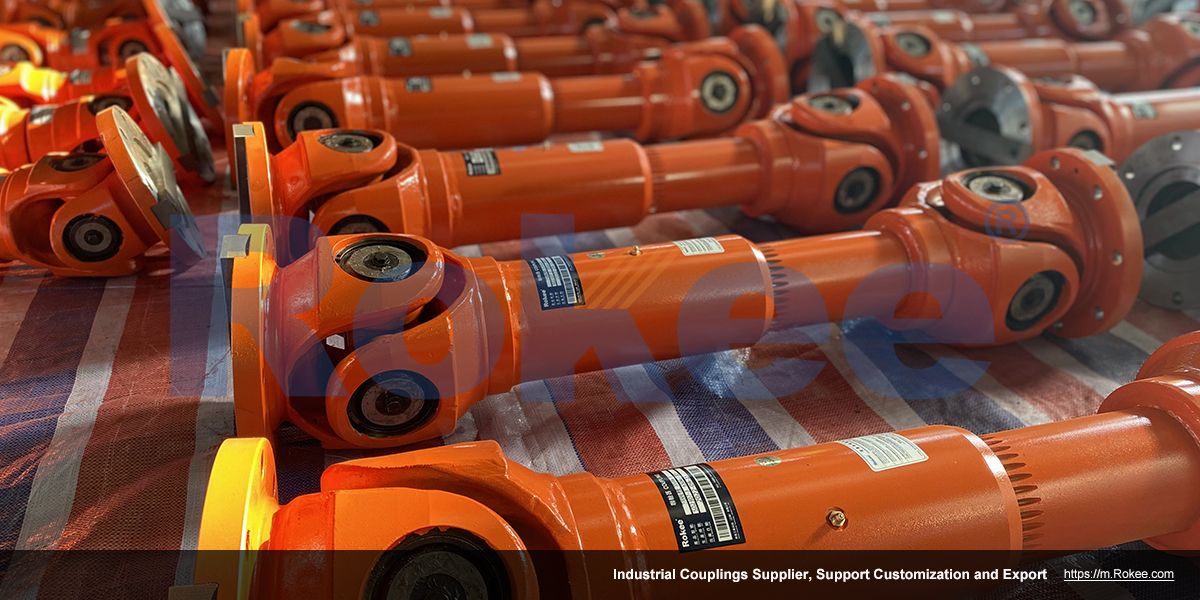
Universal Joint Shaft Couplings
Rokee is a chinese Universal Joint Shaft Couplings Manufacturer, provide Universal Joint Shaft Couplings processing and customization services, Over the years, with excellent quality, we have been continuously providing many coupling products of various categories and uses complying with multiple standards and a full range of services, from the Universal Joint Shaft Couplings selection to final installation and operation, for the industry fields of ferrous metallurgy, nuclear power, gas turbine, wind power, ropeway construction, lifting transportation, general equipment, etc. We strictly comply with quality system requirements and implement the whole process control to become a reliable and trustworthy partner of customers.
Providing customers with better Universal Joint Shaft Couplings is always our driving force. Our aim is to transmit power for you and generate value for both of us. We look forward to joining you and becoming your partner for common progress.
-
![SWC-BH Universal Joint Shaft Couplings,SWC-BH Cardan Shaft]()
SWC-BH Cardan Shaft
SWC-BH standard telescopic welded universal joint couplingView More -
![SWC-CH Universal Joint Shaft Couplings,SWC-CH Cardan Shaft]()
SWC-CH Cardan Shaft
SWC-CH long telescopic welded universal joint couplingView More -
![SWC-DH Universal Joint Shaft Couplings,SWC-DH Cardan Shaft]()
SWC-DH Cardan Shaft
SWC-DH short telescopic welded universal joint couplingView More -
![SWC-WD Universal Joint Shaft Couplings,SWC-WD Cardan Shaft]()
SWC-WD Cardan Shaft
SWC-WD non-telescopic short universal joint couplingView More -
![SWC-WH Universal Joint Shaft Couplings,SWC-WH Cardan Shaft]()
SWC-WH Cardan Shaft
SWC-WH non-telescopic welded universal joint couplingView More -
![SWP-A Universal Joint Shaft Couplings,SWP-A Cardan Shaft]()
SWP-A Cardan Shaft
SWP-A telescopic long type universal joint couplingView More -
![SWP-B Universal Joint Shaft Couplings,SWP-B Cardan Shaft]()
SWP-B Cardan Shaft
SWP-B telescopic short type universal joint couplingView More -
![SWP-C Universal Joint Shaft Couplings,SWP-C Cardan Shaft]()
SWP-C Cardan Shaft
SWP-C non telescopic short type universal joint couplingView More -
![SWP-D Universal Joint Shaft Couplings,SWP-D Cardan Shaft]()
SWP-D Cardan Shaft
SWP-D non telescopic long type universal joint couplingView More
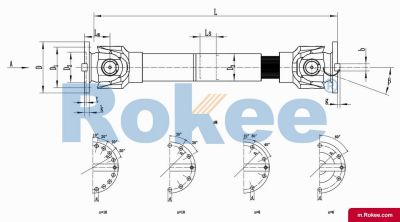
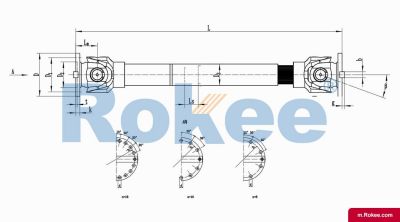
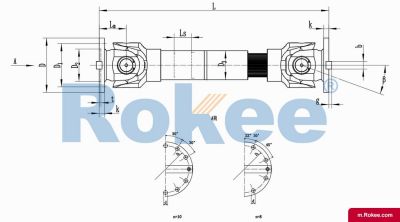
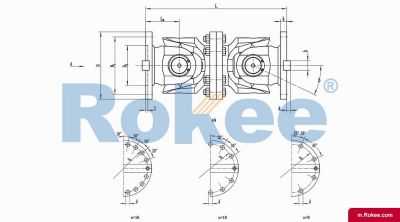
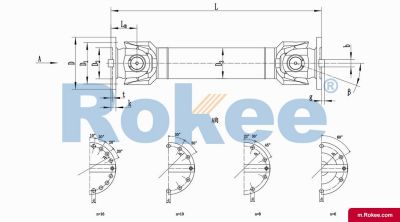
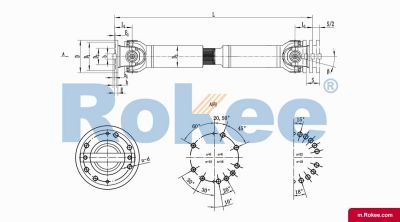
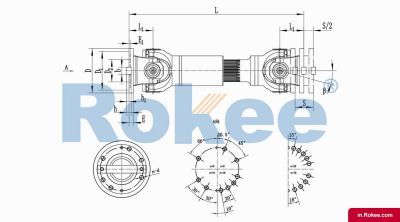
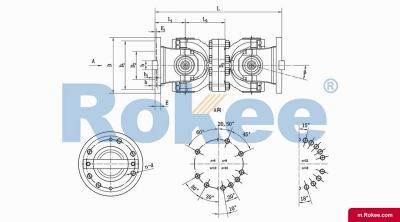
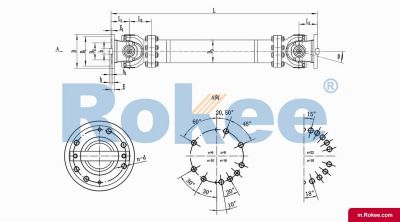
As a key component in mechanical transmission systems, universal joint shaft couplings play an indispensable role in modern industrial equipment. It can effectively solve the alignment problems caused by installation errors, working deformations, or temperature changes between shaft systems, and achieve power transmission between different axes.
universal joint shaft coupling is a special type of flexible coupling, whose core function is to connect two shafts on different axes and allow for a certain degree of angular deviation between the two shafts. This type of coupling utilizes its unique structural characteristics to enable continuous rotation of the two shafts connected without being on the same axis and with an angle between the axes, while reliably transmitting torque and motion. The biggest feature of universal joint shaft couplings is their large angular compensation ability, compact structure, and high transmission efficiency.
The basic structural components of a universal joint shaft coupling include key parts such as the coupling fork, cross shaft assembly, and bearings. Taking the most common cross axis universal joint shaft as an example, it consists of two universal joint shaft forks and a cross axis. The four journals of the cross axis are equipped with needle roller bearings, and the outer ring of the bearings matches the bearing holes of the universal joint shaft forks. This structure enables the coupling to adapt to a certain angle of deflection while transmitting torque. As a vulnerable component of the cross axis universal joint shaft, the quality of bearings directly affects the service life and transmission efficiency of the joint.
From the perspective of material selection, universal joint shaft couplings are mainly made of high-strength alloy steel, such as 45 steel, 40Cr, 40CrNi, 20CrMo, 20CrMnVB, etc. After heat treatment, these materials can reach a hardness of 58-62HRC, with sufficient strength and wear resistance. Other parts are usually made of 35 or 45 steel, with a heat treatment hardness of 48-52HRC, ensuring the reliability and durability of the overall structure. With the development of materials science, some special applications have also begun to use corrosion-resistant materials such as stainless steel to manufacture universal joint shaft couplings.
universal joint shaft couplings have developed into various types based on their structural forms and application scenarios, each with its unique advantages and scope of application. Understanding these types and their characteristics can help select the most suitable coupling solution in practical engineering.
The cross axis universal joint shaft is the most common and widely used type, with a relatively simple structure consisting of two universal joint shaft forks and a cross axis. This type of coupling can be divided into four series: heavy, medium, light, and small, suitable for situations with different torque requirements. The SWC type adopts an integral fork head design and is suitable for heavy-duty equipment with a rotation diameter of 1600mm or more; The SWP type adopts a split fork structure for easy installation and maintenance. The cross axis universal joint shaft is widely used in metallurgical machinery, heavy machinery, engineering machinery and other fields, especially in situations where large torque needs to be transmitted and there is a large axis angle, it performs well. To ensure the synchronization of the main and driven shafts, a double coupling form is often used in practical applications, which is connected by welding or flange bolts, and the length of the middle can be adjusted as needed.
The ball cage universal joint shaft is another important type, which achieves synchronous transmission through a spherical hinge structure and has the advantages of smooth transmission and low noise. The single ball joint structure of the cage type coupling can ensure transmission synchronization, with a speed change rate of less than 1%. Under the same working conditions, the load-bearing capacity is increased by 50% -100% compared to the cross shaft type. Its axial compensation does not require an external spline mechanism, and the maximum swing angle can reach 42.5 degrees. Special models even support operation with a large inclination angle of 75 degrees. The ball cage coupling adopts two transmission modes: sliding or rolling. The sliding mode uses polymer buffer sleeves to reduce vibration and noise, while the rolling mode uses rolling elements to meet the requirements of rigid transmission. This type of coupling is widely used in transportation machinery, metallurgical equipment, engineering machinery and other fields, especially in scenarios where radial space is limited, showing significant advantages.
The ball joint plunger universal joint shaft belongs to the category of flexible couplings without elastic components, mainly composed of two connecting plates and three or more force transmitting arm pairs. Positioning holes are opened on the surface of the disc, and the force arm and ball arm components are fixed by bolts. The force arm pair adopts a ball head socket connection structure, supplemented by a bowl shaped cover to achieve radial positioning. This type of coupling has a compact structure, occupies a small space, and is much smaller in size than cross shaft products under equal rotation diameter. The swing angle of the ball joint plunger coupling can reach 1.7-3 times that of traditional products, with high dynamic balance accuracy and a large allowable installation error range. It is also equipped with a quick installation spring structure to shorten assembly time. It also has overload protection function, which can automatically cut off the transmission in case of sudden torque changes, with outstanding safety performance.
Double universal joint shaft is a transmission device designed by combining two sets of universal joint shaft structures, consisting of three core components: coupling block, conversion component, and coupling component. The dual universal joint shaft utilizes a dual universal joint shaft structure to form a composite compensation mechanism, which achieves stable angular velocity output of the driven shaft through an equal angle layout between the intermediate shaft and the master and slave shafts. The spherical contact between the coupling block and the conversion block realizes axial deflection compensation, and the wedge-shaped cooperation between the compression block and the conversion block completes radial displacement absorption. The dual universal joint shaft supports axial/radial composite displacement compensation, with a maximum angular displacement compensation increase of 40% compared to a single universal joint shaft. The transmission is more precise and can effectively avoid the generation of dynamic loads. This type of coupling performs well in working conditions that require frequent adjustment of transmission angles, such as metallurgical machinery, printing equipment, and material conveying systems.
In addition, there is a WS type small cross axis universal joint shaft, which is suitable for connecting transmission shaft systems with two axis angles of β ≤ 45 °, transmitting nominal torque of 11.2~1120N · m. The WSD type is a single cross universal joint shaft, and the WS type is a double cross universal joint shaft. The maximum shaft angle between each joint is 45 °, and the precision of the finished hole is H7. Keyways, hexagonal holes, and square holes can be opened according to requirements. These types of small couplings are mostly made of 45 # steel, 40Cr or stainless steel, and their surfaces can be treated with blackening, nickel plating, zinc plating, etc. The connection forms at both ends are flexible and diverse, which can meet the needs of various small transmission devices.
« Universal Joint Shaft Couplings » Post Date: 2024/5/6
URL: https://m.rokee.com/tags/universal-joint-shaft-couplings.html