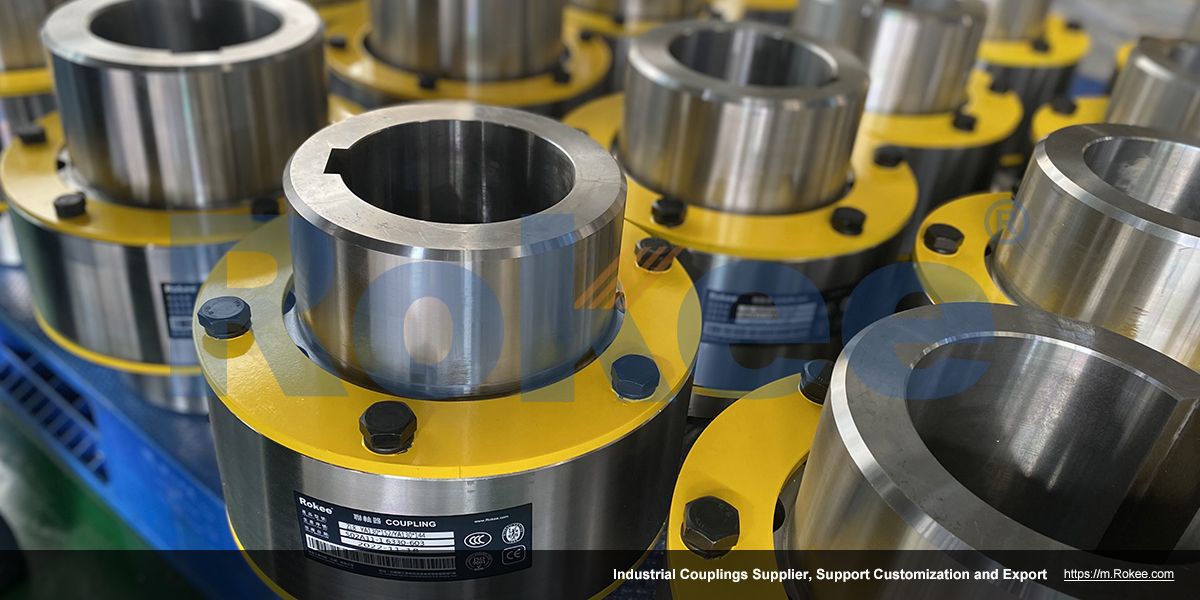
Bush Couplings
Rokee is a chinese Bush Couplings Manufacturer, provide Bush Couplings processing and customization services, Over the years, with excellent quality, we have been continuously providing many coupling products of various categories and uses complying with multiple standards and a full range of services, from the Bush Couplings selection to final installation and operation, for the industry fields of ferrous metallurgy, nuclear power, gas turbine, wind power, ropeway construction, lifting transportation, general equipment, etc. We strictly comply with quality system requirements and implement the whole process control to become a reliable and trustworthy partner of customers.
Providing customers with better Bush Couplings is always our driving force. Our aim is to transmit power for you and generate value for both of us. We look forward to joining you and becoming your partner for common progress.
-
![LT Bush Couplings,LT/TL Elastic Sleeve Pin Coupling]()
LT/TL Elastic Sleeve Pin Coupling
LT Elastic Sleeve Pin Coupling is the basic form of this series of couplings.View More -
![LTZ Bush Couplings,LTZ/TLL Elastic Sleeve Pin Coupling With Brake Wheel]()
LTZ/TLL Elastic Sleeve Pin Coupling With Brake Wheel
LTZ Elastic Sleeve Pin Coupling is designed with a brake wheel, suitable for situations where braking is required.View More
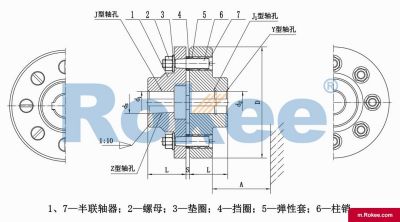
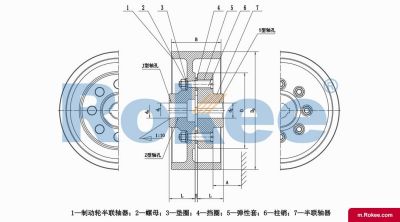
A Bush Coupling is a special type of coupling that combines the functional characteristics of a sleeve and a coupling. It is used to connect two shafts to transmit torque and speed, while also having a certain degree of flexibility and vibration absorption ability.
A Bush Coupling is a mechanical device that connects two shaft ends through a sleeve. It can not only transmit torque, but also compensate for the relative positional deviation between the two shafts to a certain extent, and absorb vibration and impact.
A Bush Coupling usually consists of two half couplings, a sleeve, and connecting elements. Two half couplings are fixed on two shafts respectively, and a bushing is installed between the two half couplings to serve as a connection and buffer. Connecting components (such as bolts) are used to secure the half coupling and bushing, ensuring the stability of the entire device.
Type:
According to the different lining materials, lining couplings can be divided into metal lining couplings, rubber lining couplings, etc.
According to structural characteristics, it can also be divided into sleeve type bushing couplings, flange type bushing couplings, etc.
Characteristics:
Flexibility: Bush Couplings typically have a certain degree of elasticity and can absorb relative positional deviations between shafts, such as parallelism, angle, or overall offset.
Vibration absorption: The lining made of elastic materials such as rubber can effectively absorb vibration and impact, protecting the transmission system from overload damage.
Easy to maintain: The structure of the Bush Coupling is relatively simple, making it easy to disassemble and replace components such as the sleeve.
Bush Couplings are widely used in various mechanical equipment, especially in situations where torque and speed transmission are required, while also requiring a certain degree of flexibility and vibration absorption ability. For example:
Pump equipment: In centrifugal pumps, gear pumps, and other pump equipment, Bush Couplings are used to connect the motor output shaft and pump shaft, ensuring synchronous rotation and reducing the impact of vibration on the pump body.
Fan: In centrifugal fans, axial fans and other fan equipment, Bush Couplings are also used to connect the motor output shaft and fan shaft to ensure stable operation of the equipment.
Blender: In a blender, a Bush Coupling is used to connect the drive shaft and mixing shaft of the blender, which can compensate for axis deviation and angle deviation to a certain extent, while absorbing the impact of starting or stopping moments.
When choosing a Bush Coupling, factors such as torque, speed, shaft diameter, installation space, and working environment of the transmission system need to be considered. At the same time, suitable lining materials and structural types need to be selected based on the specific requirements of the equipment and the working environment.
Attention:
Ensure the installation accuracy of the Bush Coupling and avoid performance degradation caused by installation errors.
Regularly inspect and maintain the bushing coupling, and promptly replace severely worn bushings and other components.
Avoid using the coupling beyond its rated torque and speed to prevent damage to the equipment.
As a special type of coupling, the Bush Coupling has a wide range of application prospects in mechanical equipment. By selecting and using Bush Couplings reasonably, the stable operation and efficient performance of the equipment can be ensured.
In the vast landscape of mechanical power transmission systems, the bush coupling stands as a fundamental yet indispensable component, serving as a critical bridge between rotating shafts to transfer torque efficiently while addressing common operational challenges such as misalignment, vibration, and shock loads. Unlike rigid couplings that demand perfect shaft alignment and offer no flexibility, bush couplings are engineered with a unique combination of metallic structural parts and resilient bushing elements, blending strength and adaptability to suit diverse industrial operating conditions.
At its core, the standard bush coupling features a streamlined and functional structural design, centered around two key metallic hubs and a set of elastic or semi-rigid bushings paired with locating pins. The two hubs are typically crafted from high-strength ferrous metals or alloy steels, chosen for their exceptional load-bearing capacity, resistance to torsional stress, and long-term mechanical stability; these hubs are securely mounted onto the driving and driven shafts respectively, often via keyway connections or interference fits to ensure zero slippage during torque transmission. Each hub is equipped with evenly spaced radial holes or flange-mounted bores, precision-machined to accommodate the connecting pins and the surrounding bushings. The bushing elements, the heart of the coupling’s flexible performance, are manufactured from a variety of resilient materials, each tailored to specific operational needs, including natural rubber, synthetic elastomers like neoprene and polyurethane, and in some heavy-duty variants, reinforced composite materials or hardened non-metallic compounds. These bushings are sleeved around the steel or alloy pins, which pass through the aligned bores of both hubs to create a unified transmission assembly. The clearance between the pins, bushings, and hub bores is meticulously calibrated during the design phase, striking a balance between rigid torque transfer and controlled flexibility. Unlike complex coupling designs with intricate gear systems or multiple moving parts, the bush coupling’s structure is inherently simple, with minimal components that reduce manufacturing complexity, simplify installation and maintenance, and lower the risk of mechanical failure due to part wear or misalignment. This straightforward construction also allows for easy disassembly for inspection, bushing replacement, or shaft re-alignment, making it a practical choice for both stationary and mobile mechanical setups.
The performance characteristics of bush couplings are directly derived from their structural design and material selection, making them versatile enough to handle a broad spectrum of operational demands. One of the most prominent performance traits is their ability to compensate for various types of shaft misalignment, a common issue in real-world mechanical installations where perfect alignment is rarely achievable. Bush couplings can effectively accommodate angular misalignment, parallel misalignment, and slight axial displacement between shafts, absorbing these deviations without transferring excessive stress to the connected equipment, such as motors, gearboxes, pumps, or compressors. This misalignment compensation not only prevents premature bearing failure, shaft bending, and component cracking but also extends the overall service life of the entire power transmission system. Another key performance advantage is exceptional vibration damping and shock absorption capabilities. The resilient bushing materials act as a natural buffer, dampening torsional vibrations generated by uneven torque loads, sudden start-stop cycles, or fluctuating operational speeds, and cushioning impact loads that occur during heavy-duty operation or mechanical jolts. This vibration reduction translates to quieter equipment operation, reduced wear on adjacent components, and improved operational comfort, particularly in settings where noise pollution and mechanical fatigue are critical concerns. Additionally, bush couplings exhibit reliable torque transmission efficiency, with minimal power loss even under moderate to high load conditions. The rigid metallic hubs ensure that the majority of applied torque is transferred from the driving shaft to the driven shaft, while the elastic bushings maintain sufficient stiffness to prevent excessive torsional deflection that could compromise operational precision. Most standard bush couplings are also maintenance-free or require only minimal upkeep, as the resilient bushings do not need lubrication, unlike gear couplings or other high-maintenance transmission components. They also demonstrate good resistance to common environmental factors, including moderate temperature fluctuations, moisture, and mild chemical exposure, depending on the bushing material used, further enhancing their operational reliability in diverse working environments. It is important to note that performance limits exist, with each type of bush coupling rated for specific torque ranges, rotational speeds, and misalignment tolerances; exceeding these limits can lead to accelerated bushing wear, reduced flexibility, and eventual coupling failure, emphasizing the need for proper selection based on application requirements.
Bush couplings are categorized into several distinct types, each differentiated by structural variations, bushing material properties, and design intent, allowing engineers to select the optimal variant for specific operational scenarios. The most widely used classification is based on the type of bushing and core structural configuration, encompassing elastic pin bush couplings, flexible sleeve bush couplings, reinforced composite bush couplings, and taper lock bush couplings, among others. Elastic pin bush couplings represent the standard and most prevalent design, featuring cylindrical elastic rubber or elastomer bushings mounted on steel pins, connecting two flanged hubs. This design offers balanced flexibility and torque capacity, making it suitable for general-purpose industrial applications with moderate misalignment and steady load conditions. Flexible sleeve bush couplings, a variation of the standard design, incorporate thicker, more durable elastomer sleeves that wrap around the pins, providing enhanced misalignment compensation and superior shock absorption; these are ideal for equipment with frequent start-stop cycles, variable torque loads, or higher levels of shaft misalignment. Reinforced composite bush couplings are engineered for heavy-duty operational environments, utilizing high-strength polyurethane or fiber-reinforced polymer bushings that offer increased wear resistance, higher torque load capacity, and better tolerance to extreme temperatures and abrasive conditions. These couplings are commonly deployed in heavy machinery where standard elastomer bushings would degrade rapidly under harsh stress. Taper lock bush couplings feature a tapered bushing design that simplifies installation and removal, eliminating the need for complex disassembly tools and allowing for quick adjustments to shaft positioning; this type is favored in applications where frequent equipment maintenance or component replacement is required. Another classification approach is based on the flexibility and load-bearing capacity, distinguishing between standard flexible bush couplings for light to medium-duty use and high-torque rigid-flex bush couplings for heavy industrial operations. High-torque variants retain the basic bush coupling structure but feature thicker metallic hubs, larger diameter pins, and denser, more rigid bushing materials to handle extreme torsional loads without sacrificing the coupling’s inherent flexibility. Additionally, some specialized bush couplings are designed with spacer hubs to create a gap between the two shafts, catering to applications where thermal expansion, shaft separation, or additional clearance is necessary, such as in large-scale industrial pumps or conveyor systems. Each type maintains the core simplicity of the bush coupling design while tailoring specific attributes to address unique operational challenges, ensuring versatility across different mechanical setups.
The combination of robust structure, reliable performance, and adaptable design makes bush couplings one of the most widely utilized power transmission components across nearly every industrial sector, with applications spanning light-duty machinery to heavy industrial equipment. In the general manufacturing industry, bush couplings are extensively integrated into conveyor systems, centrifugal pumps, fans, blowers, and small to medium-sized motor-driven machinery, where they ensure smooth power transfer, absorb minor shaft misalignment, and reduce vibration in daily production operations. Their low maintenance requirements and cost-effective design make them a preferred choice for assembly lines, material handling equipment, and auxiliary manufacturing machinery that demands consistent, uninterrupted performance. In the agricultural machinery sector, bush couplings play a vital role in tractors, harvesters, irrigation pumps, and other farm equipment, enduring the rugged outdoor conditions, variable load demands, and occasional mechanical shocks inherent to agricultural operations. The flexible nature of bush couplings allows agricultural machinery to operate efficiently even with imperfect shaft alignment, a common issue in heavy, mobile farm equipment, while their shock absorption capabilities protect critical components from damage during field work. The construction and mining industries rely heavily on heavy-duty reinforced bush couplings for equipment such as concrete mixers, crushers, excavators, and conveyor systems used in mineral extraction. These couplings withstand extreme torque loads, heavy vibration, and harsh environmental conditions including dust, moisture, and mechanical abrasion, providing durable power transmission in high-stress construction and mining applications where equipment failure can lead to costly downtime. In the marine and offshore engineering sector, bush couplings with corrosion-resistant metallic hubs and chemical-resistant bushings are used in shipboard pumps, ventilation systems, and propulsion auxiliary equipment, adapting to the humid, saline marine environment and maintaining stable performance despite slight shaft misalignment caused by vessel movement. Bush couplings also find widespread use in the automotive and transportation industry, integrated into vehicle auxiliary systems, small engine transmissions, and mobile machinery, where compact size, lightweight design, and reliable flexibility are essential. Beyond these core sectors, bush couplings are employed in HVAC systems, food processing machinery, packaging equipment, and various other mechanical setups that require efficient torque transmission, vibration damping, and misalignment compensation. Their universal appeal stems from the ability to balance performance and practicality, offering a cost-efficient, low-maintenance solution to common power transmission challenges without compromising on durability or operational efficiency.
In summary, the bush coupling remains a cornerstone of modern mechanical power transmission, distinguished by its straightforward yet effective structural design, versatile performance attributes, and broad applicability across diverse industrial landscapes. Its ability to transmit torque reliably while mitigating misalignment, vibration, and shock loads addresses key pain points in mechanical system design, ensuring the smooth and durable operation of countless pieces of equipment. The various types of bush couplings, each tailored to specific load capacities, environmental conditions, and flexibility needs, provide engineers with a flexible selection of solutions to match unique application requirements. As industrial technology continues to evolve and mechanical systems demand higher efficiency, greater durability, and enhanced adaptability, the bush coupling will retain its relevance, with ongoing material advancements and design refinements further optimizing its performance to meet the changing needs of modern engineering. Whether in light-duty auxiliary equipment or heavy-duty industrial machinery, the bush coupling’s role as a reliable, practical, and efficient power transmission component is undeniable, solidifying its status as an essential element in the global mechanical engineering ecosystem.
« Bush Couplings » Update Date: 2026/3/6
URL: https://m.rokee.com/tags/bush-couplings.html