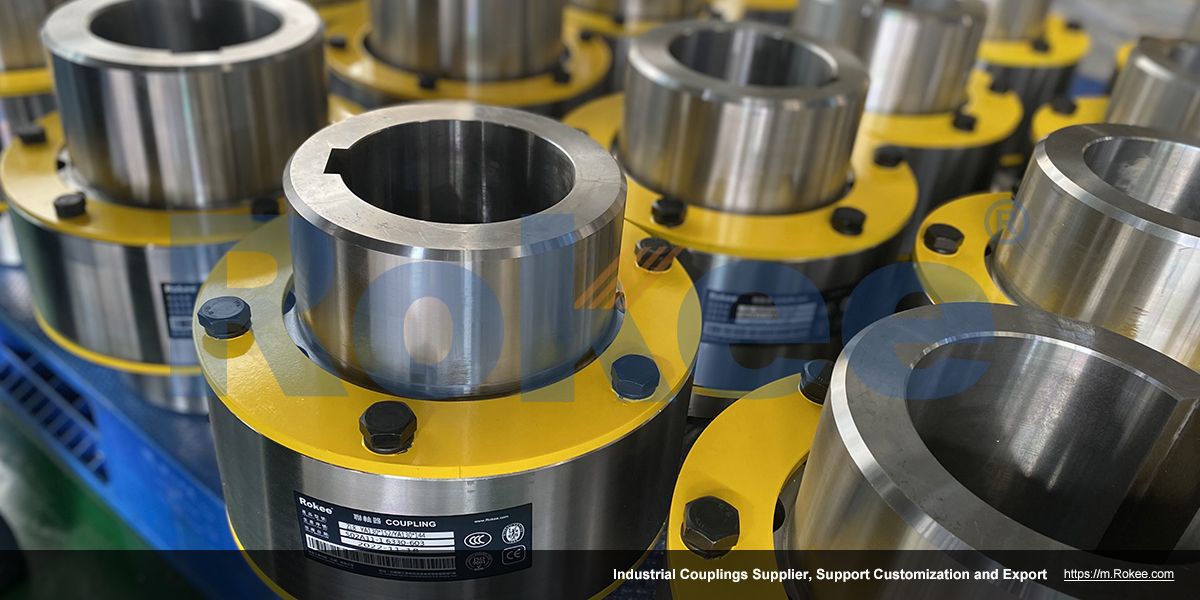
Bush Type Couplings
Rokee is a chinese Bush Type Couplings Manufacturer, provide Bush Type Couplings processing and customization services, Over the years, with excellent quality, we have been continuously providing many coupling products of various categories and uses complying with multiple standards and a full range of services, from the Bush Type Couplings selection to final installation and operation, for the industry fields of ferrous metallurgy, nuclear power, gas turbine, wind power, ropeway construction, lifting transportation, general equipment, etc. We strictly comply with quality system requirements and implement the whole process control to become a reliable and trustworthy partner of customers.
Providing customers with better Bush Type Couplings is always our driving force. Our aim is to transmit power for you and generate value for both of us. We look forward to joining you and becoming your partner for common progress.
-
![LT Bush Type Couplings,LT/TL Elastic Sleeve Pin Coupling]()
LT/TL Elastic Sleeve Pin Coupling
LT Elastic Sleeve Pin Coupling is the basic form of this series of couplings.View More -
![LTZ Bush Type Couplings,LTZ/TLL Elastic Sleeve Pin Coupling With Brake Wheel]()
LTZ/TLL Elastic Sleeve Pin Coupling With Brake Wheel
LTZ Elastic Sleeve Pin Coupling is designed with a brake wheel, suitable for situations where braking is required.View More
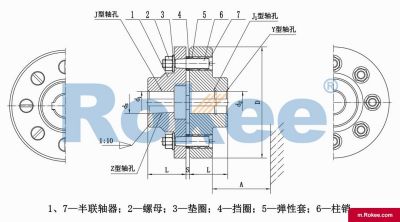
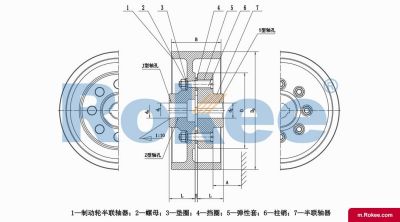
A bush type coupling is a mechanical device that uses a sleeve to achieve shaft to shaft connection and torque transmission. Its core feature is to use elastic or rigid sleeves to adapt to shaft alignment deviation while reducing vibration and impact.
Core components
Lining: usually made of metal (such as steel, aluminum alloy) or elastic material (such as polyurethane, rubber), installed in the shaft holes at both ends of the coupling, and fixed by compression or interference fit.
Connectors: including flanges, bolts, or clamping devices, used to firmly connect the bushing to the shaft.
Shell: Some designs come with protective shells to prevent liner wear or contamination.
Working principle
Torque transmission: The bushing and shaft transmit torque through friction or mechanical locking (such as bolt tightening), and the elastic bushing can also cushion impact through deformation.
Deviation compensation: allows for a certain range of axial, radial, and angular deviations, depending on the lining material and structural design.
Classification and Characteristics
Rigid sleeve coupling
Features: Non elastic components, high requirements for neutrality, large torque transmission, suitable for high-precision and impact free applications (such as machine tool spindles).
Example: Sleeve coupling, with a simple structure but requiring precise alignment.Elastic sleeve coupling
Features: Absorbs vibration through elastic bushings, compensates for deviations, and is suitable for medium and low-speed, impactful transmissions (such as pumps and fans).
Common types:
Plum shaped elastic lining: with good cushioning performance and easy installation.
Tire type liner: Strong shock absorption capability, suitable for heavy-duty impact environments.Keyless bushing coupling
Advantages: Avoiding keyway processing, quick installation, repeatable phase adjustment, suitable for frequent disassembly occasions (such as automated equipment).
Application scenarios
Industrial equipment: pumps, compressors, conveyors, and other applications that require vibration buffering.
Precision machinery: CNC machine tools, optical instruments, requiring high centering accuracy.
Heavy duty transmission: For metallurgical and mining equipment, metal bushings are selected to withstand high torque.
Key selection points
Torque and speed: Choose the lining material based on the load (metal lining is resistant to high pressure, elastic lining is suitable for high speed and light load).
Deviation compensation requirements: When the angular deviation is large, choose elastic bushings, and when the radial deviation is large, choose sliding bushings.
Environmental factors: Wet or corrosive environments require stainless steel lining or sealing design.
Installation space: bush type couplings are usually compact in structure and suitable for narrow spaces.
Advantages:
Simple structure and easy maintenance.
Elastic bushings can reduce system vibration and noise.
Keyless design reduces shaft wear and extends lifespan.
Disadvantages:
Rigid bushings require high installation accuracy.
Elastic bushings are prone to aging under long-term high loads.
Maintenance and installation suggestions
Installation: Ensure that the shaft and bushing are clean, and use a torque wrench to evenly tighten the bolts.
Maintenance: Regularly check the wear of the lining, and the replacement cycle of the elastic lining is relatively short.
Bush type couplings play an important role in mechanical transmission due to their flexibility and reliability. When selecting, it is necessary to comprehensively consider the working conditions and product characteristics to achieve optimal performance.
In the intricate landscape of mechanical power transmission systems, the bush type coupling stands as a fundamental yet indispensable component, serving as a critical bridge between rotating shafts to facilitate seamless torque transfer while addressing common operational challenges such as misalignment, vibration, and shock loads. Unlike rigid couplings that demand perfect shaft alignment and offer no flexibility, bush type couplings are engineered with a blend of robust metallic structural elements and resilient bushing components, creating a versatile solution that balances strength, flexibility, and durability across diverse industrial settings.
At its core, the standard bush type coupling features a streamlined, modular structure composed of two primary metallic hubs and a set of elastic or semi-rigid bushings, complemented by precision-machined pins or bolts that secure the assembly together. The metallic hubs, typically crafted from high-grade cast iron, forged steel, or alloy metals, are designed to mount firmly onto the driving and driven shafts, often via keyways or tapered fits to ensure a tight, slip-free connection that maximizes torque transmission efficiency. Each hub is equipped with evenly spaced radial holes or flanged recesses, calibrated to accommodate the bushing-pin assemblies that form the flexible core of the coupling. The bushings themselves are the heart of the design, manufactured from resilient materials such as natural rubber, nitrile rubber, polyurethane, or other elastomeric compounds, selected for their ability to deform elastically under load while retaining mechanical integrity. These bushings are engineered with precision contours—often cylindrical, tapered, or barrel-shaped—to fit snugly within the hub recesses and around the retaining pins, creating a buffered interface between the two hubs. Unlike complex coupling designs with intricate gear teeth or diaphragm elements, the bush type coupling avoids overly complicated mechanisms, relying instead on the inherent flexibility of the bushing material to absorb dynamic stresses and compensate for shaft irregularities. This simplified structural layout not only reduces manufacturing complexity but also streamlines installation, maintenance, and replacement processes, making the coupling highly accessible for both routine industrial use and emergency servicing.
The performance characteristics of bush type couplings are directly shaped by their structural composition, delivering a unique set of advantages that address the practical needs of rotating machinery. One of the most prominent performance traits is their ability to accommodate multiple forms of shaft misalignment, a common issue in real-world mechanical setups where perfect alignment is rarely achievable due to manufacturing tolerances, thermal expansion, or operational wear. These couplings can effectively compensate for angular misalignment, where the shafts intersect at a slight angle, parallel misalignment, where the shafts run offset but parallel, and axial misalignment, where there is slight end-play between the shafts—all without compromising torque transmission or causing excessive stress on connected components such as motors, gearboxes, or pumps. Beyond misalignment compensation, bush type couplings excel in vibration damping and shock absorption, a critical feature for machinery subjected to intermittent loads, sudden start-stop cycles, or high-speed rotation. The elastic bushing elements act as a natural shock absorber, dissipating vibrational energy and reducing torsional oscillations that can lead to premature wear of bearings, gears, and other precision parts. This vibration-dampening capability also lowers operational noise, creating a quieter working environment in industrial facilities and enhancing overall equipment longevity.
Additional performance benefits include low maintenance requirements and high operational reliability, as the elastomeric bushings eliminate the need for continuous lubrication that is essential for gear or grid couplings. This dry-running operation not only cuts down on maintenance time and costs but also prevents contamination of surrounding components from lubricants, making the coupling suitable for clean operating environments or applications where lubricant leakage is unacceptable. Bush type couplings also exhibit strong torsional stiffness paired with controlled flexibility, meaning they can transmit consistent torque under steady loads while yielding slightly to absorb sudden shock loads, protecting the entire drive train from damage during peak operational stress. The load-bearing capacity of these couplings is tailored to their design and material selection, with standard models handling low to medium torque and speed ranges efficiently, while reinforced variants with thicker metallic hubs and high-density bushings can manage heavier torque loads and higher rotational speeds. It is important to note that performance is also influenced by environmental factors, such as temperature extremes, exposure to oils, chemicals, or moisture, which can impact the lifespan and elasticity of the bushing material; accordingly, specialized bushings are formulated to resist degradation in harsh conditions, preserving the coupling’s performance over extended service life.
Bush type couplings are categorized into several distinct varieties, each engineered to meet specific operational requirements, load capacities, and misalignment compensation needs, with classifications primarily based on structural design, bushing type, and application-specific modifications. The most common variant is the standard flexible pin bush coupling, which features a basic two-hub design with straight cylindrical bushings mounted on rigid steel pins. This is the most widely used type, favored for its simplicity, cost-effectiveness, and versatility in general-purpose applications, handling moderate torque loads and misalignment with ease. It is ideal for machinery that operates at low to medium speeds and requires reliable, low-maintenance power transmission without specialized performance features. A second prominent variety is the elastic sleeve pin bush coupling, which incorporates a thin, flexible elastomeric sleeve around each metal pin, enhancing the coupling’s ability to absorb shock loads and compensate for greater angular misalignment compared to the standard model. The elastic sleeve adds an extra layer of flexibility, making this variant suitable for equipment with frequent load fluctuations, such as conveyors, compressors, and small pumps.
For heavy-duty industrial applications requiring higher torque capacity and enhanced durability, the reinforced flanged bush coupling is the preferred choice. This variant features thicker, flanged metallic hubs with reinforced pin holes, paired with high-density, abrasion-resistant bushings, enabling it to handle heavy torque loads, higher rotational speeds, and harsh operating conditions such as those found in mining, construction, and heavy manufacturing. The flanged design provides a more secure shaft connection and distributes load stress evenly across the coupling, reducing wear on individual bushings and pins. Another specialized variety is the spacer type bush coupling, which incorporates a rigid spacer between the two hubs to create a gap between the driving and driven shafts. This design is tailored for applications where shaft separation is necessary, such as in pump systems, turbine drives, or equipment where thermal expansion requires additional axial space, while still retaining the core flexible and misalignment compensation properties of standard bush couplings. Additionally, there are tapered bush couplings, which feature tapered bushing profiles that simplify installation and removal, allowing for quick assembly and disassembly without specialized tools—an asset in maintenance-heavy industries or equipment that requires frequent servicing.
Beyond these primary classifications, bush type couplings can be further customized with material modifications to suit specific environmental or operational demands. For instance, couplings designed for high-temperature environments use heat-resistant elastomeric bushings, while those for chemical-exposed settings utilize chemical-resistant bushings to prevent degradation. Some variants also feature non-metallic pins or corrosion-resistant metallic coatings to withstand humid, salty, or corrosive atmospheres, expanding their usability across marine, agricultural, and chemical processing sectors. Each variety retains the core structural simplicity of the bush type coupling design, ensuring that even specialized models remain easy to manufacture, install, and maintain, while their tailored features address niche operational challenges that standard couplings cannot resolve.
The versatility of bush type couplings is reflected in their extensive range of applications across nearly every industrial sector, where reliable power transmission, misalignment compensation, and vibration damping are essential. In general manufacturing and light industry, these couplings are a staple in small to medium-scale machinery, including electric motors, centrifugal pumps, fans, blowers, and conveyor systems. Their low maintenance and flexible design make them perfect for continuous operation in assembly lines, packaging machinery, and material handling equipment, where downtime for repairs must be minimized. In the agricultural sector, bush type couplings are widely used in farming machinery such as tractors, harvesters, seeders, and irrigation pumps, where they endure dusty, outdoor conditions, intermittent loads, and minor shaft misalignment caused by uneven terrain. The shock-absorbing properties of the bushings protect the drive train from damage during sudden load changes, such as when a harvester encounters dense crops or a tractor navigates rough ground.
In heavy industrial settings, including mining, construction, and steel production, reinforced bush type couplings are employed in heavy-duty equipment such as crushers, mixers, conveyors, and hydraulic pumps, where they handle high torque loads and harsh operating conditions. Their ability to absorb shock and compensate for misalignment is critical in these environments, where machinery is subjected to heavy vibration, mechanical stress, and frequent wear. The marine industry also relies on bush type couplings for various onboard applications, including shipboard pumps, ventilation systems, and propulsion auxiliary equipment, where corrosion-resistant variants withstand saltwater exposure and humid marine atmospheres. Additionally, these couplings find use in the automotive industry for auxiliary systems such as water pumps, cooling fans, and power steering mechanisms, where compact size, flexibility, and reliable torque transfer are paramount.
Other notable applications include power generation facilities, where bush type couplings connect generators to turbines and auxiliary motors, ensuring stable power transmission even under variable load conditions; textile machinery, where precise torque transfer and low vibration are essential for delicate manufacturing processes; and food and beverage processing equipment, where lubricant-free, clean operation is required to maintain product hygiene. Even in smaller-scale applications, such as laboratory equipment, small industrial tools, and HVAC systems, bush type couplings are favored for their quiet operation, compact design, and cost-effective performance. Across all these applications, the core value of the bush type coupling remains consistent: it provides a practical, reliable, and efficient solution to connect rotating shafts, mitigate operational stresses, and extend the service life of connected machinery, all while maintaining a balance of performance and affordability that few other coupling types can match.
In summary, the bush type coupling is a masterclass in functional mechanical design, combining a simple, modular structure with high-performance resilient elements to deliver a versatile power transmission solution. Its core structural components—metallic hubs, elastic bushings, and retaining pins—work in harmony to provide exceptional misalignment compensation, vibration damping, and shock absorption, while its low maintenance needs and reliable operation make it a practical choice for countless industrial applications. The diverse varieties of bush type couplings, from standard flexible models to heavy-duty reinforced and specialized spacer designs, ensure that there is a tailored variant for every operational requirement, spanning light-duty tools to heavy industrial machinery. As mechanical systems continue to evolve and demand higher efficiency, durability, and adaptability, the bush type coupling remains a timeless and essential component, proving that effective engineering often lies in simplicity, functionality, and the ability to address real-world operational challenges with precision and reliability. Its widespread adoption across global industries is a testament to its enduring value, solidifying its place as a cornerstone of modern mechanical power transmission technology.
« Bush Type Couplings » Update Date: 2026/3/6
URL: https://m.rokee.com/tags/bush-type-couplings.html