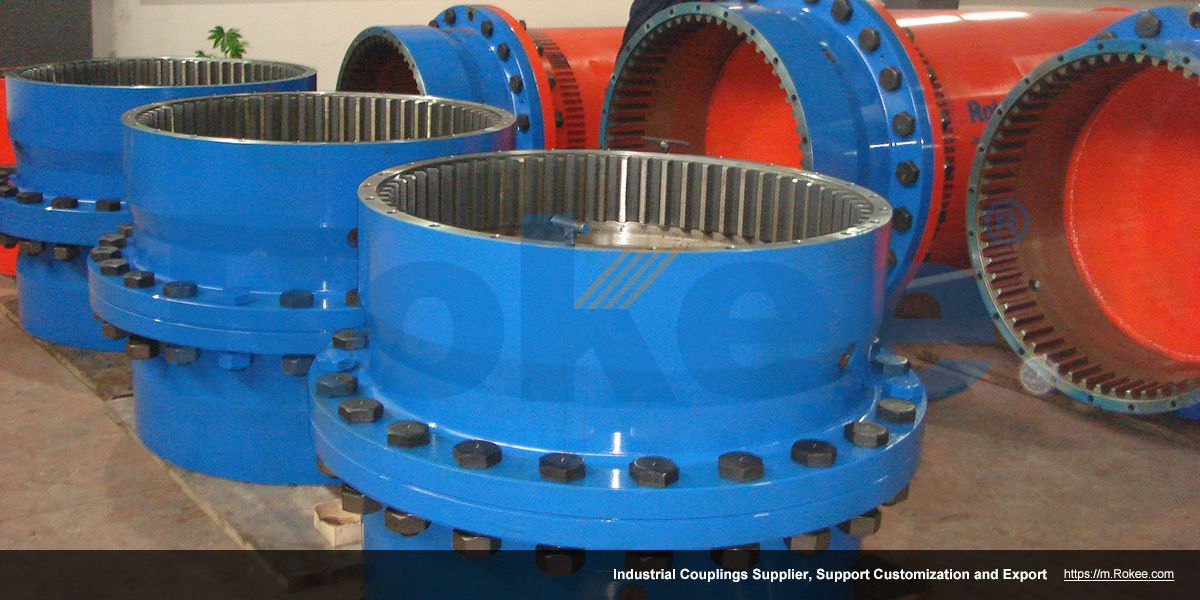
Brake Drum Gear Couplings
Rokee is a chinese Brake Drum Gear Couplings Manufacturer, provide Brake Drum Gear Couplings processing and customization services, Over the years, with excellent quality, we have been continuously providing many coupling products of various categories and uses complying with multiple standards and a full range of services, from the Brake Drum Gear Couplings selection to final installation and operation, for the industry fields of ferrous metallurgy, nuclear power, gas turbine, wind power, ropeway construction, lifting transportation, general equipment, etc. We strictly comply with quality system requirements and implement the whole process control to become a reliable and trustworthy partner of customers.
Providing customers with better Brake Drum Gear Couplings is always our driving force. Our aim is to transmit power for you and generate value for both of us. We look forward to joining you and becoming your partner for common progress.
-
![RODP Brake Drum Gear Couplings,RODP Drum Gear Coupling With Brake Disc]()
RODP Drum Gear Coupling With Brake Disc
The RODP Drum Gear Coupling is a type of ROD series coupling with a brake disc, suitable for transmission situations where braking needs to be used in conjunction with disc brakes.View More -
![RODF Brake Drum Gear Couplings,RODF Drum Gear Coupling With Split Brake Discs]()
RODF Drum Gear Coupling With Split Brake Discs
The RODF Drum Gear Coupling is a type of ROD series coupling with split brake discs, suitable for transmission situations where there is braking demand and the braking position changes when used in conjunction with disc brakes.View More -
![RODW Brake Drum Gear Couplings,RODW Drum Gear Coupling With Brake Wheel]()
RODW Drum Gear Coupling With Brake Wheel
The RODW Drum Gear Coupling is a type of ROD series coupling with brake wheels, suitable for transmission situations where braking needs to be used in conjunction with wheel brakes.View More -
![RODU Brake Drum Gear Couplings,RODU Drum Gear Coupling With Brake Wheel]()
RODU Drum Gear Coupling With Brake Wheel
The RODU Drum Gear Coupling is another type of ROD series coupling with brake wheels, suitable for transmission situations where braking needs to be used in conjunction with wheel brakes and applied to one end of the axle, achieving smoother and more reliable braking performance.View More -
![NGCL Brake Drum Gear Couplings,NGCL Drum Gear Coupling With Brake Wheel]()
NGCL Drum Gear Coupling With Brake Wheel
NGCL Drum Gear Coupling is designed with a brake wheel, suitable for situations where braking is required.View More -
![NGCLZ Brake Drum Gear Couplings,NGCLZ Drum Gear Coupling With Brake Wheel]()
NGCLZ Drum Gear Coupling With Brake Wheel
NGCLZ Drum Gear Coupling is designed with a brake wheel, suitable for situations where braking is required. Half of its structure adopts a semi-coupling sleeve design, with smaller angular displacement compensation but more stable braking.View More -
![WGZ Brake Drum Gear Couplings,WGZ Drum Gear Coupling With Brake Wheel]()
WGZ Drum Gear Coupling With Brake Wheel
WGZ Drum Gear Coupling is designed with a brake wheel, suitable for shoe type braking.View More -
![WGP Brake Drum Gear Couplings,WGP Drum Gear Coupling With Brake Discs]()
WGP Drum Gear Coupling With Brake Discs
WGP Drum Gear Coupling is designed with a brake disc, suitable for disc type braking.View More
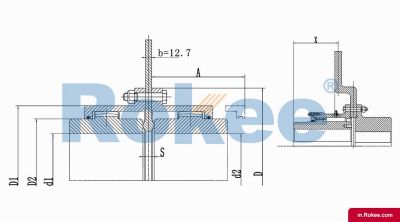
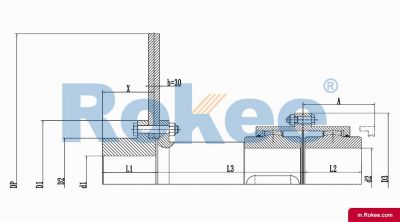
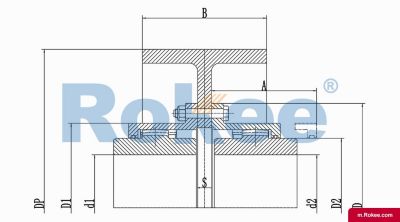
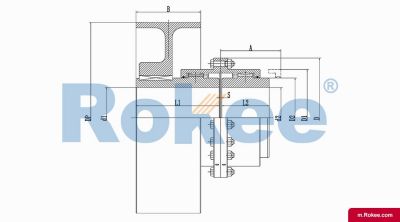
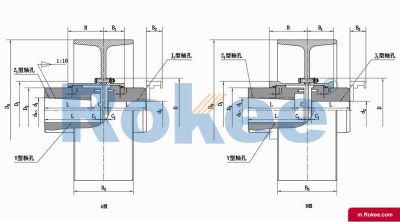
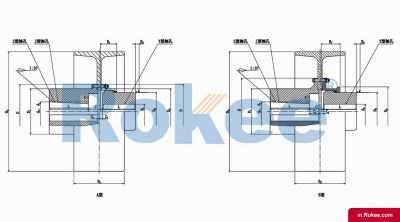
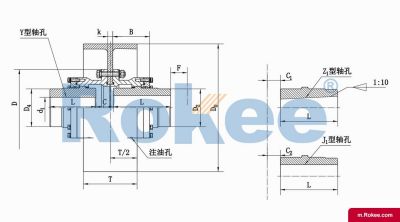
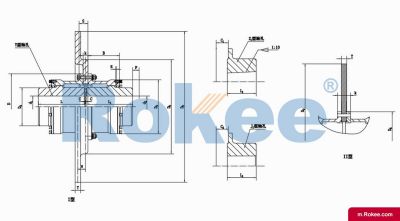
The brake drum gear coupling mainly consists of the brake drum, gear transmission part, and coupling body. Among them, the brake drum, as the core component of the braking system, achieves braking function through the interaction between friction pads and brake shoes; The gear transmission part is responsible for transmitting power from one end to the other, ensuring the normal operation of the mechanical system. The coupling body plays a role in connecting and supporting, ensuring the structural stability and transmission accuracy of the entire system.
The brake drum gear coupling, with its unique structure and excellent performance, has shown a wide range of application prospects in multiple fields. It has become an indispensable key component in fields such as heavy machinery, engineering machinery, automobile manufacturing, and aerospace.
In the field of mechanical power transmission, the brake drum gear coupling stands out as a highly versatile and robust component that seamlessly integrates torque transmission and braking functions into a single compact unit. Unlike standard gear couplings that only focus on connecting shafts and transferring rotational force, this specialized coupling merges the structural advantages of drum gear couplings with the functional necessity of a brake drum, making it an indispensable part in numerous industrial drive systems where controlled stopping, positioning, and emergency braking are critical. Designed to withstand heavy loads, compensate for shaft misalignment, and deliver reliable braking performance, it has become a staple in machinery that demands both efficient power transfer and precise motion control.
At its core, the brake drum gear coupling features a well-engineered composite structure that combines the key elements of a flexible drum gear coupling and a dedicated brake drum, with every component crafted to work in harmony for optimal functionality. The primary structural components include two hub assemblies with external gear teeth, a sleeve with internal gear teeth that meshes with the hub teeth, a rigidly integrated brake drum, and auxiliary parts such as fasteners, sealing elements, and lubrication fittings. The hub assemblies are the primary connection points, designed with precision-machined shaft bores and keyways to securely mount onto driving and driven shafts, ensuring a tight fit that prevents slippage even under extreme torque loads. The external teeth on the hubs are machined into a unique drum-shaped profile, a defining feature that sets drum gear couplings apart from conventional straight-tooth couplings; this curved tooth design centers the spherical profile on the gear axis, eliminating edge stress concentration during meshing and enabling smooth compensation for various types of shaft misalignment.
The internal gear sleeve, which encases the toothed portions of both hubs, features matching internal teeth that engage with the drum-shaped external teeth, creating a flexible yet rigid torque transmission path. This meshing mechanism allows the coupling to accommodate radial, axial, and angular misalignments between connected shafts without compromising power transfer efficiency, a critical trait in industrial settings where perfect shaft alignment is often difficult to achieve due to manufacturing tolerances, installation errors, or operational wear. The brake drum, a key functional component, is seamlessly integrated into the coupling structure, typically attached to one of the hub assemblies or the gear sleeve to form a unified body. It is machined with a smooth, durable outer surface designed to interact with brake shoes or pads, generating frictional force when braking is activated to halt or slow down the rotational motion of the entire shaft system. Sealing components are strategically installed at both ends of the gear sleeve to retain lubricant within the meshing tooth spaces and prevent the ingress of dust, moisture, debris, and other contaminants, which protects the gear surfaces from premature wear, corrosion, and damage. Fasteners are used to secure the sleeve and hubs in place, ensuring structural integrity during high-speed rotation and heavy-load operation, while lubrication ports provide a convenient pathway for applying grease or oil to maintain smooth tooth meshing and minimize friction losses.
The performance characteristics of brake drum gear couplings are tailored to meet the rigorous demands of heavy-duty industrial operation, blending the exceptional torque transmission capabilities of drum gear couplings with reliable braking performance. One of the most prominent performance advantages is its high torque-carrying capacity, enabled by the large contact area between the drum-shaped external teeth and internal sleeve teeth. This expanded contact distributes stress evenly across the tooth surfaces, allowing the coupling to transmit substantial torque loads without deformation or failure, making it suitable for heavy machinery that operates under constant high-stress conditions. Complementing its torque capacity is its superior misalignment compensation ability; the curved drum tooth design enables the coupling to tolerate moderate radial, axial, and angular deviations between shafts, reducing vibration, noise, and premature wear on connected equipment such as motors, gearboxes, and working machines. This flexibility not only extends the service life of the coupling itself but also protects the entire drive system from damage caused by misalignment-related stress.
Operational stability and durability are further hallmarks of the brake drum gear coupling’s performance. The robust construction, typically forged from high-strength carbon steel or alloy steel, ensures resistance to impact loads, fatigue, and mechanical wear, even in harsh working environments with high temperatures, dust, or heavy vibration. The integrated brake drum is engineered for consistent frictional performance, providing stable and controllable braking force without sudden jolts or inconsistent stopping, which is vital for maintaining operational safety and precision. Additionally, the coupling offers high transmission efficiency, with minimal power loss during torque transfer due to the precise tooth meshing and effective lubrication, reducing energy consumption and enhancing overall system efficiency. Maintenance requirements are relatively low, thanks to the durable gear surfaces, reliable sealing systems, and wear-resistant brake drum; routine lubrication and periodic inspection of tooth wear and brake drum surface condition are typically sufficient to keep the coupling operating smoothly over an extended service life. Unlike more complex power transmission components, it does not require frequent disassembly or part replacement, contributing to reduced downtime and lower long-term operational costs for industrial facilities.
Brake drum gear couplings are classified into distinct types based on structural design, braking mechanism, installation configuration, and application-specific requirements, each tailored to address unique operational needs and machinery setups. One primary classification is based on the braking interface, distinguishing between brake wheel type and brake disc type couplings. The brake wheel type features a cylindrical brake drum integrated with the coupling hub, designed to work with shoe brakes that press against the outer curved surface of the drum to create friction; this type is widely favored for its large frictional contact area, strong braking torque, and suitability for heavy-load braking scenarios where reliable stopping power is paramount. The brake disc type, by contrast, incorporates a flat brake disc into the coupling structure, paired with disc brake calipers that clamp onto both sides of the disc to achieve braking; this design offers faster response times, more precise control over braking force, and better heat dissipation, making it ideal for applications requiring quick stops and accurate positioning, such as high-speed conveying systems or precision manufacturing machinery.
Another key classification is based on structural complexity and misalignment compensation capacity, separating single-engagement and double-engagement brake drum gear couplings. Single-engagement models feature a simplified structure with one set of gear meshing between the hub and sleeve, offering compact dimensions, lower rotational inertia, and moderate misalignment compensation; they are suitable for systems with limited installation space and minimal shaft misalignment, where lightweight design and efficient power transfer are prioritized. Double-engagement couplings, equipped with two sets of gear meshing surfaces, provide enhanced flexibility and greater misalignment tolerance, along with higher torque transmission capacity. This robust design makes them the preferred choice for heavy-duty applications with significant shaft displacement, heavy impact loads, and demanding operational conditions. Couplings can also be categorized by installation orientation, including horizontal and vertical models. Horizontal types are engineered for standard horizontal shaft drive systems, the most common configuration in industrial machinery, while vertical types are specially designed for vertical shaft installations, such as pumps, mixers, and vertical conveyors, with reinforced structural support to handle axial loads and maintain stable operation in vertical orientations.
Further classification encompasses extended shaft types and standard shaft types, catering to varying distance requirements between driving and driven equipment. Standard shaft brake drum gear couplings are designed for direct shaft connections with short spacing, offering a compact footprint and straightforward installation. Extended shaft models feature an intermediate connecting shaft or pipe between the two gear hubs, enabling torque transmission over longer distances while retaining the integrated braking function; these are essential for machinery where the motor and working unit are separated by a significant gap, eliminating the need for additional intermediate transmission components and simplifying the overall drive system design. Regardless of classification, all types retain the core advantages of drum gear couplings – high torque capacity, misalignment compensation, and durability – while delivering specialized braking performance to match specific application demands.
The unique combination of torque transmission, misalignment compensation, and integrated braking makes brake drum gear couplings highly adaptable across a vast spectrum of industrial applications, wherever reliable power transfer and controlled braking are essential. In the lifting and material handling industry, they are extensively used in cranes, hoists, winches, and elevators, where precise load positioning and emergency braking are critical for operational safety. These couplings ensure smooth lifting and lowering of heavy loads, while the integrated brake drum provides reliable stopping power to prevent load slippage or equipment runaway, even in high-rise or heavy-load lifting scenarios. In conveying systems, including belt conveyors, chain conveyors, and roller conveyors used in mining, metallurgy, ports, and logistics, brake drum gear couplings facilitate steady material transportation and enable controlled shutdowns during maintenance or emergency situations, avoiding material spillage and equipment damage. Their ability to withstand heavy continuous loads and harsh environmental conditions makes them a reliable choice for these high-demand conveying applications.
The machinery manufacturing sector relies heavily on brake drum gear couplings in various processing equipment, such as lathes, milling machines, presses, and rolling mills. In metal forming and machining operations, these couplings deliver precise torque transfer for cutting, pressing, and rolling processes, while the braking function ensures accurate tool positioning and rapid stopping of rotating components, enhancing machining precision and operational safety. In the mining and metallurgical industry, where equipment operates under extreme conditions of heavy dust, high loads, and continuous operation, the robust construction and durable performance of brake drum gear couplings make them ideal for use in crushers, grinders, conveyors, and other mining machinery. They withstand severe mechanical stress and harsh environmental factors, providing consistent power transmission and reliable braking to maintain uninterrupted production flow.
Additional key applications include the construction machinery sector, where brake drum gear couplings are integrated into concrete mixers, road rollers, and pile drivers, supporting the heavy-load operation of construction equipment and enabling safe and controlled stopping on job sites. In the marine and shipbuilding industry, they are used in shipboard machinery such as winches, anchor windlasses, and propulsion auxiliary systems, offering corrosion-resistant performance and reliable braking in marine environments with high humidity and salt spray. They also find widespread use in water treatment facilities, power generation plants, and agricultural machinery, powering pumps, fans, threshers, and other equipment where efficient power transfer and dependable braking are required. Across all these applications, the brake drum gear coupling’s ability to combine two critical functions – torque transmission and braking – streamlines machinery design, reduces the number of components in the drive system, and enhances overall operational reliability and safety.
In summary, the brake drum gear coupling represents a masterful fusion of functional design and engineering practicality, integrating the strength and flexibility of drum gear couplings with the essential braking capability needed for modern industrial machinery. Its well-crafted structure ensures efficient torque transmission, effective misalignment compensation, and reliable braking performance, while its diverse classifications cater to the unique needs of different equipment and operating conditions. From lifting and material handling to mining, manufacturing, construction, and beyond, this versatile component plays a pivotal role in ensuring the smooth, safe, and efficient operation of countless industrial drive systems. As industrial technology continues to advance and machinery demands grow more rigorous, the brake drum gear coupling will remain a vital component, evolving alongside industry needs to deliver enhanced performance, durability, and functionality for years to come. Its enduring popularity across sectors is a testament to its superior design, practical utility, and ability to meet the most demanding operational challenges in the world of mechanical power transmission.
« Brake Drum Gear Couplings » Update Date: 2026/3/6
URL: https://m.rokee.com/tags/brake-drum-gear-couplings.html