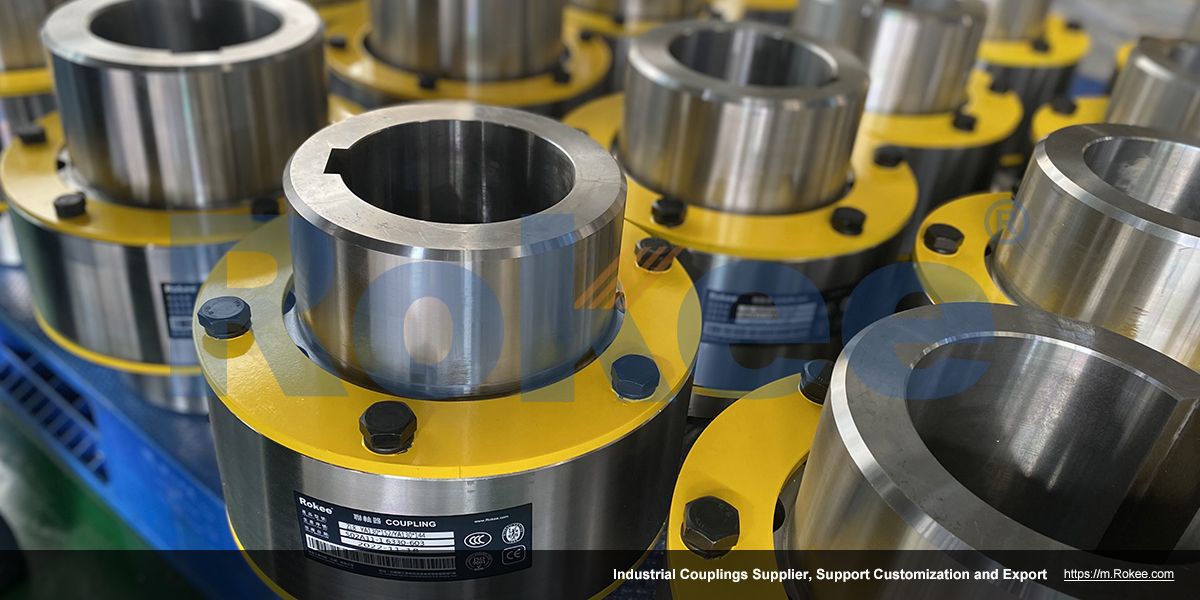
Bush Pin Type Couplings
Rokee is a chinese Bush Pin Type Couplings Manufacturer, provide Bush Pin Type Couplings processing and customization services, Over the years, with excellent quality, we have been continuously providing many coupling products of various categories and uses complying with multiple standards and a full range of services, from the Bush Pin Type Couplings selection to final installation and operation, for the industry fields of ferrous metallurgy, nuclear power, gas turbine, wind power, ropeway construction, lifting transportation, general equipment, etc. We strictly comply with quality system requirements and implement the whole process control to become a reliable and trustworthy partner of customers.
Providing customers with better Bush Pin Type Couplings is always our driving force. Our aim is to transmit power for you and generate value for both of us. We look forward to joining you and becoming your partner for common progress.
-
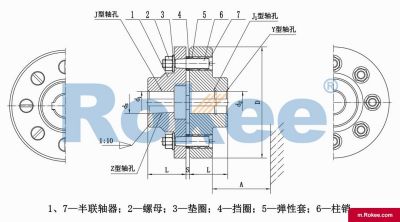
![LT Bush Pin Type Couplings,LT/TL Elastic Sleeve Pin Coupling]()
LT/TL Elastic Sleeve Pin Coupling
LT Elastic Sleeve Pin Coupling is the basic form of this series of couplings.View More -
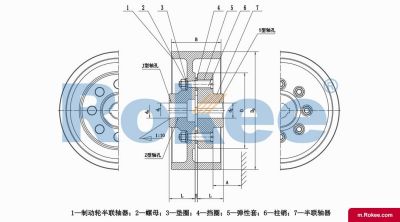
![LTZ Bush Pin Type Couplings,LTZ/TLL Elastic Sleeve Pin Coupling With Brake Wheel]()
LTZ/TLL Elastic Sleeve Pin Coupling With Brake Wheel
LTZ Elastic Sleeve Pin Coupling is designed with a brake wheel, suitable for situations where braking is required.View More
The bush pin type coupling is a mechanical device that achieves power transmission through the combination of elastic bushing and metal pin shaft.
Features
Elastic lining
Using polymer materials such as polyurethane, rubber, or nylon, absorb vibrations through elastic deformation and compensate for axial, radial, and angular deviations (typical compensation amounts: axial ± 0.5mm, radial ± 0.3mm, angular ± 1 °).Metal pin shaft
The material is mostly 45 # steel or TC4 titanium alloy, with surface high-frequency quenching treatment (hardness HRC50-55), which can withstand high shear forces.
The pin shaft and bushing are connected non rigidly, and dynamic centering is achieved through centrifugal force to reduce lateral loads.Flange connection design
Some models support quick detachable structures, which are compatible with the quick docking of motors and equipment shafts.
The floating intermediate ring design can further disperse stress and improve high-speed operation stability.
Application scenarios
Industrial motor drive
Suitable for equipment such as water pumps and fans, compensating for the alignment deviation between motors and load shafts, and reducing installation accuracy requirements.In the field of new energy
The wind turbine gearbox is connected to the generator and can withstand extreme temperature fluctuations and dynamic loads, replacing traditional gear couplings.Ship propulsion system
Underwater 500m pressure resistant design, with salt spray resistant coating added to the lining material, with a lifespan of over 100000 hours.
Specific selection needs to be consulted with professional engineers based on working conditions, and the aging condition of the lining should be checked regularly.
In the realm of mechanical power transmission, couplings serve as indispensable components that bridge rotating shafts, facilitating the transfer of torque while accommodating operational discrepancies and mitigating mechanical stress. Among the diverse array of coupling designs, the bush pin type coupling stands out as a versatile, robust, and widely adopted solution, prized for its balanced blend of flexibility, durability, and ease of use. Unlike rigid couplings that demand perfect shaft alignment and offer no tolerance for misalignment or vibration, bush pin type couplings integrate flexible elements into a sturdy pin-and-flange framework, making them suitable for a broad spectrum of industrial settings where shaft misalignment, shock loads, and torsional vibration are unavoidable.
To understand the functionality of bush pin type couplings, one must first examine their fundamental structural composition, which is engineered for simplicity, reliability, and efficient power transmission. At its core, a standard bush pin type coupling consists of two primary flanged hubs, a set of precision-machined cylindrical pins, and resilient bushing elements, along with minimal fastening hardware to secure the assembly. The two flanged hubs are typically forged or cast from high-strength metallic materials, such as ductile iron, carbon steel, or alloy steel, chosen for their ability to withstand sustained torque, radial forces, and operational wear without deformation or failure. Each hub features a series of evenly spaced, precision-drilled holes around its peripheral flange, aligned symmetrically to accommodate the connecting pins; these hubs are mounted securely onto the driving and driven shafts respectively, often via interference fits, keyways, or clamping mechanisms to ensure zero slippage during torque transmission.
The defining feature of the bush pin type coupling lies in the interaction between the rigid metal pins and the flexible bushings that encase them. The pins, constructed from hardened steel to resist bending, shear, and abrasion, pass through the aligned holes in both flanged hubs, creating a mechanical link between the two shafts. Each pin is fitted with a durable, elastic bushing—commonly fabricated from rubber, polyurethane, nylon, or other high-performance polymers—positioned between the pin surface and the inner wall of the hub’s pin holes. This bushing acts as a critical intermediary: it eliminates direct metal-to-metal contact between the pin and the hub, reducing friction and wear, while also introducing controlled flexibility into the coupling assembly. Unlike solid pin couplings that transmit torque rigidly, the bushing’s elastic properties allow for limited radial, angular, and axial movement between the two hubs, enabling the coupling to compensate for minor shaft misalignments that occur naturally in machinery due to manufacturing tolerances, thermal expansion, operational vibration, or foundation settling. The overall structure is inherently modular, with no complex internal gears, splines, or hydraulic components, simplifying manufacturing, assembly, disassembly, and routine maintenance tasks.
Beyond its straightforward structural design, the bush pin type coupling delivers a suite of exceptional performance characteristics that solidify its status as a preferred power transmission component across industries. Foremost among these is its ability to accommodate multiple forms of shaft misalignment simultaneously, a trait that sets it apart from rigid couplings and many less flexible flexible coupling variants. Radial misalignment, caused by parallel offset between the driving and driven shafts, angular misalignment, resulting from skewed shaft axes, and axial misalignment, stemming from endwise movement of shafts during operation—all are effectively managed by the elastic deformation of the bushings, preventing excessive stress from transferring to bearings, gears, and other critical drivetrain parts. This misalignment compensation not only extends the service life of connected machinery but also reduces the risk of premature mechanical failure, minimizing unplanned downtime in industrial operations.
Another key performance merit is the coupling’s superior shock absorption and vibration damping capabilities. In industrial machinery, sudden load fluctuations, frequent start-stop cycles, and impact loads—common in equipment such as pumps, compressors, and conveyors—generate torsional vibration and mechanical shock that can damage delicate components and degrade operational stability. The resilient bushings in the pin bush coupling act as a natural shock absorber, compressing and rebounding to absorb sudden energy surges and dampen vibrational forces, smoothing out power transmission and ensuring quieter, more stable operation. This damping effect also reduces noise pollution in working environments, a significant advantage in facilities where noise reduction is a priority. Additionally, the coupling exhibits high torsional rigidity paired with controlled flexibility, meaning it can transmit substantial torque efficiently without excessive wind-up, while still retaining the ability to flex under misalignment and shock loads; this balance makes it suitable for both low-speed, high-torque applications and moderate-speed, variable-load scenarios.
Durability and low maintenance requirements further enhance the performance appeal of bush pin type couplings. The metallic hubs and hardened pins resist wear, corrosion, and fatigue under normal operating conditions, while the elastic bushings are designed to be the primary wear component, a deliberate engineering choice that simplifies upkeep. Unlike gear couplings or fluid couplings that require regular lubrication, complex sealing, or specialized maintenance, most bush pin type couplings operate without the need for lubrication, as the polymer bushings provide inherent friction resistance and self-lubricating properties in many cases. When bushings do wear out over extended use, they can be quickly replaced without removing the entire coupling from the shafts, reducing maintenance time and labor costs. The coupling also demonstrates excellent thermal stability, performing reliably across a wide range of operating temperatures, from extreme cold in outdoor or refrigerated systems to high heat in heavy industrial processes, without compromising its flexible or load-bearing properties. Furthermore, it offers reliable overload protection: in the event of a sudden, excessive torque surge, the bushings will deform or fail gradually, acting as a sacrificial component to prevent damage to the driving motor, gearbox, or driven equipment, safeguarding the entire drivetrain from catastrophic failure.
Bush pin type couplings are not a one-size-fits-all solution; instead, they are manufactured in several distinct varieties, each tailored to address specific operational requirements, load conditions, and spatial constraints. These classifications are primarily based on structural modifications, bushing design, and application-specific features, ensuring compatibility with diverse machinery setups. The most common variant is the standard flexible bush pin coupling, the baseline design featuring two compact flanged hubs, straight cylindrical pins, and molded elastic bushings. This general-purpose model is optimized for moderate torque loads, low to moderate operating speeds, and small to moderate misalignment compensation, making it the most widely used across general industrial applications. Its compact footprint and simple construction make it ideal for machinery with limited installation space, such as small to medium-sized electric motors, centrifugal pumps, fans, and blowers.
A second prominent variety is the spacer-type bush pin coupling, distinguished by the inclusion of a rigid spacer sleeve between the two flanged hubs. This spacer creates a fixed axial gap between the driving and driven shafts, a critical design feature for applications where shaft separation is necessary—such as in equipment with integrated bearings, mechanical seals, or maintenance access requirements, or in long-shaft drivetrains where direct hub contact is impractical. The spacer maintains the coupling’s flexibility and misalignment compensation capabilities while extending the axial reach, making it suitable for pumps, compressors, and conveyor systems where shaft spacing is a key design consideration. Some spacer-type couplings also feature adjustable spacer lengths, allowing for minor customization to fit specific shaft distances without compromising performance.
Heavy-duty bush pin couplings represent a third major classification, engineered to withstand extreme torque loads, harsh operating environments, and severe mechanical stress. These variants feature reinforced flanged hubs constructed from high-grade alloy steel, thicker, hardened pins, and heavy-duty, high-durability bushings made from reinforced rubber or polyurethane composites. The hub flanges are often thicker and more robust, with additional pin holes to distribute torque across a larger contact area, enhancing load-bearing capacity and resistance to fatigue. This type of coupling is designed for heavy industrial machinery that operates under continuous high loads, frequent shock impacts, and abrasive conditions, where standard flexible couplings would fail prematurely. Unlike standard models, heavy-duty bush pin couplings prioritize maximum torque transmission and structural integrity, while still retaining sufficient flexibility to compensate for the larger misalignments common in heavy equipment.
Additional specialized varieties include elastic sleeve bush pin couplings, which feature extended elastic sleeves that cover more of the pin length for enhanced misalignment tolerance and vibration damping, ideal for equipment with erratic load patterns; and brake wheel-integrated bush pin couplings, which incorporate a brake drum into one of the flanged hubs to combine power transmission and braking functions in a single compact unit, suitable for material handling equipment such as hoists, cranes, and winches that require reliable stopping capabilities. Regardless of the specific variety, all bush pin type couplings retain the core pin-and-bushing design principle, ensuring consistent performance advantages while adapting to unique operational demands.
The combination of robust structure, versatile performance, and diverse classifications makes bush pin type couplings a staple in nearly every sector of industrial and mechanical engineering, with applications spanning light-duty commercial machinery to heavy-duty industrial processing equipment. In the general manufacturing and machinery sector, these couplings are ubiquitous in small to medium-scale power transmission systems, connecting electric motors to gearboxes, pumps, fans, compressors, and conveyor belts. Their ability to handle minor misalignments and dampen vibration ensures smooth operation of assembly lines, packaging machinery, and material handling equipment, improving production efficiency and reducing mechanical wear. In agricultural machinery, where equipment operates in dusty, uneven conditions and experiences frequent load changes, bush pin couplings connect engines to tractors, harvesters, irrigation pumps, and other farm implements, providing reliable torque transmission while absorbing the shock of rough terrain and variable workloads.
The chemical, oil, and gas processing industries rely heavily on bush pin type couplings for critical fluid handling equipment, including centrifugal pumps, reciprocating compressors, agitators, and mixers. These couplings are well-suited to this sector due to their resistance to mild chemical exposure, low maintenance needs, and ability to operate reliably in harsh, corrosive, or high-temperature environments; their misalignment compensation is particularly valuable here, as thermal expansion in process piping and equipment can cause significant shaft displacement. In the mining and construction industries, heavy-duty bush pin couplings are the go-to choice for rugged machinery such as crushers, grinders, excavators, and concrete mixers, where extreme torque, continuous operation, and severe shock loads are the norm. The reinforced construction of heavy-duty variants withstands the abrasive conditions and heavy stresses of mining and construction sites, ensuring uninterrupted operation in demanding off-site and outdoor settings.
Marine and offshore engineering also extensively utilizes bush pin type couplings, particularly in marine propulsion systems, onboard pumps, fans, and auxiliary machinery. The coupling’s corrosion-resistant material options and ability to compensate for shaft misalignment caused by vessel movement and hull flexing make it ideal for marine applications, where reliability and resistance to saltwater exposure are paramount. Additionally, in the power generation sector, bush pin couplings connect turbines, generators, and auxiliary equipment, providing stable power transmission while dampening the vibration generated by high-speed rotating components. Even in automotive and transportation engineering, these couplings find use in auxiliary systems such as vehicle-mounted pumps, compressors, and hydraulic systems, where compact size, reliability, and flexibility are essential.
In summary, the bush pin type coupling represents a masterclass in mechanical engineering design, merging simplicity, flexibility, and durability to create a power transmission component that addresses the most common challenges in shaft connectivity. Its well-engineered structure—centered on rigid hubs, hardened pins, and resilient bushings—delivers exceptional misalignment compensation, shock absorption, and vibration damping, while its diverse classifications cater to every conceivable load, speed, and spatial requirement. From light-duty commercial equipment to heavy industrial machinery, from indoor manufacturing facilities to harsh outdoor and marine environments, the bush pin type coupling proves its value consistently, offering reliable performance, low maintenance, and long service life. As industrial technology continues to evolve and machinery demands grow more stringent, the fundamental advantages of the bush pin type coupling ensure its enduring relevance and widespread adoption in the global mechanical engineering landscape, remaining a cornerstone of efficient, reliable power transmission systems for years to come.
« Bush Pin Type Couplings » Update Date: 2026/3/6
URL: https://m.rokee.com/tags/bush-pin-type-couplings.html