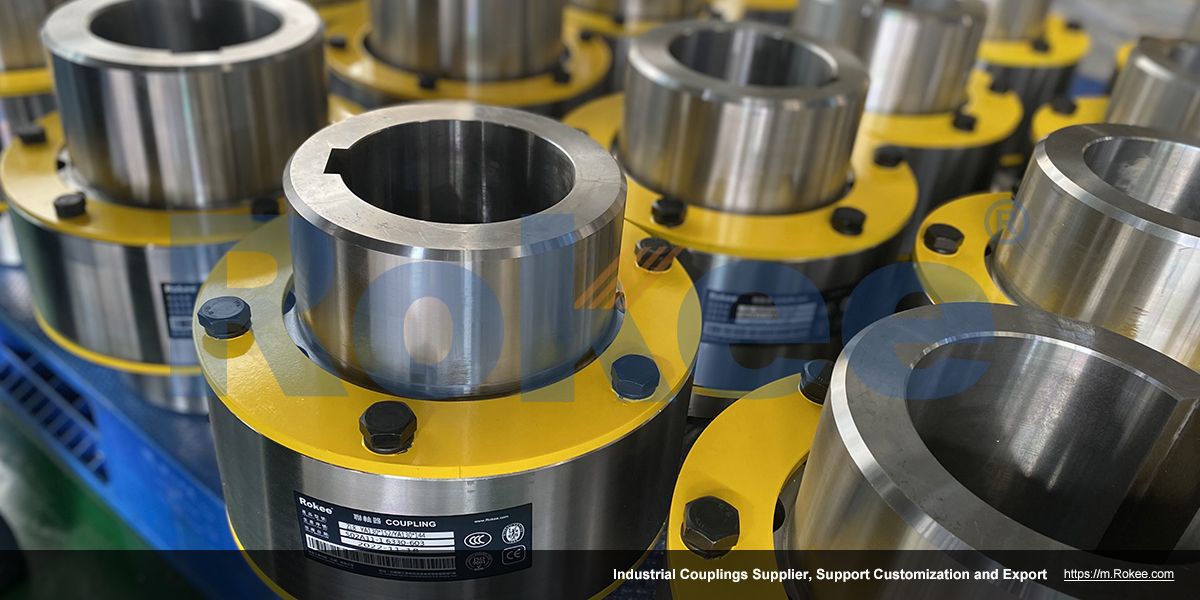
Bush Pin Type Flexible Couplings
Rokee is a chinese Bush Pin Type Flexible Couplings Manufacturer, provide Bush Pin Type Flexible Couplings processing and customization services, Over the years, with excellent quality, we have been continuously providing many coupling products of various categories and uses complying with multiple standards and a full range of services, from the Bush Pin Type Flexible Couplings selection to final installation and operation, for the industry fields of ferrous metallurgy, nuclear power, gas turbine, wind power, ropeway construction, lifting transportation, general equipment, etc. We strictly comply with quality system requirements and implement the whole process control to become a reliable and trustworthy partner of customers.
Providing customers with better Bush Pin Type Flexible Couplings is always our driving force. Our aim is to transmit power for you and generate value for both of us. We look forward to joining you and becoming your partner for common progress.
-
![LT Bush Pin Type Flexible Couplings,LT/TL Elastic Sleeve Pin Coupling]()
LT/TL Elastic Sleeve Pin Coupling
LT Elastic Sleeve Pin Coupling is the basic form of this series of couplings.View More -
![LTZ Bush Pin Type Flexible Couplings,LTZ/TLL Elastic Sleeve Pin Coupling With Brake Wheel]()
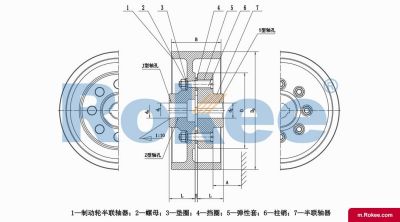
LTZ/TLL Elastic Sleeve Pin Coupling With Brake Wheel
LTZ Elastic Sleeve Pin Coupling is designed with a brake wheel, suitable for situations where braking is required.View More
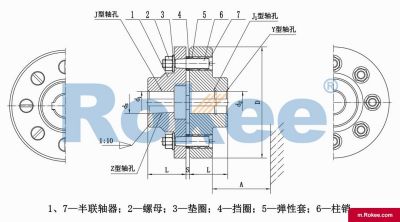
The bush pin type flexible coupling is a mechanical device that achieves power transmission through the combination of elastic bushing and pin shaft. Its core design includes the following elements:
Elastic lining: usually made of polymer materials such as polyurethane and rubber, it absorbs vibration through deformation and compensates for axial/radial deviation (compensation amount can reach ± 0.5mm, angle deviation ≤ 3 °).
Metal pin shaft: made of 45 # steel or alloy steel material, with surface high-frequency quenching treatment (hardness HRC50-55) to ensure shear resistance during torque transmission.
Flange connection structure: standard flange interface, supports quick disassembly design, adapts to the quick docking of motors and equipment shafts.
In the vast landscape of mechanical power transmission systems, flexible couplings stand as indispensable components that bridge rotating shafts, mitigate operational stresses, and ensure seamless energy transfer across diverse industrial machinery. Among the myriad flexible coupling designs, the bush pin type flexible coupling has earned widespread adoption for its balanced blend of simplicity, durability, and functional versatility, catering to the nuanced demands of low-to-medium speed, moderate torque, and misalignment-prone transmission setups. Unlike rigid couplings that enforce strict shaft alignment and transfer shock loads directly between connected components, this coupling variant integrates flexible elastomeric elements to absorb vibrations, compensate for positional discrepancies, and protect adjacent machinery from premature wear and mechanical failure, making it a cornerstone in general industrial and heavy-duty mechanical assemblies alike. To fully grasp its operational value and industrial relevance, it is critical to dissect its fundamental structural composition, core performance attributes, distinct classification criteria, and targeted application scenarios, while highlighting how each design element and performance trait aligns with real-world mechanical operational needs.
At its core, the bush pin type flexible coupling features a straightforward yet robust structural framework, composed of a small number of precision-engineered components that work in tandem to deliver reliable torque transmission and flexible shaft connection. The primary structural elements include two flanged half-couplings, a set of hardened metal pins, and elastic bushings crafted from high-performance non-metallic materials, typically rubber, polyurethane, or nylon composites. The two half-couplings are mounted securely onto the driving and driven shafts respectively, featuring evenly spaced radial holes around their flange peripheries that are sized to accommodate the metal pins and surrounding elastic bushings. The metal pins, manufactured from high-strength alloy steel to resist shear forces and bending stresses, pass through the aligned holes in both half-couplings, with each pin encased in a precisely fitted elastic bushing that acts as the critical flexible intermediary. This layered design eliminates direct metal-to-metal contact between the pins and the half-coupling flanges, replacing rigid contact with elastic compression and deformation that underpins the coupling’s flexible performance. Unlike complex gear or diaphragm couplings that feature intricate tooth profiles or thin metallic membranes, the bush pin flexible coupling lacks intricate moving parts or precision-machined interfaces, streamlining manufacturing processes and reducing production complexity while maintaining high mechanical integrity. The absence of internal lubrication channels or sealed bearing components further simplifies its structure, eliminating the need for regular lubrication maintenance and minimizing the risk of lubricant leakage or contamination in sensitive operating environments. Each component is engineered to complement the others: the half-couplings provide stable shaft mounting and torque distribution, the metal pins transmit torsional force across the coupling assembly, and the elastic bushings absorb dynamic shocks, dampen resonant vibrations, and accommodate minor shaft misalignments that are inevitable in real-world mechanical installations due to manufacturing tolerances, thermal expansion, or operational settling.
The operational principle of the bush pin type flexible coupling revolves around the synergistic interaction between its rigid metal components and flexible elastomeric bushings, enabling efficient torque transfer while preserving the coupling’s flexible characteristics. When the driving shaft rotates, torsional force is transferred from the driving half-coupling to the metal pins, which then transmit the force to the driven half-coupling via the compressed elastic bushings. During this process, the elastic bushings undergo controlled elastic deformation—compression, shear, and slight torsional twist—rather than rigidly transferring the full force instantaneously. This controlled deformation serves two pivotal functions: it smooths out torque fluctuations and shock loads generated by the driving machine, preventing sudden jolts from damaging gears, bearings, or other precision components in the transmission chain, and it accommodates three primary types of shaft misalignment that commonly plague mechanical systems. Angular misalignment, where the axes of the driving and driven shafts intersect at a small angle, parallel misalignment, where the shaft axes remain parallel but are offset radially, and axial misalignment, where the shafts shift longitudinally along their axes, are all effectively compensated by the flexible deformation of the bushings, without imposing excessive stress on the shafts or coupling components. This ability to tolerate misalignment is a defining performance advantage, as it reduces the precision required for initial shaft alignment during installation, cuts down on installation time and labor costs, and extends the service life of the entire transmission system by reducing fatigue stress. Additionally, the elastomeric bushings deliver exceptional vibration damping properties, absorbing high-frequency vibrations generated by rotating machinery such as electric motors, pumps, or gearboxes, and reducing noise emissions during operation. This noise and vibration reduction not only improves workplace safety and comfort but also prevents vibrational energy from propagating to adjacent machinery and structural supports, minimizing the risk of secondary damage and operational instability.
Beyond misalignment compensation and vibration damping, the bush pin type flexible coupling boasts a suite of performance traits that enhance its practicality and reliability across diverse operating conditions. One key performance attribute is its exceptional torsional elasticity paired with adequate torsional stiffness, striking a delicate balance that ensures efficient torque transmission without excessive wind-up or energy loss. The coupling can handle moderate torque loads consistently, with the load-bearing capacity tailored by adjusting the number and diameter of the metal pins, as well as the material hardness and wall thickness of the elastic bushings, allowing for customization to match specific transmission requirements. It exhibits strong resistance to dynamic shock loads, making it suitable for machinery with intermittent operation, frequent start-stop cycles, or variable load conditions, such as conveyor systems, crushers, or agricultural equipment, where sudden load spikes are common. The non-metallic elastic bushings also offer good resistance to common environmental stressors, including oil contamination, moisture, mild chemical exposure, and moderate temperature fluctuations, though performance may vary based on the specific elastomer material selected; rubber bushings excel in vibration damping, while polyurethane and nylon bushings offer enhanced wear resistance and load-bearing capacity for more demanding applications. Maintenance requirements are exceptionally low compared to other flexible coupling types, as the design eliminates the need for periodic lubrication, internal adjustments, or complex disassembly for inspections. Routine maintenance typically involves visual checks of the elastic bushings for signs of wear, cracking, or compression set, and straightforward replacement of worn bushings without removing the half-couplings from the shafts, minimizing downtime and maintenance costs for industrial operators. The coupling also features reliable reverse rotation capability, maintaining consistent performance regardless of the direction of shaft rotation, a critical trait for machinery that operates in both clockwise and counterclockwise directions. Furthermore, its compact, lightweight design relative to its torque-transmitting capacity allows for easy integration into space-constrained mechanical assemblies, without compromising structural strength or operational stability.
While adhering to the core structural blueprint of flanged half-couplings, metal pins, and elastic bushings, the bush pin type flexible coupling is available in several distinct variants, each optimized to address specific operational constraints, load requirements, and installation scenarios. These classifications are primarily based on design modifications, structural adaptations, and functional specializations, ensuring compatibility with a wide spectrum of industrial transmission systems. The most common type is the standard flange bush pin coupling, the baseline design that features solid flanged half-couplings with evenly distributed pin holes and standard elastomeric bushings, engineered for general-purpose applications involving low-to-medium torque, moderate rotational speeds, and minor shaft misalignment. This variant is the most widely produced and utilized, valued for its universal compatibility and cost-effective performance across routine industrial tasks. A second prominent variant is the spacer-type bush pin flexible coupling, which incorporates a rigid spacer sleeve between the two half-couplings to increase the axial distance between the driving and driven shafts. This design is tailored for applications where a fixed gap between shafts is required, such as in pump systems, fan assemblies, or machinery with integrated support bearings, addressing spatial limitations without sacrificing flexibility or torque transmission efficiency. The spacer is precision-machined to maintain alignment stability and can be customized to varying lengths to suit specific installation requirements. A third specialized variant is the brake wheel-equipped bush pin coupling, which integrates a friction brake wheel into one of the half-coupling flanges, combining the functions of power transmission and mechanical braking in a single compact unit. This design is ideal for machinery that requires immediate stopping or holding capability, such as cranes, hoists, elevators, and material handling equipment, eliminating the need for a separate braking component and simplifying the overall mechanical assembly. Additionally, there are heavy-duty variants of the standard bush pin coupling, featuring reinforced metal pins, thicker flanged half-couplings, and high-density elastomeric bushings, engineered to withstand higher torque loads, harsher operating conditions, and more severe shock loads encountered in heavy industrial settings such as mining, construction, and metallurgical processing. Each variant retains the core advantages of the bush pin design—simplicity, low maintenance, and misalignment tolerance—while incorporating targeted modifications to meet niche operational demands, ensuring that the coupling can be adapted to virtually any non-precision transmission application.
The unique combination of structural simplicity, reliable performance, and adaptable design makes the bush pin type flexible coupling a staple component across countless industrial sectors, where it serves as a critical link in power transmission systems for a vast array of machinery and equipment. In the general machinery sector, it is extensively used in connection with electric motors, gearboxes, reducers, and pumps, facilitating smooth power transfer between rotating shafts in water treatment systems, HVAC equipment, and small-scale manufacturing machinery. Its vibration damping properties make it particularly well-suited for centrifugal pumps, fans, and blowers, reducing operational noise and preventing vibration-induced damage to pump impellers, fan blades, and pipeline systems. In the agricultural machinery industry, the coupling’s durability and resistance to dust, moisture, and intermittent loads make it ideal for tractors, harvesters, seeders, and irrigation equipment, where it connects engine power to transmission systems, drive shafts, and working components, enduring the harsh outdoor conditions and variable load cycles typical of agricultural operations. The material handling and lifting equipment sector relies heavily on brake wheel-equipped variants for cranes, forklifts, hoists, and conveyor belts, leveraging the coupling’s dual transmission and braking functionality to ensure safe and efficient material movement, with reliable misalignment tolerance compensating for the structural shifts that occur during heavy lifting and transportation. In the mining and construction industry, heavy-duty bush pin couplings are deployed in crushers, grinders, excavators, and concrete mixers, withstanding the extreme shock loads, dust contamination, and continuous operation inherent to these heavy-duty machines, while protecting expensive drive components from premature failure. The chemical and food processing industries utilize standard and corrosion-resistant variants to connect motors and pumps in fluid transfer systems, where the non-lubricated design prevents product contamination and the elastic bushings resist mild chemical exposure from processed materials or cleaning agents. Furthermore, the coupling finds application in marine machinery, textile manufacturing equipment, printing presses, and woodworking machinery, wherever reliable, low-maintenance flexible shaft connection is required for moderate speed and torque applications. Its widespread adoption stems not only from its functional performance but also from its cost-effectiveness, ease of installation, and minimal maintenance demands, making it a practical and economical choice for both large-scale industrial plants and small-scale manufacturing operations.
In summary, the bush pin type flexible coupling represents a masterclass in practical mechanical engineering, merging uncomplicated structural design with high-performance functionality to address the core challenges of shaft connection and power transmission. Its well-engineered composition of flanged half-couplings, hardened metal pins, and elastic bushings enables efficient torque transfer, effective misalignment compensation, and superior vibration damping, while its diverse variants cater to specialized operational needs across multiple industrial sectors. Unlike more complex and costly flexible coupling alternatives, it delivers consistent reliability with minimal maintenance, offering a cost-efficient solution for the vast majority of low-to-medium speed, moderate torque transmission applications. As industrial machinery continues to evolve toward greater efficiency and durability, the bush pin type flexible coupling remains a timeless and essential component, adapting to emerging operational demands while retaining its core strengths of simplicity, versatility, and robust performance. Its enduring popularity across global industries underscores its status as a foundational element in mechanical power transmission, proving that effective engineering solutions often prioritize practicality and functionality alongside technical performance, and that even the most straightforward designs can deliver exceptional value in real-world industrial environments.
« Bush Pin Type Flexible Couplings » Update Date: 2026/3/6
URL: https://m.rokee.com/tags/bush-pin-type-flexible-couplings.html