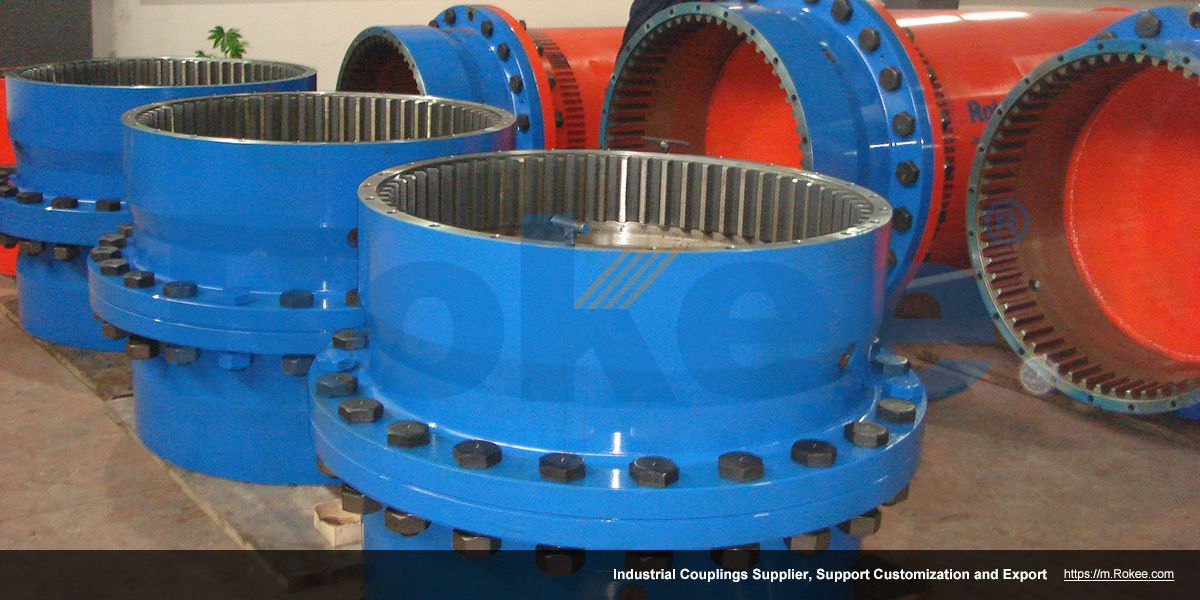
Brake Drum Geared Couplings
Rokee is a chinese Brake Drum Geared Couplings Manufacturer, provide Brake Drum Geared Couplings processing and customization services, Over the years, with excellent quality, we have been continuously providing many coupling products of various categories and uses complying with multiple standards and a full range of services, from the Brake Drum Geared Couplings selection to final installation and operation, for the industry fields of ferrous metallurgy, nuclear power, gas turbine, wind power, ropeway construction, lifting transportation, general equipment, etc. We strictly comply with quality system requirements and implement the whole process control to become a reliable and trustworthy partner of customers.
Providing customers with better Brake Drum Geared Couplings is always our driving force. Our aim is to transmit power for you and generate value for both of us. We look forward to joining you and becoming your partner for common progress.
-
![RODP Brake Drum Geared Couplings,RODP Drum Gear Coupling With Brake Disc]()
RODP Drum Gear Coupling With Brake Disc
The RODP Drum Gear Coupling is a type of ROD series coupling with a brake disc, suitable for transmission situations where braking needs to be used in conjunction with disc brakes.View More -
![RODF Brake Drum Geared Couplings,RODF Drum Gear Coupling With Split Brake Discs]()
RODF Drum Gear Coupling With Split Brake Discs
The RODF Drum Gear Coupling is a type of ROD series coupling with split brake discs, suitable for transmission situations where there is braking demand and the braking position changes when used in conjunction with disc brakes.View More -
![RODW Brake Drum Geared Couplings,RODW Drum Gear Coupling With Brake Wheel]()
RODW Drum Gear Coupling With Brake Wheel
The RODW Drum Gear Coupling is a type of ROD series coupling with brake wheels, suitable for transmission situations where braking needs to be used in conjunction with wheel brakes.View More -
![RODU Brake Drum Geared Couplings,RODU Drum Gear Coupling With Brake Wheel]()
RODU Drum Gear Coupling With Brake Wheel
The RODU Drum Gear Coupling is another type of ROD series coupling with brake wheels, suitable for transmission situations where braking needs to be used in conjunction with wheel brakes and applied to one end of the axle, achieving smoother and more reliable braking performance.View More -
![NGCL Brake Drum Geared Couplings,NGCL Drum Gear Coupling With Brake Wheel]()
NGCL Drum Gear Coupling With Brake Wheel
NGCL Drum Gear Coupling is designed with a brake wheel, suitable for situations where braking is required.View More -
![NGCLZ Brake Drum Geared Couplings,NGCLZ Drum Gear Coupling With Brake Wheel]()
NGCLZ Drum Gear Coupling With Brake Wheel
NGCLZ Drum Gear Coupling is designed with a brake wheel, suitable for situations where braking is required. Half of its structure adopts a semi-coupling sleeve design, with smaller angular displacement compensation but more stable braking.View More -
![WGZ Brake Drum Geared Couplings,WGZ Drum Gear Coupling With Brake Wheel]()
WGZ Drum Gear Coupling With Brake Wheel
WGZ Drum Gear Coupling is designed with a brake wheel, suitable for shoe type braking.View More -
![WGP Brake Drum Geared Couplings,WGP Drum Gear Coupling With Brake Discs]()
WGP Drum Gear Coupling With Brake Discs
WGP Drum Gear Coupling is designed with a brake disc, suitable for disc type braking.View More
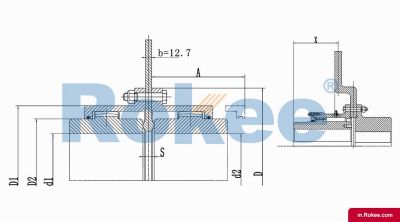
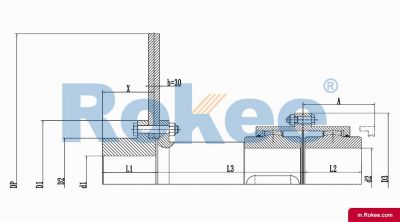
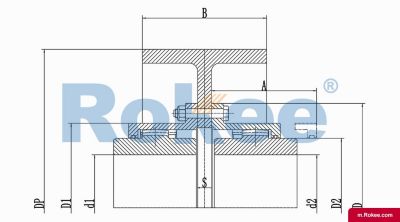
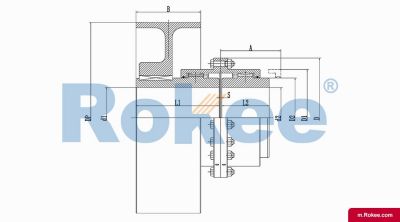
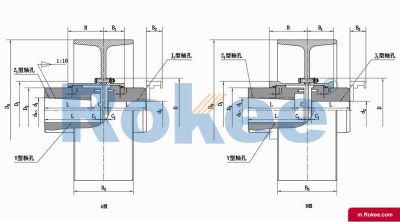
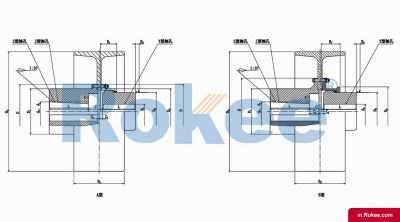
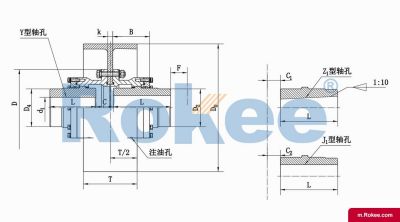
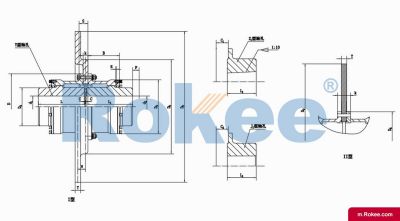
The brake drum geared coupling is a mechanical transmission component that integrates a drum shaped gear coupling with a braking device. Its core structure consists of an inner gear ring, a flange half coupling with outer teeth, and a brake drum (or brake disc). The external gear of this coupling adopts a unique drum shaped design, with a spherical tooth tip and a spherical center located on the gear axis, which has a larger tooth flank clearance compared to ordinary spur gear couplings. This structural feature enables it to effectively compensate for axial, radial, and angular displacement deviations in the transmission system, while achieving rapid braking function of the transmission system through an integrated braking device.
Drum shaped tooth design is the core technical feature of this type of coupling. Specifically, the teeth on the outer gear shaft sleeve are drum shaped, and the tooth thickness gradually decreases from the center to both sides, while the teeth on the matching inner gear ring maintain a straight tooth form. Due to the arc-shaped tooth tips and tooth surfaces of the external gear shaft sleeve, the entire coupling actually forms a double joint structure with significant flexibility, which can adapt to large angular deviations between the two shafts (usually allowing angular displacement of up to 1 ° 30 ', which is 50% higher than that of a straight tooth coupling). In working condition, when the two shafts produce relative angular displacement, the tooth surfaces of the inner and outer teeth will periodically slide axially relative to each other. This design effectively improves the contact conditions of the tooth surfaces and avoids the stress concentration problem caused by the edge compression of the tooth end under angular displacement conditions of the spur gear coupling.
The brake components in the brake drum geared coupling are usually designed as a whole with the coupling, and can be divided into brake wheel type (such as WGZ type, NGCLZ type) and brake disc type (such as WGP type) according to different models. The brake drum is generally installed on the outer edge of the coupling, and achieves braking function through frictional contact with the external brake shoes. This integrated design saves installation space and simplifies the system structure, making it particularly suitable for applications that require frequent start stop or emergency braking.
From the perspective of material selection, brake drum geared couplings are usually made of high-quality alloy steel, with the tooth surface treated by carburizing and quenching, and the surface hardness can reach HRC50-60, ensuring both load-bearing capacity and improving wear resistance. Lubrication methods are divided into two forms based on different application scenarios: grease lubrication and forced thin oil lubrication. The latter can not only lubricate the tooth surface by circulating thin oil, but also take away the heat generated by friction, significantly extending the service life of the coupling (the wear of thin oil lubrication is only about 10% of that of grease lubrication).
The brake drum geared coupling combines the dual advantages of drum gear transmission and mechanical braking, demonstrating outstanding performance in various aspects in industrial transmission systems. Compared with traditional spur gear couplings, this type of coupling has significantly improved load-bearing capacity, displacement compensation, transmission efficiency, and braking performance, making it an ideal choice for heavy machinery and precision transmission systems.
Excellent load-bearing and transmission performance is the primary characteristic of brake drum geared couplings. Under the same outer diameter of the inner gear sleeve and the maximum outer diameter of the coupling, the load-bearing capacity of the drum shaped gear coupling is on average 15% -20% higher than that of the spur gear coupling. This improvement is due to the optimized contact distribution of the drum shaped tooth surface, which enables the load to be more evenly distributed on multiple tooth surfaces, avoiding local stress concentration. At the same time, its transmission efficiency is as high as 99.7%, with almost no power loss, which is particularly important for high-power transmission systems. For example, in the practical application of GIICL drum tooth coupling, users have reported a significant reduction in equipment vibration and energy consumption, fully reflecting its efficient transmission characteristics.
In terms of displacement compensation capability, the brake drum geared coupling performs excellently. It can simultaneously compensate for radial, axial, and angular axis deviations, with angular displacement compensation increasing by 50% compared to spur gear couplings. The specific parameters are as follows: when the radial displacement is zero, the allowable angular displacement can reach 1 ° 30 '; Under the same modulus, number of teeth, and tooth width conditions, drum shaped teeth allow for a larger comprehensive displacement. This feature makes equipment installation and debugging more convenient, and also reduces vibration and wear caused by poor shaft alignment. Taking the WGT type intermediate sleeve drum shaped gear coupling as an example, its special design can meet the requirements of rolling mill roll by roll, and the expansion and contraction adjustment is very convenient.
The integrated braking function of the brake drum geared coupling is its core feature that distinguishes it from ordinary drum shaped gear couplings. The brake drum or brake disc with integrated design has high coaxiality with the coupling body, ensuring a smooth and reliable braking process. According to different models, brake components can be divided into drum type (such as WGZ type) and disc type (such as WGP type). Drum brakes have a compact structure and high braking torque, making them suitable for low-speed and heavy-duty applications; Disc brakes have good heat dissipation performance, sensitive response, and are suitable for frequent braking conditions. This integrated design not only saves installation space, but also simplifies the transmission system structure and improves overall reliability.
In the field of industrial power transmission, the brake drum geared coupling stands out as a highly versatile and reliable mechanical component, seamlessly integrating the torque transmission function of a geared coupling with the braking capability of a dedicated brake drum. This unique combination makes it an indispensable part of numerous mechanical systems that demand both efficient power delivery and precise, timely braking control. Unlike standard geared couplings that focus solely on shaft connection and torque transfer, or standalone brake components that lack integrated transmission functionality, the brake drum geared coupling optimizes mechanical layout, reduces space occupation, and enhances the overall stability and safety of transmission systems. It is widely applied across heavy industry, light manufacturing, transportation, and other sectors, adapting to diverse operating conditions ranging from low-speed heavy-load scenarios to high-speed precision transmission environments.
At its core, the brake drum geared coupling features a compact and robust structural design, crafted to withstand extreme mechanical stresses, thermal fluctuations, and operational wear over prolonged service life. The primary structural components include two half-coupling bodies, a set of meshing drum-shaped gear teeth, an integrated brake drum assembly, fastening connectors, and sealing protection parts. Each component is engineered with precise tolerances to ensure seamless cooperation and optimal performance. The half-coupling bodies serve as the connection hubs between driving and driven shafts, typically manufactured from high-strength alloy steel or high-quality cast iron, selected for their exceptional mechanical strength, toughness, and resistance to fatigue failure. These half-couplings are equipped with shaft holes matched to the diameter of the connected shafts, often fitted with keyways or expansion sleeve structures to achieve tight, non-slip connection with the shaft ends, ensuring efficient torque transfer without relative slippage even under heavy loads.
The most distinctive structural feature of the brake drum geared coupling is its drum-shaped gear tooth design, which differentiates it from conventional straight-tooth geared couplings. The outer gear teeth are processed into a spherical contour with the sphere center aligned with the coupling’s axis, while the inner gear teeth form a matching ring gear structure. This curved tooth profile creates a larger contact area during meshing, distributing stress evenly across the tooth surface and avoiding localized stress concentration that can lead to tooth breakage or premature wear. The gear tooth clearance is moderately designed to accommodate certain degrees of shaft misalignment, including radial, axial, and angular deviations between the driving and driven shafts, a critical advantage that compensates for installation errors, thermal expansion and contraction, and mechanical vibration during operation. The integrated brake drum is securely attached to one or both half-coupling bodies, featuring a smooth, wear-resistant outer surface designed to engage with brake pads or brake shoes. The brake drum is manufactured with high thermal conductivity and friction stability to ensure consistent braking force and rapid heat dissipation during repeated braking actions, preventing thermal deformation and maintaining braking efficiency.
Additional structural elements include high-strength fastening bolts and locking nuts that secure the half-couplings and gear components together, resisting loosening caused by rotational vibration and impact loads. Sealing components such as rubber gaskets or labyrinth seals are installed at the joint gaps of the coupling to prevent the ingress of dust, moisture, and abrasive particles, while retaining lubricating grease inside the gear meshing area. Adequate lubrication is vital for reducing friction between gear teeth, minimizing wear, lowering operating noise, and extending the service life of the entire coupling. The overall structural layout is streamlined, with a small radial dimension and optimized weight distribution, making it suitable for installation in confined mechanical spaces without compromising transmission efficiency or braking performance. Every structural detail is tailored to balance strength, flexibility, and functionality, ensuring the coupling can operate reliably in harsh industrial environments with heavy dust, high humidity, or frequent temperature changes.
The performance advantages of the brake drum geared coupling are multifaceted, making it a preferred choice for complex transmission systems that require both power transmission and braking control. First and foremost, it boasts exceptional torque transmission capacity, capable of handling heavy radial and axial loads while delivering stable, efficient power transfer. The drum-shaped gear tooth design enhances load-bearing performance, allowing the coupling to transmit higher torque than similarly sized straight-tooth couplings, making it ideal for heavy machinery operating under sustained high loads. Secondly, it exhibits superior misalignment compensation ability, effectively accommodating radial displacement, axial displacement, and angular misalignment between connected shafts. This flexibility reduces additional stress on shafts and bearings, minimizing mechanical wear and lowering the risk of equipment failure caused by rigid shaft connection, while also dampening minor vibrations and shocks during operation to protect downstream mechanical components.
Another key performance metric is its reliable and stable braking performance, enabled by the integrated brake drum that works in tandem with external brake mechanisms to deliver consistent, controllable braking force. The brake drum’s high-friction, heat-resistant surface ensures rapid deceleration and secure locking of the transmission system when needed, critical for ensuring operational safety in equipment that requires emergency stops or frequent positioning braking. The coupling also features excellent wear resistance and durability, with high-quality material selection and precision machining reducing gear tooth wear and brake drum friction loss. With proper lubrication and routine maintenance, it can maintain stable performance over an extended service cycle, reducing downtime for repairs and replacements and improving overall equipment operational efficiency.
Additionally, the brake drum geared coupling offers high operational efficiency with low energy loss, as the optimized gear meshing design minimizes friction and backlash during rotation, reducing power consumption and heat generation. It operates with low noise levels even at high rotational speeds, creating a quieter working environment and complying with industrial noise control standards. The coupling also demonstrates strong adaptability to diverse operating conditions, performing reliably in both low-temperature and high-temperature environments, as well as in settings with high dust, moisture, or light corrosion. Its simple installation and disassembly process further adds to its practicality, allowing for convenient assembly, alignment, and maintenance without complex specialized tools, reducing installation time and labor costs for industrial users.
Brake drum geared couplings are classified into distinct types based on structural design, braking mode, installation requirements, and application scenarios, each tailored to specific operational needs. One primary classification is based on the braking structure, dividing couplings into brake wheel type and brake disc type. The brake wheel type features a cylindrical brake wheel integrated with the geared coupling body, designed to pair with external shoe brakes, offering stable braking force and suitability for heavy-load, low-speed equipment requiring frequent braking. The brake disc type incorporates a flat brake disc structure, matching with disc brake mechanisms, characterized by fast braking response, high heat dissipation efficiency, and ideal for high-speed transmission systems needing rapid, precise braking.
Classified by gear structure and compensation performance, couplings are split into wide-tooth type and narrow-tooth type. Wide-tooth brake drum geared couplings have a larger inner tooth width, enabling greater axial displacement compensation and higher torque transmission capacity, perfect for long-distance shaft transmission or systems with significant axial thermal expansion. Narrow-tooth type couplings feature a more compact structure with smaller inner tooth width, offering limited axial displacement compensation but reduced moment of inertia and higher rotational speed adaptability, suitable for high-speed, small-load transmission systems with limited installation space.
Classification by installation and connection form includes standard integrated type, split type, and intermediate shaft type. Standard integrated type couplings have a unified, compact structure, easy to install and suitable for conventional short-distance shaft connections with coaxial alignment. Split type couplings feature a detachable brake drum and gear assembly, facilitating maintenance and replacement without full disassembly of the transmission system, ideal for equipment requiring frequent upkeep. Intermediate shaft type couplings are equipped with an extended intermediate shaft component, enabling torque transmission between distant driving and driven shafts, adapting to layouts where shafts are separated by a large gap and cannot be directly connected.
Further classification by application environment covers general industrial type, heavy-duty type, and special environment adaptive type. General industrial type couplings meet the needs of conventional manufacturing and processing equipment, balancing performance and cost for daily operational scenarios. Heavy-duty type couplings are reinforced with thicker materials and larger gear modules, engineered to withstand ultra-high torque and impact loads for heavy industrial machinery. Special environment adaptive type couplings use corrosion-resistant, wear-resistant materials or specialized surface treatments, suitable for harsh conditions such as high humidity, chemical corrosion, or heavy dust, ensuring stable performance in challenging settings.
The diverse structural designs and performance characteristics of brake drum geared couplings enable their extensive application across a wide range of industrial sectors, addressing unique transmission and braking demands of various mechanical equipment. In the heavy machinery industry, including mining machinery, metallurgical equipment, and construction machinery, these couplings are widely used in conveyors, crushers, rolling mills, and excavators. The high torque capacity and misalignment compensation make them ideal for heavy-load, low-speed operation, while the integrated brake drum ensures safe emergency braking and stable positioning in rugged mining and construction environments, preventing equipment slippage or damage during operation.
In the lifting and transportation industry, such as cranes, elevators, and hoisting equipment, brake drum geared couplings play a pivotal role in the transmission system. Lifting machinery requires precise torque control and reliable braking to ensure the safety of lifted loads, and the coupling’s fast braking response and stable transmission prevent sudden drops or uncontrolled movement, enhancing operational safety. It is also used in port handling machinery and belt conveyors, ensuring smooth material transportation and efficient braking during loading and unloading, improving logistics efficiency and operational security.
In the mechanical manufacturing and processing industry, including machine tools, textile machinery, and packaging machinery, these couplings meet the demand for high-precision transmission and controllable braking. Machine tools require stable power transfer and precise positioning for accurate machining, and the coupling’s low vibration, high precision, and responsive braking ensure machining accuracy and surface quality. In textile and packaging machinery, its compact structure and efficient performance adapt to high-speed continuous operation, enabling smooth start-stop and braking to maintain production continuity and product quality.
In the transportation equipment sector, such as automotive assembly lines, railway maintenance machinery, and marine transmission systems, brake drum geared couplings deliver reliable transmission and braking in limited installation spaces. The durable, shock-resistant design withstands vibration and impact during transportation and operation, adapting to diverse environmental conditions on land and at sea. They are also used in power transmission systems of pumps, fans, and compressors in the energy and chemical industry, ensuring stable operation of fluid transmission equipment and enabling timely shutdown and braking during maintenance or emergencies, preventing operational accidents and ensuring production safety.
Beyond these core sectors, brake drum geared couplings find application in agricultural machinery, papermaking equipment, printing machinery, and other fields, proving their versatility across industrial production. As industrial automation and mechanical technology advance, the demand for high-performance, multifunctional transmission components grows, driving continuous optimization of brake drum geared coupling design, material technology, and manufacturing processes. Future developments will focus on enhancing wear resistance, reducing maintenance requirements, improving transmission efficiency, and expanding adaptability to more extreme operating conditions, solidifying its role as a critical component in modern industrial transmission systems. In summary, the brake drum geared coupling’s unique integration of transmission and braking functions, robust performance, and wide adaptability make it irreplaceable in industrial production, supporting efficient, safe, and stable operation of diverse mechanical equipment across global industries.
« Brake Drum Geared Couplings » Update Date: 2026/3/6
URL: https://m.rokee.com/tags/brake-drum-geared-couplings.html