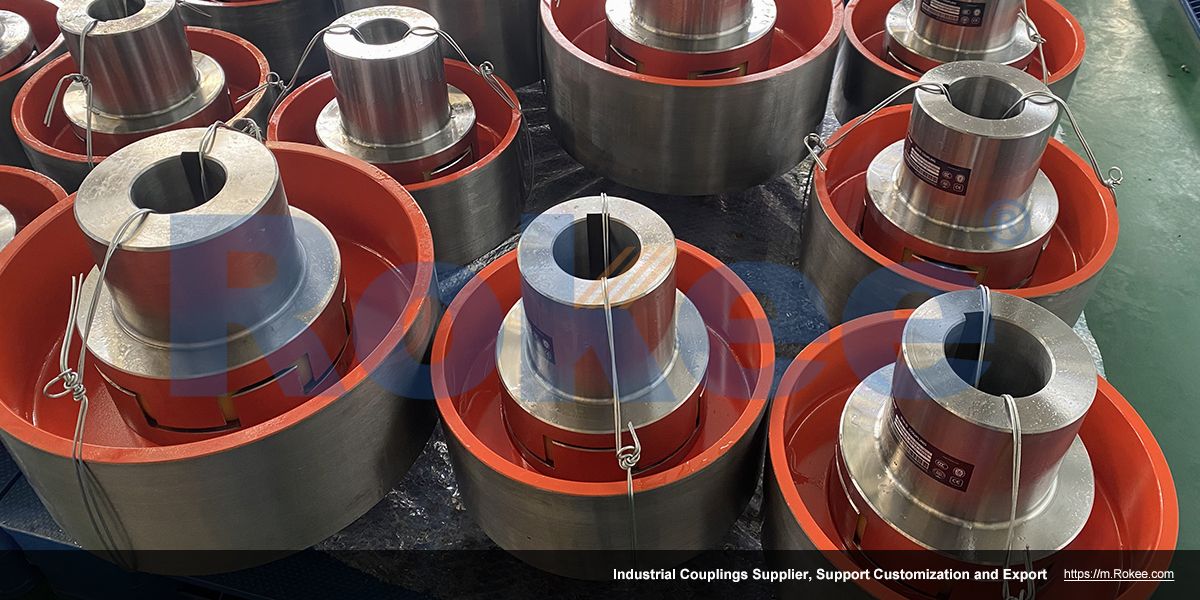
Claw Couplings
Rokee is a chinese Claw Couplings Manufacturer, provide Claw Couplings processing and customization services, Over the years, with excellent quality, we have been continuously providing many coupling products of various categories and uses complying with multiple standards and a full range of services, from the Claw Couplings selection to final installation and operation, for the industry fields of ferrous metallurgy, nuclear power, gas turbine, wind power, ropeway construction, lifting transportation, general equipment, etc. We strictly comply with quality system requirements and implement the whole process control to become a reliable and trustworthy partner of customers.
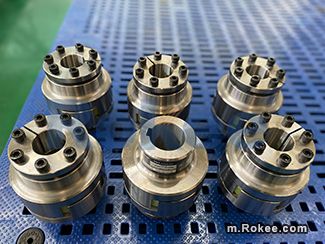
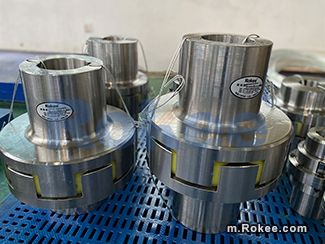
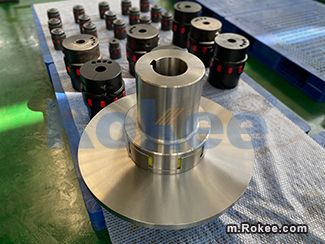
Providing customers with better Claw Couplings is always our driving force. Our aim is to transmit power for you and generate value for both of us. We look forward to joining you and becoming your partner for common progress.
-
![LM Claw Couplings,LM/ML Flexible Plum Jaw Coupling]()
LM/ML Flexible Plum Jaw Coupling
LM Plum-shaped Flexible Coupling is the basic form of this series of couplings.View More -
![LMD Claw Couplings,LMD/MLZ Flexible Plum Jaw Coupling With Single Flange]()
LMD/MLZ Flexible Plum Jaw Coupling With Single Flange
LMD Plum-shaped Flexible Coupling is added with transition connection, which eliminates the need of axially moving the semi-coupling when replacing the elastomer.View More -
![LMS Claw Couplings,LMS/MLS Flexible Plum Jaw Coupling With Double Flange]()
LMS/MLS Flexible Plum Jaw Coupling With Double Flange
LMS Plum-shaped Flexible Coupling adopts double transition flange connection, which eliminates the need of axially moving the semi-coupling when replacing the elastomer.View More -
![LMZ-I Claw Couplings,LMZ-I/MLL-I Flexible Plum Jaw Coupling With Split Brake Wheel]()
LMZ-I/MLL-I Flexible Plum Jaw Coupling With Split Brake Wheel
LMZ-I Plum-shaped Flexible Coupling adopts split brake wheel design, suitable for situations where braking is required.View More -
![LMZ-II Claw Couplings,LMZ-II/MLL-II Flexible Plum Jaw Coupling With Integral Brake Wheel]()
LMZ-II/MLL-II Flexible Plum Jaw Coupling With Integral Brake Wheel
LMZ- II Plum-shaped Flexible Coupling adopts integral brake wheel design, suitable for situations where braking is required.View More -
![LMPK Claw Couplings,LMPK/MLPK Flexible Plum Jaw Coupling With Split Brake Disc]()
LMPK/MLPK Flexible Plum Jaw Coupling With Split Brake Disc
LMPK Plum-shaped Flexible Coupling adopts split brake disc design, suitable for situations where braking is required and eliminating the need of axially moving the semi-coupling when replacing the elastomer.View More
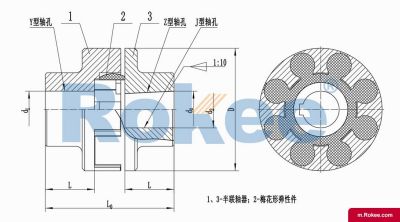
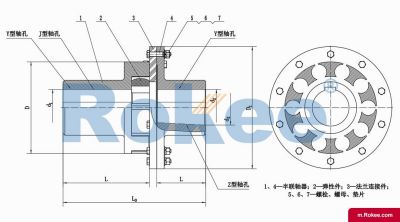
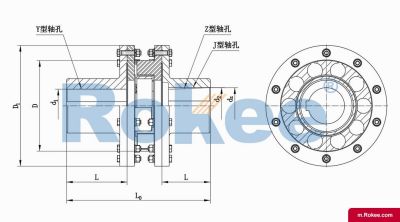
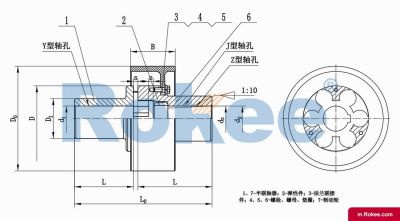
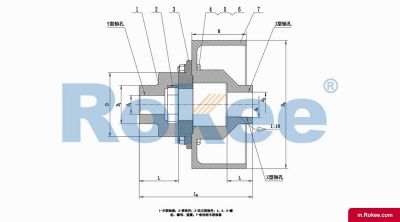
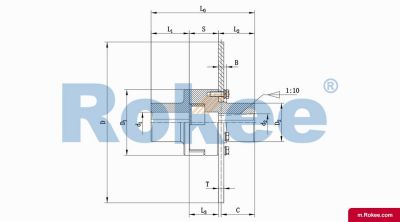
The claw coupling is mainly composed of two metal claw plates and an elastic body. Two metal claw plates are generally made of 45 steel, but in cases where load sensitivity is required, aluminum alloy or stainless steel materials may also be used. Elasticity is usually made of materials such as engineering plastics, rubber, or high-strength wear-resistant polyurethane, which have good elasticity and wear resistance, ensuring the long-term stable operation of the coupling.
The working principle of the claw type coupling is to use a plum blossom shaped elastic element placed between the two halves of the coupling claws to achieve the connection between the two halves of the coupling. When there is a relative offset between the two axes, the elastic element will undergo corresponding elastic deformation, thereby playing an automatic compensation role. This design enables the claw coupling to absorb vibrations, compensate for radial, angular, and axial deviations, while also having good vibration reduction, buffering, and electrical insulation performance.
Characteristics and advantages
Compact structure: Claw coupling has a compact structure, small radial size, light weight, and small moment of inertia, suitable for medium and high-speed applications.
No lubrication required: This coupling does not require lubrication, requires less maintenance, and can operate continuously for a long time.
Strong compensation capability: With significant axial, radial, and angular compensation capabilities, it can adapt to various complex working conditions.
High strength and wear-resistant: High strength polyurethane elastic components are wear-resistant, oil resistant, have high load-bearing capacity, long service life, and safe and reliable.
Easy installation: Claw couplings are easy to install and do not require complex disassembly operations.
Claw couplings are widely used in CNC machine tools, CNC lathes, machining centers, engraving machines, metallurgical machinery, mining machinery, petroleum machinery, chemical machinery, lifting machinery, transportation machinery, light industry machinery, textile machinery, as well as water pumps, fans and other equipment. Especially suitable for working environments with frequent starting, forward and reverse rotation, medium high speed, moderate torque, and high reliability requirements.
When installing a claw type coupling, the first thing to check is whether the two shafts of the prime mover and the working machine are concentric, whether there is packaging paper or collision damage on the surfaces of the two shafts, whether there are debris in the inner holes of the two half couplings of the coupling, and whether there are collision damage on the edges of the inner holes. If necessary, the shaft and half coupling should be cleaned thoroughly, and any scratches should be handled with a fine file. Then tighten and fix according to the prescribed tightening torque. When disassembling, the device should be completely stopped and the locking screws should be loosened in sequence.
In terms of maintenance, claw couplings generally do not require frequent repairs, but the wear of the elastic body should be checked regularly and replaced in a timely manner if necessary. Some models adopt a dual flange split design, supporting radial installation without the need for moving equipment. The elastic body can be quickly replaced, and maintenance does not require dismantling the main shaft sleeve, further reducing maintenance difficulty and cost.
In the realm of mechanical power transmission, the claw coupling stands as a versatile and widely utilized component, serving as a critical bridge between driving and driven shafts across countless industrial and mechanical systems. Renowned for its balanced blend of rigidity, flexibility, and durability, this type of coupling has evolved significantly over time, adapting to diverse operational demands and engineering requirements through refined structural designs, material selections, and performance optimizations. Unlike overly complex transmission connectors, the claw coupling maintains a straightforward yet robust construction, making it accessible for installation, maintenance, and replacement while delivering reliable torque transmission and operational stability. Its widespread adoption stems from its ability to address common mechanical challenges such as shaft misalignment, vibration transmission, and occasional overloads, filling a unique niche in the broader landscape of shaft coupling solutions.
At its core, the structural design of a claw coupling is defined by its distinctive claw-shaped interlocking components, which form the foundation of its functionality. A standard claw coupling typically consists of two main hub halves and a central elastic or rigid intermediate element, each engineered to work in seamless harmony to transfer rotational force. The two hub halves are precision-machined with evenly spaced, protruding claws on their opposing faces; these claws are crafted to interlock with one another, either directly or via the intermediate piece, creating a secure mechanical bond that facilitates torque transfer. The hubs are designed with central bores to fit snugly onto the shafts of driving and driven machinery, secured firmly to prevent slippage during operation—common fastening methods include keyways, set screws, or clamping mechanisms, tailored to the torque load and operational speed of the system. The intermediate element, a defining feature of most modern claw couplings, is positioned between the interlocking claws, acting as a buffer and compensator. In flexible claw couplings, this element is typically fabricated from elastic materials such as polyurethane, rubber, or high-strength nylon, chosen for their ability to deform slightly under load; in rigid claw couplings, the intermediate piece is a solid, rigid component, often made of metal or hard plastic, prioritizing precise torque transmission over flexibility. The claw profiles themselves vary in design, with straight claws, curved claws, and contoured claws being the most prevalent, each engineered to optimize contact area, stress distribution, and load-bearing capacity. Straight claws offer simplicity in manufacturing and reliable torque transfer for standard applications, while curved and contoured claws enhance contact uniformity, reduce stress concentrations, and improve the coupling’s ability to handle dynamic loads and minor misalignments. The overall structural symmetry of the claw coupling ensures balanced rotational performance, minimizing radial runout and ensuring smooth operation even at moderate to high speeds.
The performance attributes of claw couplings are directly shaped by their structural design and material composition, making them suitable for a wide spectrum of operating conditions. One of the most notable performance features is its capacity to compensate for shaft misalignment, a common issue in mechanical systems arising from installation inaccuracies, thermal expansion, or operational wear. Flexible claw couplings excel in this regard, absorbing small degrees of angular, radial, and axial misalignment without imposing excessive stress on connected shafts, bearings, or gearboxes. This misalignment compensation not only extends the service life of adjacent components but also reduces the risk of premature failure due to uneven loading. Another key performance trait is vibration damping and shock absorption, particularly in elastic claw coupling variants. The intermediate elastic element acts as a natural shock absorber, dampening torsional vibrations and sudden impact loads generated by machinery start-up, shutdown, or fluctuating operational loads. This vibration isolation protects sensitive equipment from damage, reduces operational noise, and enhances the overall smoothness of the transmission system. In terms of torque transmission, claw couplings offer excellent efficiency, with minimal power loss during operation. Rigid claw couplings deliver near-zero backlash torque transfer, making them ideal for applications requiring precise rotational positioning and synchronous movement, while flexible variants maintain high torque transmission efficiency alongside their misalignment and damping benefits. Durability is another hallmark of claw coupling performance, especially when constructed from high-quality materials. Hubs made from carbon steel, cast iron, or aluminum alloy exhibit exceptional resistance to wear, fatigue, and mechanical stress, capable of withstanding prolonged operation under heavy loads. The elastic intermediate elements, when selected appropriately for the operating environment, resist degradation from oil, moisture, temperature fluctuations, and mechanical fatigue, ensuring consistent performance over extended service intervals. Additionally, claw couplings feature low maintenance requirements; unlike gear couplings or fluid couplings that demand regular lubrication, most claw couplings operate without the need for lubrication, reducing downtime and maintenance costs. They are also easy to inspect and service, with worn elastic elements replaceable quickly to restore full functionality, further boosting their operational practicality.
Claw couplings are categorized into distinct types based on structural design, flexibility characteristics, and application-specific features, each tailored to meet unique operational needs. The primary classification distinguishes between rigid claw couplings and flexible claw couplings, the two broadest categories with fundamental differences in performance and use cases. Rigid claw couplings, as the name suggests, lack an elastic intermediate element, featuring direct interlocking of the clawed hubs. This design prioritizes absolute torque transmission precision and torsional rigidity, eliminating backlash and ensuring synchronous rotation between connected shafts. They are engineered for systems where shaft alignment is strictly maintained and precise motion transfer is critical, though they offer no misalignment compensation or vibration damping. Within the rigid claw coupling subgroup, variations include quick-disconnect rigid claw couplings, designed for rapid assembly and disassembly to facilitate equipment maintenance or component replacement, and heavy-duty rigid claw couplings, built with reinforced claws and thicker hub walls to handle extremely high torque loads in heavy industrial settings. Flexible claw couplings, the more widely used variant, incorporate the elastic intermediate element, striking a balance between torque transmission and operational flexibility. This category can be further divided into several sub-types based on the design of the elastic element and claw configuration. Standard plum-shaped elastic claw couplings, also known as spider claw couplings, feature a star or plum-blossom shaped elastic insert that fits between the interlocking claws, offering reliable misalignment compensation and vibration damping for general industrial use. Curved claw flexible couplings utilize contoured claw profiles paired with custom-shaped elastic elements, enhancing load distribution and extending the service life of the elastic insert, making them suitable for high-cycle or dynamic load applications. Non-lubricated flexible claw couplings are engineered with self-lubricating materials or low-friction coatings, ideal for enclosed or hard-to-access systems where regular maintenance is impractical. Additionally, there are compact lightweight claw couplings, constructed from aluminum alloy or high-strength engineering plastics, designed for small-scale machinery, precision instruments, or low-load applications where weight reduction and space efficiency are priorities. Each type of claw coupling is refined to optimize specific performance metrics, ensuring engineers can select the ideal variant to match the unique demands of their mechanical system, from light-duty precision equipment to heavy-duty industrial machinery.
The diverse structural and performance characteristics of claw couplings translate to a vast array of practical applications across nearly every sector of mechanical engineering, cementing their status as a foundational transmission component. In general industrial machinery, claw couplings are ubiquitous, serving as the primary shaft connector for pumps, fans, compressors, and conveyors. These applications often involve moderate torque loads, occasional shaft misalignment, and continuous operation, making flexible claw couplings the preferred choice for their vibration damping and misalignment compensation capabilities, ensuring stable and reliable performance in manufacturing plants, processing facilities, and material handling systems. In the machine tool industry, where precision and rigidity are paramount, both rigid and flexible claw couplings find specialized use. Rigid claw couplings are employed in high-precision CNC machines, machining centers, and lathes, where zero-backlash torque transfer is essential for maintaining machining accuracy and dimensional consistency. Flexible claw couplings are used in auxiliary machine tool systems, such as coolant pumps and feed mechanisms, balancing precision with the ability to absorb minor operational vibrations. The automotive and transportation sectors also rely heavily on claw couplings, integrating them into engine accessories, transmission systems, and auxiliary equipment. Their compact design, durability, and ability to withstand dynamic loads make them suitable for the demanding operational conditions of automotive manufacturing equipment, assembly lines, and vehicle auxiliary systems. In agricultural machinery, claw couplings are valued for their ruggedness and low maintenance, powering irrigation pumps, harvesting equipment, and tractors, where they endure dust, moisture, and intermittent heavy loads without compromising performance. The energy and power generation industry utilizes heavy-duty claw couplings in generators, water turbine auxiliary systems, and wind turbine drive mechanisms, leveraging their high torque capacity and resistance to fatigue to ensure reliable power transmission in critical energy infrastructure. Precision instruments and small-scale electromechanical devices benefit from compact lightweight claw couplings, which provide efficient torque transfer without adding excessive weight or bulk, supporting the miniaturization and precision performance of medical devices, laboratory equipment, and automation components. Furthermore, claw couplings are widely used in packaging machinery, textile equipment, and printing presses, where consistent operation, easy maintenance, and vibration reduction are essential for uninterrupted production workflows. Their adaptability to different operating environments—from clean, temperature-controlled facilities to harsh, dusty, or moist industrial settings—further expands their application scope, making them a go-to solution for engineers seeking a reliable, cost-effective, and versatile shaft coupling option.
As mechanical engineering continues to advance, the design and functionality of claw couplings evolve in tandem, with ongoing innovations in material science and manufacturing techniques enhancing their performance and versatility. Modern advancements focus on developing high-performance elastic materials with improved wear resistance, temperature tolerance, and fatigue life, extending the service interval of flexible claw couplings and expanding their usability in extreme environments. Additive manufacturing and precision machining techniques have enabled the production of claw couplings with more complex, optimized claw profiles, enhancing load distribution and torque capacity while reducing overall weight and material usage. Customization has also become a key trend, with manufacturers offering tailored claw coupling designs to meet unique application requirements, such as specialized shaft sizes, environmental resistance coatings, or enhanced torque capacities. Despite these advancements, the core appeal of the claw coupling remains unchanged: its simple, efficient design that delivers reliable performance without unnecessary complexity. This combination of practicality, durability, and adaptability ensures that claw couplings will continue to be a vital component in mechanical power transmission systems for years to come. Whether in heavy industrial machinery, precision manufacturing equipment, or small-scale electromechanical devices, the claw coupling’s ability to facilitate smooth, reliable torque transmission while addressing common operational challenges solidifies its role as an indispensable part of modern mechanical engineering, supporting the functionality and efficiency of countless mechanical systems across global industries.
« Claw Couplings » Update Date: 2026/3/6
URL: https://m.rokee.com/tags/claw-couplings.html