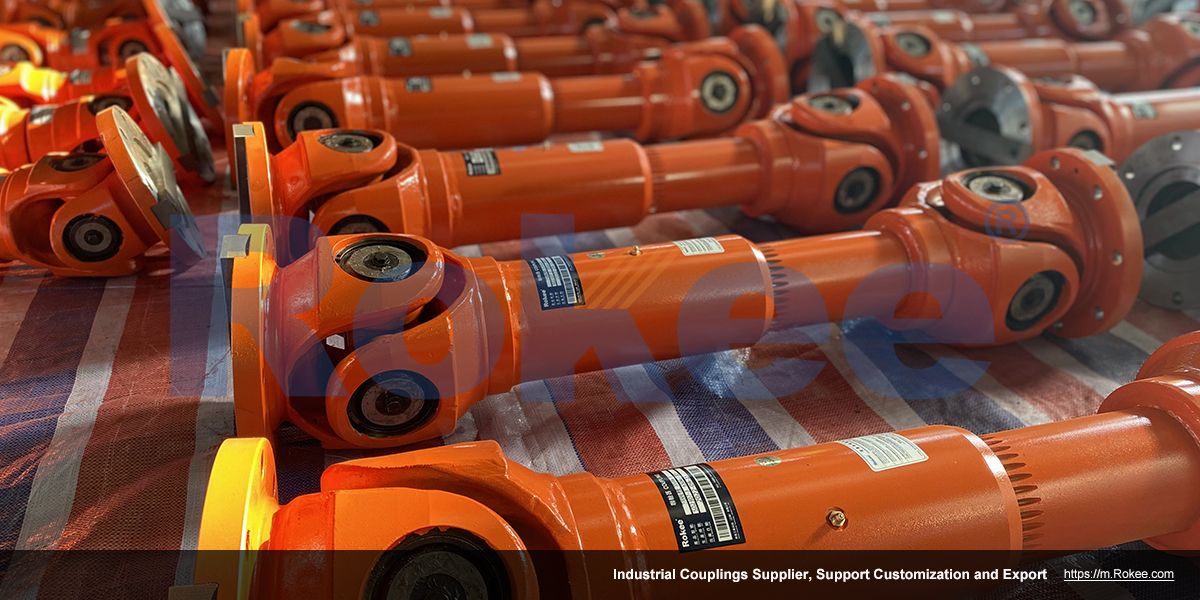
Industrial Cardan Shafts
Rokee is a chinese Industrial Cardan Shafts Manufacturer, provide Industrial Cardan Shafts processing and customization services, Over the years, with excellent quality, we have been continuously providing many coupling products of various categories and uses complying with multiple standards and a full range of services, from the Industrial Cardan Shafts selection to final installation and operation, for the industry fields of ferrous metallurgy, nuclear power, gas turbine, wind power, ropeway construction, lifting transportation, general equipment, etc. We strictly comply with quality system requirements and implement the whole process control to become a reliable and trustworthy partner of customers.
Providing customers with better Industrial Cardan Shafts is always our driving force. Our aim is to transmit power for you and generate value for both of us. We look forward to joining you and becoming your partner for common progress.
-
![SWC-BH Industrial Cardan Shafts,SWC-BH Cardan Shaft]()
SWC-BH Cardan Shaft
SWC-BH standard telescopic welded universal joint couplingView More -
![SWC-CH Industrial Cardan Shafts,SWC-CH Cardan Shaft]()
SWC-CH Cardan Shaft
SWC-CH long telescopic welded universal joint couplingView More -
![SWC-DH Industrial Cardan Shafts,SWC-DH Cardan Shaft]()
SWC-DH Cardan Shaft
SWC-DH short telescopic welded universal joint couplingView More -
![SWC-WD Industrial Cardan Shafts,SWC-WD Cardan Shaft]()
SWC-WD Cardan Shaft
SWC-WD non-telescopic short universal joint couplingView More -
![SWC-WH Industrial Cardan Shafts,SWC-WH Cardan Shaft]()
SWC-WH Cardan Shaft
SWC-WH non-telescopic welded universal joint couplingView More -
![SWP-A Industrial Cardan Shafts,SWP-A Cardan Shaft]()
SWP-A Cardan Shaft
SWP-A telescopic long type universal joint couplingView More -
![SWP-B Industrial Cardan Shafts,SWP-B Cardan Shaft]()
SWP-B Cardan Shaft
SWP-B telescopic short type universal joint couplingView More -
![SWP-C Industrial Cardan Shafts,SWP-C Cardan Shaft]()
SWP-C Cardan Shaft
SWP-C non telescopic short type universal joint couplingView More -
![SWP-D Industrial Cardan Shafts,SWP-D Cardan Shaft]()
SWP-D Cardan Shaft
SWP-D non telescopic long type universal joint couplingView More
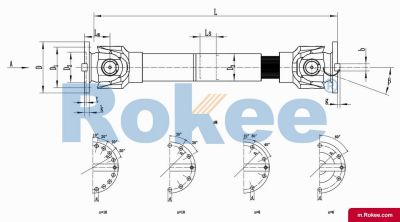
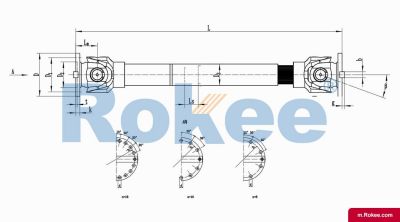
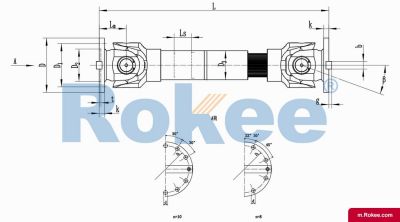
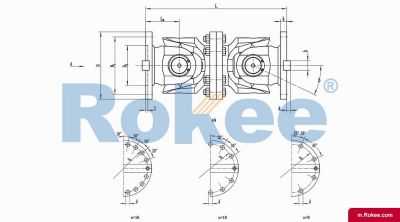
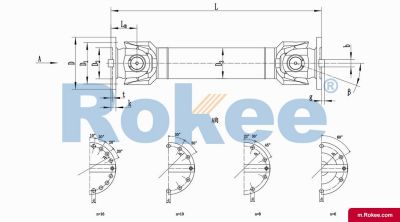
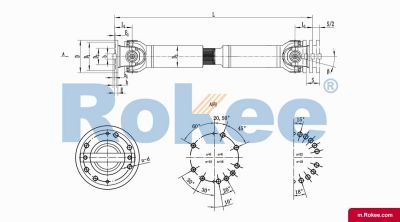
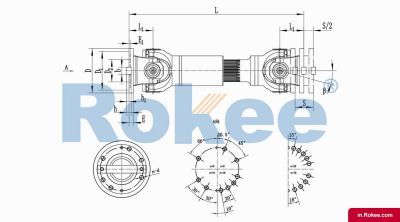
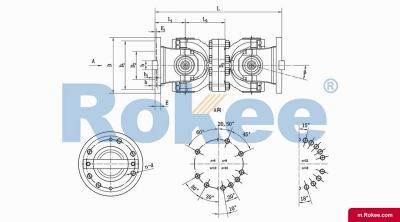
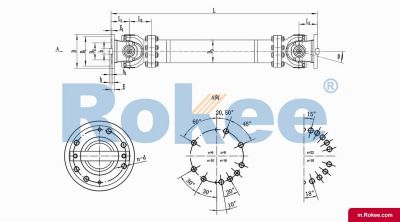
Industrial Cardan Shaft is a mechanism that utilizes the characteristics of its mechanism to enable continuous rotation of the two shafts connected without being on the same axis and with an angle between the axes, and to reliably transmit torque and motion. It has a large angular compensation capability, compact structure, and high transmission efficiency. There are various structural types of Industrial Cardan Shafts, such as cross shaft type, ball cage type, ball fork type, convex block type, ball pin type, ball joint type, ball joint plunger type, three pin type, trident rod type, three ball pin type, hinge rod type, etc. Among them, the most commonly used is the cross axis type, followed by the cage type. The core component of the cross axis Industrial Cardan Shaft is the cross axis, which allows the two shafts to rotate continuously at equal angular velocities within a large range of angles. The ball cage Industrial Cardan Shaft achieves two axis transmission through components such as the outer ring of the ball cage, the inner ring of the star shape, the cage, and the transmission steel ball. It is suitable for working conditions with large inclination angles and limited radial dimensions.
According to the magnitude of the transmitted torque, Industrial Cardan Shafts can be classified as heavy, medium, light, and small. Different models of Industrial Cardan Shafts are suitable for different mechanical transmission systems. Industrial Cardan Shafts are widely used in metallurgy, heavy machinery, petrochemicals, engineering machinery, rail transportation, agricultural machinery, industrial machinery and other fields. For example, in steel rolling machinery, Industrial Cardan Shafts are used to connect rollers and transmission systems, achieving reliable torque transmission; In heavy transportation equipment, it is used to connect the wheels and transmission shaft, ensuring that the vehicle can travel smoothly in various road conditions.
Industrial Cardan Shafts have significant angular compensation capabilities and can adapt to changes in the angle between two shafts. Compact structure, small footprint, easy to install and maintain. The transmission efficiency of Industrial Cardan Shafts is high, which can reduce energy loss and improve the overall performance of mechanical transmission systems. Using high-quality materials and advanced manufacturing processes, the Industrial Cardan Shaft has high reliability and durability.
When selecting a Industrial Cardan Shaft, factors such as the magnitude of the transmitted torque, the speed of the shaft, and the magnitude and direction of the relative displacement between the two shafts need to be considered. At the same time, it is necessary to refer to the characteristics of various types of couplings and choose a suitable type of coupling. For the Industrial Cardan Shafts that have already been selected, regular maintenance and upkeep are required. For example, regular lubrication can extend its service life; When disassembling and reinstalling, it is necessary to pay attention to adjusting the position of the cross axis to balance wear and tear; In addition, it is necessary to regularly check the wear of the coupling and replace damaged components in a timely manner.
In the intricate landscape of industrial power transmission, the industrial cardan shaft stands as a foundational and versatile mechanical component, engineered to bridge the gap between non-coaxial driving and driven shafts while reliably transferring rotational torque and motion across varying angular displacements. Unlike rigid shaft couplings that demand perfect axial alignment, cardan shafts thrive in scenarios where misalignment, spatial constraints, or dynamic movement disrupt the straight-line connection between power sources and operational machinery, making them indispensable across countless heavy-duty and precision-driven industrial sectors. This component’s design, performance attributes, diverse classifications, and wide-ranging applications collectively shape its role as a cornerstone of modern mechanical drive systems, with each structural detail and performance trait tailored to withstand the rigors of industrial operation and meet the unique demands of distinct working environments.
At its core, the industrial cardan shaft features a streamlined yet robust structural composition, optimized for torque transmission and angular compensation. The primary components include universal joint forks, a cross shaft assembly (also referred to as a cross journal), needle roller bearings, sealing elements, and a main shaft body, with optional telescopic spline mechanisms for axial length adjustment. The cross shaft assembly serves as the heart of the structure, connecting the two yoke ends and enabling the pivotal angular movement that defines the cardan shaft’s functionality. Needle roller bearings are integrated within the cross shaft and yoke interfaces, reducing friction during rotational and angular deflection, enhancing wear resistance, and extending the operational lifespan of the entire assembly. Sealing components are meticulously fitted to prevent the ingress of dust, moisture, grease, and industrial contaminants, safeguarding internal bearing surfaces and lubrication systems even in harsh, abrasive, or high-humidity operating conditions. The main shaft body is crafted from high-strength alloy steel, processed through precision forging, heat treatment, and machining to deliver exceptional torsional rigidity, bending resistance, and fatigue strength—critical traits for enduring repeated stress, heavy loads, and prolonged continuous operation. For applications requiring flexibility in shaft length, telescopic spline sections are incorporated, allowing smooth axial extension and retraction to compensate for thermal expansion, mechanical vibration, or positional shifts between connected equipment without compromising torque transmission efficiency.
The performance characteristics of industrial cardan shafts are meticulously engineered to address the multifaceted challenges of industrial power transmission, with key attributes including angular compensation capacity, torque transmission capability, operational stability, wear resistance, and adaptability to diverse working conditions. One of the most defining performance features is its ability to accommodate significant angular misalignment between driving and driven shafts, typically ranging from a few degrees to over 25 degrees in standard designs, with specialized models capable of handling even greater deflection angles without sacrificing transmission efficiency. This angular flexibility eliminates the need for precise axial alignment during installation, simplifying machinery setup, reducing assembly time, and minimizing stress on adjacent components such as motors, gearboxes, and driven equipment. In terms of torque handling, industrial cardan shafts exhibit exceptional load-bearing capacity, capable of transmitting low to extremely high torque values across a wide spectrum of industrial operations, from light-duty precision machinery to heavy-duty mining, metallurgical, and construction equipment. The torsional rigidity of the shaft body ensures minimal torsional deformation under heavy loads, preventing power loss and maintaining consistent rotational speed and torque delivery, which is vital for maintaining operational accuracy and productivity in industrial processes.
Operational stability is another paramount performance metric, with balanced design and precision manufacturing reducing vibration, noise, and dynamic imbalance during high-speed rotation. This stability not only improves the smoothness of power transmission but also reduces wear on bearings, gears, and other vulnerable components, lowering maintenance requirements and enhancing overall equipment reliability. Wear resistance is fortified through high-quality material selection, specialized heat treatment processes, and precision machining, enabling the cardan shaft to withstand continuous friction, cyclic loading, and harsh environmental factors without premature failure. Additionally, these shafts offer strong adaptability to extreme operating conditions, including high temperatures, heavy dust, moisture, and corrosive atmospheres, making them suitable for use in outdoor construction sites, underground mining operations, steel mills, chemical processing plants, and other demanding industrial settings. Unlike fragile transmission components that falter under adverse conditions, industrial cardan shafts maintain consistent performance and structural integrity, ensuring uninterrupted operation even in the most challenging industrial environments.
Industrial cardan shafts are classified into distinct categories based on multiple criteria, including structural design, load-bearing capacity, operational speed, and functional features, each tailored to specific industrial applications and working conditions. One primary classification is based on load capacity, dividing shafts into light-duty, medium-duty, heavy-duty, and extra-heavy-duty variants. Light-duty cardan shafts are characterized by a compact design, low weight, and moderate torque transmission capacity, ideal for small-scale precision machinery, automated production lines, packaging equipment, and light industrial tools where space is limited and loads are relatively low. These shafts prioritize agility and precision over raw load-bearing strength, ensuring smooth power delivery for delicate operational processes. Medium-duty cardan shafts strike a balance between torque capacity and operational flexibility, suitable for a broad range of general industrial machinery such as conveyor systems, pumps, fans, agricultural equipment, and light manufacturing machinery. They handle moderate torque loads and moderate angular misalignment, offering reliable performance for everyday industrial operations without the overengineering of heavy-duty models.
Heavy-duty and extra-heavy-duty cardan shafts are engineered for extreme load conditions, featuring reinforced cross shaft assemblies, thicker shaft walls, larger bearing surfaces, and high-strength alloy construction to withstand massive torque values, heavy impact loads, and prolonged stress. These variants are reserved for the most demanding industrial applications, including steel rolling mills, mining crushers, large-scale construction machinery, marine propulsion systems, and heavy material handling equipment. Their robust design ensures resistance to deformation, cracking, and wear under extreme loads, making them the backbone of heavy industrial processes where failure would result in significant downtime and productivity losses. Another key classification is based on structural design, distinguishing between single joint cardan shafts, double joint cardan shafts, solid shaft cardan shafts, hollow shaft cardan shafts, and telescopic cardan shafts. Single joint shafts feature a single universal joint assembly, suitable for applications with limited angular misalignment and straightforward transmission requirements, offering a cost-effective and compact solution. Double joint shafts incorporate two universal joint assemblies connected by an intermediate shaft, canceling out rotational imbalances caused by angular deflection and enabling smoother operation at higher speeds and larger misalignment angles, making them ideal for high-performance industrial drives.
Solid shaft cardan shafts feature a solid, one-piece main shaft body, delivering maximum torsional rigidity and load-bearing capacity, perfect for heavy-duty applications where structural strength is non-negotiable and weight is not a limiting factor. Hollow shaft cardan shafts, by contrast, feature a hollow main shaft, reducing overall weight while maintaining nearly equivalent torque transmission performance; this design is advantageous for applications requiring lightweight components, such as mobile industrial equipment, automotive auxiliary systems, and high-speed machinery where reduced inertia improves responsiveness and energy efficiency. Telescopic cardan shafts, equipped with sliding spline mechanisms, provide adjustable shaft length to compensate for axial displacement, thermal expansion, or dynamic movement between connected equipment, making them essential for long-distance power transmission and applications where shaft length cannot be fixed during operation. Additional classifications include high-speed cardan shafts optimized for rapid rotational speeds with enhanced dynamic balancing, and low-speed high-torque shafts designed for slow, heavy-load operation, further expanding the versatility of these components to match every industrial transmission need.
The adaptability and robust performance of industrial cardan shafts translate to an extensive range of industrial applications, spanning nearly every sector of manufacturing, construction, resource extraction, transportation, and precision engineering. In the metallurgical industry, cardan shafts play a critical role in steel rolling mills, continuous casting equipment, plate leveling machines, and coil processing machinery, transmitting high torque between drive motors and rolling rollers while accommodating the significant misalignment and vibration inherent in steel production processes. Their ability to withstand extreme loads and high temperatures ensures reliable operation in the harsh, high-stress environment of steel mills, where consistent power transmission is essential for maintaining product quality and production continuity. In the mining and quarrying sector, these shafts are integrated into crushing equipment, grinding mills, conveyor systems, and mineral processing machinery, handling heavy impact loads, abrasive dust, and continuous operation to facilitate the extraction and processing of raw materials. The rugged construction of heavy-duty cardan shafts prevents premature failure in underground and open-pit mining environments, where equipment downtime incurs substantial operational costs.
The construction and engineering industry relies on industrial cardan shafts for a wide array of heavy machinery, including excavators, bulldozers, concrete mixers, asphalt pavers, and crane systems. These shafts transmit power between engine assemblies and operational components, accommodating the dynamic movement, vibration, and misalignment that occur during construction operations, ensuring reliable performance on job sites worldwide. In agricultural machinery, cardan shafts are used in tractors, harvesters, seeders, and irrigation equipment, connecting power take-off systems to agricultural implements and enabling efficient field operations. Their flexibility and durability withstand the uneven terrain and variable loads of agricultural work, supporting modern farming practices and enhancing productivity in the agricultural sector. In the paper and pulp industry, cardan shafts are integrated into paper machines, calenders, pulp grinders, and winding equipment, providing smooth, consistent power transmission for high-speed paper production while compensating for minor misalignments and vibration, ensuring uniform paper quality and uninterrupted manufacturing flow.
Beyond these core sectors, industrial cardan shafts find application in marine propulsion systems, connecting ship engines to propeller shafts and accommodating the movement and misalignment caused by wave motion and hull flexing. They are also widely used in pump and fan systems across water treatment plants, power generation facilities, and HVAC systems, ensuring efficient fluid and air movement in industrial and commercial infrastructure. In the automotive and transportation industry, cardan shafts are integral to heavy-duty trucks, buses, railway vehicles, and specialized transport equipment, transmitting power from engines to drive axles and adapting to the dynamic movement and misalignment of vehicle chassis. Additionally, these shafts are employed in specialized industrial equipment such as amusement park rides, test benches, rubber processing machinery, and plastic molding equipment, highlighting their universal utility across diverse mechanical systems.
The enduring relevance of industrial cardan shafts stems from their unique ability to solve the universal challenge of power transmission between misaligned shafts, combining structural robustness, performance versatility, and adaptability to meet the evolving demands of modern industry. As industrial machinery continues to advance toward higher loads, faster speeds, and more compact designs, the cardan shaft remains a critical component, with ongoing refinements in material science, manufacturing precision, and structural design further enhancing its performance, durability, and efficiency. Whether operating in the extreme conditions of a steel mill, the rugged terrain of a construction site, or the precise environment of a manufacturing line, the industrial cardan shaft delivers consistent, reliable power transmission, underscoring its status as an indispensable element of global industrial infrastructure. Its multifaceted design, diverse classifications, and wide-ranging applications collectively solidify its role as a cornerstone of mechanical engineering, enabling the seamless operation of countless industrial processes that drive modern production and economic activity.
« Industrial Cardan Shafts » Update Date: 2026/3/6
URL: https://m.rokee.com/tags/industrial-cardan-shafts.html