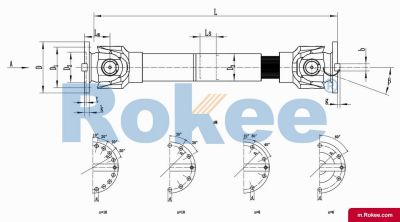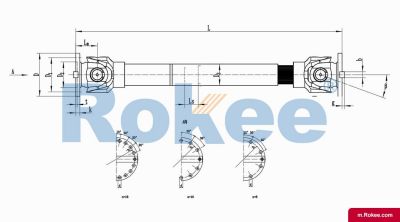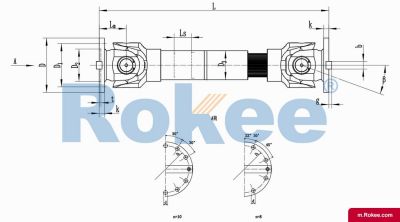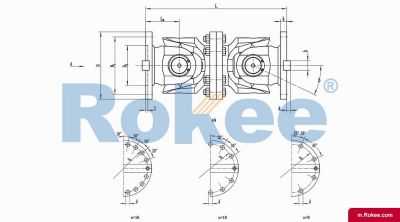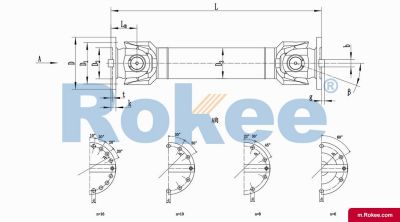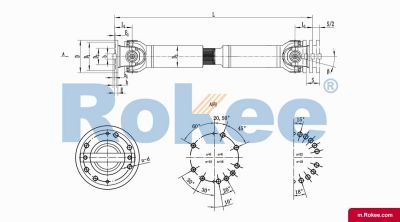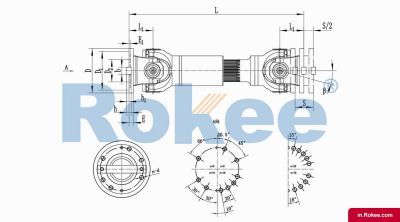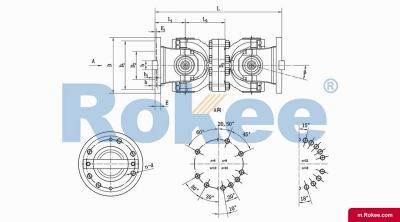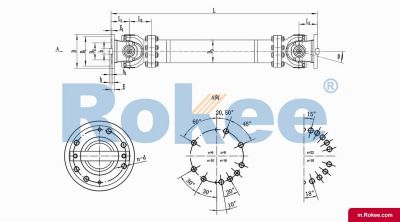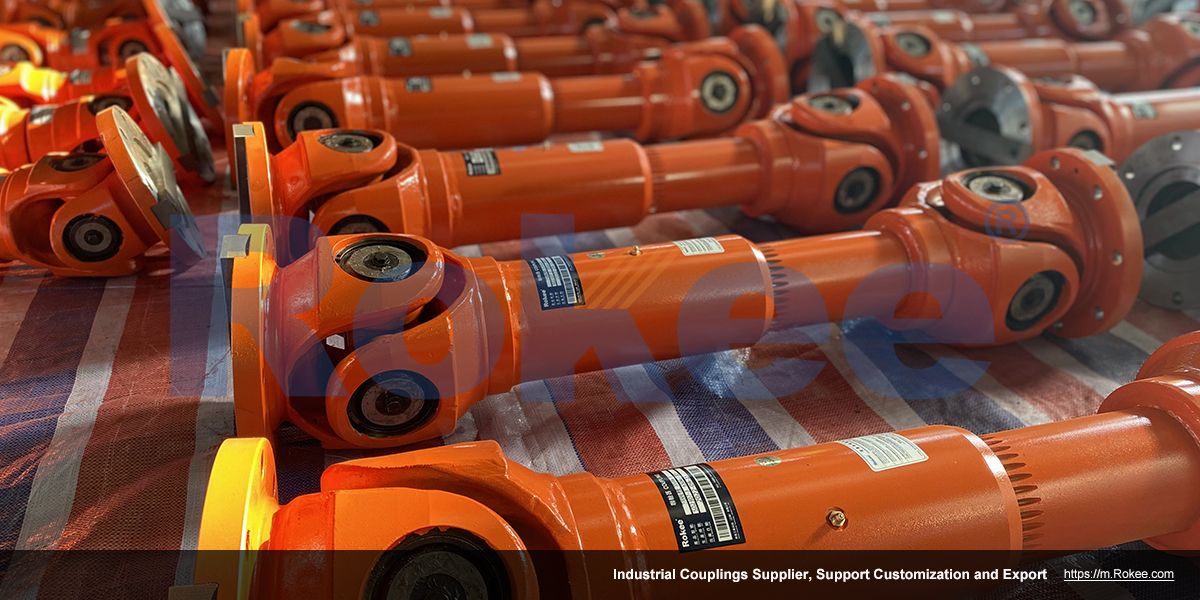
Rokee is a chinese Cross Type Universal Joints Manufacturer, provide Cross Type Universal Joints processing and customization services, Over the years, with excellent quality, we have been continuously providing many coupling products of various categories and uses complying with multiple standards and a full range of services, from the Cross Type Universal Joints selection to final installation and operation, for the industry fields of ferrous metallurgy, nuclear power, gas turbine, wind power, ropeway construction, lifting transportation, general equipment, etc. We strictly comply with quality system requirements and implement the whole process control to become a reliable and trustworthy partner of customers.
Providing customers with better Cross Type Universal Joints is always our driving force. Our aim is to transmit power for you and generate value for both of us. We look forward to joining you and becoming your partner for common progress.
The cross type universal joint, commonly referred to as a Cardan joint or U-joint, stands as one of the most fundamental and widely utilized mechanical coupling components in modern engineering systems. Engineered to transmit rotational torque and motion between two shafts that are not collinear or have variable angular misalignment, it addresses a core challenge in mechanical power transmission: maintaining consistent power delivery despite shifts in shaft orientation, mechanical vibration, or spatial constraints. Unlike rigid couplings that demand perfect shaft alignment, the cross type universal joint offers exceptional flexibility, making it indispensable across automotive, industrial, agricultural, aerospace, and marine sectors. Its enduring popularity stems from a balanced blend of simple structural design, high load-bearing capacity, reliable performance, and adaptability to diverse operating conditions, with ongoing refinements to its materials, manufacturing, and internal mechanisms further enhancing its functionality and service life in both light-duty and heavy-duty applications.
At its core, the cross type universal joint features a compact, symmetric structure composed of four primary interconnected components, each engineered to withstand mechanical stress, reduce friction, and enable smooth angular articulation. The central element is the cross-shaped spindle, commonly called a spider, which features four orthogonal shaft necks that form the pivotal connection between the driving and driven shafts. This cross is precision-machined to ensure uniform stress distribution and dimensional accuracy, as even minor deviations can lead to uneven wear, increased friction, or reduced operational efficiency. Flanking the cross are two yoke assemblies, one attached to the input shaft and the other to the output shaft, each designed to cradle the corresponding ends of the cross spindle. The critical interface between the cross necks and the yokes consists of bearing assemblies, nearly universally needle roller bearings in standard designs, which minimize rotational friction and enable the cross to pivot freely within the yokes. These needle bearings are selected for their high load-carrying capacity relative to their compact size, allowing the joint to handle substantial radial and thrust loads without sacrificing flexibility. Additional supporting elements include bearing caps, seals, and retaining rings, which protect the internal bearing surfaces from contamination by dust, moisture, or debris, lock the bearings in place, and retain lubrication to sustain long-term performance. The simplicity of this structure is a key advantage: it minimizes the number of moving parts, reduces the risk of mechanical failure, and simplifies assembly, disassembly, and routine maintenance, while the symmetric design ensures balanced rotation even under moderate to high operating speeds.
The performance characteristics of the cross type universal joint are defined by its ability to manage angular misalignment, transmit torque efficiently, and endure varying operational stresses, with key metrics shaping its suitability for specific applications. Foremost among these is angular displacement capacity: standard cross type universal joints can accommodate single-plane angular misalignment ranging from 5 degrees to 45 degrees, depending on the design scale, material strength, and intended use. Light-duty variants typically handle smaller angles, while heavy-duty industrial and off-highway joints are engineered to manage larger deflections without compromising torque transmission. This angular flexibility allows the joint to compensate for shaft misalignment caused by manufacturing tolerances, mechanical wear, dynamic movement, or structural vibration, eliminating the need for perfect shaft alignment and reducing stress on adjacent components such as gearboxes, bearings, and shafts. Torque transmission efficiency is another standout performance trait, with well-maintained cross type universal joints achieving efficiency ratings of 98% to 99.8% under optimal operating conditions. This high efficiency minimizes energy loss during power transfer, making the joint ideal for high-power transmission systems where energy conservation and operational economy are priorities. Load-bearing capacity is equally robust: constructed from high-strength alloy steels, heat-treated for enhanced hardness, toughness, and fatigue resistance, these joints can withstand heavy static and dynamic torque loads, as well as shock loads common in rugged operating environments. Fatigue resistance is further bolstered by precision machining and surface finishing, which reduce stress concentrations that could lead to crack propagation or premature failure under cyclic loading.
Despite these strengths, the cross type universal joint does exhibit inherent performance limitations that must be considered in system design. The most notable is non-constant velocity transmission in single joint configurations: when operating at significant angles, the output shaft experiences slight speed fluctuations, or velocity ripple, relative to the input shaft. This ripple creates minor rotational vibration, which can be mitigated by using dual joint setups, maintaining moderate operating angles, or integrating balancing mechanisms into the drivetrain. Additionally, while sealed designs reduce maintenance needs, standard cross type universal joints require periodic lubrication to prevent bearing wear, overheating, and premature failure, especially in high-speed or heavy-load applications. Operating temperature and environmental conditions also impact performance: extreme heat can degrade lubricants and weaken material properties, while corrosive environments, such as marine or chemical processing settings, demand specialized corrosion-resistant materials to maintain structural integrity and performance longevity. Overall, the performance profile of the cross type universal joint makes it a versatile choice, with its limitations manageable through thoughtful design, proper installation, and routine upkeep, ensuring reliable operation across a broad spectrum of mechanical systems.
Cross type universal joints are categorized into distinct variants based on structural design, load capacity, operational purpose, and configuration, each tailored to meet unique performance requirements and application constraints. The most fundamental classification is the single Cardan joint, the standard cross type universal joint featuring one cross assembly and two yokes. This variant is the most widely used, valued for its simplicity, compactness, and cost-effectiveness, and is suitable for applications with moderate angular misalignment and steady torque loads. It is the go-to choice for light-duty automotive systems, small industrial machinery, and portable equipment where space is limited and operational demands are moderate. A refined iteration is the double Cardan joint, which integrates two single cross type universal joints linked by a central intermediate shaft and a centering yoke. This design eliminates the non-constant velocity issue of single joints, delivering smooth, consistent rotational speed at the output shaft even at larger operating angles. Double Cardan joints are preferred for high-performance automotive drivetrains, heavy-duty industrial shafts, and systems requiring minimal vibration and precise motion control, where velocity consistency is critical to operational performance.
Classification by load-bearing capacity divides cross type universal joints into light-duty, medium-duty, heavy-duty, and extra-heavy-duty variants, each engineered to handle specific torque ranges and operational stresses. Light-duty joints are designed for low-torque, low-speed applications such as small appliances, hand tools, and precision instrumentation, featuring compact dimensions and lightweight materials to minimize mass and spatial footprint. Medium-duty joints strike a balance between load capacity and flexibility, serving in general industrial machinery, automotive auxiliary systems, and agricultural light equipment, where they handle moderate torque and intermittent shock loads. Heavy-duty and extra-heavy-duty joints are constructed with thicker, high-strength materials, reinforced cross spindles, and heavy-duty needle bearings, engineered to withstand extreme torque, continuous heavy loads, and severe shock loads common in construction machinery, mining equipment, large agricultural machinery, and marine propulsion systems. These robust variants often feature enhanced sealing and lubrication systems to extend service life in harsh, low-maintenance environments.
Additional structural classifications include sealed and non-sealed variants, telescopic designs, and flange-mounted vs. spline-mounted joints. Sealed cross type universal joints feature integrated protective seals and pre-filled lubrication, creating a maintenance-free design that resists contamination and reduces downtime; these are ideal for hard-to-access installations, cleanroom environments, or applications where routine lubrication is impractical. Non-sealed variants allow for regular lubrication and bearing replacement, making them suitable for heavy-use equipment that requires periodic servicing to maintain performance. Telescopic cross type universal joints incorporate a sliding shaft component, enabling axial length adjustment alongside angular misalignment compensation, perfect for systems with variable shaft spacing, such as vehicle drivetrains and industrial conveyor systems. Connection-type classifications further diversify usage: flange-mounted joints offer secure, rigid attachment for high-torque industrial machinery, while spline-mounted joints provide flexible, easy installation for automotive and agricultural equipment, adapting to slight axial movements during operation.
The versatility of the cross type universal joint is reflected in its extensive, cross-industry applications, where it solves unique power transmission challenges and enables the functionality of countless mechanical systems. In the automotive industry, it is a cornerstone component, integral to drivetrain systems including drive shafts, rear axles, and steering columns. In rear-wheel-drive and four-wheel-drive vehicles, cross type universal joints connect the transmission to the differential, transmitting engine torque to the wheels while accommodating suspension movement and terrain-induced shaft angle changes. They also feature in steering linkages, translating driver input into wheel movement despite dynamic chassis shifts, and in auxiliary systems such as windshield wiper mechanisms and power take-off (PTO) units for commercial vehicles. Off-road and heavy-duty vehicles rely heavily on reinforced cross type universal joints, as they endure extreme terrain-induced stress, large angular deflections, and heavy shock loads that would compromise less robust coupling components.
Industrial machinery represents another major application sector, where cross type universal joints facilitate power transmission in diverse equipment ranging from conveyor systems and machine tools to rolling mills, mixers, and printing presses. In manufacturing assembly lines, they connect drive motors to rotating components across non-linear paths, compensating for misalignment and vibration to ensure smooth, uninterrupted operation. In heavy industrial settings such as steel mills and mining operations, heavy-duty cross type universal joints transmit high torque in crushers, conveyors, and material handling equipment, operating continuously under harsh conditions with heavy loads and abrasive contaminants. Precision industrial machinery, such as CNC machine tools and robotic arms, uses compact, low-backlash cross type universal joints to ensure accurate motion control and torque delivery, enabling precise positioning and repeatable performance in automated manufacturing processes. Their ability to reduce wear on gears and bearings by absorbing misalignment also extends the service life of entire industrial systems, lowering maintenance costs and enhancing operational efficiency.
Agricultural machinery depends extensively on cross type universal joints, particularly in power take-off (PTO) shafts that transfer power from tractors to attached implements such as mowers, balers, plows, seeders, and harvesters. Agricultural operations involve uneven terrain, constant vibration, and frequent equipment repositioning, creating dynamic angular misalignment between the tractor and implements; cross type universal joints accommodate these shifts, ensuring consistent power delivery and reliable implement performance. Designed for quick attachment and disassembly, they support the modular nature of agricultural equipment, allowing farmers to switch implements rapidly to suit varying farming tasks. Ruggedized agricultural variants feature enhanced sealing and corrosion resistance to withstand exposure to soil, moisture, and agricultural chemicals, maintaining functionality in demanding outdoor farm environments.
Aerospace and marine sectors utilize specialized cross type universal joints engineered to meet stringent performance and durability standards. In aerospace systems, lightweight, high-strength variants made from titanium or aerospace-grade alloys are integrated into flight control mechanisms, connecting cockpit controls to ailerons, rudders, and elevators, transmitting precise motion while accommodating structural flexing during flight. These joints are engineered for minimal weight and maximum reliability, critical for aerospace systems where safety and weight efficiency are non-negotiable. In marine applications, corrosion-resistant cross type universal joints, constructed from stainless steel or brass alloys, are used in propulsion systems, steering linkages, and deck machinery, enduring saltwater exposure, high humidity, and constant vibration. They transmit power to propeller shafts and control marine steering systems, maintaining performance in corrosive marine environments that would degrade standard metal components.
Beyond these core sectors, cross type universal joints find utility in specialized fields such as medical equipment, robotics, renewable energy systems, and construction machinery. In robotics, they enable multi-axis articulation in robotic wrists and manipulators, supporting smooth, flexible movement in automated guided vehicles and collaborative robots. In renewable energy, they facilitate power transmission in wind turbine pitch control systems and solar tracker mechanisms, adapting to dynamic movement and environmental stresses. In construction machinery, including excavators, loaders, and bulldozers, heavy-duty cross type universal joints power hydraulic systems and drivetrains, operating reliably on construction sites with heavy loads, dust, and frequent shock loads. This broad applicability underscores the cross type universal joint’s status as a foundational mechanical component, adaptable to nearly any scenario requiring flexible, efficient torque transmission between misaligned shafts.
In summary, the cross type universal joint remains an irreplaceable element in mechanical engineering, combining a straightforward, robust structure with exceptional performance versatility to address critical power transmission challenges. Its well-engineered design delivers reliable angular misalignment compensation, high torque transmission efficiency, and strong load-bearing capacity, with diverse classifications ensuring a tailored variant for every application and operational demand. From everyday automotive systems to heavy industrial machinery, rugged agricultural equipment, and high-precision aerospace components, it enables the seamless operation of machinery across global industries. While it has inherent limitations, ongoing advancements in material science, manufacturing precision, and sealing technology continue to enhance its performance, durability, and adaptability, solidifying its role as a timeless, essential component in modern mechanical design. As engineering systems evolve to meet demands for greater efficiency, durability, and flexibility, the cross type universal joint will remain a key enabler of innovative power transmission solutions across existing and emerging industrial sectors.
« Cross Type Universal Joints » Update Date: 2026/3/6
URL: https://m.rokee.com/tags/cross-type-universal-joints.html