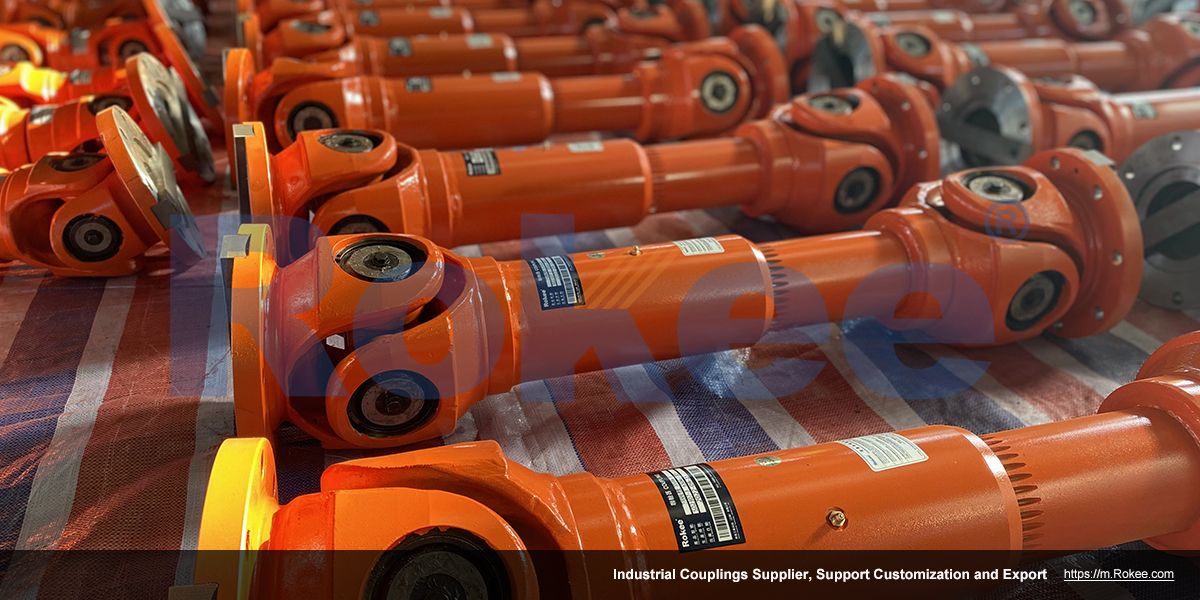
Cross Joint Shafts
Rokee is a chinese Cross Joint Shafts Manufacturer, provide Cross Joint Shafts processing and customization services, Over the years, with excellent quality, we have been continuously providing many coupling products of various categories and uses complying with multiple standards and a full range of services, from the Cross Joint Shafts selection to final installation and operation, for the industry fields of ferrous metallurgy, nuclear power, gas turbine, wind power, ropeway construction, lifting transportation, general equipment, etc. We strictly comply with quality system requirements and implement the whole process control to become a reliable and trustworthy partner of customers.
Providing customers with better Cross Joint Shafts is always our driving force. Our aim is to transmit power for you and generate value for both of us. We look forward to joining you and becoming your partner for common progress.
-
![SWC-BH Cross Joint Shafts,SWC-BH Cardan Shaft]()
SWC-BH Cardan Shaft
SWC-BH standard telescopic welded universal joint couplingView More -
![SWC-CH Cross Joint Shafts,SWC-CH Cardan Shaft]()
SWC-CH Cardan Shaft
SWC-CH long telescopic welded universal joint couplingView More -
![SWC-DH Cross Joint Shafts,SWC-DH Cardan Shaft]()
SWC-DH Cardan Shaft
SWC-DH short telescopic welded universal joint couplingView More -
![SWC-WD Cross Joint Shafts,SWC-WD Cardan Shaft]()
SWC-WD Cardan Shaft
SWC-WD non-telescopic short universal joint couplingView More -
![SWC-WH Cross Joint Shafts,SWC-WH Cardan Shaft]()
SWC-WH Cardan Shaft
SWC-WH non-telescopic welded universal joint couplingView More -
![SWP-A Cross Joint Shafts,SWP-A Cardan Shaft]()
SWP-A Cardan Shaft
SWP-A telescopic long type universal joint couplingView More -
![SWP-B Cross Joint Shafts,SWP-B Cardan Shaft]()
SWP-B Cardan Shaft
SWP-B telescopic short type universal joint couplingView More -
![SWP-C Cross Joint Shafts,SWP-C Cardan Shaft]()
SWP-C Cardan Shaft
SWP-C non telescopic short type universal joint couplingView More -
![SWP-D Cross Joint Shafts,SWP-D Cardan Shaft]()
SWP-D Cardan Shaft
SWP-D non telescopic long type universal joint couplingView More
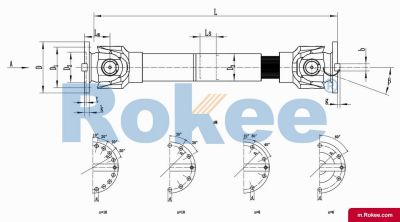
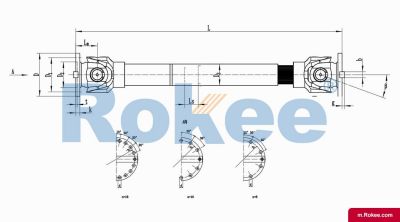
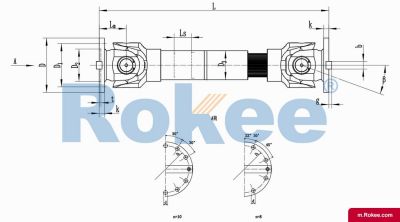
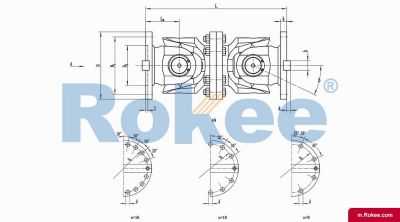
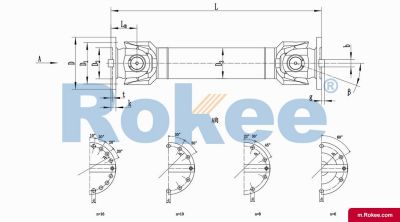
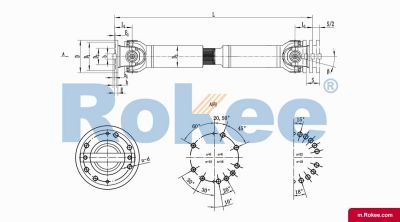
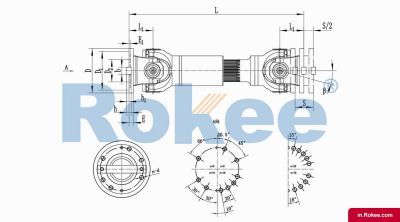
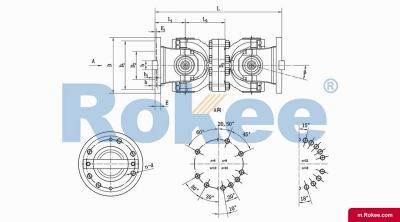
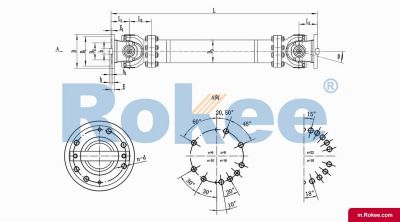
In the realm of mechanical power transmission, the cross joint shaft stands as one of the most fundamental and widely utilized components, serving as a critical bridge between driving and driven shafts that lack perfect coaxial alignment. Also referred to as a universal joint shaft in many engineering contexts, this mechanism is defined by its distinctive cross-shaped core structure, which enables the efficient transfer of torque and rotational motion while accommodating angular, axial, and even minor radial misalignments between connected shafts. Unlike rigid shaft couplings that demand precise shaft alignment and fail to adapt to positional shifts during operation, the cross joint shaft offers exceptional flexibility, making it indispensable across countless industrial, automotive, marine, and aerospace applications. Its enduring relevance stems from a harmonious blend of robust structural design, reliable performance under diverse operating conditions, and adaptable configurations tailored to specific load, speed, and environmental requirements.
At its core, the cross joint shaft features a streamlined yet durable structural framework that prioritizes strength, friction reduction, and misalignment compensation. The foundational assembly consists of four key elements: two yoke-shaped end fittings (also known as fork joints), a central cross-shaped spindle (the cross joint itself), and four precision bearing sets mounted on the four arms of the cross spindle. The yokes are securely attached to the driving shaft and driven shaft respectively, typically via flange connections, spline fittings, or sleeve couplings, creating a stable linkage between the two separate shaft systems. The cross spindle is positioned orthogonally between the two yokes, with each of its four cylindrical journals inserted into a corresponding bearing housed within the yoke arms. This orthogonal arrangement allows the cross spindle to pivot freely in multiple directions, enabling the connected shafts to operate at varying angles relative to one another without disrupting power flow. The bearing systems, most commonly needle roller bearings in standard designs, are engineered to minimize rotational friction and withstand high contact stresses, as they bear the brunt of torque transmission and angular movement. High-grade alloy steels are the predominant material for both the cross spindle and yokes, chosen for their exceptional tensile strength, toughness, and resistance to wear and fatigue; heat treatments such as carburizing, quenching, and tempering are routinely applied to enhance surface hardness and structural integrity, ensuring prolonged service life even under heavy, cyclic loads. The simplicity of this structure is a defining advantage—it minimizes the number of moving parts, reduces the risk of mechanical failure, and facilitates straightforward installation, maintenance, and replacement, all while delivering consistent power transmission performance.
The performance characteristics of the cross joint shaft are tailored to address the core challenges of non-coaxial power transmission, with key attributes that set it apart from other coupling mechanisms. Foremost among these is its angular misalignment compensation capacity, which allows the connected shafts to operate at significant angular offsets without compromising torque delivery. Standard cross joint shafts can accommodate angular ranges from 5 degrees up to 45 degrees, depending on the specific design, size, and intended application; this flexibility is critical in scenarios where shaft alignment cannot be perfectly maintained, such as in vehicles with suspension movement or industrial machinery subject to thermal expansion and mechanical vibration. Beyond angular adaptability, many cross joint shaft variants feature telescopic spline mechanisms integrated into the shaft assembly, enabling axial displacement compensation to handle minor shifts in shaft separation distance during operation. This dual capability to address both angular and axial misalignment eliminates the need for overly precise installation setup and reduces wear caused by forced shaft alignment, a common issue with rigid couplings. In terms of torque transmission, cross joint shafts exhibit exceptional load-bearing capacity, with designs ranging from lightweight units for low-torque precision equipment to heavy-duty assemblies capable of transferring thousands of Newton-meters of torque in heavy industrial settings. Transmission efficiency is another standout performance metric, with most standard designs achieving efficiency rates between 96% and 98%, minimizing energy loss during power transfer and supporting overall system energy conservation. Additionally, these shafts demonstrate strong resilience to shock loads and vibration, absorbing sudden mechanical impacts and reducing resonant vibration transfer between connected components, which protects downstream machinery and extends the operational lifespan of the entire transmission system. While single cross joint configurations exhibit minor rotational speed fluctuations due to the nature of angular pivoting—an inherent trait of non-constant velocity universal joints—this limitation is easily mitigated in dual joint or constant velocity modified designs, making the cross joint shaft suitable for both low-speed, high-torque and high-speed, precision-driven applications alike.
Cross joint shafts are classified into distinct varieties based on structural design, load capacity, operational functionality, and application-specific requirements, with each category engineered to excel in particular operating environments. The most practical classification system groups these shafts by their load-bearing capabilities, dividing them into light-duty, medium-duty, heavy-duty, and extra-heavy-duty variants. Light-duty cross joint shafts are compact and lightweight, designed for low-torque, high-precision applications such as small-scale industrial instruments, office machinery, and light automotive accessories; they prioritize space efficiency and smooth operation over extreme load capacity, with torque ratings suited for low-power transmission systems. Medium-duty variants strike a balance between load capacity and versatility, making them the most widely used category for general industrial equipment, including conveyor systems, small to medium-sized pumps, fans, and agricultural machinery. These shafts offer reliable performance for moderate torque loads and moderate angular misalignments, with durable construction that withstands routine operational stress without excessive maintenance. Heavy-duty cross joint shafts are built for extreme torque transmission and harsh operating conditions, featuring reinforced cross spindles, thicker yokes, and heavy-duty bearings to handle intense, continuous loads; they are predominantly deployed in heavy industrial machinery where high torque and rugged durability are non-negotiable. Extra-heavy-duty variants are custom-engineered for the most demanding applications, such as large-scale marine propulsion systems, steel rolling mills, and mining equipment, with oversized components and specialized materials to endure extreme stress, shock loads, and prolonged operation in harsh environments. A secondary classification is based on structural adaptability, distinguishing between fixed-length and telescopic cross joint shafts. Fixed-length models have a rigid shaft assembly with no axial adjustability, ideal for applications where shaft separation distance remains constant throughout operation; they offer enhanced torsional rigidity and simplified construction, reducing potential points of failure. Telescopic models incorporate internal spline mechanisms that allow the shaft to extend or retract within a defined range, providing axial displacement compensation to accommodate thermal expansion, mechanical movement, or installation tolerances—this adaptability makes them indispensable in automotive drivetrains, construction machinery, and other systems where shaft spacing fluctuates. A tertiary classification focuses on transmission uniformity, separating standard non-constant velocity cross joint shafts from modified constant velocity cross joint shafts. Standard non-constant velocity designs are the most cost-effective and widely used, suitable for applications where minor speed fluctuations are acceptable, while constant velocity variants feature refined internal geometries and dual joint configurations to eliminate speed variation, making them perfect for high-speed, precision-critical systems such as automotive front-wheel drivetrains and high-performance industrial automation equipment.
The versatility of cross joint shafts, coupled with their robust performance and adaptable designs, has led to their widespread adoption across an extensive spectrum of industries and applications, each leveraging the component’s unique strengths to solve specific transmission challenges. In the automotive industry, cross joint shafts are integral to virtually every vehicle’s drivetrain system, serving as a core component of propeller shafts (drive shafts) that transfer power from the transmission to the drive axles. In rear-wheel-drive and four-wheel-drive vehicles, they accommodate the angular misalignment caused by suspension movement during travel, ensuring smooth power delivery even as the vehicle navigates uneven terrain; constant velocity cross joint shafts are particularly vital in front-wheel-drive and all-wheel-drive vehicles, where they maintain consistent speed and torque transfer during steering and suspension articulation, eliminating vibration and ensuring a smooth driving experience. Beyond passenger vehicles, they are equally essential in heavy commercial vehicles such as trucks, buses, and construction equipment, where heavy-duty variants handle the high torque demands of diesel engines and endure the rugged conditions of off-road operation. The agricultural sector relies heavily on cross joint shafts as well, with medium and heavy-duty models powering farm machinery like tractors, harvesters, and tillers; these shafts adapt to the uneven movement of agricultural equipment in fields and transfer high torque to drive implements, supporting efficient farming operations.
In the industrial manufacturing and heavy machinery sector, cross joint shafts are a cornerstone of power transmission systems across diverse applications. Metallurgical equipment, including steel rolling mills and continuous casting machines, depends on extra-heavy-duty cross joint shafts to transmit extreme torque while compensating for shaft misalignment caused by mechanical stress and thermal expansion; these shafts withstand the harsh, high-load conditions of metal processing without faltering, ensuring uninterrupted production. Mining machinery, such as crushers, conveyors, and drilling equipment, utilizes rugged cross joint shafts to handle shock loads, abrasive dust, and continuous heavy operation, maintaining reliable power transfer in one of the most demanding industrial environments. Pump and compressor systems in the petrochemical, water treatment, and manufacturing industries rely on medium-duty cross joint shafts to link motors and pump shafts, accommodating minor misalignments and reducing vibration that could damage sensitive internal components; their efficient torque transfer and low maintenance requirements make them ideal for long-term, continuous operation in these critical utility systems. Material handling equipment, including cranes, forklifts, and conveyor belts, uses cross joint shafts to ensure smooth power delivery, even as the equipment shifts and moves during operation, enhancing operational safety and efficiency. Additionally, precision industrial machinery such as CNC machine tools, robotic arms, and automated assembly lines employs lightweight, high-precision cross joint shafts to maintain accurate motion control and torque transfer, supporting the tight tolerances required for advanced manufacturing processes.
The marine and aerospace industries also benefit significantly from the unique performance of cross joint shafts, albeit with specialized engineering to meet sector-specific demands. In marine applications, cross joint shafts are used in propulsion systems to connect marine engines to propeller shafts, accommodating angular misalignment caused by hull flexing and wave-induced movement; corrosion-resistant materials and sealed bearing designs are incorporated to withstand the harsh, humid, and saline marine environment, preventing rust and mechanical degradation. Smaller marine vessels, such as speedboats and fishing boats, use compact cross joint shafts for efficient power transfer, while large cargo ships and naval vessels rely on heavy-duty, custom-built variants to handle the high torque requirements of massive marine engines. In aerospace engineering, lightweight yet high-strength cross joint shafts are integrated into aircraft control systems, rotor assemblies, and auxiliary power units, where they deliver precise torque transmission while adhering to strict weight and space constraints; their ability to operate reliably under varying temperatures and mechanical stresses makes them suitable for the rigorous conditions of flight operations. Even in smaller-scale aerospace equipment, such as unmanned aerial vehicles and satellite communication systems, specialized cross joint shafts support smooth motion and power transfer, highlighting the component’s adaptability to high-precision, low-load applications.
Beyond these major industries, cross joint shafts find utility in a host of specialized applications, ranging from renewable energy systems to medical equipment. In wind turbines, they play a role in power transmission systems, linking rotor assemblies to gearboxes and accommodating misalignment caused by wind-induced movement; their durable construction ensures reliable operation in remote, outdoor environments with minimal maintenance. Medical machinery, such as surgical robots and diagnostic equipment, uses miniature, high-precision cross joint shafts to enable smooth, controlled movement, supporting the delicate operations required in medical settings. Even in consumer goods and small-scale equipment, such as power tools, garden machinery, and recreational vehicles, compact cross joint shafts deliver reliable power transfer, demonstrating the component’s ubiquity across both heavy industrial and everyday mechanical systems. The enduring popularity of cross joint shafts across such a diverse array of applications stems from their ability to balance simplicity, durability, and performance—they solve the universal engineering challenge of non-coaxial power transmission without unnecessary complexity, offering a cost-effective, reliable solution that can be tailored to meet the unique demands of nearly any mechanical system.
In summary, the cross joint shaft remains a cornerstone of mechanical power transmission, distinguished by its robust structural design, exceptional misalignment compensation capabilities, and adaptable performance profiles. Its core cross-spindle and yoke configuration, paired with precision bearing systems, enables efficient torque transfer across misaligned shafts, while material and engineering refinements enhance durability and efficiency across varying load and speed conditions. The diverse range of cross joint shaft varieties—categorized by load capacity, structural adaptability, and transmission uniformity—ensures that a suitable variant exists for every application, from lightweight precision instruments to heavy-duty industrial machinery. Its widespread deployment across automotive, industrial, marine, aerospace, and specialized sectors underscores its irreplaceable role in modern engineering, as it continues to address the fundamental need for reliable, flexible power transmission. As manufacturing technology and material science advance, cross joint shafts will continue to evolve, with enhanced durability, reduced friction, and more compact designs further expanding their potential applications. Yet, even with these advancements, the core principles of the cross joint shaft—simplicity, versatility, and reliable performance—will remain unchanged, solidifying its status as an essential component in the ever-evolving landscape of mechanical engineering and power transmission systems.
« Cross Joint Shafts » Update Date: 2026/3/6
URL: https://m.rokee.com/tags/cross-joint-shafts.html