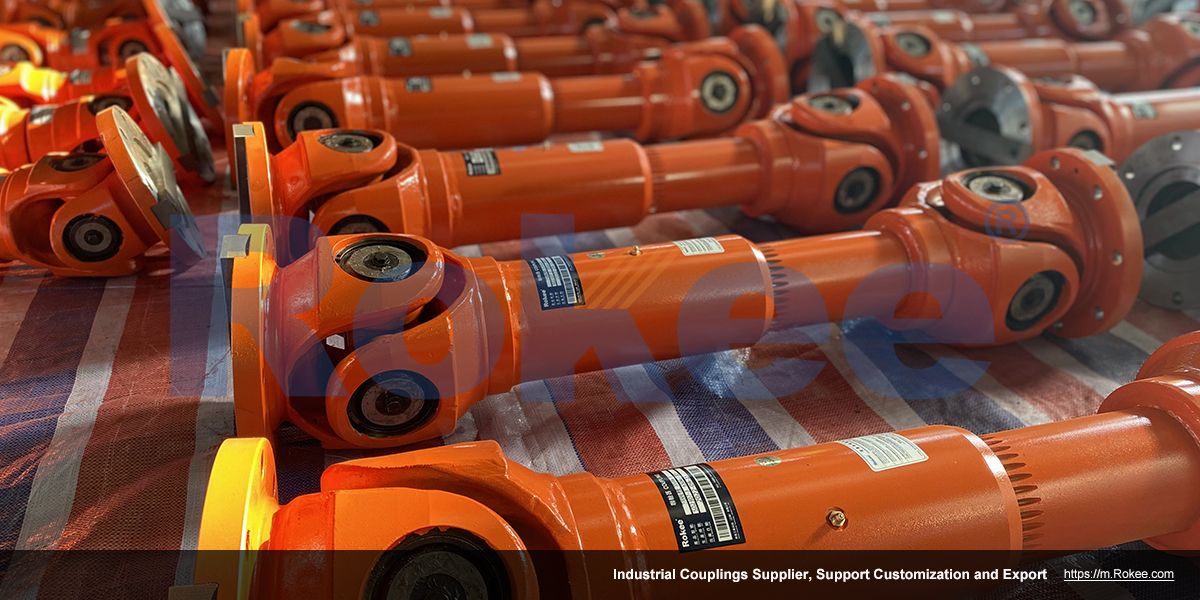
Cross Joint Couplings
Rokee is a chinese Cross Joint Couplings Manufacturer, provide Cross Joint Couplings processing and customization services, Over the years, with excellent quality, we have been continuously providing many coupling products of various categories and uses complying with multiple standards and a full range of services, from the Cross Joint Couplings selection to final installation and operation, for the industry fields of ferrous metallurgy, nuclear power, gas turbine, wind power, ropeway construction, lifting transportation, general equipment, etc. We strictly comply with quality system requirements and implement the whole process control to become a reliable and trustworthy partner of customers.
Providing customers with better Cross Joint Couplings is always our driving force. Our aim is to transmit power for you and generate value for both of us. We look forward to joining you and becoming your partner for common progress.
-
![SWC-BH Cross Joint Couplings,SWC-BH Cardan Shaft]()
SWC-BH Cardan Shaft
SWC-BH standard telescopic welded universal joint couplingView More -
![SWC-CH Cross Joint Couplings,SWC-CH Cardan Shaft]()
SWC-CH Cardan Shaft
SWC-CH long telescopic welded universal joint couplingView More -
![SWC-DH Cross Joint Couplings,SWC-DH Cardan Shaft]()
SWC-DH Cardan Shaft
SWC-DH short telescopic welded universal joint couplingView More -
![SWC-WD Cross Joint Couplings,SWC-WD Cardan Shaft]()
SWC-WD Cardan Shaft
SWC-WD non-telescopic short universal joint couplingView More -
![SWC-WH Cross Joint Couplings,SWC-WH Cardan Shaft]()
SWC-WH Cardan Shaft
SWC-WH non-telescopic welded universal joint couplingView More -
![SWP-A Cross Joint Couplings,SWP-A Cardan Shaft]()
SWP-A Cardan Shaft
SWP-A telescopic long type universal joint couplingView More -
![SWP-B Cross Joint Couplings,SWP-B Cardan Shaft]()
SWP-B Cardan Shaft
SWP-B telescopic short type universal joint couplingView More -
![SWP-C Cross Joint Couplings,SWP-C Cardan Shaft]()
SWP-C Cardan Shaft
SWP-C non telescopic short type universal joint couplingView More -
![SWP-D Cross Joint Couplings,SWP-D Cardan Shaft]()
SWP-D Cardan Shaft
SWP-D non telescopic long type universal joint couplingView More
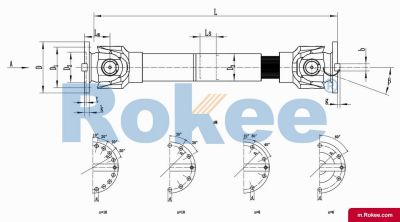
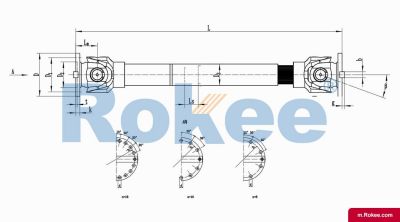
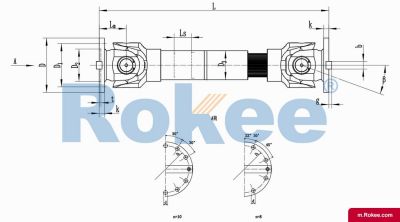
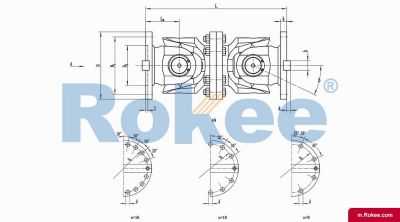
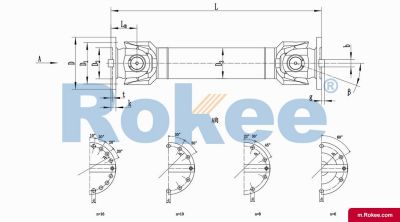
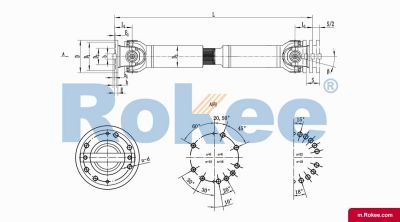
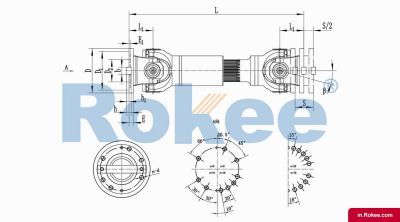
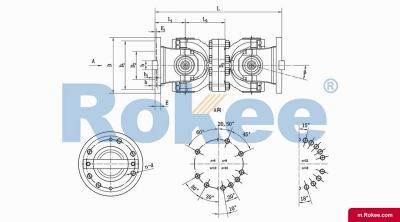
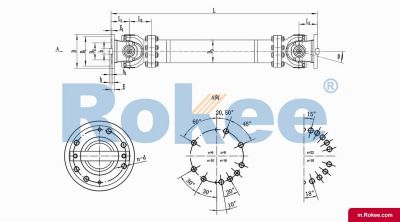
In the realm of mechanical power transmission, cross joint couplings stand as one of the most versatile and widely utilized components, serving as critical connectors between misaligned or offset rotating shafts. Unlike rigid couplings that demand perfect shaft alignment, these specialized mechanical assemblies are engineered to accommodate angular, axial, and even minor radial deviations between driving and driven shafts, all while efficiently transferring torque and rotational motion across diverse operating environments. Their unique structural design, tailored performance attributes, and adaptable classifications make them indispensable across countless industrial, automotive, aerospace, marine, and precision engineering sectors, addressing the inherent challenges of shaft misalignment that arise from manufacturing tolerances, thermal expansion, mechanical vibration, and dynamic operational shifts.
At its most fundamental level, a standard cross joint coupling, often referred to as a universal cross joint coupling, is constructed around a compact, robust core assembly that minimizes friction and maximizes load-bearing capacity. The primary components include two fork-shaped yokes, a central cross-shaped shaft (commonly called a spider), and four sets of precision needle roller bearings, each positioned at the orthogonal ends of the cross shaft to interface with the inner surfaces of the yokes. The yokes act as the connection points to the driving and driven shafts, typically secured via clamping, flanging, or spline fitting, depending on the application’s torque requirements and installation constraints. The cross shaft serves as the pivotal articulation point, enabling the yokes to rotate at varying angles relative to one another without disrupting torque transmission; its orthogonal design ensures that rotational force is evenly distributed across the bearing surfaces, reducing localized stress and wear. Needle roller bearings are integral to this design, as their slender, densely packed needle configuration delivers high radial load capacity with minimal radial space, facilitating smooth, low-friction rotation even under heavy loads and extreme angular misalignment. This basic structural framework is refined and modified across different coupling variants to enhance specific performance traits, such as increased misalignment tolerance, higher torque transmission, extended service life, or reduced operational backlash, catering to the unique demands of specialized applications.
The performance capabilities of cross joint couplings are defined by a set of core mechanical properties that distinguish them from other coupling types, making them suitable for a broad spectrum of operating conditions. Foremost among these is angular misalignment compensation, a defining feature that allows standard cross joint couplings to accommodate shaft angles ranging from 5 degrees to 45 degrees, with custom-engineered models capable of exceeding this range for highly specialized use cases. This flexibility eliminates the need for perfect shaft alignment during installation and mitigates the risk of premature bearing failure, shaft bending, or system vibration that plagues rigid coupling setups. Axial displacement compensation is another key performance attribute, achieved through integrated spline mechanisms in many telescopic cross joint variants, enabling the coupling to adjust for axial movement ranging from ±10mm to ±50mm without compromising torque delivery or structural integrity. This adaptability is critical in systems where shafts experience thermal expansion, mechanical settling, or dynamic shifting during operation, such as heavy machinery, automotive drivetrains, and marine propulsion systems.
Torque transmission efficiency and load-bearing capacity further solidify the practical value of cross joint couplings, with most standard models boasting transmission efficiencies between 96% and 99.8%, minimizing energy loss during power transfer. Constructed from high-strength alloy steels, carbon steels, and in some lightweight applications, advanced aluminum alloys or polymer composites, these couplings can handle moderate to extremely high torque loads, from small-scale precision equipment requiring minimal torque to heavy industrial machinery transmitting thousands of Newton-meters of force. Torsional stiffness and impact resistance are equally notable, as the rigid cross shaft and reinforced yoke design withstand sudden load spikes, mechanical shocks, and sustained vibrational stress without deformation or failure, ensuring consistent performance in harsh operating environments. Additionally, many cross joint couplings feature low backlash design, achieved through precision machining and tight tolerance fitting of components, making them suitable for applications requiring precise rotational control, while others prioritize durability and maintenance resilience, with sealed bearing designs to retain lubrication and repel dust, moisture, and corrosive contaminants. It is important to note that while standard cross joint couplings exhibit slight velocity fluctuations at extreme angles due to their non-constant velocity design, specialized variants address this limitation for high-speed, precision-critical applications, balancing flexibility and operational smoothness.
Cross joint couplings are categorized into several distinct types based on structural design, load capacity, misalignment tolerance, and functional specialization, each engineered to excel in specific operational contexts. The most basic and widely used classification is the single cross joint coupling, featuring a single cross shaft and two yokes, ideal for low to moderate torque applications with limited angular misalignment requirements. This compact, cost-effective variant is prevalent in light-duty machinery, small automotive systems, and consumer-grade mechanical equipment, offering reliable torque transfer with minimal space requirements. Building on this design, the double cross joint coupling incorporates two interconnected cross shaft assemblies linked by an intermediate yoke, significantly enhancing angular misalignment tolerance and torque-carrying capacity. This dual-joint setup enables smoother power transmission at larger shaft angles and is commonly employed in heavy-duty industrial machinery, commercial vehicle drivetrains, and construction equipment, where extreme misalignment and high loads are commonplace.
Another prominent classification is based on load-bearing capacity, dividing cross joint couplings into heavy-duty, medium-duty, light-duty, and miniature variants. Heavy-duty cross joint couplings feature reinforced cross shafts, thickened yokes, and oversized bearings, engineered to withstand extreme torque loads, continuous heavy operation, and harsh industrial conditions; they are typically deployed in metallurgical equipment, rolling mills, mining machinery, and large-scale material handling systems. Medium-duty variants strike a balance between load capacity and compactness, suitable for general industrial machinery, agricultural equipment, and medium-sized automotive systems, offering reliable performance for moderate torque and misalignment demands. Light-duty and miniature cross joint couplings are designed for precision applications with limited space and low torque requirements, such as CNC machine tools, robotic arms, medical devices, and small-scale automation systems, prioritizing compactness, low backlash, and smooth rotation over maximum load capacity.
Structural modifications also give rise to specialized cross joint coupling types, each tailored to address unique operational challenges. Telescopic cross joint couplings integrate a splined shaft mechanism within the assembly, allowing for adjustable length and enhanced axial displacement compensation, making them ideal for systems with variable shaft spacing, such as automotive driveshafts, agricultural machinery, and mobile construction equipment. Non-telescopic, short-length cross joint couplings are optimized for space-constrained installations, delivering robust performance in compact mechanical setups where length flexibility is unnecessary. Constant velocity cross joint couplings represent a premium specialized variant, engineered to eliminate velocity fluctuations and ensure uniform rotational speed between input and output shafts even at extreme angles; this design is critical for high-speed applications such as automotive front-wheel drive systems, aerospace control mechanisms, and high-precision industrial automation, where smooth, consistent motion is non-negotiable. Additionally, split-fork cross joint couplings feature a detachable yoke design for simplified maintenance and component replacement, while integral-fork variants offer enhanced structural rigidity and load capacity for heavy-duty, high-stress environments.
The versatility of cross joint couplings is reflected in their extensive cross-industry applications, where their unique combination of misalignment tolerance, torque transmission, and durability addresses critical mechanical challenges across every major engineering sector. In the automotive industry, cross joint couplings are integral components of drivetrain systems, connecting transmissions to drive axles, propelling wheels, and facilitating power transfer in both two-wheel and four-wheel drive vehicles; they accommodate the angular and axial shifts that occur during vehicle movement, suspension articulation, and terrain navigation, ensuring reliable power delivery across varying road conditions. In heavy industrial settings, including metallurgy, mining, and manufacturing, heavy-duty cross joint couplings are the backbone of high-torque transmission systems, powering rolling mills, continuous casting machines, conveyor systems, and crushing equipment; their ability to withstand extreme loads, vibration, and abrasive conditions ensures uninterrupted operation in these high-demand environments, reducing downtime and maintenance costs.
Construction and agricultural machinery rely heavily on cross joint couplings for their adaptability to rugged, dynamic operating conditions. Excavators, cranes, bulldozers, tractors, and harvesters utilize these couplings to transfer power between engine components and working implements, accommodating the significant shaft misalignment caused by uneven terrain, heavy load manipulation, and continuous mechanical movement. The telescopic and heavy-duty variants are particularly well-suited here, providing the flexibility and durability needed to withstand the harsh stresses of off-road operation. In the marine industry, cross joint couplings play a vital role in propulsion systems, connecting ship engines to propeller shafts and compensating for shaft misalignment induced by hull flexing, wave-induced vibration, and thermal expansion; sealed, corrosion-resistant designs ensure reliable performance in saltwater environments, resisting moisture and corrosive marine contaminants to maintain long-term functionality.
Aerospace and precision engineering sectors utilize specialized cross joint couplings, particularly constant velocity and miniature variants, for high-precision, high-speed applications. Aircraft control systems, helicopter rotor assemblies, and aerospace guidance mechanisms depend on these couplings for smooth, accurate torque transmission with minimal backlash and velocity variation, ensuring precise control and operational safety. In precision manufacturing and automation, including CNC machinery, robotic arms, and assembly line equipment, miniature and low-backlash cross joint couplings deliver precise rotational control, supporting high-accuracy positioning, repetitive motion, and fine-tuned operational performance. The petrochemical industry also leverages cross joint couplings in pumps, compressors, and rotary processing equipment, where their sealed, durable design withstands exposure to chemicals, high temperatures, and continuous operation, supporting reliable fluid handling and processing tasks.
Beyond these core industries, cross joint couplings find utility in rail transit systems, power generation equipment, medical devices, and countless other mechanical systems where shaft misalignment is unavoidable and reliable torque transmission is essential. Their widespread adoption stems not only from their functional versatility but also from their ease of integration, adaptability to diverse operating conditions, and ability to extend the service life of connected shafts and bearings by reducing stress and wear. While each type of cross joint coupling is engineered for specific performance parameters, the overarching design philosophy remains consistent: to provide a reliable, efficient, and flexible connection between misaligned shafts, bridging the gap between theoretical mechanical design and real-world operational challenges.
As manufacturing technologies and material science continue to advance, the performance and capabilities of cross joint couplings are constantly evolving, with ongoing innovations focused on enhancing load capacity, reducing friction, extending service life, and optimizing compactness. Advanced alloy materials, precision machining techniques, and improved bearing designs are pushing the boundaries of what these couplings can achieve, enabling their use in even more extreme environments and high-performance applications. Despite these advancements, the core structural and functional principles of cross joint couplings remain unchanged, a testament to the timeless effectiveness of their design. Whether deployed in heavy industrial machinery, precision automation systems, or everyday automotive applications, cross joint couplings continue to play an irreplaceable role in mechanical power transmission, proving that simplicity, durability, and adaptability are the hallmarks of truly exceptional engineering components. Understanding the structural nuances, performance traits, and specialized types of cross joint couplings is essential for engineers, technicians, and equipment designers seeking to optimize transmission system performance, minimize maintenance, and ensure long-term operational reliability across all mechanical applications.
« Cross Joint Couplings » Update Date: 2026/3/6
URL: https://m.rokee.com/tags/cross-joint-couplings.html