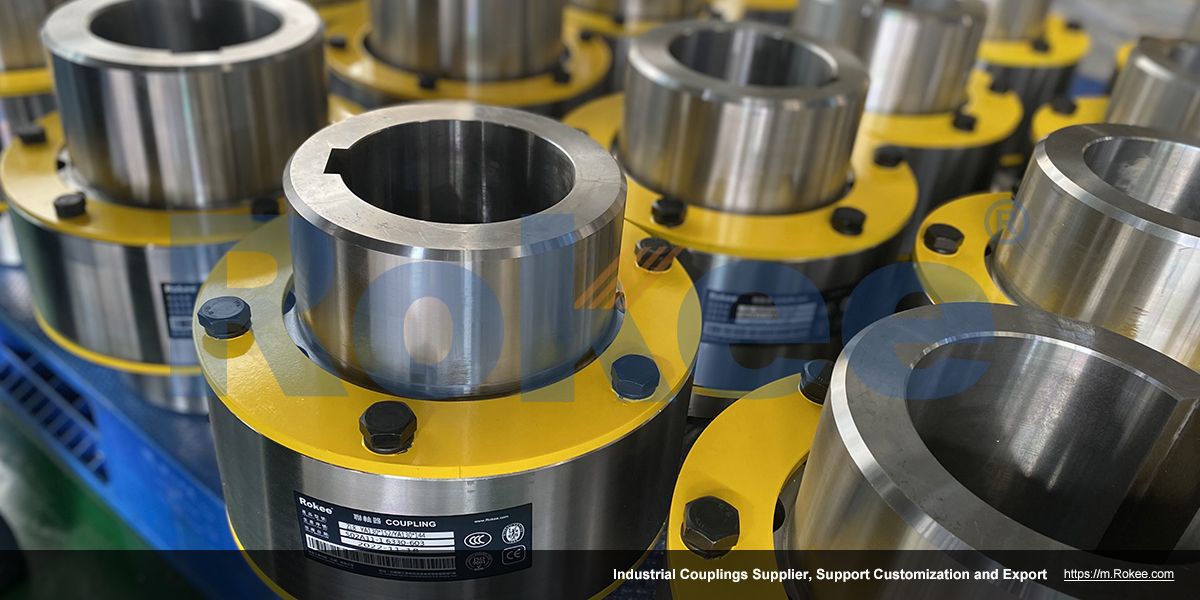
Bushed Pin Type Couplings
Rokee is a chinese Bushed Pin Type Couplings Manufacturer, provide Bushed Pin Type Couplings processing and customization services, Over the years, with excellent quality, we have been continuously providing many coupling products of various categories and uses complying with multiple standards and a full range of services, from the Bushed Pin Type Couplings selection to final installation and operation, for the industry fields of ferrous metallurgy, nuclear power, gas turbine, wind power, ropeway construction, lifting transportation, general equipment, etc. We strictly comply with quality system requirements and implement the whole process control to become a reliable and trustworthy partner of customers.
Providing customers with better Bushed Pin Type Couplings is always our driving force. Our aim is to transmit power for you and generate value for both of us. We look forward to joining you and becoming your partner for common progress.
-
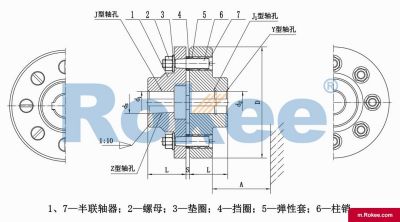
![LT Bushed Pin Type Couplings,LT/TL Elastic Sleeve Pin Coupling]()
LT/TL Elastic Sleeve Pin Coupling
LT Elastic Sleeve Pin Coupling is the basic form of this series of couplings.View More -
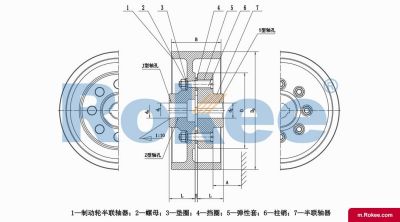
![LTZ Bushed Pin Type Couplings,LTZ/TLL Elastic Sleeve Pin Coupling With Brake Wheel]()
LTZ/TLL Elastic Sleeve Pin Coupling With Brake Wheel
LTZ Elastic Sleeve Pin Coupling is designed with a brake wheel, suitable for situations where braking is required.View More
As a key component of mechanical transmission systems, the bushed pin type coupling has been widely used in the industrial field due to its unique buffering performance and structural advantages.
Elastic buffer design, using column pins with rubber/polyurethane sleeves to connect the two halves of the coupling, achieved through compression deformation of the elastic sleeve:
Torque transmission: The column pin bears shear force, and the elastic sleeve absorbs impact (transmission torque range 40-20000 N · m)
Displacement compensation: radial compensation 0.15-0.25mm, angular compensation 0.5 °
Vibration suppression: Rubber materials can reduce system vibration by 15-30%
In the realm of mechanical power transmission, the bushed pin type coupling stands as a versatile and widely adopted component, serving as a critical bridge between rotating shafts in countless industrial and mechanical systems. Unlike rigid couplings that demand perfect shaft alignment and offer no flexibility, this type of coupling integrates elastic elements and a robust pin-and-hub framework to balance torque transmission efficiency, misalignment compensation, and operational resilience. It has earned its place in diverse engineering setups due to its straightforward design, reliable performance, and adaptability to varying operating conditions, addressing common challenges such as shaft misalignment, torsional vibration, and shock loads that plague rigid power transmission setups.
At its core, the bushed pin type coupling features a streamlined yet durable structural composition, centered around two key hubs, precision-engineered pins, and elastic bushings as the foundational flexible elements. The two hubs, typically crafted from high-strength cast iron, carbon steel, or alloy steel, are mounted securely onto the driving and driven shafts respectively, forming the primary connection points for power transfer. Each hub is equipped with evenly spaced radial holes, machined to tight tolerances to accommodate the pins and ensure stable positioning. The pins, usually made of hardened steel to withstand shear forces and torsional stress, pass through the aligned holes of both hubs, acting as the primary torque carriers between the two shaft ends. The defining feature of this coupling lies in the elastic bushings, which are fitted tightly around each pin and nestled within the hub holes, creating a cushioned interface between the rigid metal pins and hubs. These bushings are commonly fabricated from elastomeric materials such as natural rubber, nitrile rubber, neoprene, or polyurethane, chosen for their exceptional elasticity, wear resistance, and ability to withstand moderate temperature fluctuations and environmental exposure.
The structural design of the bushed pin type coupling is engineered for both functionality and ease of use, with no overly complex components or intricate assembly requirements. The hubs are often designed with standard bore sizes and keyway slots to facilitate seamless mounting onto various shaft diameters, ensuring compatibility with a wide range of mechanical drives. The pins are typically secured with simple fasteners or retaining rings to prevent axial displacement during operation, eliminating the risk of pin slippage and maintaining consistent power transmission. The elastic bushings are precision-molded to fit snugly around the pins and within the hub bores, with some variants featuring contoured or tapered profiles to enhance contact distribution and reduce localized stress. This modular construction not only simplifies manufacturing and assembly processes but also streamlines maintenance and replacement; worn or damaged bushings can be easily swapped out without disassembling the entire coupling or removing the hubs from the shafts, minimizing downtime and operational disruptions. Additionally, the compact form factor of the bushed pin type coupling allows it to fit into tight spatial constraints, making it suitable for machinery with limited installation space.
The performance characteristics of bushed pin type couplings are tailored to meet the demands of real-world mechanical operations, blending efficient torque transmission with valuable flexible properties. Foremost among these is its ability to compensate for multiple forms of shaft misalignment, a common occurrence in industrial machinery due to manufacturing tolerances, installation errors, thermal expansion, or operational wear. The elastic nature of the bushings enables the coupling to accommodate small to moderate angular misalignment, parallel radial misalignment, and slight axial displacement between the driving and driven shafts, preventing excessive stress on the shafts, bearings, and adjacent components. This misalignment compensation capability is crucial for prolonging the service life of the entire drive system, as it eliminates the premature wear and fatigue that would occur with rigid couplings in less-than-perfect alignment scenarios.
Beyond misalignment compensation, bushed pin type couplings excel in shock absorption and vibration damping, making them ideal for applications involving fluctuating loads, sudden starts, or frequent reversals. When subjected to impact loads or torsional vibrations, the elastomeric bushings deform slightly to absorb and dissipate kinetic energy, smoothing out power delivery and reducing the transmission of harmful vibrations to the rest of the machinery. This not only enhances operational stability but also reduces noise levels during operation, creating a safer and more comfortable working environment in industrial settings. The coupling also delivers consistent torque transmission efficiency, with minimal power loss under normal operating conditions; the rigid pins transfer torque reliably, while the elastic bushings maintain a firm grip without slipping, ensuring that rotational motion is transferred smoothly from the driving shaft to the driven shaft across a range of speeds and loads.
Durability and low maintenance are additional standout performance traits of bushed pin type couplings. The high-strength metal hubs and pins resist bending, shearing, and abrasion under heavy loads, while the elastomeric bushings are formulated to withstand prolonged use without rapid degradation, even in environments with moderate dust, moisture, or oil exposure. Unlike some flexible couplings that require regular lubrication to maintain performance, most bushed pin type couplings are lubrication-free, as the elastic bushings act as self-lubricating interfaces between the metal components. This eliminates the need for routine lubrication tasks, reducing maintenance costs and effort, and makes the coupling suitable for applications where lubrication is impractical or undesirable. The coupling also operates effectively across a broad range of rotational speeds and torque loads, from low-speed, high-torque heavy machinery to medium-speed general industrial drives, further expanding its operational versatility.
Bushed pin type couplings are available in several distinct varieties, each optimized to cater to specific operational requirements, load conditions, and installation scenarios, without sacrificing the core design principles that define this coupling category. The most common variant is the standard flexible bushed pin coupling, a general-purpose model featuring straight elastic bushings and cylindrical pins, designed for everyday industrial applications with moderate torque loads, standard shaft sizes, and typical misalignment conditions. This variant is the most widely used due to its balanced performance, cost-effectiveness, and compatibility with a vast array of general machinery, serving as a reliable solution for basic power transmission needs across multiple industries.
A second prominent variety is the curved or contoured bushed pin coupling, which incorporates specially shaped elastic bushings with a curved or barrel profile. This design enhances the coupling’s misalignment compensation capacity, particularly for angular and parallel misalignment, by distributing contact pressure more evenly across the bushing surface and reducing stress concentrations. The contoured bushings also improve shock absorption performance, making this variant well-suited for applications with heavier shock loads, higher misalignment tolerances, or more demanding operational conditions, such as heavy-duty manufacturing equipment and material handling machinery. Some versions of this variant feature tapered pins for enhanced fitting stability, further boosting load-bearing capacity and operational reliability.
The spacer bushed pin coupling is a specialized variant designed to address situations where a fixed distance must be maintained between the driving and driven shafts. This model incorporates a rigid spacer section between the two hubs, extending the overall length of the coupling to bridge the gap between shafts that are not in close proximity. The spacer is integrated seamlessly with the pin and bushing assembly, retaining all the core performance benefits of standard bushed pin couplings, including misalignment compensation and shock absorption. This variant is commonly used in systems where shaft separation is necessary for functional or spatial reasons, such as long-drive conveyor systems, pump units with remote motor mounting, and industrial machinery with spaced shaft arrangements.
Another specialized variety is the heavy-duty bushed pin coupling, engineered to handle exceptionally high torque loads and harsh operating environments. This variant features reinforced hubs made from high-grade alloy steel, thicker and stronger hardened steel pins, and heavy-duty elastomeric bushings with higher shore hardness and enhanced load-bearing capabilities. The structural components are machined to stricter tolerances and built with increased wall thickness and robust fastening mechanisms to withstand extreme shear forces, heavy shock loads, and continuous heavy-duty operation. This type of coupling is reserved for industrial applications with demanding load requirements, where standard flexible couplings would lack the necessary strength and durability.
Additionally, some bushed pin coupling variants are designed with integrated braking features, incorporating a brake drum or brake disc into one of the hubs to combine power transmission and braking functions in a single component. This space-saving design eliminates the need for a separate braking unit, making it ideal for machinery where braking is required alongside shaft coupling, such as lifting equipment, material handling hoists, and conveyor systems with frequent start-stop operations. Despite the added braking component, these variants retain the core flexible performance of bushed pin couplings, ensuring reliable torque transmission and misalignment compensation while providing efficient braking functionality.
The combination of robust structure, adaptable performance, and diverse varieties makes bushed pin type couplings indispensable across a vast spectrum of industrial and mechanical applications, spanning multiple sectors and equipment types. In the general manufacturing industry, these couplings are extensively used in machine tools, conveyor systems, mixers, agitators, and packaging machinery, where they facilitate smooth power transmission, absorb operational vibrations, and compensate for minor shaft misalignment inherent in production line equipment. Their low maintenance requirements and long service life make them a cost-effective choice for continuous manufacturing operations, where downtime must be minimized to maintain productivity.
In the fluid handling sector, bushed pin couplings are a staple component in pumps, compressors, blowers, and fans, both in horizontal and vertical configurations. These machines often experience shaft misalignment due to pipeline pressure, thermal expansion, or base plate movement, and the coupling’s flexible properties protect the pump and motor shafts, bearings, and seals from excessive stress, reducing the risk of leaks, component failure, and unplanned maintenance. The lubrication-free design is particularly advantageous in pump applications, as it eliminates the risk of lubricant contamination of fluid streams, making it suitable for water pumps, chemical transfer pumps, and industrial ventilation systems.
The material handling and construction industries rely heavily on bushed pin type couplings for heavy-duty equipment such as cranes, hoists, elevators, escalators, and stone crushing machinery. These applications involve high shock loads, frequent load fluctuations, and challenging operating conditions, and the coupling’s superior shock absorption and high torque capacity ensure reliable power delivery while protecting the drive system from impact damage. The durable construction of heavy-duty variants withstands the rigors of construction sites and material handling operations, where equipment is subjected to constant use and harsh environmental conditions.
Bushed pin couplings also find widespread use in the power generation and transmission sector, integrated into generator sets, turbine drives, and auxiliary power equipment. Their ability to dampen torsional vibrations and compensate for thermal misalignment makes them ideal for power generation systems, where stable and efficient power transmission is critical to avoid operational disruptions. Additionally, they are employed in textile machinery, printing presses, and other light to medium-duty industrial equipment, where smooth operation, low noise, and reliable performance are essential for maintaining product quality and production efficiency.
Beyond industrial machinery, bushed pin type couplings are utilized in various commercial and automotive auxiliary systems, as well as marine equipment, where their compact design, corrosion resistance (in coated variants), and flexible performance meet the unique demands of these applications. Whether in small-scale mechanical setups or large industrial drive systems, the bushed pin type coupling remains a preferred choice due to its unique ability to balance simplicity, reliability, and flexibility. Its enduring popularity stems from its capacity to solve common power transmission challenges, adapt to diverse operational needs, and deliver consistent performance over extended service periods, solidifying its status as a fundamental component in the field of mechanical engineering.
In summary, the bushed pin type coupling is a masterclass in practical mechanical design, merging a simple modular structure with high-performance functional attributes. Its core components—hubs, pins, and elastic bushings—work in harmony to deliver efficient torque transmission, effective misalignment compensation, and reliable shock absorption, while its diverse varieties cater to specialized operational needs across countless applications. From general industrial machinery to heavy-duty material handling equipment, fluid handling systems to power generation units, this coupling type continues to play a pivotal role in ensuring the smooth, reliable, and durable operation of rotating shaft systems. As mechanical engineering evolves and operational demands grow more stringent, the bushed pin type coupling remains a timeless and adaptable solution, valued for its practicality, performance, and versatility in the ever-expanding landscape of power transmission technology.
« Bushed Pin Type Couplings » Update Date: 2026/3/6
URL: https://m.rokee.com/tags/bushed-pin-type-couplings.html