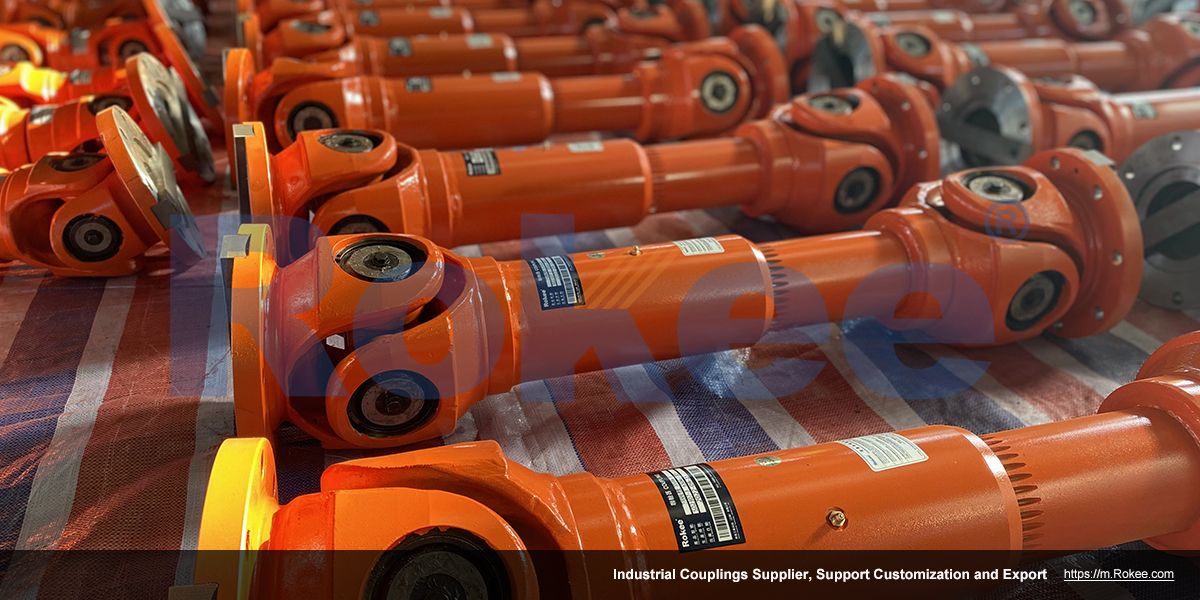
Cardan Shaft Couplings
Rokee is a chinese Cardan Shaft Couplings Manufacturer, provide Cardan Shaft Couplings processing and customization services, Over the years, with excellent quality, we have been continuously providing many coupling products of various categories and uses complying with multiple standards and a full range of services, from the Cardan Shaft Couplings selection to final installation and operation, for the industry fields of ferrous metallurgy, nuclear power, gas turbine, wind power, ropeway construction, lifting transportation, general equipment, etc. We strictly comply with quality system requirements and implement the whole process control to become a reliable and trustworthy partner of customers.
Providing customers with better Cardan Shaft Couplings is always our driving force. Our aim is to transmit power for you and generate value for both of us. We look forward to joining you and becoming your partner for common progress.
-
![SWC-BH Cardan Shaft Couplings,SWC-BH Cardan Shaft]()
SWC-BH Cardan Shaft
SWC-BH standard telescopic welded universal joint couplingView More -
![SWC-CH Cardan Shaft Couplings,SWC-CH Cardan Shaft]()
SWC-CH Cardan Shaft
SWC-CH long telescopic welded universal joint couplingView More -
![SWC-DH Cardan Shaft Couplings,SWC-DH Cardan Shaft]()
SWC-DH Cardan Shaft
SWC-DH short telescopic welded universal joint couplingView More -
![SWC-WD Cardan Shaft Couplings,SWC-WD Cardan Shaft]()
SWC-WD Cardan Shaft
SWC-WD non-telescopic short universal joint couplingView More -
![SWC-WH Cardan Shaft Couplings,SWC-WH Cardan Shaft]()
SWC-WH Cardan Shaft
SWC-WH non-telescopic welded universal joint couplingView More -
![SWP-A Cardan Shaft Couplings,SWP-A Cardan Shaft]()
SWP-A Cardan Shaft
SWP-A telescopic long type universal joint couplingView More -
![SWP-B Cardan Shaft Couplings,SWP-B Cardan Shaft]()
SWP-B Cardan Shaft
SWP-B telescopic short type universal joint couplingView More -
![SWP-C Cardan Shaft Couplings,SWP-C Cardan Shaft]()
SWP-C Cardan Shaft
SWP-C non telescopic short type universal joint couplingView More -
![SWP-D Cardan Shaft Couplings,SWP-D Cardan Shaft]()
SWP-D Cardan Shaft
SWP-D non telescopic long type universal joint couplingView More
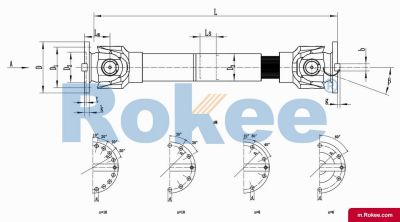
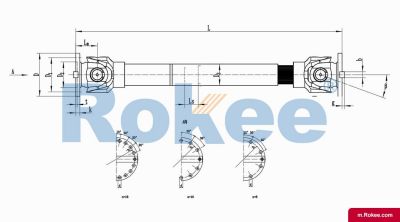
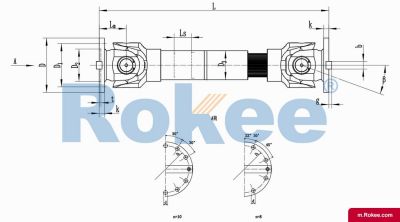
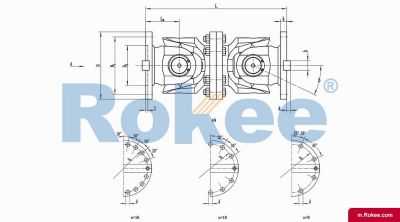
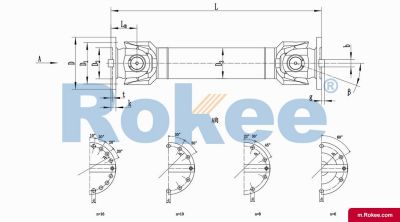
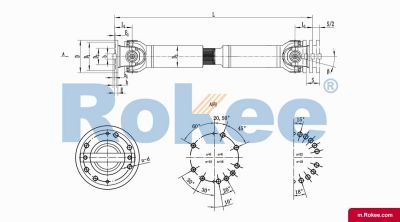
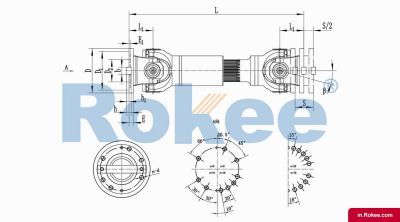
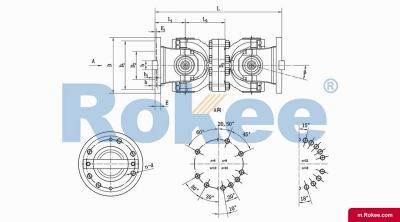
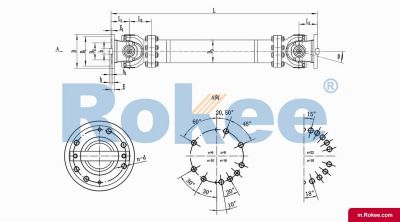
Cardan Shaft Coupling is a mechanism that utilizes the characteristics of its mechanism to enable continuous rotation of the two shafts connected without being on the same axis and with an angle between the axes, and to reliably transmit torque and motion. It has a large angular compensation capability, compact structure, and high transmission efficiency. There are various structural types of Cardan Shaft Couplings, such as cross shaft type, ball cage type, ball fork type, convex block type, ball pin type, ball joint type, ball joint plunger type, three pin type, trident rod type, three ball pin type, hinge rod type, etc. Among them, the most commonly used is the cross axis type, followed by the cage type. The core component of the cross axis Cardan Shaft Coupling is the cross axis, which allows the two shafts to rotate continuously at equal angular velocities within a large range of angles. The ball cage Cardan Shaft Coupling achieves two axis transmission through components such as the outer ring of the ball cage, the inner ring of the star shape, the cage, and the transmission steel ball. It is suitable for working conditions with large inclination angles and limited radial dimensions.
According to the magnitude of the transmitted torque, Cardan Shaft Couplings can be classified as heavy, medium, light, and small. Different models of Cardan Shaft Couplings are suitable for different mechanical transmission systems. Cardan Shaft Couplings are widely used in metallurgy, heavy machinery, petrochemicals, engineering machinery, rail transportation, agricultural machinery, industrial machinery and other fields. For example, in steel rolling machinery, Cardan Shaft Couplings are used to connect rollers and transmission systems, achieving reliable torque transmission; In heavy transportation equipment, it is used to connect the wheels and transmission shaft, ensuring that the vehicle can travel smoothly in various road conditions.
Cardan Shaft Couplings have significant angular compensation capabilities and can adapt to changes in the angle between two shafts. Compact structure, small footprint, easy to install and maintain. The transmission efficiency of Cardan Shaft Couplings is high, which can reduce energy loss and improve the overall performance of mechanical transmission systems. Using high-quality materials and advanced manufacturing processes, the Cardan Shaft Coupling has high reliability and durability.
When selecting a Cardan Shaft Coupling, factors such as the magnitude of the transmitted torque, the speed of the shaft, and the magnitude and direction of the relative displacement between the two shafts need to be considered. At the same time, it is necessary to refer to the characteristics of various types of couplings and choose a suitable type of coupling. For the Cardan Shaft Couplings that have already been selected, regular maintenance and upkeep are required. For example, regular lubrication can extend its service life; When disassembling and reinstalling, it is necessary to pay attention to adjusting the position of the cross axis to balance wear and tear; In addition, it is necessary to regularly check the wear of the coupling and replace damaged components in a timely manner.
In the realm of mechanical power transmission, the cardan shaft coupling stands as a versatile and indispensable component, engineered to address the inherent challenges of misaligned shaft connections while ensuring seamless torque and rotational motion transfer. Unlike rigid couplings that demand perfect shaft alignment and fail to accommodate any form of displacement, cardan shaft couplings are designed with articulated, flexible structures that can adapt to angular, parallel, and axial misalignments between driving and driven shafts, making them a cornerstone of countless industrial and mechanical systems across diverse sectors.
At its core, the fundamental structure of a standard cardan shaft coupling is built around a few key precision-machined components that work in tandem to deliver reliable power transmission. The most prevalent and widely used variant is the cross-type cardan shaft coupling, which consists of two fork-shaped yokes, a central cross shaft (also known as a spider), and bearing assemblies that enable smooth articulation. The fork yokes are securely attached to the input and output shafts respectively, featuring open-ended slots that cradle the ends of the cross shaft. The cross shaft, a rigid, cross-shaped metal component, serves as the pivotal connecting element, with its four arms fitted with specialized bearings to reduce friction and facilitate free rotational movement between the yokes and the cross shaft. These bearings are typically needle roller bearings or plain sliding bearings, chosen for their ability to withstand high radial and thrust loads while maintaining minimal backlash and smooth operation under dynamic conditions. The entire assembly is engineered with tight tolerances to ensure precise fitment, preventing excessive play that could lead to vibration, noise, or premature wear during operation. Beyond the basic cross-type design, more advanced cardan shaft coupling structures incorporate additional features such as telescopic shafts, reinforced yokes, and sealed bearing housings to enhance durability, extend operational lifespan, and suit specialized operating environments. The telescopic design, for instance, integrates a splined shaft section within the coupling body, allowing for adjustable length to compensate for axial displacement caused by thermal expansion, mechanical movement, or installation inconsistencies, further expanding the coupling’s adaptive capabilities.
The performance characteristics of cardan shaft couplings are what set them apart from other power transmission components, making them suitable for both light-duty precision applications and heavy-duty industrial operations. One of the most prominent performance advantages is their exceptional misalignment compensation capacity. Standard cross-type cardan shaft couplings can accommodate angular misalignments ranging from a few degrees up to 45 degrees in specialized designs, while also handling moderate parallel offsets and significant axial displacements, a feat that rigid couplings and many other flexible couplings cannot match. This ability to absorb misalignment not only simplifies installation processes by reducing the need for ultra-precise shaft alignment but also protects connected equipment such as motors, gearboxes, and pumps from excessive stress, bending moments, and premature failure that would otherwise occur due to forced alignment. Another key performance trait is high torque transmission efficiency, with most well-designed cardan shaft couplings achieving efficiency rates of 98% to 99.8% under optimal operating conditions. This high efficiency minimizes energy loss during power transfer, making them ideal for high-power transmission systems where energy conservation is critical. Additionally, cardan shaft couplings exhibit strong load-bearing capacity, with heavy-duty variants constructed from high-strength alloy steels capable of handling extreme torque loads and shock loads common in heavy industrial settings. They also offer reliable operation across a wide range of operating speeds, from low-speed, high-torque machinery to moderate-speed precision equipment, though it is important to note that single cross-type couplings may experience minor speed fluctuations at higher operating angles, a limitation that can be mitigated with specialized dual-coupling designs.
Durability and resilience are also hallmarks of cardan shaft coupling performance. The robust structural design, combined with high-quality bearing systems and corrosion-resistant materials in some variants, allows these couplings to operate effectively in harsh environments including high temperatures, high humidity, dusty atmospheres, and mild corrosive conditions. Sealed bearing designs prevent the ingress of contaminants such as dust, dirt, and moisture, preserving lubrication integrity and reducing wear on internal components, which in turn extends maintenance intervals and reduces downtime for equipment. Furthermore, cardan shaft couplings feature low backlash, ensuring precise rotational motion transfer without lag or play, a vital attribute for precision machinery applications where positional accuracy and consistent motion are paramount. While they do generate some vibration and noise at higher speeds or larger misalignment angles, proper design optimization, balanced components, and correct installation can minimize these effects, ensuring smooth and stable operation throughout the coupling’s service life. It is also worth noting that the performance of a cardan shaft coupling is highly dependent on proper selection based on application requirements, including torque load, operating speed, misalignment magnitude, and environmental conditions, as mismatched specifications can compromise performance and lead to premature failure.
Cardan shaft couplings are classified into several distinct types based on structural design, operational characteristics, load capacity, and intended applications, each tailored to meet specific mechanical transmission needs. The primary classification is based on core articulation design, with the three most common categories being cross-type universal cardan couplings, constant-velocity ball cage cardan couplings, and double cardan shaft couplings. Cross-type universal cardan couplings, as the most basic and widely used type, feature the classic yoke and cross shaft assembly, offering simple construction, cost-effective manufacturing, and high load-bearing capacity. They are ideal for heavy-duty, low-to-moderate speed applications where large torque transfer and significant angular misalignment compensation are required, though they are not optimized for ultra-high-speed operation due to potential centrifugal force-induced vibration at elevated speeds. Constant-velocity ball cage cardan couplings represent a more advanced design, replacing the cross shaft with a spherical housing, steel ball bearings, and a precision cage that guides the balls along optimized raceways. This design eliminates speed fluctuations and ensures constant rotational velocity between input and output shafts even at large operating angles, delivering exceptionally smooth, vibration-free power transmission. These couplings are engineered for high-speed, precision applications where operational smoothness and accuracy are critical, though they typically have lower load-bearing capacity compared to heavy-duty cross-type couplings and involve more complex manufacturing processes.
Double cardan shaft couplings, also known as dual joint couplings, feature two sets of cross-type universal joints connected by an intermediate shaft, creating a balanced assembly that cancels out the speed variations inherent in single cross-type couplings. This design combines the high load capacity of cross-type joints with the smooth operation of constant-velocity couplings, making it suitable for long-distance power transmission, large misalignment scenarios, and high-speed heavy-duty applications. Beyond these core structural classifications, cardan shaft couplings are also categorized by load capacity into light-duty, medium-duty, and heavy-duty variants. Light-duty cardan shaft couplings are compact, lightweight, and designed for small-scale precision equipment, handling low to moderate torque loads with precise motion transfer. Medium-duty couplings strike a balance between load capacity and flexibility, suited for general industrial machinery with moderate torque and speed requirements. Heavy-duty cardan shaft couplings are constructed with thickened, reinforced components, high-strength alloy materials, and oversized bearing systems, engineered to withstand extreme torque, shock loads, and harsh operating conditions in heavy industrial settings. Additional classifications include telescopic and non-telescopic variants, with telescopic couplings offering adjustable length for axial displacement compensation, and welded or flanged connection types, differing in how they attach to driving and driven shafts to suit various installation requirements.
The adaptability, reliable performance, and diverse design options of cardan shaft couplings make them ubiquitous across nearly every sector of mechanical and industrial engineering, with applications spanning automotive systems, construction machinery, metallurgical equipment, aerospace technology, marine engineering, agricultural machinery, and general industrial manufacturing. In the automotive industry, cardan shaft couplings are integral components of drive train systems, connecting the gearbox to the drive axle and compensating for vertical movement and angular misalignment between the chassis and wheels, ensuring smooth power delivery to the wheels even as the vehicle navigates uneven terrain. They are also used in steering systems, facilitating precise steering control by accommodating misalignment between steering column components. In construction machinery, including excavators, cranes, loaders, and bulldozers, heavy-duty cardan shaft couplings transmit high torque between engines, hydraulic systems, and working mechanisms, withstanding severe shock loads and constant misalignment caused by the rugged, dynamic operating conditions of construction sites. Their ability to handle extreme loads and adapt to frequent mechanical movement makes them irreplaceable in this sector, ensuring the durability and reliability of heavy construction equipment.
Metallurgical and mining operations rely heavily on heavy-duty cardan shaft couplings for the transmission of power in rolling mills, crushers, conveyor systems, and continuous casting equipment. These environments demand couplings that can endure high temperatures, heavy impact loads, and continuous operation, and cardan shaft couplings deliver consistent performance while compensating for shaft misalignment caused by thermal expansion and heavy mechanical stress. In aerospace engineering, precision-engineered cardan shaft couplings are used in critical systems such as helicopter rotor transmissions, aircraft engine drive systems, and flight control mechanisms, where lightweight construction, precise motion transfer, and reliable operation under extreme conditions are non-negotiable. The constant-velocity variants are particularly valued here for their smooth, low-vibration performance, ensuring the accuracy and safety of aerospace systems. Marine engineering also utilizes cardan shaft couplings in propulsion systems, deck machinery, and servo drive systems, where they resist corrosion, accommodate shaft misalignment caused by hull flexing, and transmit power efficiently in wet, saline environments.
Agricultural machinery, including tractors, harvesters, and tillers, depends on cardan shaft couplings to transfer power from the engine to various working attachments such as plows, mowers, and seeders. These couplings withstand the dusty, abrasive conditions of farmland, adapt to misalignment caused by uneven ground, and provide reliable power transfer for efficient agricultural operations. In general industrial manufacturing, cardan shaft couplings are found in machine tools, pumping systems, conveyor belts, packaging machinery, and industrial robots, serving diverse roles from precision motion control in CNC machines to heavy-duty power transmission in assembly lines. Light-duty and medium-duty variants are ideal for small-scale automated equipment, ensuring precise positioning and smooth operation, while heavy-duty variants power large industrial machinery such as paper mills, textile machines, and wastewater treatment equipment. Even in renewable energy systems, such as wind turbines and water turbines, cardan shaft couplings play a vital role in transmitting rotational power from the turbine blades to the generator, compensating for shaft misalignment caused by wind or water flow fluctuations and ensuring efficient energy conversion.
In summary, the cardan shaft coupling is a masterclass in mechanical engineering design, blending simple yet robust structural principles with exceptional performance versatility to solve the universal challenge of misaligned power transmission. Its core structural components work in harmony to deliver reliable torque transfer, while its diverse classifications cater to every conceivable load, speed, and environmental requirement. From precision aerospace systems to heavy-duty mining equipment, from automotive drive trains to agricultural machinery, the cardan shaft coupling proves its value time and again by enhancing equipment durability, simplifying installation, reducing maintenance needs, and ensuring efficient, stable power transmission. As industrial technology continues to advance and mechanical systems demand greater flexibility, resilience, and precision, the cardan shaft coupling will remain an essential component, evolving alongside technological innovations to meet the ever-growing needs of modern engineering and manufacturing. Understanding its structure, performance, types, and applications is not only crucial for mechanical engineers and design professionals but also for ensuring the optimal performance and longevity of countless mechanical systems that rely on seamless power transmission.
« Cardan Shaft Couplings » Update Date: 2026/3/6
URL: https://m.rokee.com/tags/cardan-shaft-couplings.html