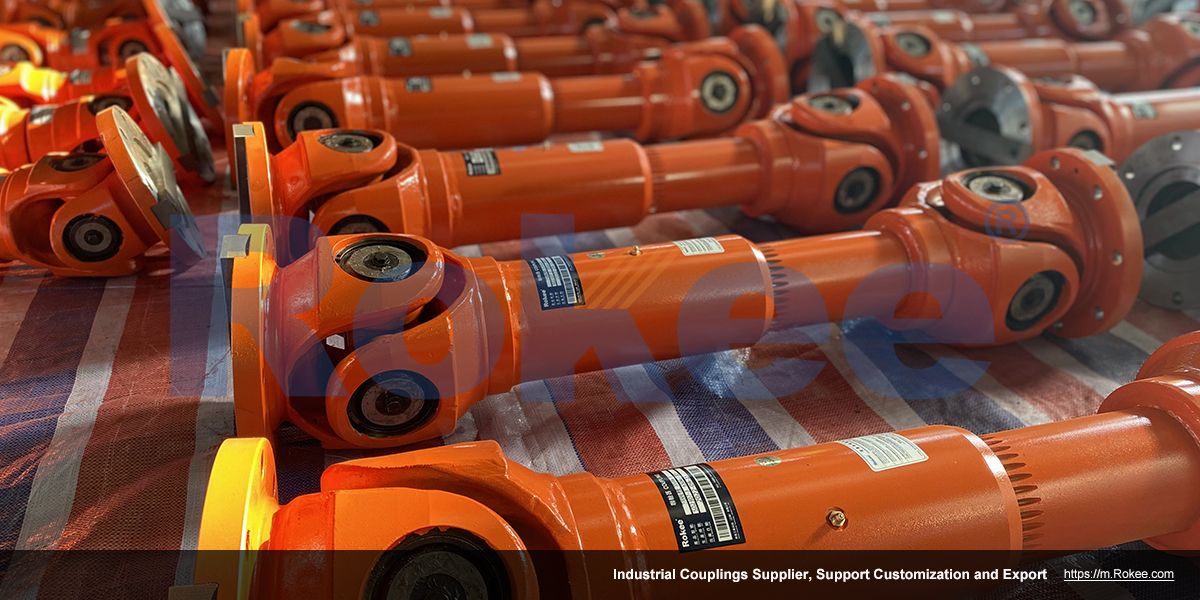
Cardan Joints
Rokee is a chinese Cardan Joints Manufacturer, provide Cardan Joints processing and customization services, Over the years, with excellent quality, we have been continuously providing many coupling products of various categories and uses complying with multiple standards and a full range of services, from the Cardan Joints selection to final installation and operation, for the industry fields of ferrous metallurgy, nuclear power, gas turbine, wind power, ropeway construction, lifting transportation, general equipment, etc. We strictly comply with quality system requirements and implement the whole process control to become a reliable and trustworthy partner of customers.
Providing customers with better Cardan Joints is always our driving force. Our aim is to transmit power for you and generate value for both of us. We look forward to joining you and becoming your partner for common progress.
-
![SWC-BH Cardan Joints,SWC-BH Cardan Shaft]()
SWC-BH Cardan Shaft
SWC-BH standard telescopic welded universal joint couplingView More -
![SWC-CH Cardan Joints,SWC-CH Cardan Shaft]()
SWC-CH Cardan Shaft
SWC-CH long telescopic welded universal joint couplingView More -
![SWC-DH Cardan Joints,SWC-DH Cardan Shaft]()
SWC-DH Cardan Shaft
SWC-DH short telescopic welded universal joint couplingView More -
![SWC-WD Cardan Joints,SWC-WD Cardan Shaft]()
SWC-WD Cardan Shaft
SWC-WD non-telescopic short universal joint couplingView More -
![SWC-WH Cardan Joints,SWC-WH Cardan Shaft]()
SWC-WH Cardan Shaft
SWC-WH non-telescopic welded universal joint couplingView More -
![SWP-A Cardan Joints,SWP-A Cardan Shaft]()
SWP-A Cardan Shaft
SWP-A telescopic long type universal joint couplingView More -
![SWP-B Cardan Joints,SWP-B Cardan Shaft]()
SWP-B Cardan Shaft
SWP-B telescopic short type universal joint couplingView More -
![SWP-C Cardan Joints,SWP-C Cardan Shaft]()
SWP-C Cardan Shaft
SWP-C non telescopic short type universal joint couplingView More -
![SWP-D Cardan Joints,SWP-D Cardan Shaft]()
SWP-D Cardan Shaft
SWP-D non telescopic long type universal joint couplingView More
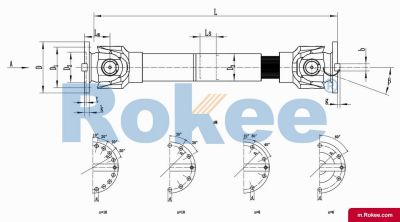
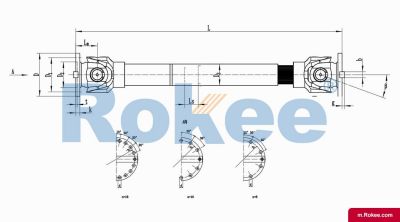
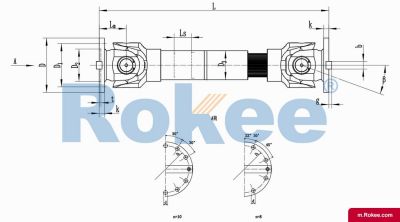
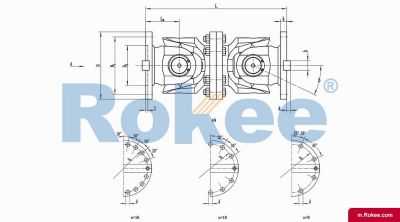
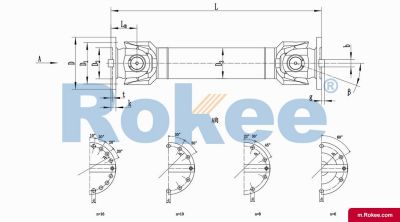
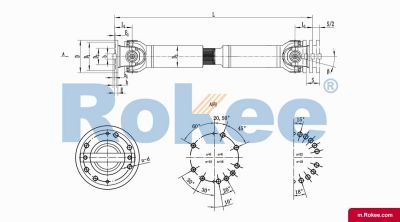
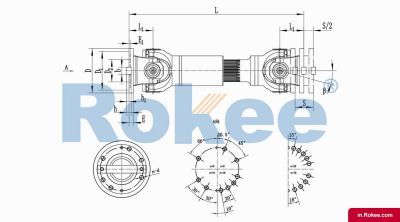
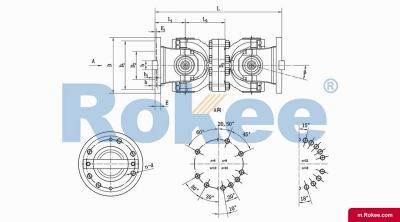
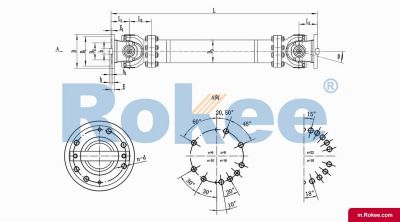
The Cardan joint, also widely referred to as a universal joint, stands as one of the most fundamental and indispensable mechanical components in modern engineering systems, designed to transmit rotational motion and torque between two shafts that are not collinear, intersecting at a fixed or variable angle. Since its conceptualization and refinement over centuries, this versatile coupling has evolved from a basic mechanical linkage to a highly engineered component tailored for diverse operational demands, spanning light-duty precision machinery to heavy-duty industrial equipment. At its core, the Cardan joint solves a critical mechanical challenge: enabling power transfer between misaligned shafts without compromising the integrity of the transmission system, a capability that has cemented its role across countless industries. Unlike rigid couplings that demand perfect shaft alignment, the Cardan joint accommodates angular misalignment, axial displacement, and in some configurations, radial offset, making it a cornerstone of mechanical design where shaft positioning is constrained by spatial limitations, dynamic movement, or operational stress. To fully grasp its significance, it is essential to dissect its intrinsic structural design, evaluate key performance metrics, categorize its varied types, and explore its extensive real-world applications, all of which highlight its adaptability and engineering value.
Delving into the fundamental structure of a standard Cardan joint reveals a streamlined yet robust mechanical assembly that prioritizes functionality and durability. The classic single Cardan joint, the most prevalent variant, consists of three core components: two yoke-shaped end fittings (also known as forks) and a central cross-shaped member, commonly called a spider. Each yoke is securely attached to the driving and driven shafts respectively, featuring two perpendicular arms that connect to the spider via precision bearings. The spider, with its four orthogonal arms, acts as the pivotal intermediary, allowing the yokes to pivot independently relative to one another, thus facilitating the transmission of rotation across angled shafts. In most industrial and automotive grade Cardan joints, needle roller bearings are integrated between the spider arms and yoke bores to minimize friction, reduce wear, and enhance load-bearing capacity; this bearing configuration is critical for sustaining smooth operation under both static and dynamic loads, as well as for extending the joint’s service life. Some simplified variants utilize plain bearings or bushings for low-load, low-speed applications, prioritizing cost-effectiveness and ease of maintenance over high-performance capabilities. The structural simplicity of the basic Cardan joint is one of its greatest strengths, as it minimizes the number of moving parts, reduces the risk of mechanical failure, and allows for straightforward installation, maintenance, and replacement. However, this simplicity also brings inherent performance tradeoffs, particularly related to velocity fluctuation and operational stability at high angles or high rotational speeds, which have driven the development of modified and advanced Cardan joint designs to address these limitations.
Performance characteristics of Cardan joints are defined by a set of core mechanical properties that dictate their suitability for specific applications, with no single variant excelling in all operational parameters, necessitating careful selection based on system requirements. One of the primary performance metrics is angular misalignment capacity, which refers to the maximum angle between the driving and driven shafts that the joint can accommodate while maintaining efficient power transmission. Standard single Cardan joints typically operate optimally at angles ranging from 1 to 15 degrees, with performance deteriorating significantly as angles exceed 20 degrees; beyond this threshold, velocity fluctuations, vibration, and mechanical stress escalate rapidly, risking premature wear and system damage. A defining trait of conventional single Cardan joints is non-constant velocity transmission: when operating at an angle, the driven shaft rotates with periodic speed variations even when the driving shaft runs at a constant speed, a phenomenon caused by the geometric offset of the pivot points. This speed fluctuation induces torsional vibration, noise, and stress on connected components, making single joints less ideal for high-speed, high-precision applications where smooth operation is paramount. Torque capacity is another pivotal performance attribute, determined by factors such as material strength, bearing type, cross-sectional dimensions of the spider and yokes, and overall joint size. Heavy-duty Cardan joints are engineered with high-strength alloy steels, reinforced yokes, and heavy-duty bearings to handle extreme torque loads, while lightweight variants use aluminum alloys or engineered polymers for low-torque, weight-sensitive applications. Durability and fatigue resistance are equally critical, with performance heavily influenced by operating conditions such as rotational speed, temperature, lubrication quality, and exposure to contaminants like dust, moisture, or debris. Properly lubricated and maintained Cardan joints can withstand millions of rotational cycles, while inadequate maintenance or harsh operating environments drastically shorten their lifespan. Additional performance considerations include backlash, torsional stiffness, and axial play; minimal backlash and high torsional stiffness are preferred for precision transmission systems, while controlled axial play allows for minor shaft length adjustments, a valuable feature in systems with thermal expansion or dynamic movement.
Cardan joints are classified into distinct types based on structural design, performance capabilities, and intended use cases, each engineered to overcome specific limitations of the basic single joint and cater to specialized operational needs. The most prominent categories include single Cardan joints, double Cardan joints, offset Cardan joints, constant velocity (CV) Cardan variants, and heavy-duty reinforced Cardan joints, each with unique structural modifications and performance profiles. Single Cardan joints, as the baseline design, offer simplicity, compactness, and cost-efficiency, making them suitable for applications with moderate angular misalignment, low to moderate speeds, and manageable torque loads. Their straightforward construction makes them easy to manufacture and integrate into compact mechanical systems, though their non-constant velocity output restricts use in high-precision or high-speed setups. Double Cardan joints, also known as constant velocity Cardan joints in some configurations, address the velocity fluctuation flaw of single joints by pairing two single Cardan joints with a short intermediate shaft and a centering mechanism that maintains equal angular displacement between the driving and driven shafts. This dual-joint setup cancels out the speed variations inherent in single joints, delivering near-constant velocity transmission, enabling operation at larger angles (up to 30 degrees or more) with reduced vibration and noise. Double Cardan joints feature a more complex structure than single variants, with additional components including the intermediate shaft, centering ball, or socket mechanism to ensure phased rotation, but their enhanced performance justifies the added complexity in demanding applications. Offset Cardan joints represent a specialized variation designed to handle both angular misalignment and axial displacement simultaneously, a capability absent in standard single and double joints. The offset design incorporates a modified spider and yoke configuration that allows for limited radial and axial movement, making them ideal for systems where shafts experience both angular offset and length variation due to thermal expansion, mechanical settling, or dynamic operation. Constant velocity Cardan joints, a refined subset of double joints, are engineered to deliver perfectly uniform rotational speed between input and output shafts across all operational angles, eliminating torsional vibration entirely; these joints often feature precision-machined ball bearings, cage assemblies, or spherical contact surfaces to maintain constant velocity, prioritizing smooth operation over sheer torque capacity. Heavy-duty Cardan joints are built for extreme industrial conditions, featuring oversized components, forged alloy steel construction, multi-row roller bearings, and reinforced welds to handle exceptionally high torque loads, heavy shock loads, and low-speed, high-stress operation. These joints are often larger in size and more robust, sacrificing compactness for unparalleled strength and durability in the harshest working environments.
Beyond these primary classifications, Cardan joints can also be categorized by lubrication and sealing design, with sealed, maintenance-free joints and grease-lubricated, serviceable joints being the two main groups. Sealed Cardan joints feature integrated rubber or polymer boots that encapsulate the bearing and spider assembly, retaining lubricant and blocking contaminants; these joints require no periodic lubrication, reducing maintenance demands and extending service life in harsh conditions, though they are less repairable if damaged. Serviceable Cardan joints, by contrast, have accessible grease fittings and removable bearings, allowing for regular lubrication and component replacement, making them cost-effective for applications where maintenance is feasible and long-term repairability is a priority. Material selection further differentiates Cardan joint types, with standard carbon steel joints for general-purpose use, alloy steel joints for high-load applications, stainless steel joints for corrosion-resistant environments (such as marine or food processing equipment), and lightweight non-metallic joints for low-load, weight-sensitive precision equipment. Each material and design variation fine-tunes the joint’s performance to match specific environmental and operational demands, ensuring optimal functionality across diverse use cases.
The versatility of Cardan joints is reflected in their widespread adoption across nearly every major industry, with each application leveraging the joint’s unique ability to transmit power across misaligned shafts. In the automotive and transportation sector, Cardan joints are ubiquitous, serving as critical components in drive shafts, steering columns, and axle assemblies. Single Cardan joints are commonly used in rear-wheel-drive vehicles to connect the transmission to the rear differential, accommodating the angular movement caused by suspension travel and chassis flex. Double Cardan joints and constant velocity variants are integral to front-wheel-drive and all-wheel-drive vehicles, where they handle larger steering angles and suspension movement while maintaining smooth power delivery to the wheels, eliminating vibration and ensuring stable handling. Heavy-duty trucks, buses, and off-road vehicles rely on reinforced Cardan joints to withstand the high torque and shock loads associated with heavy loads and rough terrain, while agricultural machinery such as tractors, harvesters, and tillers uses Cardan joints in power take-off (PTO) systems, linking the engine to auxiliary equipment and accommodating the dynamic misalignment common in farming operations.
In industrial machinery and manufacturing, Cardan joints play a vital role in power transmission systems across a spectrum of equipment, from small assembly line tools to large-scale manufacturing machinery. They are extensively used in conveyor systems, pumps, compressors, and mixers, where they compensate for shaft misalignment caused by installation errors, thermal expansion, or operational vibration. Offset Cardan joints are particularly valuable in industrial pumps and fans, where shafts often experience both angular and axial movement, ensuring uninterrupted power transfer and reducing stress on connected motors and gearboxes. Heavy-duty Cardan joints are indispensable in metalworking equipment, including rolling mills, presses, and shearing machines, where they transmit extreme torque loads and withstand the harsh, high-shock conditions of metal fabrication. In material handling equipment such as cranes, hoists, and forklifts, Cardan joints enable smooth rotation and power transfer across articulated components, supporting the dynamic movement required for lifting and transporting heavy loads. Additionally, they are used in machine tools such as lathes, milling machines, and grinders, where precision power transmission is critical; constant velocity Cardan joints are preferred here to maintain machining accuracy by eliminating speed fluctuations and vibration.
The aerospace and defense sector relies on specialized Cardan joints for high-performance, mission-critical applications, where lightweight construction, precision, and reliability are non-negotiable. These joints are used in flight control systems, landing gear actuation mechanisms, and auxiliary power units, transmitting motion between components in tight, constrained spaces while withstanding extreme temperature fluctuations, high altitudes, and mechanical stress. Aerospace-grade Cardan joints are engineered with lightweight, high-strength materials such as titanium alloys and precision-machined components, ensuring minimal weight addition to aircraft structures while maintaining exceptional durability and performance. In marine engineering, Cardan joints are adapted for corrosion resistance, with stainless steel and coated components to withstand saltwater exposure; they are used in ship propulsion systems, steering mechanisms, and onboard machinery, accommodating shaft misalignment caused by hull flex and wave-induced movement.
Cardan joints also find niche applications in precision instruments, medical devices, and consumer goods, highlighting their adaptability beyond heavy industry. In optical and scientific equipment, miniature Cardan joints enable precise angular adjustment and motion transmission in telescopes, cameras, and laboratory instrumentation, where compact size and smooth operation are essential. Medical devices such as surgical robots, diagnostic equipment, and rehabilitation machinery use small, precision Cardan joints to transmit delicate, controlled movements, ensuring accuracy and patient safety. In consumer products, they are integrated into appliances such as washing machines, power tools, and outdoor equipment, providing reliable power transfer in compact designs where shaft alignment is impractical.
As engineering technology continues to advance, the design and performance of Cardan joints evolve in tandem, with ongoing innovations focused on enhancing efficiency, durability, and adaptability. Modern manufacturing techniques such as precision forging, computer numerical control (CNC) machining, and advanced heat treatment have improved the dimensional accuracy and material strength of Cardan joint components, boosting load capacity and service life. Research into advanced lubricants and sealing materials has further optimized performance, reducing friction and extending maintenance intervals, even in extreme environments. Additionally, custom-engineered Cardan joints are increasingly developed to meet the unique demands of specialized applications, with tailored designs for specific torque loads, angular ranges, and environmental conditions, ensuring a perfect fit for diverse mechanical systems.
In summary, the Cardan joint remains a timeless and essential mechanical component, its enduring relevance stemming from its unique ability to solve the universal engineering challenge of transmitting power across misaligned shafts. From the basic single joint to advanced constant velocity and heavy-duty variants, each type offers distinct performance attributes tailored to specific operational needs, spanning automotive, industrial, aerospace, marine, and precision sectors. Its structural simplicity, coupled with continuous design refinements, has made it a versatile and reliable solution for countless mechanical systems, balancing functionality, durability, and cost-effectiveness. As industrial and technological progress continues, the Cardan joint will undoubtedly retain its status as a foundational element of mechanical engineering, adapting to emerging demands and maintaining its critical role in powering the machinery that drives modern society.
« Cardan Joints » Update Date: 2026/3/6
URL: https://m.rokee.com/tags/cardan-joints.html