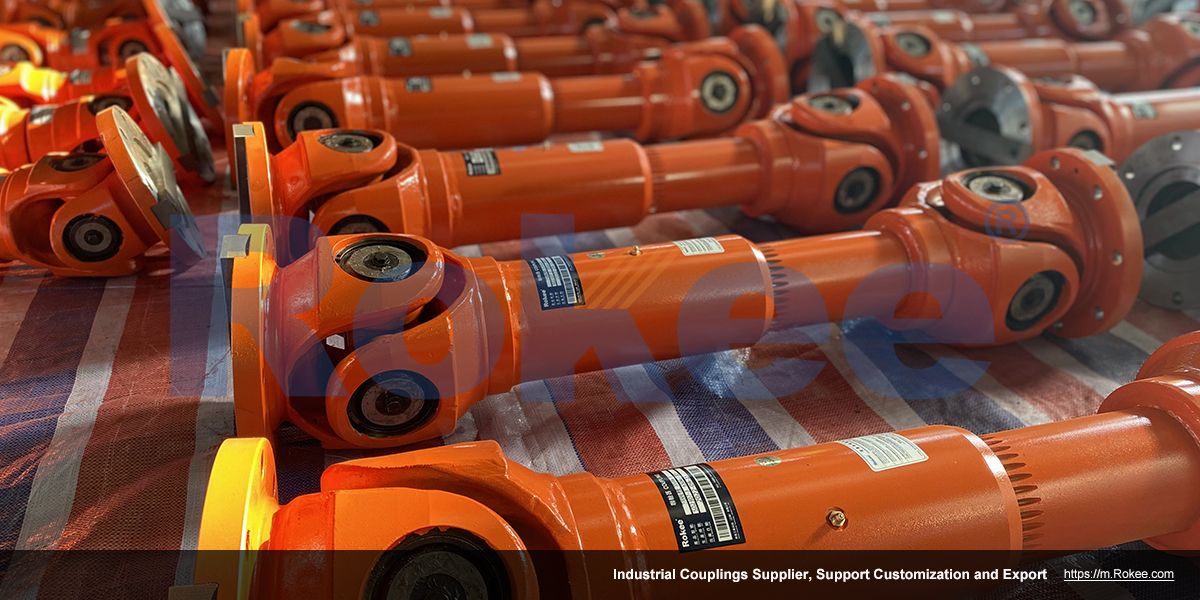
Cardan Shafts
Rokee is a chinese Cardan Shafts Manufacturer, provide Cardan Shafts processing and customization services, Over the years, with excellent quality, we have been continuously providing many coupling products of various categories and uses complying with multiple standards and a full range of services, from the Cardan Shafts selection to final installation and operation, for the industry fields of ferrous metallurgy, nuclear power, gas turbine, wind power, ropeway construction, lifting transportation, general equipment, etc. We strictly comply with quality system requirements and implement the whole process control to become a reliable and trustworthy partner of customers.
Providing customers with better Cardan Shafts is always our driving force. Our aim is to transmit power for you and generate value for both of us. We look forward to joining you and becoming your partner for common progress.
-
![SWC-BH Cardan Shafts,SWC-BH Cardan Shaft]()
SWC-BH Cardan Shaft
SWC-BH standard telescopic welded universal joint couplingView More -
![SWC-CH Cardan Shafts,SWC-CH Cardan Shaft]()
SWC-CH Cardan Shaft
SWC-CH long telescopic welded universal joint couplingView More -
![SWC-DH Cardan Shafts,SWC-DH Cardan Shaft]()
SWC-DH Cardan Shaft
SWC-DH short telescopic welded universal joint couplingView More -
![SWC-WD Cardan Shafts,SWC-WD Cardan Shaft]()
SWC-WD Cardan Shaft
SWC-WD non-telescopic short universal joint couplingView More -
![SWC-WH Cardan Shafts,SWC-WH Cardan Shaft]()
SWC-WH Cardan Shaft
SWC-WH non-telescopic welded universal joint couplingView More -
![SWP-A Cardan Shafts,SWP-A Cardan Shaft]()
SWP-A Cardan Shaft
SWP-A telescopic long type universal joint couplingView More -
![SWP-B Cardan Shafts,SWP-B Cardan Shaft]()
SWP-B Cardan Shaft
SWP-B telescopic short type universal joint couplingView More -
![SWP-C Cardan Shafts,SWP-C Cardan Shaft]()
SWP-C Cardan Shaft
SWP-C non telescopic short type universal joint couplingView More -
![SWP-D Cardan Shafts,SWP-D Cardan Shaft]()
SWP-D Cardan Shaft
SWP-D non telescopic long type universal joint couplingView More
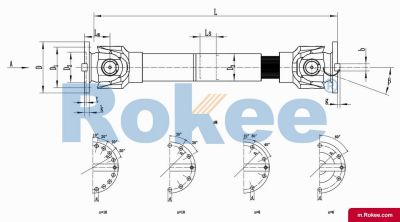
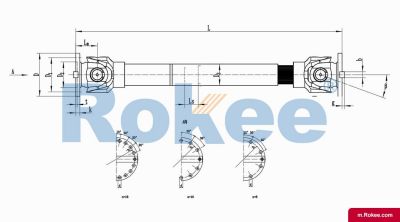
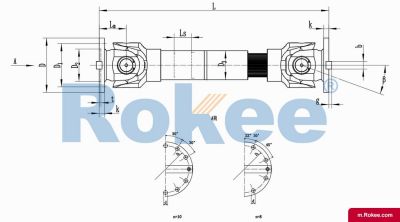
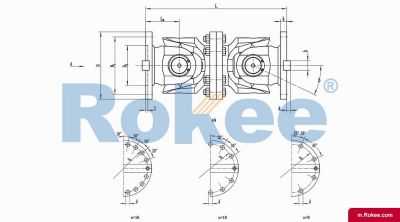
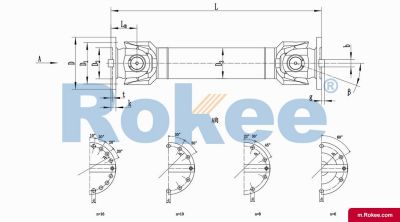
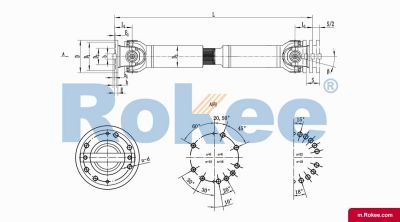
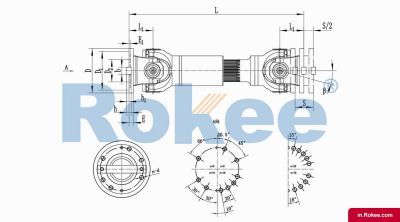
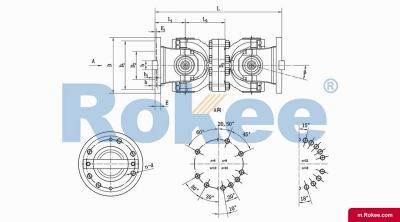
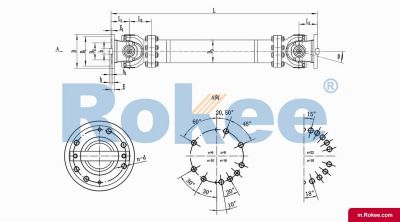
Cardan Shaft is a mechanical coupling that can achieve angular and positional flexibility. It is mainly used to connect two shafts that must rotate synchronously but have angular deviation. Through its unique structure, it can reliably transmit torque and motion. There are various structural types of Cardan Shafts to meet the needs of different application scenarios. Among them, the commonly used is the cross axis Cardan Shaft, followed by the ball cage Cardan Shaft. The angle between the two axes of Cardan Shafts with different structural types is generally between 5 ° and 45 °. In addition, according to the magnitude of the transmitted torque, Cardan Shafts can be classified into different types such as heavy, medium, light, and small.
The working principle of a Cardan Shaft mainly depends on its internal cross axis or ball cage structure. When there is an angle deviation between the two shafts, the Cardan Shaft can utilize the characteristics of these structures to achieve continuous rotation of the two shafts without being on the same axis, and reliably transmit torque and motion. This characteristic makes the Cardan Shaft highly flexible and adaptable in mechanical transmission.
Cardan Shafts are widely used in various mechanical and transportation systems due to their versatility and adaptability. For example, in the automotive industry, Cardan Shafts are used to connect the transmission shaft between the engine and gearbox, as well as the connection between the drive axle and the half shaft; In mechanical equipment, Cardan Shafts are often used to connect rotating components in different parts to achieve power transmission and synchronization of motion. In addition, Cardan Shafts also have important applications in fields such as ships, aviation, and aerospace.
In order to ensure the normal operation and prolong the service life of the Cardan Shaft, regular maintenance and upkeep are necessary. This includes checking the wear, lubrication, and fastening of the Cardan Shaft. Once abnormalities or damages are found, they should be replaced or repaired in a timely manner.
In the vast landscape of mechanical power transmission systems, the Cardan shaft stands as a fundamental and indispensable component, engineered to bridge the gap between non-coaxial rotating shafts and deliver consistent torque and rotational motion across diverse operating conditions. Also widely referred to as a universal joint shaft, this mechanical assembly has evolved significantly since its conceptual inception, adapting to the ever-growing demands of modern machinery across industrial, automotive, agricultural, marine, and aerospace sectors. Unlike rigid shaft couplings that demand perfect alignment between driving and driven components, the Cardan shaft thrives in scenarios where axial misalignment, angular deflection, or radial displacement are inevitable—whether due to manufacturing tolerances, installation errors, dynamic movement during operation, or structural flexing under load. Its core design philosophy revolves around flexibility without compromising power transfer efficiency, making it a cornerstone of reliable mechanical transmission in equipment that cannot maintain rigid shaft alignment at all times.
At its most basic level, the standard Cardan shaft is a precision-engineered assembly composed of several core components that work in tandem to enable flexible power transmission. The central element of the universal joint mechanism is the cross-shaped spindle, commonly known as the cross shaft, which features four perpendicular journal ends designed to accommodate bearing assemblies. Flanking this cross shaft are two yoke-shaped connectors—one attached to the input driving shaft and the other to the output driven shaft—each paired with the cross shaft via high-precision bearings to facilitate smooth articulation. These bearings are typically needle roller bearings or sliding bearings, chosen for their ability to handle high radial and thrust loads while minimizing friction during angular movement; needle roller bearings, in particular, are favored for their compact design, high load-bearing capacity, and suitability for moderate to high-speed operations. The yokes are securely fastened to the respective shaft ends via flanged connections, splined fittings, or welded joints, depending on the intended load capacity and application requirements. Many Cardan shafts also incorporate a telescopic intermediate shaft section, which allows for axial length adjustment to compensate for thermal expansion, mechanical vibration, or shifts in shaft positioning during operation. This telescopic feature is often constructed with splined inner and outer tubes, enabling smooth sliding movement while maintaining continuous torque transmission. Beyond these primary parts, additional components such as sealing rings, dust covers, and lubrication channels are integrated to protect internal bearing surfaces from contaminants, retain lubricating grease, and extend the overall service life of the assembly, even in harsh operating environments with dust, moisture, or debris.
The structural design of the Cardan shaft directly dictates its performance characteristics, which set it apart from other power transmission components and define its suitability for specific applications. One of the most prominent performance traits is its ability to accommodate angular misalignment between input and output shafts, with standard designs capable of handling deflection angles ranging from 5 degrees to 45 degrees, depending on the specific type and construction. This angular flexibility ensures that power transmission remains uninterrupted even when shafts are not perfectly aligned, eliminating the risk of premature wear, vibration, or component failure that plagues rigid coupling systems. Another key performance metric is torque transmission capacity, which varies widely based on the shaft’s dimensions, material composition, and joint design; heavy-duty variants are built to transfer extremely high torque loads, making them ideal for heavy machinery, while lighter versions excel in low-to-moderate torque applications with space constraints. Durability is another critical performance attribute, achieved through the use of high-strength alloy steels, specialized heat treatment processes, and precision machining that enhance resistance to fatigue, abrasion, and impact loads. The Cardan shaft also offers reliable operational stability across a broad spectrum of rotational speeds, with optimized designs balancing smooth operation at high speeds and robust load handling at low speeds. Additionally, high-quality Cardan shafts exhibit minimal power loss during transmission, thanks to low-friction bearing systems and precise component machining, contributing to the overall energy efficiency of the machinery they serve. While single Cardan joints may exhibit minor speed fluctuations at larger deflection angles, this limitation is effectively mitigated in dual-joint or multi-joint configurations, which deliver near-uniform rotational velocity and reduced vibration, further boosting performance in precision-sensitive applications.
Cardan shafts are classified into distinct types based on structural design, load capacity, operational speed, and functional features, each tailored to address specific transmission challenges and operating conditions. The most fundamental categorization is based on the number of universal joints integrated into the assembly, distinguishing between single-joint and double-joint Cardan shafts. Single-joint Cardan shafts represent the simplest and most compact design, consisting of a single universal joint connecting two yokes; they are cost-effective, easy to install, and ideal for applications with limited angular misalignment and moderate torque requirements, such as light industrial machinery and small-scale automotive components. Double-joint Cardan shafts, by contrast, feature two universal joints linked by an intermediate shaft, a design that eliminates the non-uniform rotational speed inherent in single-joint models and allows for greater angular deflection and longer transmission distances. This type delivers smoother power transfer, reduced vibration, and enhanced stability, making it suitable for high-speed, precision-critical applications and systems with significant shaft misalignment. Beyond joint count, Cardan shafts are also categorized by load-bearing capacity, dividing into light-duty, medium-duty, and heavy-duty variants. Light-duty Cardan shafts are constructed with smaller cross sections, thinner materials, and compact bearing assemblies, designed for low-torque, high-speed applications such as passenger vehicles, small agricultural implements, and precision machine tools. Medium-duty Cardan shafts strike a balance between load capacity and operational flexibility, featuring reinforced components and medium-sized cross shafts to handle moderate torque loads and a wide range of speeds; they are versatile workhorses used in conveyor systems, light construction equipment, and marine auxiliary machinery. Heavy-duty Cardan shafts are engineered for extreme operating conditions, boasting large-diameter cross shafts, thick-walled tubing, heavy-duty needle bearings, and high-strength forged yokes to withstand massive torque loads, heavy impact, and prolonged stress. These robust shafts are purpose-built for heavy industrial machinery, mining equipment, large-scale agricultural machinery, and marine propulsion systems where failure is not an option.
Further classification of Cardan shafts is based on specialized structural features that enhance their functionality for niche applications. Telescopic Cardan shafts, equipped with splined axial adjustment sections, are designed to compensate for dynamic changes in shaft distance during operation, such as those caused by suspension movement in vehicles, thermal expansion in industrial machinery, or mechanical vibration in rotating equipment. This telescopic design eliminates the need for precise axial alignment during installation and accommodates continuous length variations without compromising transmission efficiency. Non-telescopic Cardan shafts, with fixed axial lengths, are used in applications where shaft positioning remains constant, offering enhanced rigidity and higher torque capacity for stationary industrial equipment. Ball cage Cardan shafts represent a premium design variant, replacing the traditional cross shaft and yoke assembly with a spherical housing, steel balls, and a cage structure that transmits torque via precision ball tracks. This design delivers exceptionally smooth rotation, minimal vibration, and high-speed capability, making it ideal for precision machinery, high-performance automotive drivetrains, and aerospace systems where operational smoothness is paramount. Additionally, Cardan shafts can be categorized based on mounting configuration, including flanged mount, splined mount, and welded mount variants, each designed to integrate seamlessly with different shaft end designs and installation requirements. Flanged mount shafts offer easy installation and removal, splined mount shafts provide secure torque transfer and axial adjustability, and welded mount shafts deliver maximum rigidity and load capacity for permanent, heavy-duty installations.
The versatility of Cardan shafts is reflected in their widespread adoption across nearly every industry that relies on mechanical power transmission, with each application leveraging the component’s unique combination of flexibility, torque capacity, and durability. In the automotive industry, Cardan shafts are integral to the drivetrain systems of passenger vehicles, commercial trucks, buses, and off-road vehicles, transmitting power from the transmission to the drive axles while accommodating the vertical movement of suspension components and changes in drive shaft length during operation. They are also critical components of steering systems and four-wheel-drive transfer cases, enabling smooth power delivery and directional control even when wheels are articulating over uneven terrain. In the agricultural sector, Cardan shafts connect tractors to a vast array of implements, including mowers, balers, seeders, plows, and harvesters, adapting to the constant movement and misalignment that occurs as farm equipment operates over rough, uneven fields. Their ability to transfer high torque while withstanding dust, dirt, and moisture makes them essential for reliable agricultural machinery performance in harsh outdoor conditions. The construction and mining industries rely heavily on heavy-duty Cardan shafts to power excavators, loaders, cranes, bulldozers, crushing equipment, and conveyor systems, where they endure extreme torque loads, continuous vibration, and abrasive operating environments. These shafts ensure consistent power transmission to moving components, even as heavy machinery shifts, lifts, and processes materials under immense stress.
Industrial manufacturing sectors, including steel production, paper manufacturing, and cement production, depend on Cardan shafts for the operation of heavy machinery such as rolling mills, continuous casting equipment, paper machines, rotary kilns, and mixing systems. In these settings, Cardan shafts compensate for shaft misalignment caused by thermal expansion, mechanical wear, and structural movement, maintaining uninterrupted production and reducing downtime caused by transmission failures. Marine applications utilize Cardan shafts in propulsion systems, steering mechanisms, and deck machinery, where they transmit power between engines and propellers, rudders, and winches while accommodating the movement and flexing of ship hulls in rough seas. The corrosion-resistant designs and high load capacity of marine-grade Cardan shafts make them vital for safe and efficient maritime operations. Aerospace engineering incorporates precision-engineered Cardan shafts in flight control systems, engine transmission assemblies, and landing gear mechanisms, where lightweight construction, high-speed capability, and flawless reliability are non-negotiable. These specialized shafts ensure precise power transfer and control in critical aircraft systems, operating under extreme temperature and pressure conditions with zero margin for error. Even in emerging sectors such as renewable energy, Cardan shafts play a key role in wind turbines and water turbine systems, transmitting rotational power from turbine blades to generators while accommodating shaft misalignment caused by wind and water forces.
Beyond these major industries, Cardan shafts find utility in countless specialized applications, ranging from industrial robots and automated manufacturing lines to material handling equipment, printing presses, and textile machinery. In each case, the selection of a specific Cardan shaft type is determined by a careful evaluation of operating parameters, including torque load, rotational speed, angular misalignment, environmental conditions, and space constraints. Properly matched to its application, a Cardan shaft not only ensures efficient power transmission but also extends the service life of surrounding machinery by reducing vibration, minimizing wear on bearings and gears, and absorbing dynamic loads. Ongoing advancements in materials science, precision manufacturing, and design optimization continue to enhance the performance of Cardan shafts, with innovations such as high-strength lightweight alloys, low-friction bearing coatings, and computer-aided joint design further expanding their capabilities and application potential. As machinery becomes more advanced, compact, and capable of operating in increasingly demanding environments, the Cardan shaft remains a timeless and essential component, proving that its core design principles of flexibility and reliability are as relevant today as they were at its inception. Its enduring presence across diverse industrial and mechanical systems underscores its status as a foundational element of modern power transmission, enabling the seamless operation of the machinery that drives global industry, transportation, and production.
In summary, the Cardan shaft’s structural ingenuity, diverse performance profiles, and wide-ranging typology make it an irreplaceable asset in mechanical engineering. Its ability to overcome shaft misalignment challenges while delivering consistent torque transmission addresses a universal problem in machinery design, offering practical and efficient solutions for nearly every power transmission scenario. From lightweight precision equipment to heavy-duty industrial machinery, from land-based vehicles to marine and aerospace systems, the Cardan shaft adapts to meet the unique demands of each application, delivering durability, efficiency, and reliability in equal measure. As technology progresses and machinery evolves, the Cardan shaft will continue to be refined and optimized, maintaining its position as a critical component in the global mechanical ecosystem and supporting the development of more efficient, powerful, and versatile machinery across all sectors of industry.
« Cardan Shafts » Update Date: 2026/3/6
URL: https://m.rokee.com/tags/cardan-shafts.html