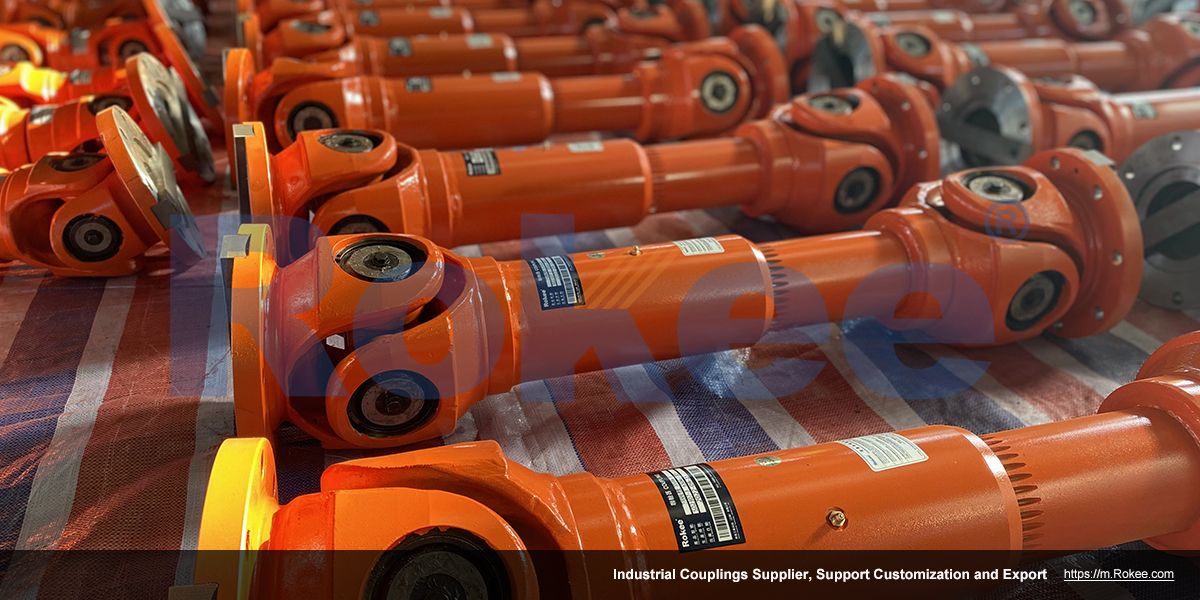
Cardan Universal Joints
Rokee is a chinese Cardan Universal Joints Manufacturer, provide Cardan Universal Joints processing and customization services, Over the years, with excellent quality, we have been continuously providing many coupling products of various categories and uses complying with multiple standards and a full range of services, from the Cardan Universal Joints selection to final installation and operation, for the industry fields of ferrous metallurgy, nuclear power, gas turbine, wind power, ropeway construction, lifting transportation, general equipment, etc. We strictly comply with quality system requirements and implement the whole process control to become a reliable and trustworthy partner of customers.
Providing customers with better Cardan Universal Joints is always our driving force. Our aim is to transmit power for you and generate value for both of us. We look forward to joining you and becoming your partner for common progress.
-
![SWC-BH Cardan Universal Joints,SWC-BH Cardan Shaft]()
SWC-BH Cardan Shaft
SWC-BH standard telescopic welded universal joint couplingView More -
![SWC-CH Cardan Universal Joints,SWC-CH Cardan Shaft]()
SWC-CH Cardan Shaft
SWC-CH long telescopic welded universal joint couplingView More -
![SWC-DH Cardan Universal Joints,SWC-DH Cardan Shaft]()
SWC-DH Cardan Shaft
SWC-DH short telescopic welded universal joint couplingView More -
![SWC-WD Cardan Universal Joints,SWC-WD Cardan Shaft]()
SWC-WD Cardan Shaft
SWC-WD non-telescopic short universal joint couplingView More -
![SWC-WH Cardan Universal Joints,SWC-WH Cardan Shaft]()
SWC-WH Cardan Shaft
SWC-WH non-telescopic welded universal joint couplingView More -
![SWP-A Cardan Universal Joints,SWP-A Cardan Shaft]()
SWP-A Cardan Shaft
SWP-A telescopic long type universal joint couplingView More -
![SWP-B Cardan Universal Joints,SWP-B Cardan Shaft]()
SWP-B Cardan Shaft
SWP-B telescopic short type universal joint couplingView More -
![SWP-C Cardan Universal Joints,SWP-C Cardan Shaft]()
SWP-C Cardan Shaft
SWP-C non telescopic short type universal joint couplingView More -
![SWP-D Cardan Universal Joints,SWP-D Cardan Shaft]()
SWP-D Cardan Shaft
SWP-D non telescopic long type universal joint couplingView More
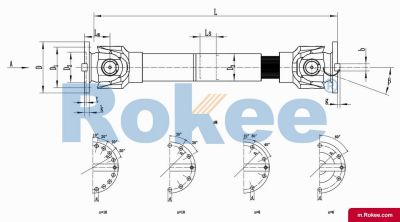
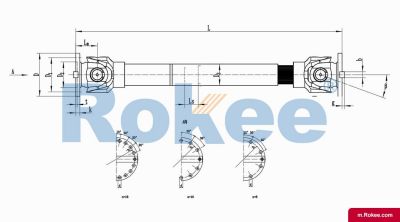
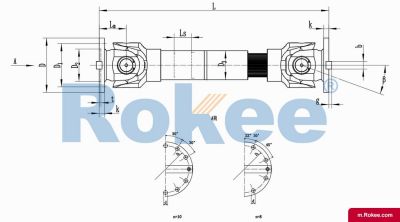
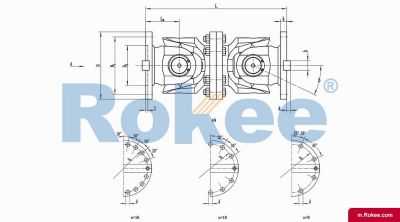
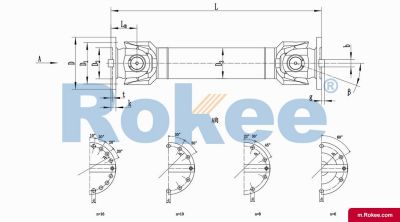
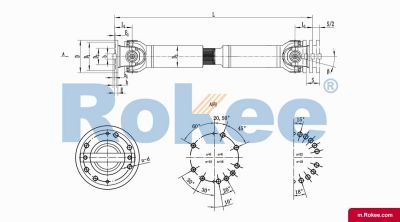
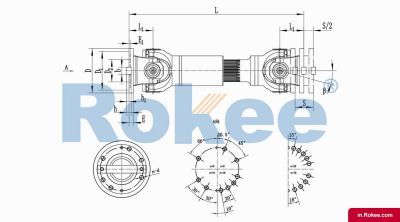
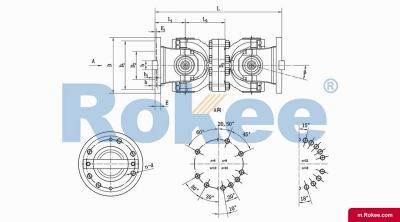
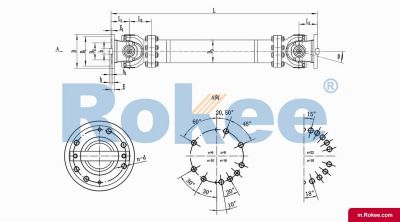
The Cardan universal joint, also widely referred to as a universal coupling or U-joint, stands as one of the most fundamental and indispensable mechanical components in modern engineering, designed to transmit rotational torque and motion between two shafts that are not collinear, intersecting at a fixed or variable angle. Since its conceptualization and refinement over centuries, this mechanism has evolved from a basic kinematic device to a highly engineered component tailored for diverse operational demands, spanning light-duty precision machinery to heavy-duty industrial and automotive systems. At its core, the Cardan joint solves a pervasive challenge in mechanical design: the need to maintain consistent power transmission despite angular misalignment between driving and driven shafts, a scenario common in nearly every rotating mechanical assembly where rigid, straight shafting is impractical or impossible to implement. Unlike rigid couplings that demand perfect shaft alignment, the Cardan universal joint introduces flexibility without sacrificing torque transfer efficiency, making it a cornerstone of modern mechanical engineering across countless industries.
Delving into the structural composition of the standard Cardan universal joint reveals a deceptively simple yet mechanically robust assembly, optimized for durability and smooth rotational transfer. The classic cross-type Cardan joint, the most prevalent configuration, consists of three core interconnected elements: two yoke-shaped end fittings (also known as fork ends) and a central cross-shaped component called a spider. Each yoke is securely attached to the end of a respective shaft, whether driving or driven, with a hollow receptacle designed to mate with the protruding arms of the central spider. The spider, machined to precise tolerances, features four perpendicular trunnions (shaft extensions) that fit into corresponding bearing housings within the yokes. To minimize friction, enable smooth rotation, and withstand radial and thrust loads, high-precision needle bearings or roller bearings are mounted between each spider trunnion and the inner bore of the yoke receptacles; these bearings are critical to reducing wear, heat generation, and energy loss during continuous operation, especially under high speeds or heavy loads. The entire assembly is engineered to allow pivotal movement between the yokes and the spider, enabling the joint to articulate and accommodate angular displacement between the two shafts. This basic structure remains consistent across most Cardan joint variants, with modifications made solely to enhance load capacity, reduce velocity fluctuations, or adapt to specific spatial constraints. Notably, the simplicity of this design translates to reliable performance, ease of maintenance, and cost-effective manufacturing, while the use of hardened alloy steels for critical components ensures resistance to fatigue, abrasion, and deformation under cyclic loading conditions.
The performance characteristics of Cardan universal joints are defined by their ability to manage angular misalignment, transmit torque efficiently, and operate consistently under varying operational conditions, alongside inherent limitations that shape their suitable applications. Foremost among its strengths is its capacity to accommodate angular deflection between shafts; standard single Cardan joints typically handle operating angles ranging from a few degrees up to approximately 30 degrees, with optimal performance and minimal wear occurring at angles between 10 and 20 degrees. Beyond this optimal range, performance degradation becomes noticeable, with increased vibration, bearing stress, and mechanical wear shortening service life. A key performance trait is its high torque-carrying capacity relative to its compact size, making it suitable for both small-scale precision equipment and large heavy-duty machinery; the robust cross-and-yoke design distributes load evenly across the bearing surfaces, enabling the joint to withstand substantial torsional forces without failure. Additionally, Cardan joints offer moderate axial compliance, allowing for minor shaft length adjustments or thermal expansion without imposing excessive stress on adjacent components, a valuable feature in systems where shaft alignment may shift slightly during operation. However, the standard single Cardan joint is not without performance constraints: it exhibits non-uniform rotational velocity output when operating at any angle greater than zero, meaning that even with a constant input speed, the output shaft rotates with periodic speed fluctuations. This velocity variation generates cyclic vibration, dynamic stress, and noise, which can compromise precision in sensitive equipment and accelerate wear on connected components over time. This limitation has driven the development of modified Cardan joint designs to mitigate such issues, while also guiding the selection of joint types based on specific performance requirements for speed, precision, and load tolerance.
Cardan universal joints are categorized into distinct types based on structural modifications, performance enhancements, and intended use cases, each engineered to address specific operational challenges and expand the mechanism’s versatility. The primary classification encompasses single Cardan joints, double Cardan joints, and heavy-duty reinforced Cardan joints, each with unique design features and performance profiles. The single Cardan joint, the most basic and widely used variant, retains the classic cross-and-yoke structure described earlier, prized for its simplicity, compact footprint, and cost-effectiveness. It is ideal for applications with moderate angular misalignment, lower rotational speeds, and where minor velocity fluctuations are acceptable, as it lacks mechanisms to counteract non-uniform rotation. This variant is the go-to choice for general-purpose mechanical systems where space is limited and precision speed consistency is not a critical requirement. The double Cardan joint, by contrast, is a refined design developed to eliminate the non-uniform velocity output of the single joint, making it suitable for high-speed, high-precision applications. Constructed by integrating two single Cardan joints linked by a short intermediate shaft or a central yoke, the double joint is phased such that the velocity fluctuations induced by the first joint are counterbalanced by the second joint, resulting in near-constant rotational speed between input and output shafts. This design also accommodates larger operating angles while maintaining smooth operation, reducing vibration and wear significantly compared to single joints. Heavy-duty Cardan joints represent a reinforced iteration of the standard design, engineered to handle extreme torque loads, harsh environmental conditions, and heavy industrial usage. These joints feature thicker, high-strength alloy components, larger bearings with enhanced load-bearing capabilities, and reinforced yoke and spider structures to resist bending, fatigue, and impact damage. Some heavy-duty variants also incorporate sealed bearing assemblies to prevent contamination from dust, moisture, or debris, extending service life in rugged operating environments. Beyond these core types, specialized Cardan joint variants exist for niche applications, including compact miniature joints for precision instruments, flexible Cardan shafts with integrated telescoping sections for extended reach, and corrosion-resistant joints for marine or chemical processing environments. Each variant is meticulously designed to balance structural integrity, performance, and adaptability, ensuring that a suitable Cardan joint exists for nearly every mechanical transmission need.
The versatility of Cardan universal joints is reflected in their extensive cross-industry applications, where they serve as critical components in systems requiring flexible torque transmission between misaligned shafts. In the automotive sector, Cardan joints are integral to the drivetrain and steering systems of countless vehicles, from passenger cars to heavy commercial trucks and off-road equipment. In rear-wheel-drive and four-wheel-drive vehicles, single and double Cardan joints are used in propeller shafts to transfer power from the transmission to the drive axles, accommodating the constant angular shifts caused by suspension movement over uneven terrain. They also feature in steering columns, enabling the transfer of steering input from the steering wheel to the steering gear despite misalignment between the column and steering linkage, ensuring responsive and reliable steering control. Beyond passenger vehicles, Cardan joints are essential in agricultural machinery, including tractors, harvesters, and tillers, where they transmit power to attached implements and navigate the extreme angles and vibrations inherent in farming operations. The industrial machinery sector relies heavily on Cardan joints for a multitude of applications, from conveyor systems and material handling equipment to pumps, compressors, and milling machines. In manufacturing assembly lines, Cardan joints connect drive motors to rotating components, compensating for minor alignment errors caused by machine installation or thermal expansion, while heavy-duty variants power steel rolling mills, cranes, and mining equipment, enduring sustained heavy loads and harsh operating conditions. In aerospace and aviation, lightweight, precision-engineered Cardan joints are used in flight control systems, rotor drive mechanisms, and auxiliary power units, where reliable torque transmission and compact design are critical for safety and performance. Marine engineering also utilizes Cardan joints in propulsion systems, connecting boat engines to propeller shafts and accommodating the flexing of hulls and minor shaft misalignment in marine vessels. Additionally, miniature Cardan joints find use in precision instruments, medical devices, robotics, and optical equipment, where delicate torque transfer and minimal backlash are required for precise operation. Even in consumer goods, such as power tools, household appliances, and gardening equipment, small-scale Cardan joints enable flexible power transmission, enhancing functionality and durability.
The enduring relevance of Cardan universal joints stems from their unique ability to bridge the gap between rigid mechanical design and real-world operational demands, offering a reliable, efficient solution to shaft misalignment challenges that no other single mechanical component can match. While advanced engineering has introduced alternative coupling technologies, the Cardan joint remains unrivaled in its simplicity, cost-effectiveness, and adaptability across low, medium, and high-load applications. Its structural design, refined over centuries of engineering innovation, balances strength and flexibility, while ongoing material and manufacturing advancements continue to enhance its performance, durability, and service life. Understanding the structural nuances, performance capabilities, type-specific advantages, and diverse applications of Cardan universal joints is essential for mechanical engineers, designers, and technicians tasked with selecting, implementing, and maintaining reliable power transmission systems. Whether in a compact precision instrument or a massive industrial machine, the Cardan universal joint continues to play a vital role in keeping rotational machinery operating smoothly, underscoring its status as a timeless and indispensable pillar of mechanical engineering. As technology evolves and industrial demands grow more stringent, the Cardan joint will undoubtedly remain a key component, adapted and optimized to meet the ever-changing needs of modern mechanical systems across the globe.
« Cardan Universal Joints » Update Date: 2026/3/6
URL: https://m.rokee.com/tags/cardan-universal-joints.html