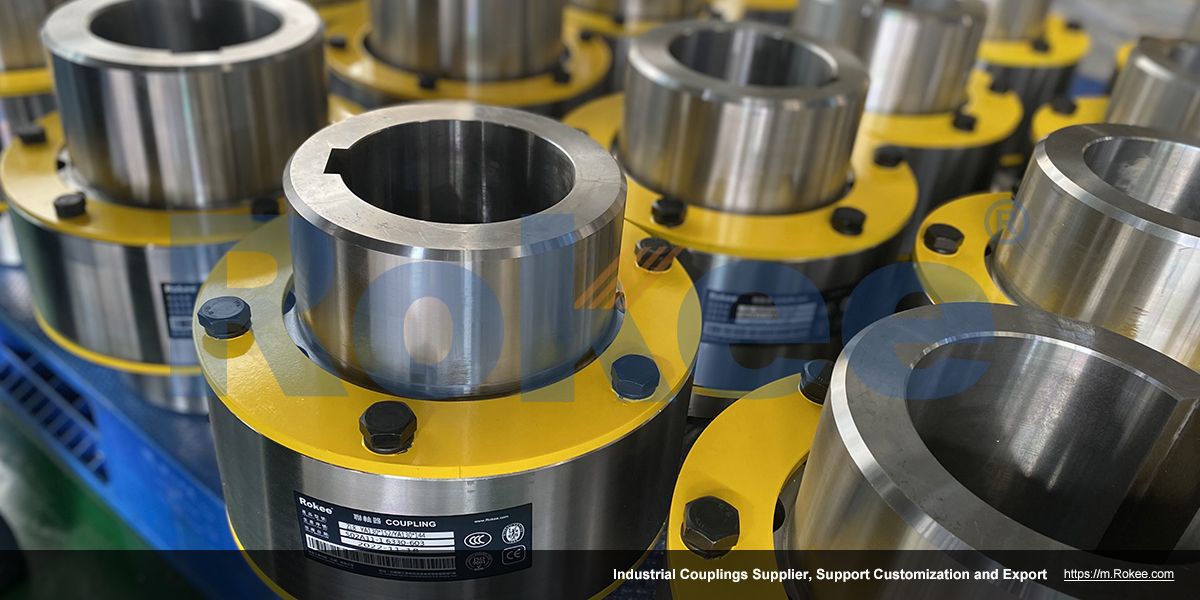
Bush Type Flexible Couplings
Rokee is a chinese Bush Type Flexible Couplings Manufacturer, provide Bush Type Flexible Couplings processing and customization services, Over the years, with excellent quality, we have been continuously providing many coupling products of various categories and uses complying with multiple standards and a full range of services, from the Bush Type Flexible Couplings selection to final installation and operation, for the industry fields of ferrous metallurgy, nuclear power, gas turbine, wind power, ropeway construction, lifting transportation, general equipment, etc. We strictly comply with quality system requirements and implement the whole process control to become a reliable and trustworthy partner of customers.
Providing customers with better Bush Type Flexible Couplings is always our driving force. Our aim is to transmit power for you and generate value for both of us. We look forward to joining you and becoming your partner for common progress.
-
![LT Bush Type Flexible Couplings,LT/TL Elastic Sleeve Pin Coupling]()
LT/TL Elastic Sleeve Pin Coupling
LT Elastic Sleeve Pin Coupling is the basic form of this series of couplings.View More -
![LTZ Bush Type Flexible Couplings,LTZ/TLL Elastic Sleeve Pin Coupling With Brake Wheel]()
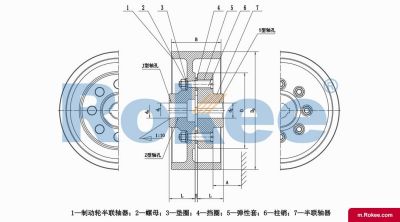
LTZ/TLL Elastic Sleeve Pin Coupling With Brake Wheel
LTZ Elastic Sleeve Pin Coupling is designed with a brake wheel, suitable for situations where braking is required.View More
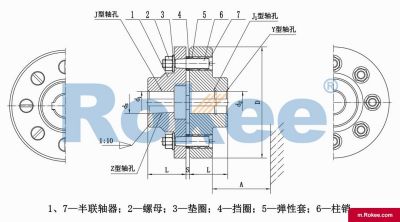
As an important connecting component in the field of mechanical transmission, the bush type flexible coupling plays a key role in modern industrial equipment due to its unique buffering and vibration reduction performance and deviation compensation ability.
The innovative design of the bush type flexible coupling is reflected in its elastic sleeve structure. A typical structure consists of two metal flanges (usually made of cast iron or steel), multiple column pins, and an elastic liner (made of rubber or polyurethane material) that wraps around the column pins. This type of coupling achieves three major functions through the elastic deformation of the bushing: torque transmission, vibration absorption, and deviation compensation. When the driving shaft rotates, torque is transmitted to the column pin through the flange, and then transmitted to the driven shaft through the shear deformation of the bushing. In this process, the elastic bushing absorbs impact energy like a "mechanical shock absorber".
The dynamic compensation mechanism is the technical highlight of this type of coupling. Under axial offset conditions, the liner undergoes uniform compression deformation; When facing radial deviation, each liner exhibits asymmetric deformation distribution; And the angular deviation causes the liner to produce a conical deformation mode. Test data shows that high-quality sleeve type couplings can compensate for radial displacement of 0.2-0.5mm, axial displacement of 1-3mm, and angular deviation of 0.5 ° -1 °, while reducing system vibration amplitude by 20-30%. This three-dimensional compensation capability makes it particularly suitable for transmission systems with installation errors or working deformations.
The mechanical properties of the lining material directly determine the performance of the coupling. Modern bushings often use special rubber (such as hydrogenated nitrile rubber) or engineering plastics (such as polyurethane). By adjusting the material hardness (usually Shore A70-95 degrees) and formula, the rigidity (ensuring transmission accuracy) and elasticity (ensuring vibration reduction effect) of the coupling can be balanced. The advanced models also adopt a layered design, such as the nylon thread reinforcement structure in patented technology. By embedding oriented nylon fiber layers inside the rubber body, the torque transmission capacity is improved (by about 40%) while maintaining good damping characteristics.
The sleeve type design endows this type of coupling with significant engineering advantages. Compared to rigid couplings, its vibration absorption capacity can extend the bearing life by 2-3 times; Compared with gear couplings, it does not require lubrication and maintenance, avoiding oil leakage problems; Compared to membrane couplings, its structure is simpler and the cost is reduced by about 30%. Of particular note is the "maintenance free" feature - high-quality bushings can have a service life of 3-5 years under standard operating conditions, without the need for any lubrication or adjustment, significantly reducing maintenance costs.
The dynamic response characteristics of couplings are worthy of in-depth study. During the start-up phase, the progressive deformation of the lining can effectively suppress peak torque and protect transmission components; During normal operation, its inherent damping characteristics can suppress resonance amplitude; When facing sudden impact loads, elastic deformation can absorb up to 15-25% of the impact energy. But this buffering capacity also has limitations - when the speed exceeds 5000rpm, centrifugal force may cause excessive stress on the lining; Under continuous high temperature (>100 ℃) environment, rubber materials will accelerate aging. These characteristics define their applicable boundaries: they are most suitable for small and medium power transmission systems (usually ≤ 500kW) with speeds ≤ 4000rpm, temperatures ranging from -30 ℃ to 80 ℃, and stable loads.
From an economic perspective, the sleeve type coupling exhibits excellent cost-effectiveness. The initial procurement cost is only 1/3-1/2 of the same specification gear coupling; When replacing the lining, there is no need to move the equipment, and the average maintenance time is controlled within 30 minutes; Standardized design reduces spare parts inventory costs by over 50%. These characteristics make it the preferred solution for industries such as food machinery, packaging equipment, water pumps, and fans.
The bush type flexible coupling has developed multiple technical branches, and the mainstream models include:
Standard lining type: nominal torque range of 40-20000 N · m, compatible with shaft diameter of 12-150mm
Brake wheel assembly: One end is integrated with a brake disc, making it easy to install the brake. It is commonly used in conveyor systems that require rapid braking
Flange connection type: using flange docking, easy to match with standard pumps/motors, installation tolerance can be relaxed to ± 1.5mm
Heavy duty reinforced type: with a metal frame embedded in the lining, the torque capacity is increased by 50%, suitable for impact load applications such as crushers
In steel production lines, sleeve type couplings are commonly used in roller conveyor transmission parts to compensate for axis deviation caused by thermal deformation of rolling rolls; In the ship propulsion system, it connects the gearbox and propeller shaft, effectively isolating engine vibration; The food processing equipment is made of stainless steel material and meets hygiene standards. However, it should be noted that prohibited scenarios include extremely humid environments (rubber is prone to hydrolysis), strong oxidative conditions (accelerated aging), and servo systems that require precise phase maintenance.
The installation accuracy directly affects the service life. Suggest using a laser alignment device to ensure:
Radial deviation ≤ 0.1mm
Angular deviation ≤ 0.05mm/m
Adjust the axial clearance according to the manufacturer's specifications
In the vast landscape of mechanical power transmission systems, flexible couplings serve as indispensable connecting components that bridge driving and driven shafts, addressing the inherent challenges of shaft misalignment, vibration transmission, and torque fluctuation in industrial operations. Among the diverse array of flexible coupling designs, the bush type flexible coupling stands out as a widely adopted, cost-effective, and highly versatile solution, renowned for its straightforward structural design, reliable operational performance, and broad adaptability across multiple industrial sectors. Unlike rigid couplings that demand perfect shaft alignment and offer no tolerance for positional deviations, this type of coupling integrates resilient bushing elements to deliver controlled flexibility, ensuring smooth power transfer while protecting adjacent mechanical components from excessive stress, wear, and premature failure.
At its core, the bush type flexible coupling features a simplified yet robust structural framework, consisting of two primary metallic hub assemblies and a set of elastic bushing components that form the flexible connection between the hubs. Each metallic hub is precision-engineered to mount securely onto the corresponding driving and driven shafts, typically utilizing keyway connections or interference fits to ensure firm torque transmission without slippage during operation. The hubs are designed with evenly spaced radial holes or flanged mounting slots along their peripheral edges, tailored to accommodate the elastic bushes and connecting pins that establish the flexible linkage. The elastic bushes, the heart of the coupling’s flexibility, are manufactured from high-performance elastomeric materials such as natural rubber, neoprene, polyurethane, or reinforced synthetic polymers, selected for their exceptional elasticity, wear resistance, and load-bearing capacity. These bushes are engineered to fit snugly around rigid metal pins or directly into the hub mounting apertures, creating a buffered interface between the two hubs that absorbs misalignment and dampens mechanical shocks.
The structural design of bush type flexible couplings is optimized for both functionality and ease of assembly, with no complex moving parts or intricate mechanical linkages that require specialized maintenance. The two hub components are positioned facing each other, with the elastic bushes and connecting pins interlocked between them to form a unified transmission unit. This modular construction allows for straightforward installation, disassembly, and replacement of worn components, minimizing downtime during maintenance procedures. A critical structural advantage is the absence of metal-to-metal direct contact between the hubs during normal operation; all relative movement caused by shaft misalignment or torque variation is absorbed by the elastic deformation of the bushing elements. This design eliminates friction-induced wear between rigid metal surfaces, reduces the risk of seizing or jamming, and eliminates the need for continuous lubrication, a stark contrast to gear couplings or other lubrication-reliant flexible coupling designs. Additionally, the symmetrical layout of the bushes and pins ensures balanced load distribution across the coupling, preventing localized stress concentrations that could compromise structural integrity under heavy or fluctuating torque loads.
The performance characteristics of bush type flexible couplings are directly derived from their unique structural design and material selection, making them well-suited for a wide spectrum of operating conditions. Foremost among these performance traits is the ability to accommodate multiple forms of shaft misalignment, a common challenge in industrial machinery where perfect alignment is often unattainable due to manufacturing tolerances, thermal expansion, foundation settling, or operational vibration. These couplings can effectively compensate for angular misalignment, parallel misalignment, and axial displacement within specified limits, with the elastic bushes deforming gently to absorb positional deviations without transmitting excessive forces to the shafts or connected equipment. This misalignment compensation capability not only ensures smooth power transmission but also significantly reduces wear on bearings, seals, and shaft surfaces, extending the service life of the entire drive system.
Another key performance attribute is exceptional vibration damping and shock absorption, which is critical for maintaining operational stability and reducing noise in mechanical systems. The viscoelastic properties of the elastomeric bushes enable the coupling to absorb torsional vibrations generated by engine pulses, load fluctuations, or sudden start-stop cycles, preventing the transfer of harmful vibrational energy throughout the drive train. This damping effect minimizes noise emission, reduces mechanical fatigue, and protects delicate components from impact damage, particularly in applications involving variable loads or intermittent operation. Furthermore, bush type flexible couplings exhibit reliable torque transmission performance, capable of handling moderate to high torque loads with consistent efficiency. The elastic bushes transfer torque through shear and compressive forces, maintaining a stable connection even under transient overload conditions, while the rigid metallic hubs provide the structural rigidity needed to prevent excessive deflection or failure under rated operating loads.
Durability and environmental adaptability further enhance the performance appeal of bush type flexible couplings. The elastomeric bushes are formulated to resist degradation from common environmental factors such as moisture, dust, oil, and moderate temperature fluctuations, ensuring consistent performance in harsh industrial environments without rapid deterioration. The metallic hubs, typically crafted from cast iron, carbon steel, or alloy steel, offer high strength and resistance to bending and shear stresses, supporting long-term operational reliability under continuous working conditions. Unlike some specialized flexible couplings that are limited to controlled environments, bush type designs can operate effectively in outdoor settings, dusty workshops, and mildly corrosive industrial spaces, provided the bushing material is selected to match the specific environmental conditions. Additionally, these couplings feature low rotational inertia due to their compact, lightweight design, reducing energy consumption and minimizing dynamic loads on the drive system during high-speed operation, a benefit that boosts overall mechanical efficiency.
Bush type flexible couplings are categorized into several distinct variants based on structural modifications, bushing design, and operational capabilities, each tailored to meet specific application requirements and operating parameters. The most common classification is based on the number and configuration of flexible elements, distinguishing between single-flex bush couplings and double-flex bush couplings. Single-flex bush couplings feature a single set of elastic bushes connecting the two hubs, offering compact dimensions and sufficient flexibility for light to moderate misalignment conditions. These are ideal for applications where space is limited and shaft alignment is relatively consistent, such as small pumps, fans, and conveyor systems. Double-flex bush couplings, by contrast, incorporate an intermediate spacer or additional hub section between two sets of elastic bushes, providing enhanced misalignment compensation and greater axial flexibility. This design is suitable for heavy-duty applications with significant shaft separation or substantial positional deviations, such as large industrial pumps, compressors, and heavy machinery drives.
Classification can also be based on the shape and design of the elastic bushing elements, with barrel-shaped bushes and straight cylindrical bushes being the two predominant types. Barrel-shaped bushes feature a curved, tapered profile that allows for smoother angular movement and greater misalignment tolerance, distributing stress more evenly across the bushing surface to reduce wear and extend service life. This design is widely preferred for general-purpose industrial applications with moderate to high misalignment potential. Straight cylindrical bushes, with a uniform diameter along their length, offer simpler manufacturing and more consistent torque transmission, making them suitable for applications with minimal misalignment and steady load conditions. Another classification criterion is the presence of additional functional features, such as couplings with integrated brake drums or flanged hubs for direct mounting to equipment casings. These specialized variants retain the core flexible bushing design while adding auxiliary functionality, catering to applications requiring braking systems or simplified mounting configurations without compromising on flexibility or torque transmission.
Beyond structural and design-based classifications, bush type flexible couplings can also be grouped by load capacity and operational speed, separating light-duty, medium-duty, and heavy-duty models to align with diverse industrial power transmission needs. Light-duty bush couplings are engineered for small-scale machinery and low-power drives, handling minimal torque loads and operating at moderate speeds, commonly found in household appliances, small workshop tools, and precision instruments. Medium-duty couplings represent the most widely used category, balancing flexibility, load capacity, and durability to serve the majority of general industrial applications, from material handling equipment to agricultural machinery. Heavy-duty bush type couplings are reinforced with thicker metallic hubs, larger high-strength bushes, and reinforced connecting pins, designed to withstand extreme torque loads, high operational speeds, and harsh working conditions in heavy industrial sectors. This diverse classification system ensures that there is a suitable bush type flexible coupling variant for nearly every mechanical power transmission scenario, regardless of load size, speed, or environmental constraints.
The combination of robust structure, reliable performance, and versatile classification makes bush type flexible couplings one of the most widely utilized components across countless industrial and commercial applications. In the general machinery sector, they are extensively employed in pumps, fans, blowers, and compressors, where they absorb vibration from rotating components and compensate for misalignment caused by thermal expansion during operation. These couplings ensure consistent fluid flow and air delivery, reducing maintenance frequency and enhancing the longevity of pump and fan assemblies. In the material handling industry, bush type flexible couplings are integral to conveyor systems, elevators, and hoists, providing the flexibility needed to accommodate slight shaft misalignment in long-distance drive lines while transmitting torque smoothly to move heavy loads reliably. Their shock absorption properties are particularly valuable here, protecting the drive system from sudden load spikes during material loading and unloading.
The agricultural machinery sector also relies heavily on bush type flexible couplings, leveraging their durability, low maintenance requirements, and adaptability to harsh outdoor conditions. These couplings connect engines to gearboxes, drive shafts, and working components in tractors, harvesters, planters, and other agricultural equipment, enduring dust, moisture, and irregular load conditions typical of farm operations. Their ability to absorb shock from uneven terrain and sudden load changes prevents damage to vital agricultural machinery, ensuring uninterrupted operation during critical planting and harvesting seasons. In the manufacturing and processing industry, bush type flexible couplings are found in machine tools, textile machinery, packaging equipment, and printing presses, where precise power transmission and vibration damping are essential for maintaining product quality and operational accuracy. The absence of lubrication requirements makes them ideal for clean manufacturing environments where oil contamination must be avoided, while their flexibility compensates for minor alignment errors in precision machinery setups.
Additional key applications span the mining, construction, and marine industries, where rugged performance and reliability are non-negotiable. In mining equipment, such as crushers, screens, and conveyors, bush type flexible couplings withstand heavy shock loads and abrasive environmental conditions, providing consistent power transmission despite extreme operational stresses. Construction machinery, including mixers, compactors, and drilling equipment, benefits from their misalignment compensation and durability, adapting to the rough handling and variable loads inherent to construction sites. In marine applications, these couplings are used in onboard machinery such as winches, pumps, and propulsion auxiliary systems, resisting moisture and salt exposure while maintaining flexible, reliable power transmission. Even in automotive and transportation auxiliary systems, bush type flexible couplings play a vital role in connecting auxiliary components such as alternators, water pumps, and cooling fans, ensuring efficient power transfer while dampening engine vibrations.
The widespread adoption of bush type flexible couplings is further reinforced by their unparalleled ease of maintenance and cost-effectiveness, which add significant long-term value to industrial operations. Unlike complex flexible couplings that require regular lubrication, precise alignment checks, and specialized repair procedures, bush type designs demand minimal upkeep. The only wearable components are the elastic bushes, which can be quickly and easily replaced when worn, without the need for specialized tools or extensive disassembly of the entire drive system. This simplified maintenance reduces labor costs, minimizes operational downtime, and eliminates the expense of lubricants and specialized maintenance equipment. The modular, standardized design of these couplings also ensures broad availability of replacement parts, further reducing maintenance costs and logistical complexity for industrial operators.
In summary, the bush type flexible coupling represents a pinnacle of practical mechanical design, merging simplicity, performance, and versatility to address core challenges in power transmission systems. Its well-engineered structural composition, centered on resilient elastomeric bushes and rigid metallic hubs, delivers exceptional misalignment compensation, vibration damping, and torque transmission capabilities. The diverse range of classifications ensures adaptability to light, medium, and heavy-duty applications across nearly every industrial sector, while low maintenance requirements and cost-efficiency make it a economically viable choice for businesses of all scales. From small-scale precision machinery to heavy industrial equipment, the bush type flexible coupling continues to prove its worth as a reliable, durable, and indispensable component, ensuring smooth, efficient, and protected power transmission in countless mechanical systems. As industrial technology advances and operational demands evolve, the fundamental design strengths of bush type flexible couplings will ensure their enduring relevance and widespread adoption in the global mechanical engineering landscape.
« Bush Type Flexible Couplings » Update Date: 2026/3/6
URL: https://m.rokee.com/tags/bush-type-flexible-couplings.html