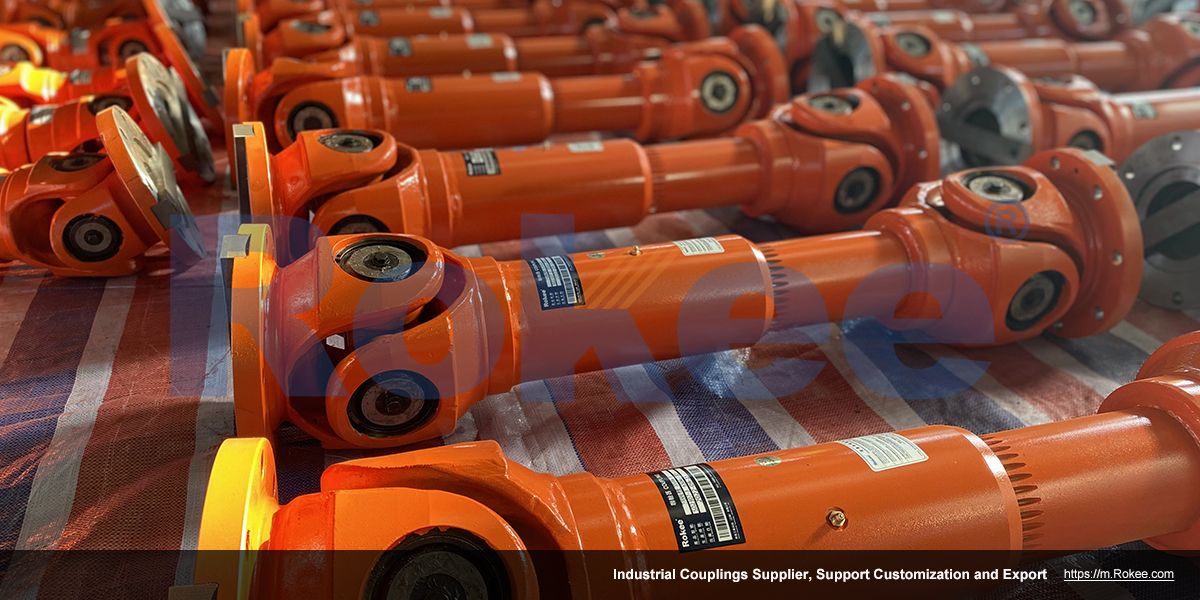
Telescoping Driveshafts
Rokee is a chinese Telescoping Driveshafts Manufacturer, provide Telescoping Driveshafts processing and customization services, Over the years, with excellent quality, we have been continuously providing many coupling products of various categories and uses complying with multiple standards and a full range of services, from the Telescoping Driveshafts selection to final installation and operation, for the industry fields of ferrous metallurgy, nuclear power, gas turbine, wind power, ropeway construction, lifting transportation, general equipment, etc. We strictly comply with quality system requirements and implement the whole process control to become a reliable and trustworthy partner of customers.
Providing customers with better Telescoping Driveshafts is always our driving force. Our aim is to transmit power for you and generate value for both of us. We look forward to joining you and becoming your partner for common progress.
-
![SWC-BH Telescoping Driveshafts,SWC-BH Cardan Shaft]()
SWC-BH Cardan Shaft
SWC-BH standard telescopic welded universal joint couplingView More -
![SWC-CH Telescoping Driveshafts,SWC-CH Cardan Shaft]()
SWC-CH Cardan Shaft
SWC-CH long telescopic welded universal joint couplingView More -
![SWC-DH Telescoping Driveshafts,SWC-DH Cardan Shaft]()
SWC-DH Cardan Shaft
SWC-DH short telescopic welded universal joint couplingView More -
![SWC-WD Telescoping Driveshafts,SWC-WD Cardan Shaft]()
SWC-WD Cardan Shaft
SWC-WD non-telescopic short universal joint couplingView More -
![SWC-WH Telescoping Driveshafts,SWC-WH Cardan Shaft]()
SWC-WH Cardan Shaft
SWC-WH non-telescopic welded universal joint couplingView More -
![SWP-A Telescoping Driveshafts,SWP-A Cardan Shaft]()
SWP-A Cardan Shaft
SWP-A telescopic long type universal joint couplingView More -
![SWP-B Telescoping Driveshafts,SWP-B Cardan Shaft]()
SWP-B Cardan Shaft
SWP-B telescopic short type universal joint couplingView More -
![SWP-C Telescoping Driveshafts,SWP-C Cardan Shaft]()
SWP-C Cardan Shaft
SWP-C non telescopic short type universal joint couplingView More -
![SWP-D Telescoping Driveshafts,SWP-D Cardan Shaft]()
SWP-D Cardan Shaft
SWP-D non telescopic long type universal joint couplingView More
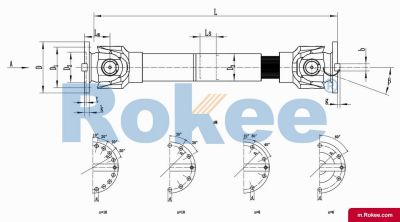
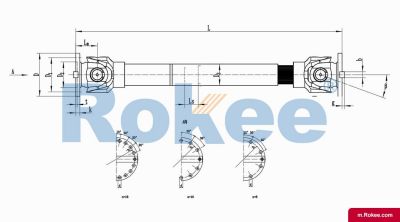
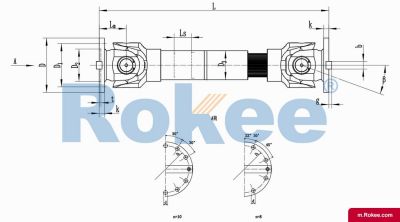
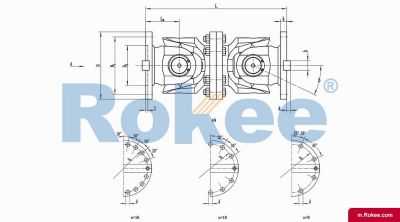
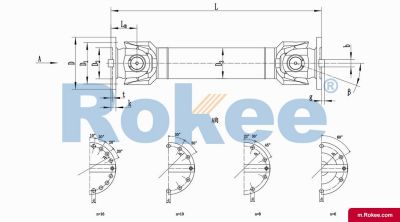
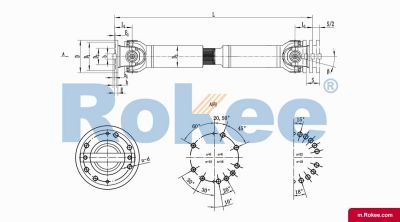
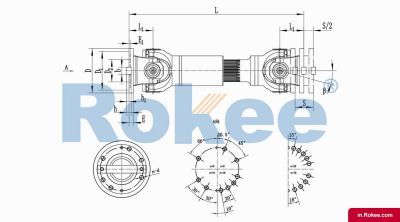
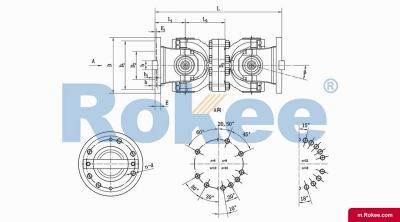
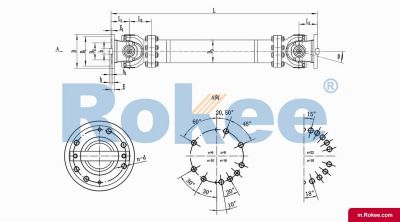
The telescoping driveshaft is a mechanical transmission device that combines the telescoping driveshaft and the telescopic function. It is mainly used to connect transmission systems where two shafts are not in the same straight line and need to compensate for axial displacement. This type of coupling can simultaneously solve the problems of angle deviation and axial displacement compensation, and is an important component in modern mechanical transmission systems.
The core working principle is based on the motion characteristics of the telescoping driveshaft: when the driving shaft rotates, power is transmitted to the driven shaft through the cross axis, allowing for a certain degree of angular deviation between the two shafts (usually 15 ° -45 °). The telescopic function is achieved through a spline shaft or sleeve structure, allowing the coupling to freely expand and contract in the axial direction, compensating for the axial displacement generated during the transmission process.
Main structural components
Cross shaft assembly: composed of a cross shaft, needle roller bearings, and bearing seats, it is the core component for transmitting torque and adapting to angular deviations.
Expansion spline component: usually composed of an internal spline shaft and an external spline sleeve, allowing axial relative sliding while ensuring effective torque transmission.
Flange or end connector: used to connect the drive shaft and the driven shaft, can be designed as flange type, clamping type, or welding type according to needs.
Sealing system: protects internal bearings and splines from contamination and extends their service life.
Lubrication device: including oil nozzle and internal oil passage, ensuring that all moving parts are fully lubricated.
Technical features and advantages
Multi directional compensation capability: simultaneously compensates for radial, angular, and axial deviations, adapting to complex installation conditions.
High transmission efficiency: using precision needle roller bearings with low friction loss, the transmission efficiency can reach over 98%.
Large angle compensation: A single section can achieve angle compensation of 15 ° -45 °, while a double section connected in series can achieve a larger compensation angle.
Axial expansion and contraction: Depending on the model, the expansion and contraction can reach 50-300mm, meeting the requirements of different working conditions.
High speed capability: High dynamic balance level, suitable for high-speed operation scenarios.
Long life design: Made of high-quality alloy steel and special heat treatment process, it has high wear resistance and fatigue strength.
Main application areas
Construction machinery: excavators, loaders, cranes, and other applications that require large angle deflection and axial displacement compensation.
Metallurgical equipment: Long axis transmission for heavy equipment such as rolling mills and straightening machines.
Shipbuilding industry: Ship propulsion shaft system, compensating for hull deformation and installation errors.
Petroleum machinery: field operation equipment such as drilling equipment and pumping units.
Wind power industry: Transmission connection of yaw system for wind turbines.
Special vehicles: Transmission systems for military vehicles, mining vehicles, and other harsh working conditions.
Selection and design considerations
Torque capacity: Calculate the required torque based on the transmitted power and speed, taking into account start-up shock and operating condition factors.
Compensation requirement: Determine the required range of angle compensation and axial expansion and contraction.
Speed limit: Couplings of different specifications have their maximum operating speed limit.
Installation space: Consider matching the external dimensions of the coupling with the equipment space.
Environmental conditions: Factors such as temperature, humidity, and corrosiveness affect material selection and sealing design.
Maintenance requirements: Select lubrication methods and sealing structures based on maintainability requirements.
Key points of maintenance and upkeep
Regular lubrication: Add designated lubricating grease according to the manufacturer's requirements, paying special attention to the lubrication of the spline area.
Check for wear: Regularly inspect the wear of the cross shaft bearings and spline tooth surfaces.
Sealing inspection: Ensure that the sealing components are intact and prevent contaminants from entering.
Alignment inspection: Regularly check the alignment of the shaft system to avoid working at extreme angles for a long time.
Dynamic balance maintenance: It is necessary to regularly check the dynamic balance status in high-speed applications.
Abnormal vibration monitoring: Abnormal vibration is often a precursor to coupling failure.
As a key component in the field of mechanical transmission, the telescoping driveshaft is advancing towards higher performance, longer lifespan, and greater intelligence, providing a more reliable power transmission solution for modern industrial equipment.
In the realm of mechanical power transmission, the telescoping driveshaft stands as a versatile and indispensable component, engineered to address the inherent challenges of misalignment, dynamic length variation, and efficient torque transfer across diverse mechanical systems. Unlike fixed-length driveshafts that rely on rigid connections and struggle to accommodate positional shifts or operational movements, telescoping driveshafts integrate a specialized sliding mechanism that enables axial extension and contraction, paired with joint assemblies that manage angular deviations between driving and driven shafts. This unique combination of structural adaptability and power transmission capability makes them a cornerstone of countless industrial, automotive, agricultural, and heavy machinery applications, where consistent power delivery and mechanical resilience are non-negotiable.
At its core, the telescoping driveshaft is constructed from a set of precision-engineered components that work in unison to deliver reliable performance under variable operating conditions. The primary structural elements include the telescoping spline assembly, universal joint or constant velocity (CV) joint modules, shaft tubing, end connection fittings, sealing systems, and lubrication pathways. The telescoping spline assembly is the heart of the component, typically consisting of an internal splined sleeve and an external splined shaft that interlock tightly to transmit torque while permitting smooth axial sliding. This spline design is precision-machined to ensure a tight fit without excessive play, preventing power loss, vibration, or premature wear during extension and contraction cycles. The spline profiles vary based on load requirements, with triangular, square, star, and lemon-shaped profiles commonly used to balance torque capacity, sliding ease, and manufacturing feasibility; heavy-duty variants often feature thicker spline teeth and hardened surfaces to withstand high shear forces and repetitive sliding motion.
Surrounding the spline assembly, robust sealing components are integrated to protect the internal splines and bearings from environmental contaminants such as dust, dirt, moisture, and debris, while also retaining lubricants to minimize friction. These seals are typically made from durable elastomeric materials that resist wear, temperature fluctuations, and chemical exposure, forming a tight barrier between the internal moving parts and the external environment. The shaft tubing, which forms the main body of the driveshaft, is crafted from high-strength alloy steel or carbon steel, chosen for its exceptional tensile strength, fatigue resistance, and ability to dampen minor vibrations without warping. The tubing is often hollow to reduce overall weight while maintaining structural rigidity, a design choice that enhances rotational efficiency and reduces stress on connected machinery components. End connection fittings, such as flanges, yokes, or clamping mechanisms, provide secure attachment to the driving unit (such as an engine or motor) and the driven equipment (such as a wheel axle, pump, or conveyor), ensuring a stable torque transfer interface without slippage.
Complementing the telescoping mechanism are the joint assemblies, which enable the driveshaft to accommodate angular misalignment between the input and output shafts. Two primary joint designs are prevalent: universal joints (U-joints) and constant velocity joints. Universal joints feature a cross-shaped trunnion with needle roller bearings, allowing angular deflection typically ranging from 15 to 45 degrees per joint; multiple U-joints can be combined in series to achieve greater angular compensation for complex drivetrain layouts. While effective for moderate speeds and loads, universal joints may introduce minor speed fluctuations at extreme angles, making them ideal for applications where precise rotational uniformity is not the top priority. Constant velocity joints, by contrast, are engineered to maintain consistent rotational speed between the input and output shafts regardless of deflection angle, eliminating vibration and power irregularities even at high speeds and steep angles. This makes CV joint-equipped telescoping driveshafts suitable for high-performance, high-speed applications where smooth operation is critical. The integration of these joints with the telescoping spline creates a dual-functional component that addresses both axial length changes and angular misalignment, a capability that sets telescoping driveshafts apart from rigid transmission components.
Performance is the defining characteristic of telescoping driveshafts, with several key metrics dictating their suitability for specific applications. Torque transmission capacity is the foremost performance attribute, referring to the maximum rotational force the driveshaft can handle without deformation, spline wear, or joint failure. This metric is determined by material strength, spline design, joint quality, and overall shaft diameter, with heavy-duty models engineered to transmit extremely high torque for industrial machinery and commercial vehicles, while lighter variants cater to small-scale equipment and passenger vehicles. Axial stroke length, or the total distance the driveshaft can extend and contract, is another critical performance parameter; stroke lengths range from a few centimeters for compact machinery to over 300 millimeters for large-scale equipment with significant positional shifts, such as off-road vehicles or industrial conveyors with variable spacing.
Angular compensation capability ties directly to the joint design, defining the maximum angle at which the driveshaft can operate while maintaining efficient power transfer. High angular compensation is essential for vehicles with independent suspension, articulated machinery, or equipment with misaligned shafts due to manufacturing tolerances or operational wear. Operational speed tolerance is equally vital, as telescoping driveshafts must perform reliably across low, medium, and high rotational speeds without excessive vibration, heat buildup, or mechanical failure. High-speed variants undergo precision dynamic balancing to minimize rotational imbalance, while heavy-duty low-speed models prioritize torque capacity over high-speed smoothness. Durability and service life are also key performance indicators, influenced by material quality, heat treatment processes, sealing efficiency, and lubrication retention; well-designed telescoping driveshafts can withstand thousands of hours of operation in harsh conditions, including extreme temperatures, heavy loads, and exposure to outdoor elements, with minimal maintenance requirements.
Additional performance traits include friction efficiency, where precision machining and high-quality lubricants reduce sliding friction in the spline assembly and rotational friction in the joints, boosting overall power transmission efficiency and reducing energy waste. Resistance to fatigue and wear is critical for applications involving repetitive extension-contraction cycles and continuous rotation, preventing premature failure due to material fatigue or spline tooth degradation. Corrosion resistance is another important factor, with specialized surface coatings or rust-resistant materials used for driveshafts deployed in marine, agricultural, or outdoor industrial settings to prevent oxidation and extend functional life. Collectively, these performance metrics ensure that telescoping driveshafts can adapt to the unique demands of each application, delivering consistent, reliable power transmission even in the most challenging operational environments.
Telescoping driveshafts are categorized into distinct types based on structural design, joint configuration, load capacity, and functional specialization, each tailored to address specific operational needs. The most fundamental classification is based on the number of joints and telescoping sections, including single-telescoping driveshafts, multi-telescoping driveshafts, single-joint, dual-joint, and multi-joint variants. Single-telescoping driveshafts feature a single spline sliding assembly and a compact design, making them lightweight, cost-effective, and ideal for applications with limited axial stroke requirements and minimal angular misalignment, such as small agricultural implements, light-duty industrial pumps, and passenger vehicle auxiliary systems. They are easy to install and maintain, with fewer components reducing the risk of mechanical failure, making them a popular choice for low-to-medium load applications.
Multi-telescoping driveshafts incorporate two or more sliding spline sections, enabling significantly longer axial stroke lengths to accommodate extreme length variations between driving and driven components. These models are commonly used in large industrial machinery, long conveyor systems, and heavy commercial vehicles where substantial positional shifts occur during operation. In terms of joint configuration, single-joint telescoping driveshafts offer basic angular compensation and are suited for straight-line power transfer with minor misalignment, while dual-joint and multi-joint variants provide enhanced angular flexibility, capable of handling complex, multi-axis misalignment in articulated vehicles, construction machinery, and marine propulsion systems. Joint type further subdivides the category: universal joint telescoping driveshafts are the most common, offering robust performance at a practical design, while constant velocity joint telescoping driveshafts cater to high-speed, high-precision applications such as performance vehicles, high-speed industrial spindles, and precision manufacturing equipment where vibration-free operation is mandatory.
Load capacity is another key classification criterion, separating telescoping driveshafts into light-duty, medium-duty, and heavy-duty variants. Light-duty telescoping driveshafts are designed for small-scale applications with low torque requirements, such as garden machinery, small portable generators, and light industrial tools; they feature thinner shaft tubing, smaller spline profiles, and basic sealing to match their operational demands. Medium-duty models strike a balance between load capacity and versatility, handling moderate torque and speed levels for a wide range of general-purpose applications, including standard agricultural equipment, industrial conveyors, and light commercial vehicles. Heavy-duty telescoping driveshafts are engineered for extreme operating conditions, with reinforced splines, thick-walled alloy steel tubing, heavy-duty bearings, and heavy-duty sealing systems to withstand massive torque loads, high stress, and harsh environments. These variants are built for continuous operation in heavy machinery, making them suitable for mining equipment, large agricultural harvesters, marine propulsion systems, and industrial processing plants.
Specialized telescoping driveshaft types also exist for niche applications, including those with integrated damping mechanisms to reduce vibration and shock loads, corrosion-resistant models for marine and coastal applications, and high-temperature variants for industrial settings with extreme heat exposure. Some designs feature spring-loaded locking mechanisms to secure the telescoping length at specific positions, ideal for equipment with adjustable operational configurations, while others boast maintenance-free lubrication systems sealed for life, reducing downtime and upkeep in hard-to-reach installations. Each type is engineered to optimize performance for its intended use case, ensuring that operators can select a telescoping driveshaft that aligns perfectly with their equipment’s load, speed, alignment, and environmental requirements.
The adaptability and robust performance of telescoping driveshafts translate to an extensive array of practical applications across nearly every sector of mechanical engineering, with each industry leveraging their unique capabilities to overcome specific transmission challenges. In the automotive industry, telescoping driveshafts are integral components of both passenger and commercial vehicle drivetrains, particularly in four-wheel-drive, all-wheel-drive, and rear-wheel-drive systems. They connect the transmission to the drive axles, accommodating the vertical movement of the suspension system as vehicles traverse uneven terrain, bumps, or potholes. By extending and contracting with suspension travel, they eliminate excessive stress on the drivetrain components, prevent binding, and ensure consistent power delivery to the wheels, enhancing vehicle stability, handling, and safety. Commercial trucks, buses, and off-road vehicles rely heavily on heavy-duty telescoping driveshafts to handle heavy payloads and rough operating conditions, while passenger vehicles use lighter, more compact variants for smooth, efficient power transfer.
The agricultural sector is another major consumer of telescoping driveshafts, where they serve as critical links between tractors and attached implements such as mowers, tillers, harvesters, seeders, and fertilizer spreaders. Agricultural equipment often requires adjustable spacing between the tractor’s power take-off (PTO) and the implement, and the telescoping design allows for quick, tool-free adjustments to match different implement sizes and operational setups. These driveshafts must withstand exposure to dirt, moisture, crop debris, and heavy loads, making durable, sealed, heavy-duty variants the standard for agricultural use. Their ability to handle angular misalignment is also vital, as implements often operate on uneven farmland, ensuring uninterrupted power transfer even when the implement is tilted or raised off the ground.
In industrial manufacturing and processing, telescoping driveshafts play a pivotal role in power transmission for a vast range of machinery, including conveyor systems, pumps, fans, compressors, milling machines, and rolling mills. Conveyor systems, which are ubiquitous in factories, warehouses, and production lines, often require driveshafts that can accommodate slight misalignments during installation or thermal expansion during operation, and the telescoping design eliminates the need for precise, rigid alignment, simplifying installation and maintenance. Industrial pumps and fans, used in water treatment, HVAC, and manufacturing processes, rely on telescoping driveshafts to connect motors to rotating components, compensating for shaft misalignment and reducing vibration that could damage sensitive equipment. Heavy industrial machinery such as metal rolling mills and mining equipment uses heavy-duty telescoping driveshafts to transmit extreme torque over variable distances, withstanding the high stress and continuous operation of industrial production environments.
Construction and heavy machinery represent another key application area, where telescoping driveshafts are essential for excavators, loaders, cranes, bulldozers, and articulated haul trucks. These machines feature complex, movable arm and chassis designs that create significant shifts in shaft alignment and length during operation, and telescoping driveshafts ensure reliable power transfer to wheels, tracks, and hydraulic pumps regardless of the machine’s position. Their ability to handle heavy shock loads, extreme angles, and harsh construction site conditions—including dust, mud, and debris—makes them indispensable for construction equipment performance and longevity. Marine and shipbuilding applications also utilize specialized telescoping driveshafts for propulsion systems, steering mechanisms, and on-board machinery, where they compensate for hull deformation, shaft misalignment, and the dynamic movements of vessels at sea, with corrosion-resistant designs to withstand saltwater exposure.
Beyond these core sectors, telescoping driveshafts find use in aerospace support equipment, material handling systems, renewable energy machinery (such as wind turbine yaw systems), and specialized industrial robotics. In each of these applications, the core value of the telescoping driveshaft remains consistent: it solves the universal problem of transmitting rotary power between shafts that are not perfectly aligned or that experience positional changes during operation. Without this adaptable component, machinery would require rigid, precision-aligned connections that are prone to failure, costly to install, and unable to adapt to real-world operational stresses.
As mechanical engineering continues to evolve, the design and performance of telescoping driveshafts are also advancing, with ongoing innovations focused on enhancing durability, reducing weight, improving efficiency, and extending service life. Modern manufacturing techniques, such as precision CNC machining, advanced heat treatment, and high-performance material science, are enabling the production of telescoping driveshafts with higher torque capacities, longer stroke lengths, and greater resistance to wear and fatigue. Sealing and lubrication technologies are also improving, creating maintenance-free designs that reduce operational costs and downtime for end-users. Additionally, optimized balancing and lightweight materials are boosting high-speed performance, expanding the range of applications for these versatile components.
In summary, the telescoping driveshaft is a masterclass in mechanical engineering adaptability, blending a robust telescoping spline mechanism with reliable joint assemblies to deliver exceptional torque transmission, angular compensation, and axial length adjustment. Its well-engineered structural components, diverse performance profiles, and wide range of specialized types make it a versatile solution for nearly every power transmission challenge, spanning automotive, agricultural, industrial, construction, marine, and beyond. Whether deployed in a compact agricultural implement, a heavy-duty mining machine, a commercial vehicle, or a precision industrial conveyor, the telescoping driveshaft delivers consistent, reliable performance, ensuring seamless power transfer and enhancing the efficiency, durability, and functionality of the machinery it serves. As industries continue to demand more resilient, adaptable, and efficient mechanical components, the telescoping driveshaft will remain a vital and irreplaceable part of global mechanical systems, evolving alongside technological advancements to meet the ever-changing needs of modern engineering.
« Telescoping Driveshafts » Update Date: 2026/3/6
URL: https://m.rokee.com/tags/telescoping-driveshafts.html