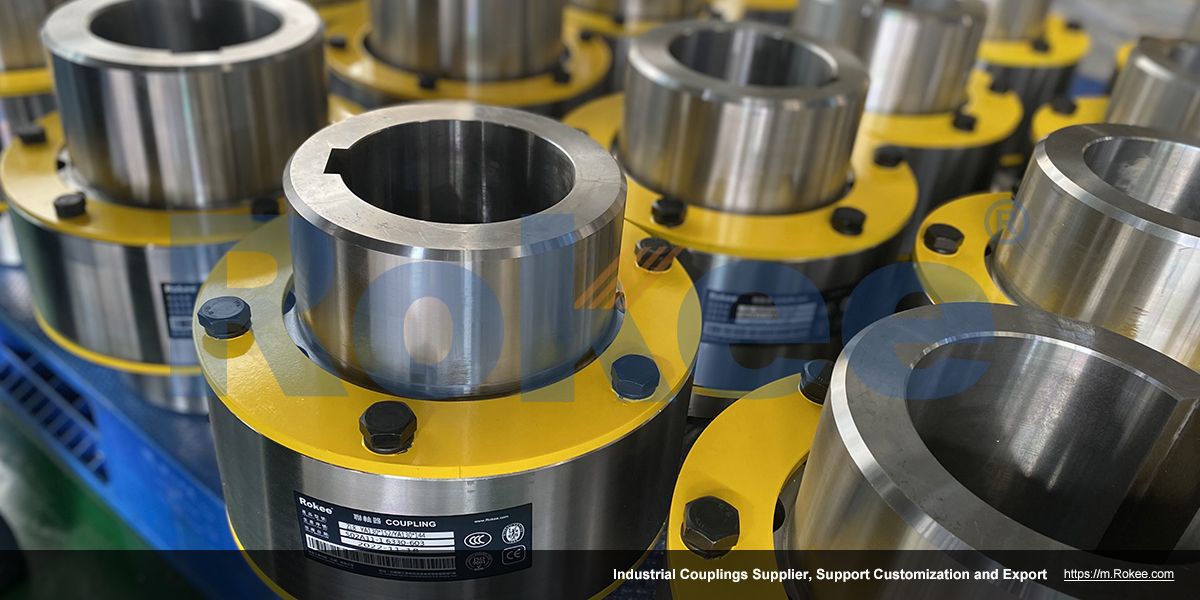
Elastic Pin Couplings
Rokee is a chinese Elastic Pin Couplings Manufacturer, provide Elastic Pin Couplings processing and customization services, Over the years, with excellent quality, we have been continuously providing many coupling products of various categories and uses complying with multiple standards and a full range of services, from the Elastic Pin Couplings selection to final installation and operation, for the industry fields of ferrous metallurgy, nuclear power, gas turbine, wind power, ropeway construction, lifting transportation, general equipment, etc. We strictly comply with quality system requirements and implement the whole process control to become a reliable and trustworthy partner of customers.
Providing customers with better Elastic Pin Couplings is always our driving force. Our aim is to transmit power for you and generate value for both of us. We look forward to joining you and becoming your partner for common progress.
-
![LZ Elastic Pin Couplings,LZ/ZL Elastic Pin Gear Coupling]()
LZ/ZL Elastic Pin Gear Coupling
LZ Pin Gear Coupling is the basic form of this series of couplings.View More -
![LZD Elastic Pin Couplings,LZD/ZLD Elastic Pin Gear Coupling With Conical Shaft Hole]()
LZD/ZLD Elastic Pin Gear Coupling With Conical Shaft Hole
One end of the LZD Pin Gear Coupling is designed with a conical shaft hole, and the clearance between the semi-couplings is increased to facilitate the fixing space at the shaft end.View More -
![LZZ Elastic Pin Couplings,LZZ/ZLL Elastic Pin Gear Coupling With Brake Wheel]()
LZZ/ZLL Elastic Pin Gear Coupling With Brake Wheel
LZZ Pin Gear Coupling is designed with a brake wheel, suitable for situations where braking is required.View More -
![LX Elastic Pin Couplings,LX/HL Flexible Pin Coupling]()
LX/HL Flexible Pin Coupling
LX(HL) Flexible Pin Coupling is the basic form of this series of couplings.View More -
![LXZ Elastic Pin Couplings,LXZ/HLL Flexible Pin Coupling With Brake Wheel]()
LXZ/HLL Flexible Pin Coupling With Brake Wheel
LXZ(HLL) Flexible Pin Coupling is designed with a brake wheel, suitable for situations where braking is required.View More -
![LT Elastic Pin Couplings,LT/TL Elastic Sleeve Pin Coupling]()
LT/TL Elastic Sleeve Pin Coupling
LT Elastic Sleeve Pin Coupling is the basic form of this series of couplings.View More -
![LTZ Elastic Pin Couplings,LTZ/TLL Elastic Sleeve Pin Coupling With Brake Wheel]()
LTZ/TLL Elastic Sleeve Pin Coupling With Brake Wheel
LTZ Elastic Sleeve Pin Coupling is designed with a brake wheel, suitable for situations where braking is required.View More
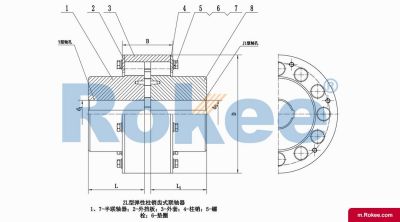
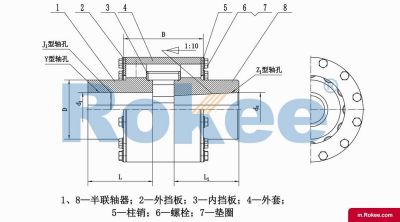
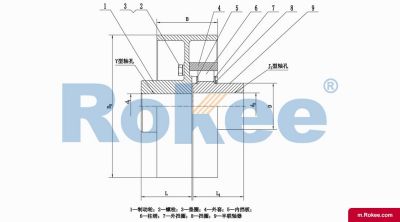
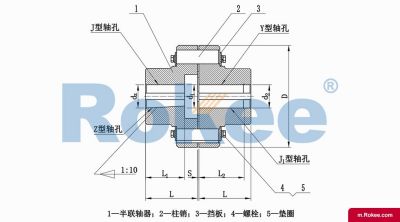
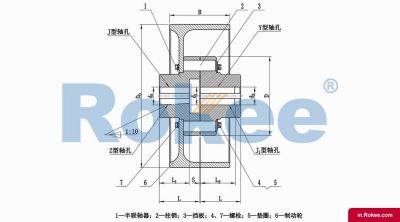
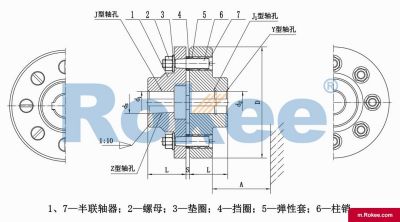
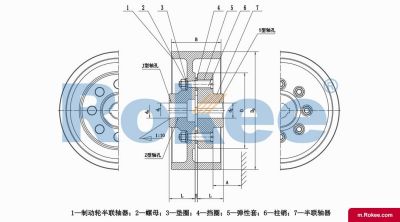
Elastic pin coupling is a device that uses several non-metallic elastic materials to make column pins, which are placed in the flange holes of the two halves of the coupling, and connect the two halves of the coupling through the column pins. Its structure is simple, easy to manufacture, and the installation, disassembly, and replacement of elastic components are relatively convenient, without the need to move the two couplings. The elastic element (pin) of the elastic pin coupling is generally made of non-metallic materials such as nylon 6.
Features:
It has the ability to compensate for slight offset of two axes.
During operation, the elastic components are subjected to shear, resulting in relatively poor reliability, and are only suitable for medium speed transmission shaft systems with very low requirements.
The structure is simple and reasonable, easy to maintain, symmetrical and interchangeable on both sides, and has a long service life.
Allow for significant axial movement and possess properties such as buffering, shock absorption, and wear resistance.
Elastic pin couplings are suitable for various coaxial transmission systems, such as marine main and auxiliary engines, internal combustion engines, diesel couplings, electric motors, and hydraulic motors that drive various power devices for shaft connections. Meanwhile, it is also commonly used in small and medium power transmission shaft systems, as well as in situations that require buffering and shock absorption. Due to the relatively poor reliability of the elastic pin coupling, it is not suitable for working conditions with high reliability requirements, such as the transmission shaft system of the lifting mechanism of lifting machinery. In addition, it is not suitable for low-speed load-bearing and transmission shaft systems with strong impact and vibration, as well as working conditions with large radial and angular offsets and transmission shaft systems with low installation accuracy.
When installing the elastic pin coupling, ensure the coaxiality of the two halves of the coupling and avoid excessive radial and angular offsets. At the same time, suitable pin materials and sizes should be selected to ensure the normal operation of the coupling. Regularly check the wear of the elastic pin coupling and replace the severely worn pins in a timely manner. At the same time, the coupling should be kept clean and lubricated to avoid damage caused by debris and dry friction.
In the field of mechanical power transmission, the elastic pin coupling stands as a widely applied and highly practical flexible coupling component, serving as a critical bridge between driving and driven shafts in countless mechanical systems. Unlike rigid couplings that demand strict shaft alignment and offer no tolerance for operational deviations, elastic pin couplings integrate elastic elements into their core design, endowing them with unique functional advantages that address common challenges in shaft connection, such as installation errors, thermal expansion, load fluctuations, and mechanical vibration.
At its core, the elastic pin coupling features a straightforward yet robust structural composition, centered around two fundamental components: the half-coupling bodies and the elastic pin assemblies. The half-coupling bodies are typically crafted from high-strength cast iron, carbon steel, or alloy steel, tailored to the load-bearing demands of different operating scenarios; lightweight and cost-effective cast iron is suitable for low-to-medium load conditions, while quenched and tempered alloy steel is preferred for heavy-duty, high-impact environments to ensure sufficient structural rigidity and fatigue resistance. Each half-coupling is equipped with evenly distributed mounting holes along the flange end face, precisely matched to the size and quantity of the elastic pins, forming a stable torque transmission path between the two shaft connectors. The elastic pins, the core functional parts of the coupling, are mainly fabricated from high-elastic non-metallic materials such as rubber, polyurethane, or nylon, with some reinforced versions incorporating fiber materials to enhance wear resistance and load-bearing capacity. These elastic pins are tightly embedded into the corresponding holes of the two half-couplings, relying on their own elastic deformation to transfer torque while absorbing external shocks and compensating for shaft misalignment, eliminating the need for complex lubrication systems and simplifying daily maintenance.
The structural design of elastic pin couplings also emphasizes ease of assembly, disassembly, and component replacement, a practical advantage that significantly reduces equipment downtime and maintenance costs. In most standard configurations, the elastic pins can be removed and replaced without shifting the positions of the two half-couplings or dismantling the connected driving and driven equipment, which is particularly valuable for large-scale mechanical systems or installations where shaft alignment is difficult. The symmetrical structural layout of the coupling ensures balanced stress distribution during high-speed rotation, avoiding eccentric loads that could trigger additional vibration and noise, and maintaining stable transmission performance even under continuous operation. Additionally, the compact profile of elastic pin couplings makes them adaptable to narrow installation spaces, a key benefit for equipment with limited internal layout, such as small pumps, fans, and motor-driven transmission devices.
The performance characteristics of elastic pin couplings are deeply rooted in their structural design, manifesting in multiple aspects that meet the diverse needs of mechanical transmission systems. Foremost is their exceptional shock absorption and vibration damping capacity. In mechanical operations, sudden load changes, start-stop cycles, and mechanical impacts often generate transient torsional vibrations, which can damage precision components such as bearings, gears, and shafts over time. The elastic deformation of the non-metallic pins acts as a natural buffer, absorbing these impact forces and attenuating vibration transmission, effectively protecting the entire transmission chain from fatigue damage and reducing operational noise. This performance is especially critical for equipment operating in noise-sensitive environments or requiring smooth power output, such as textile machinery, precision conveying systems, and medical mechanical equipment.
Another core performance advantage is the ability to compensate for various types of shaft misalignment, a common issue in practical engineering applications that rigid couplings cannot resolve. Manufacturing tolerances, installation errors, thermal deformation during operation, and mechanical wear can all lead to axial, radial, or angular misalignment between driving and driven shafts. Elastic pin couplings accommodate these deviations through the flexible deformation of the elastic pins: axial misalignment is addressed by the axial elasticity of the pins, radial misalignment by lateral bending deformation, and angular misalignment by the coordinated deformation of multiple pins around the axis. While the compensation range is moderate compared to some highly flexible couplings, it fully meets the alignment requirements of most general industrial equipment, striking an ideal balance between flexibility and torsional rigidity.
Torsional transmission performance is also a highlight of elastic pin couplings, delivering reliable torque delivery with stable efficiency. The coupling maintains high torsional rigidity under normal operating loads, ensuring minimal power loss during torque transmission and avoiding idle rotation or slippage that plagues some flexible couplings. At the same time, it retains appropriate elasticity to adapt to slight load fluctuations, preventing rigid impact between shafts and enhancing system stability. The load-bearing capacity of elastic pin couplings covers a wide spectrum, from small-scale low-torque devices like small motors and instrument drivers to large-scale high-torque equipment such as heavy conveyors, crushers, and industrial compressors, with material and structural adjustments expanding their applicable load range. Durability is equally noteworthy: high-quality elastic pins resist fatigue, wear, and environmental factors like temperature variations and mild chemical corrosion, while the metal half-couplings offer long-term structural stability, resulting in a long service life with proper maintenance.
Elastic pin couplings are categorized into distinct types based on structural design, elastic element materials, and functional configurations, each tailored to specific operating conditions and application scenarios. The most common classification is by structural form, dividing them into standard elastic pin couplings, elastic sleeve pin couplings, and elastic pin gear couplings. Standard elastic pin couplings are the most basic and widely used type, featuring a simple structure with direct insertion of elastic pins into flange holes, suitable for low-to-medium speed, low-to-medium torque applications with mild load fluctuations and moderate alignment requirements. They excel in general-purpose equipment due to easy processing, installation, and cost efficiency.
Elastic sleeve pin couplings feature an upgraded design, with a layer of elastic rubber or polyurethane sleeve wrapped around the metal pin core, combining the high strength of metal with the elasticity of non-metallic materials. This structure enhances load-bearing capacity, wear resistance, and misalignment compensation, particularly for angular deviation, making it ideal for equipment with frequent start-stop cycles, significant load fluctuations, or moderate impact loads, such as agricultural machinery, small crushers, and machine tool transmission systems. Elastic pin gear couplings integrate a gear engagement structure into the pin design, boosting torque transmission capacity and misalignment compensation, especially for comprehensive radial, axial, and angular deviations. Suited for heavy-duty, high-torque, harsh environments like mining machinery, metallurgical equipment, and marine propulsion systems, they offer robust performance without sacrificing flexibility.
Classification by elastic pin material further differentiates their performance: rubber elastic pin couplings, the most prevalent type, offer excellent elasticity, vibration damping, and cost efficiency, operating effectively in normal temperature environments for general industrial equipment. Polyurethane elastic pin couplings boast higher wear resistance, mechanical strength, and temperature tolerance compared to rubber, with better oil and corrosion resistance, suitable for harsh conditions with slight chemical exposure or heavy wear, such as mining, construction, and chemical machinery. Nylon elastic pin couplings feature high rigidity, fatigue resistance, and dimensional stability, ideal for high-speed, low-vibration applications requiring precise torque transmission, like precision machine tools and automotive transmission components.
Functional classification includes standard transmission couplings and brake wheel-equipped elastic pin couplings, the latter integrating a brake wheel into one half-coupling for systems requiring emergency braking or speed regulation, such as hoisting machinery, conveyor systems, and lifting equipment, combining transmission and braking functions to optimize equipment structure and save space. Regardless of type, elastic pin couplings retain core advantages of simple structure, maintenance-free operation, and reliable performance, with targeted design adjustments expanding their versatility across industries.
The combination of stable performance, diverse types, and practical design makes elastic pin couplings indispensable across nearly all industrial sectors involving mechanical power transmission. In general industrial machinery, they are the preferred choice for connecting motors and pumps, fans, compressors, and mixers, ensuring stable transmission, damping vibration, and reducing noise, while compensating for installation misalignment to lower bearing wear and extend equipment life. In mining and metallurgy, heavy-duty elastic pin couplings handle high-torque, high-impact loads in crushers, ball mills, conveyors, and rolling mills, withstanding harsh dust and heavy loads to maintain stable operation and protect core transmission components.
In transportation and engineering machinery, elastic pin couplings connect engine and transmission systems in automobiles, construction machinery, and marine equipment, absorbing engine vibration, compensating for frame-induced shaft misalignment, and enhancing driving smoothness; marine versions use corrosion-resistant materials to adapt to humid, salt-spray environments, linking engines and propeller shafts for reliable power transmission. The textile and light industry relies on their smooth transmission and vibration damping for textile machines, printing presses, and packaging equipment, preventing vibration-induced fabric damage or printing inaccuracies, ensuring production efficiency and product quality.
In agricultural machinery, elastic pin couplings connect tractors, harvesters, and irrigation equipment engines and working components, adapting to field load fluctuations and harsh environmental conditions, with easy maintenance suiting non-specialized maintenance scenarios. Energy and power applications include water pumps, fans, and generator sets in thermal, hydropower, and wind power systems, where they stabilize transmission, dampen grid-induced load fluctuations, and protect generator rotors and gearboxes. They also serve in specialized fields like automated production lines, robotic equipment, and aerospace ground support machinery, with customized configurations meeting precision, miniaturization, and high-reliability demands.
In summary, the elastic pin coupling is a classic, practical flexible transmission component, blending simple structure, reliable performance, and versatile adaptability to become a cornerstone of mechanical power transmission. Its structural design balances rigidity and flexibility, while performance advantages like shock absorption, misalignment compensation, and stable torque transmission address core engineering challenges. Diverse classifications enable tailored solutions for every operating condition, and widespread industrial applications solidify its essential role. As mechanical engineering advances toward higher efficiency, intelligence, and durability, elastic pin couplings will continue to evolve with improved materials and optimized structures, maintaining their vital position in global mechanical transmission systems and supporting the stable operation of diverse mechanical equipment across industries.
« Elastic Pin Couplings » Update Date: 2026/3/6
URL: https://m.rokee.com/tags/elastic-pin-couplings.html