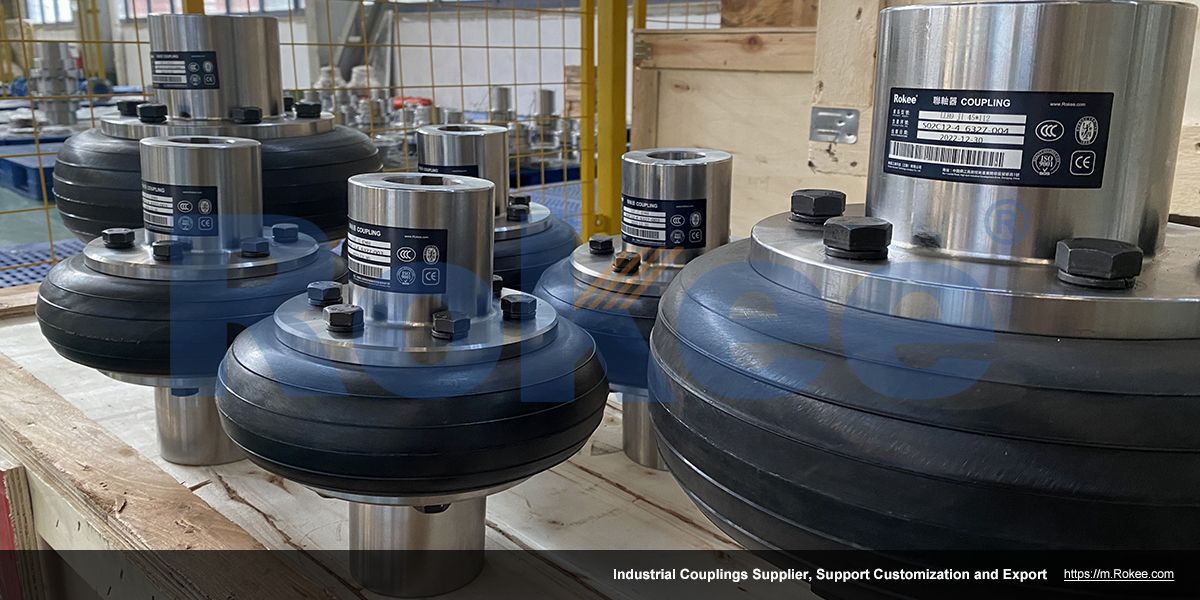
Rubber Tire Couplings
Rokee is a chinese Rubber Tire Couplings Manufacturer, provide Rubber Tire Couplings processing and customization services, Over the years, with excellent quality, we have been continuously providing many coupling products of various categories and uses complying with multiple standards and a full range of services, from the Rubber Tire Couplings selection to final installation and operation, for the industry fields of ferrous metallurgy, nuclear power, gas turbine, wind power, ropeway construction, lifting transportation, general equipment, etc. We strictly comply with quality system requirements and implement the whole process control to become a reliable and trustworthy partner of customers.
Providing customers with better Rubber Tire Couplings is always our driving force. Our aim is to transmit power for you and generate value for both of us. We look forward to joining you and becoming your partner for common progress.
-
![LLA Rubber Tire Couplings,LLA Tyre Coupling]()
LLA Tyre Coupling
The LLA Tyre Coupling uses two semi-couplings to connect both sides of the elastic tyre body through internal pressing plates and bolts, making it easy to replace the elastic tyre body. The LLA Tyre Coupling is a kind of high elastic coupling, with good damping buffer and superior offset compensation performance.The working temperature of 20~80 degrees Celsius, transmitting torque 10~20000NM, suitable for damp, dust, shock, vibration, reversing the changeable and frequent starting working conditions, and convenient assembly and disassembly, no lubrication, durable and reliable. Non standard couplings are made in accordance with special needs. In overloading work and half coupling, there will be no malignant accidents.View More -
![LLB Rubber Tire Couplings,LLB Tyre Coupling]()
LLB Tyre Coupling
The LLB Tyre Coupling is a kind of high elastic coupling, with good damping buffer and superior offset compensation performance. The working temperature of 20~80 degrees Celsius, transmitting torque 10~20000NM, suitable for damp, dust, shock, vibration, reversing the changeable and frequent starting working conditions, and convenient assembly and disassembly, no lubrication, durable and reliable. Non standard couplings are made in accordance with special needs. In overloading work and half coupling, there will be no malignant accidents.View More -
![UL Rubber Tire Couplings,UL Tyre Coupling]()
UL Tyre Coupling
UL Tyre Coupling adopts the structure of vulcanizing and bonding the tyre body with the metal connecting plate with threaded holes, which is then directly connected to the two semi-couplings by bolts for torque transmission and other displacement compensation.UL Tyre Couplings are flexible shaft coupling. UL type tire has good buffering performance. Operating temperature: -20~+80℃. Torque range: 10~25000N.M.UL Tyre Coupling mainly used in damp, dusty, vibration working environment. Because the elastic part is the whole tire, so, easy to disassemble and assemble. No lubrication is required.View More
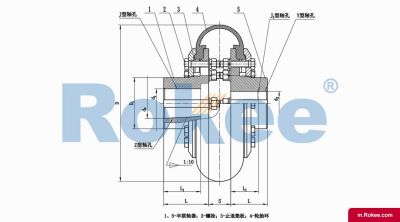
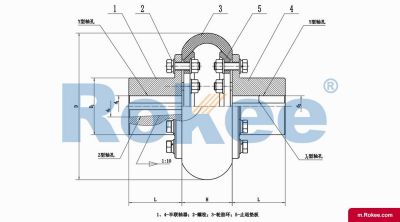
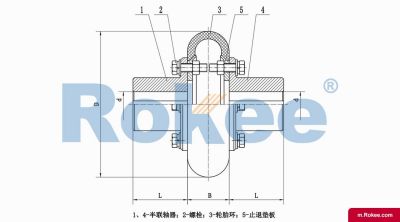
Rubber tire coupling is a high-performance coupling device with rubber material as the core elastic element, which combines the rubber tire body with the metal skeleton through vulcanization process. This unique structural design enables it to achieve both torque transmission and vibration buffering functions simultaneously in the mechanical transmission system. Compared with traditional rigid couplings, it can effectively compensate for axial, radial, and angular deviations that are difficult to avoid during installation, significantly reducing equipment vibration and bearing wear caused by poor alignment.
From a classification perspective, rubber tire couplings belong to a broader family of elastic couplings, but they have distinct characteristics. According to the force distribution, it can be classified as a shear type elastic coupling because it mainly absorbs impact and compensates for displacement through the shear deformation of the rubber body during operation. This is significantly different from the working principle of compression type elastic couplings, such as plum blossom shaped elastic couplings. Structurally, tire couplings typically consist of two flange plates with shaft holes and a rubber tire body, which is tightly pressed between the two flanges using bolts to transmit torque through friction.
The demand for such couplings in the industrial field mainly stems from their excellent shock absorption performance and displacement compensation capability. In industries such as metallurgy, mining, and petrochemicals, equipment often faces harsh working conditions such as humidity, dust, and high impact loads. Traditional couplings are often difficult to work stably for a long time. The tire coupling, with the elasticity and weather resistance of rubber material, can operate reliably in the temperature range of -20 ℃ to 80 ℃ without frequent lubrication and maintenance, greatly reducing equipment downtime and maintenance costs. With the development of modern mechanical equipment towards high speed, heavy load, and intelligence, the requirements for the reliability and adaptability of transmission systems continue to increase. The technological advantages of rubber tire couplings have led to a continuous expansion of their application scope.
The brilliance of rubber tire couplings lies in their multi-layered composite structure design. The core component tire body is usually made of high-quality rubber material, with high-strength nylon thread or nylon cloth embedded inside as a reinforcing skeleton. This combination ensures sufficient elasticity and improves the overall tensile strength and durability. The inner side of the tire ring is firmly bonded to the steel frame through high-temperature vulcanization process, and nuts are pre welded at the bolt holes on the frame for subsequent assembly. This vulcanization bonding process ensures that the interface between rubber and metal will not peel off even under long-term alternating loads. The flanges at both ends of the coupling are usually made of 45 # steel, cast steel or forged steel, and undergo quenching and tempering heat treatment to obtain good comprehensive mechanical properties. The flange end face is precision machined to ensure uniform distribution of contact area and friction force with the tire body.
From the perspective of working principle, rubber tire couplings mainly achieve power transmission and vibration absorption through multi-stage energy conversion. When the driving shaft starts to rotate, torque is first transmitted to the rubber element through the frictional force between the flange and the tire body contact surface, and the rubber body then undergoes torsional deformation. The nylon reinforcement layer inside converts some kinetic energy into elastic potential energy and stores it. As the rotation continues, this periodic deformation recovery process effectively smooths out torque fluctuations and reduces the impact load on the transmission system. It is worth noting that tire type couplings perform well in compensating for axis deviations and can simultaneously handle three basic forms of displacement: axial displacement (usually ≤ 5mm), radial displacement (≤ 2mm), and angular displacement (≤ 1 °). This composite compensation capability enables it to maintain stable transmission even in situations such as equipment foundation settlement, thermal expansion deformation, or installation errors.
The dynamic characteristics of the coupling are also reflected in its nonlinear stiffness. Within the normal working range, the torsional stiffness of the rubber body is relatively constant, but when the load exceeds the design value, the stiffness will significantly increase. This characteristic ensures the flexibility of daily operation and provides overload protection function. In addition, the internal friction of rubber molecules inside the coupling will produce a certain damping effect, which helps to suppress the resonance phenomenon of the transmission system. This is particularly important for working conditions with frequent start stop or forward and reverse changes. However, this damping characteristic can also cause some energy to dissipate in the form of thermal energy, so special attention should be paid to temperature rise control in high-speed and heavy-duty situations to avoid accelerated aging of rubber materials due to overheating.
After years of development, rubber tire couplings have formed multiple series of products, each model designed for specific working conditions and with unique performance characteristics. UL type, LLB type, and LLA type constitute the mainstream product lines in the current market, and understanding their differences can help engineering and technical personnel make reasonable selections.
The UL tire coupling is the most universal model, characterized by the use of an integral non opening tire body structure that balances various performance parameters. This model has a wide range of specifications, covering 18 specifications from UL1 to UL18, with nominal torque ranging from 10N · m to 25000 N · m, which can meet most conventional transmission needs. Taking the UL10 model as an example, its allowable speed can reach 5000r/min (low torque condition) or 800r/min (high torque condition), and the shaft hole diameter can be adapted to a range of 11-180mm, which is suitable for connecting most small and medium-sized mechanical equipment. Another advantage of UL type is its high degree of standardization, good interchangeability, and easy access to spare parts during maintenance. In practical applications, UL type is particularly suitable for rotating equipment such as fans and pumps that require vibration transmission to be alleviated. The layered structure of nylon wires in its rubber components effectively disperses stress concentration and extends its service life.
LLB tire couplings are specially developed for the metallurgical industry and are often referred to as "tire couplings for metallurgical equipment". Compared with the UL type, the LLB type uses thicker tire bodies under the same specifications, enhancing impact resistance and durability. This model includes 13 specifications from LLB1 to LLB13, with a nominal torque range of 10-2000N · m, an allowable speed of 5000-1000r/min, and a shaft hole diameter of 6-200mm. The structural feature of LLB type is that the vulcanized joint surface between the tire body and the metal skeleton is larger, and a special formula of heat-resistant rubber material is used, which can withstand a high temperature environment of 120 ℃ in a short period of time. Metallurgical equipment such as rolling mills and straightening machines generate severe vibrations and impact loads during operation. The LLB type coupling effectively absorbs these dynamic loads by increasing the thickness of the rubber body and using a high damping formula, protecting other components of the transmission system from damage. It is worth mentioning that the LLB type has specially considered the frequent forward and reverse working conditions in its design, and its tire body's fatigue resistance is about 30% higher than that of ordinary models.
The LLA tire coupling adopts a unique open tire body structure, which makes it outstanding in terms of installation convenience. The LLA type includes 11 specifications from LLA1 to LLA11, with basic parameters similar to the LLB type (nominal torque 10-20000N · m, allowable speed 5000-800r/min), but the weight is usually 15% -20% lighter than the LLB type of the same class. The open design allows the LLA type to replace the tire body without the need for axial movement of the coupling during equipment maintenance, greatly saving downtime. This model is particularly suitable for situations where space is limited or frequent maintenance is required, such as ship power systems, tunnel construction equipment, etc. However, it should be noted that the open structure will slightly reduce the torsional stiffness of the coupling, so it should be carefully selected in situations where high transmission accuracy is required.
In addition to these three mainstream models, there are also some special variant products on the market. The DL polygonal rubber coupling adopts a polygonal rubber block arrangement structure, providing greater angle compensation capability; The LAK saddle block elastic coupling is designed with segmented rubber blocks, making it easy to replace damaged elastic components separately. Although these special models have a small market share, they can play an irreplaceable role in specific operating conditions. In addition to considering basic parameters when selecting, users also need to pay attention to the environmental adaptability of the coupling, such as oil resistance, ozone resistance, and other special requirements. These characteristics are usually achieved by adjusting the formula of rubber materials.
Rubber tire couplings play an important role in the industrial transmission field, mainly due to their excellent comprehensive performance. Compared with traditional rigid couplings, its core advantage lies in excellent shock absorption and buffering capabilities. When the transmission system is subjected to impact loads, the rubber components of the coupling can absorb up to 60% -70% of the impact energy through elastic deformation, significantly reducing the damage of peak stress to key components such as bearings and gears. Test data shows that a properly configured tire coupling can reduce the vibration amplitude of the transmission system by more than 40% and reduce noise by 15-20 decibels. This vibration suppression effect is particularly valuable in high-speed rotating equipment, as it can effectively extend the service life of the equipment and improve operational stability.
Another significant advantage is its multi-directional displacement compensation capability. In actual installation, it is difficult to achieve complete alignment between the two connected shafts due to factors such as foundation settlement, thermal deformation, or assembly errors. The three-dimensional flexibility of tire couplings enables them to simultaneously compensate for various forms of deviations: axial displacement can reach 5mm, radial displacement 2mm, and angular deviation 1 °. This composite compensation capability significantly reduces the installation accuracy requirements. According to statistics, using tire couplings can shorten equipment installation time by more than 30%. Especially in the installation of large equipment groups, uneven settlement of the foundation is difficult to avoid. The adaptive characteristics of tire couplings ensure that the transmission system can work stably throughout the entire life cycle of the equipment.
From a maintenance perspective, tire couplings have obvious ease of use. Its structural design usually takes into account the need for quick disassembly and assembly, and most models can complete maintenance operations without the need for specialized tools. Due to the self-lubricating properties of rubber components, couplings do not require additional lubricants during operation, avoiding grease contamination and the hassle of regular lubrication. This maintenance free feature is particularly popular in industries with high cleanliness requirements such as food processing and pharmaceuticals. At the same time, rubber materials have good resistance to pollutants such as water and dust, allowing the coupling to work reliably in harsh environments such as outdoor, dusty, and humid conditions. Actual cases have shown that the average trouble free working time of tire couplings applied to port lifting equipment can reach over 30000 hours.
It is worth noting that the tire coupling also has overload protection function. When the system experiences severe overload or jamming faults, the rubber components will first slip or deform significantly, cutting off the power transmission path and protecting upstream driving equipment from damage. This safety feature is particularly important in conveying systems, crushing equipment, and other situations where material blockage is prone to occur. Compared with mechanical safety couplings, tire couplings have a smoother overload response, do not produce fragments or mechanical components that need to be replaced, and have a simple and fast reset. However, this protective function also brings certain design challenges, requiring precise calculation of the clamping force on the friction surface to ensure that there is no slipping during normal operation and that it can be released in a timely manner when overloaded.
Although rubber tire couplings have many advantages, there are also some technical limitations that need to be fully recognized and properly addressed by designers in practical applications. The most significant limitation is its relatively limited carrying capacity. Compared with rigid couplings such as gear couplings or diaphragm couplings, the rated torque of tire couplings is usually smaller, generally not exceeding 25000 N · m, which is mainly limited by the strength of rubber materials. In situations with excessive torque, using tire couplings can result in excessively large structural dimensions, which may affect the overall layout of the equipment. In response to this limitation, modern design adopts reinforced rubber composite materials, which increase the tear resistance of the rubber body by more than 50% by adding reinforcing materials such as Kevlar fibers or special carbon black, thereby achieving higher torque transmission capacity under the same external dimensions.
Another issue that cannot be ignored is the additional axial force generated during high-speed operation. When the coupling rotates at high speed, the outer edge of the tire body will expand outward under the action of centrifugal force. This deformation not only changes the stress distribution of the rubber components, but also generates additional axial thrust on the shaft system. Experimental data shows that at a speed of 3000r/min, the additional axial force generated by the medium tire coupling may reach 500-800N. This axial thrust will increase the bearing load and reduce the bearing service life. To solve this problem, technicians have developed a pre compression installation process, which applies a stress opposite to the working state to the tire body in advance during installation, partially offsetting the two stresses during operation. In addition, optimizing the cross-sectional shape of the tire body and adopting a streamlined design with thickened middle and gradually thinner edges can effectively reduce the adverse effects of centrifugal effects.
The relative lack of compactness in the size of tire couplings is also a factor that needs to be considered in design. Due to the need to ensure sufficient elastic deformation space, the radial size of tire couplings is usually 30% -40% larger than gear couplings of the same torque level, which may cause installation difficulties in space limited situations. Modern design alleviates this problem by using high-strength rubber materials and optimizing structural layout, such as changing the traditional single-layer tire body to a multi-layer staggered arrangement, reducing radial dimensions while maintaining the same elasticity. Another innovative approach is to develop a "flattened" tire coupling, which achieves a more compact axial installation space by increasing the diameter and reducing the thickness. This design is particularly suitable for long wheelbase transmission systems.
The environmental sensitivity of rubber materials is also a challenge that needs to be faced in practical applications. Although modern synthetic rubber has good weather resistance, environmental factors such as extreme temperature, ozone, and oil pollution can still affect the performance and service life of couplings. The working temperature range of standard tire couplings is generally -20 ℃ to 80 ℃, and special formula rubber needs to be selected if it exceeds this range. In cold regions, low temperatures can cause rubber to harden and reduce shock absorption effectiveness; In high-temperature environments, the aging rate of rubber accelerates, and heat-resistant materials need to be selected. For situations with oil stains, nitrile rubber (NBR) or hydrogenated nitrile rubber (HNBR) are better choices, as their oil resistance is 5-8 times higher than that of ordinary natural rubber. In addition, under the strong ultraviolet radiation environment, the rubber formula with anti-aging agent added or the protective cover added should be selected.
In the realm of mechanical power transmission, flexible couplings serve as indispensable components that bridge driving and driven shafts, mitigating the adverse impacts of misalignment, vibration, and shock loads on rotating machinery. Among the diverse array of flexible coupling designs, the rubber tire coupling stands out for its unique structural composition, exceptional elastic properties, and versatile operational capabilities. Unlike rigid couplings that demand precise shaft alignment and offer no tolerance for dynamic disturbances, rubber tire couplings leverage the inherent flexibility and damping characteristics of high-performance rubber composites to deliver reliable torque transmission while accommodating various forms of shaft displacement.
At its core, the rubber tire coupling features a streamlined yet robust structural configuration, engineered to balance flexibility, strength, and durability for long-term operational stability. The primary components of a standard rubber tire coupling include two metallic half-couplings, a flexible rubber tire-shaped elastomer, and a set of fastening hardware that unifies these elements into a cohesive assembly. The metallic half-couplings, typically forged from high-strength carbon steel, alloy steel, or ductile cast iron, are precision machined with shaft bores to fit the driving and driven shafts securely; these bores may feature keyways, tapered surfaces, or clamping designs to ensure firm torque transfer without slippage during operation. The central rubber tire element is the heart of the coupling, manufactured from specially formulated rubber compounds blended with reinforcing materials such as nylon cord, steel wire, or fiber fabric to enhance tensile strength, tear resistance, and load-bearing capacity. This rubber tire is not a standalone component but is often bonded to internal metal inserts or skeletons via vulcanization, a heat and pressure treatment process that fuses the rubber and metal into a single, integrated unit, eliminating separation risks under dynamic loading and extending the service life of the elastomer. The fastening hardware, consisting of high-tensile bolts, nuts, and washers, secures the rubber tire assembly to the two metallic half-couplings, creating a tight connection that maintains structural integrity while allowing controlled elastic deformation during operation. Notably, the design avoids complex lubrication systems or intricate moving parts, resulting in a low-maintenance structure that operates smoothly in harsh industrial environments with minimal upkeep requirements.
The performance characteristics of rubber tire couplings are directly derived from their structural design and material properties, making them uniquely suited for challenging transmission scenarios where rigid couplings fail to perform. One of the most prominent performance advantages is their exceptional misalignment compensation capacity, which addresses the common issue of shaft misalignment caused by manufacturing tolerances, installation errors, thermal expansion, or mechanical wear during operation. These couplings can effectively accommodate three primary types of shaft displacement: axial displacement, which occurs along the longitudinal axis of the shafts; radial displacement, which involves lateral offset between the shaft centers; and angular displacement, which refers to the tilting of one shaft relative to the other. Unlike many flexible couplings that only compensate for one or two types of misalignment, rubber tire couplings handle combined misalignment seamlessly, thanks to the uniform elastic deformation of the rubber tire element across all directions. This ability to absorb misalignment reduces stress on shaft bearings, gears, and other critical transmission components, preventing premature failure and lowering overall maintenance costs for machinery.
Beyond misalignment compensation, rubber tire couplings exhibit superior vibration damping and shock absorption properties, a critical trait for machinery operating under fluctuating loads, frequent start-stop cycles, or high-impact conditions. The viscoelastic nature of the rubber tire element allows it to absorb and dissipate vibrational energy and transient shock loads, preventing the transfer of harmful vibrations from the driving end to the driven end of the transmission system. This damping effect not only reduces noise levels during operation but also protects delicate machinery components from fatigue damage caused by repeated vibrational stress. Additionally, rubber tire couplings offer stable torque transmission with moderate torsional stiffness, ensuring efficient power delivery without excessive wind-up or backlash. The rubber material also provides electrical insulation between the two shafts, a valuable feature in applications where electrical conductivity could cause interference or damage to electronic control systems integrated with rotating machinery. While these couplings excel in flexibility and damping, they are designed to maintain adequate load-bearing capacity for medium to heavy-duty applications, with the reinforced rubber tire structure resisting deformation under sustained torque loads and preventing premature wear or failure. It is important to note that their performance is tailored to specific operational parameters, with temperature resistance, chemical stability, and load limits varying based on the rubber compound and structural design, ensuring compatibility with diverse working environments.
Rubber tire couplings are classified into distinct categories based on structural variations, reinforcement designs, and assembly methods, each tailored to meet specific operational requirements and load conditions in industrial settings. The most common classification is based on the presence and design of internal reinforcement skeletons, dividing the couplings into skeleton-equipped rubber tire couplings and skeleton-free rubber tire couplings. Skeleton-equipped models feature a rigid metal insert or framework embedded within the rubber tire during vulcanization, which enhances the coupling's torque-carrying capacity, radial stiffness, and dimensional stability. This design is ideal for heavy-duty applications requiring higher load ratings and reduced radial deflection, as the metal skeleton distributes stress evenly across the rubber tire and prevents excessive stretching or deformation under heavy loads. In contrast, skeleton-free rubber tire couplings rely solely on the reinforced rubber compound for structural support, offering greater flexibility and elasticity with lower torsional stiffness. These models are better suited for applications with significant misalignment and high vibration levels, prioritizing flexibility over maximum load capacity and providing smoother operation in light to medium-duty transmission systems.
Another key classification criterion is the structural form of the rubber tire element, distinguishing between integral rubber tire couplings and split or radial-cut rubber tire couplings. Integral rubber tire couplings feature a single, continuous rubber tire component with no cuts or separations, offering uniform strength and sealing properties; this design simplifies installation and ensures consistent performance, making it a popular choice for standard industrial applications. Split or radial-cut rubber tire couplings feature intentional radial slits or segmented designs on the rubber tire, which enhance the element's flexibility and misalignment compensation range, particularly for angular and radial displacement. The cut design allows for greater elastic deformation without inducing excessive internal stress in the rubber, extending the service life of the elastomer in applications with extreme misalignment or frequent dynamic loading. Additionally, rubber tire couplings can be categorized by their assembly and connection style, including flange-mounted couplings, clamp-type couplings, and hub-mounted couplings, each differing in how the rubber tire is attached to the metallic half-couplings. Flange-mounted models use bolted flange connections for high torque transmission, clamp-type designs offer tool-free installation and quick replacement of the rubber tire, and hub-mounted couplings provide a compact, space-saving profile for confined machinery layouts. Each classification variant retains the core advantages of rubber tire couplings while optimizing specific performance metrics to align with unique operational demands, ensuring a suitable option for nearly every flexible transmission requirement.
The versatility of rubber tire couplings, stemming from their balanced performance and adaptable designs, has led to their widespread adoption across numerous industrial sectors, where they address critical transmission challenges and enhance the reliability and longevity of rotating machinery. In the heavy machinery and manufacturing sector, these couplings are extensively used in equipment such as conveyor systems, mixers, agitators, crushers, and grinding mills. Conveyor systems, which often operate with slight shaft misalignment due to long-distance layout and continuous operation, benefit from the misalignment compensation and vibration damping of rubber tire couplings, ensuring smooth material transport without downtime. Mixers and agitators, which handle viscous materials and experience uneven load distribution, rely on the shock absorption properties of these couplings to protect motor and gearbox components from damage caused by sudden load spikes. In the metallurgical industry, rubber tire couplings are integrated into rolling mills, continuous casting machines, and other high-temperature, high-shock equipment, where their heat-resistant rubber compounds and robust construction withstand extreme operational conditions while isolating vibration and misalignment stresses.
The pump and fan industry represents another major application area for rubber tire couplings, where reliable, low-maintenance transmission is essential for continuous fluid handling and ventilation operations. Centrifugal pumps, reciprocating pumps, axial fans, and centrifugal fans all utilize rubber tire couplings to connect motors and impeller shafts, compensating for misalignment caused by pipeline pressure, thermal expansion, and foundation settlement. The vibration damping feature of these couplings reduces noise emissions in pump and fan stations, creating a safer and more comfortable working environment, while the maintenance-free design minimizes operational disruptions in critical water supply, wastewater treatment, and HVAC systems. In the marine and offshore engineering sector, rubber tire couplings are employed in ship propulsion systems, auxiliary machinery, and deck equipment, where they resist corrosion from saltwater and harsh marine environments, absorb vibration from engine operation, and accommodate shaft movement caused by wave-induced hull deformation. Their electrical insulation properties also prevent galvanic corrosion between different metal components of marine transmission systems, further enhancing equipment durability.
Rubber tire couplings also play a vital role in the power generation industry, integrated into gas turbines, diesel generators, wind turbine drive systems, and hydroelectric equipment. In wind turbines, these couplings compensate for shaft misalignment caused by tower sway and wind load fluctuations, protecting gearboxes and generators from excessive stress and ensuring stable power output. In diesel and gas generator sets, they absorb engine vibration and shock loads, reducing wear on engine components and improving the overall efficiency of power generation. Additionally, rubber tire couplings find applications in the automotive and transportation equipment sector, used in test benches, material handling vehicles, and specialized mobile machinery, where their compact design and flexible performance support smooth power transfer in dynamic, mobile operating conditions. They are also widely utilized in food processing, pharmaceutical, and textile manufacturing equipment, where clean, low-noise operation is required; the non-lubricated design of rubber tire couplings eliminates the risk of lubricant contamination, making them compliant with strict hygiene standards in these sensitive industries.
In summary, rubber tire couplings represent a pinnacle of flexible transmission design, merging simple structural engineering with high-performance material science to deliver a reliable, versatile, and cost-effective solution for mechanical power transmission. Their unique combination of misalignment compensation, vibration damping, shock absorption, and low-maintenance operation sets them apart from other flexible coupling types, enabling their deployment across an unparalleled range of industrial applications. The diverse classification of rubber tire couplings ensures that engineers and equipment designers can select the optimal variant to match specific load requirements, environmental conditions, and operational constraints, maximizing machinery performance and minimizing lifecycle costs. As industrial technology continues to advance and demand for more resilient, efficient transmission systems grows, rubber tire couplings will remain a foundational component in mechanical engineering, adapting to evolving industry needs and continuing to provide reliable power transmission solutions for critical machinery across the global industrial landscape. Their enduring relevance stems from their ability to address the fundamental challenges of shaft misalignment and vibration, core issues that persist in nearly all rotating mechanical systems, solidifying their status as an essential and irreplaceable element in modern power transmission technology.
« Rubber Tire Couplings » Update Date: 2026/3/6
URL: https://m.rokee.com/tags/rubber-tire-couplings.html