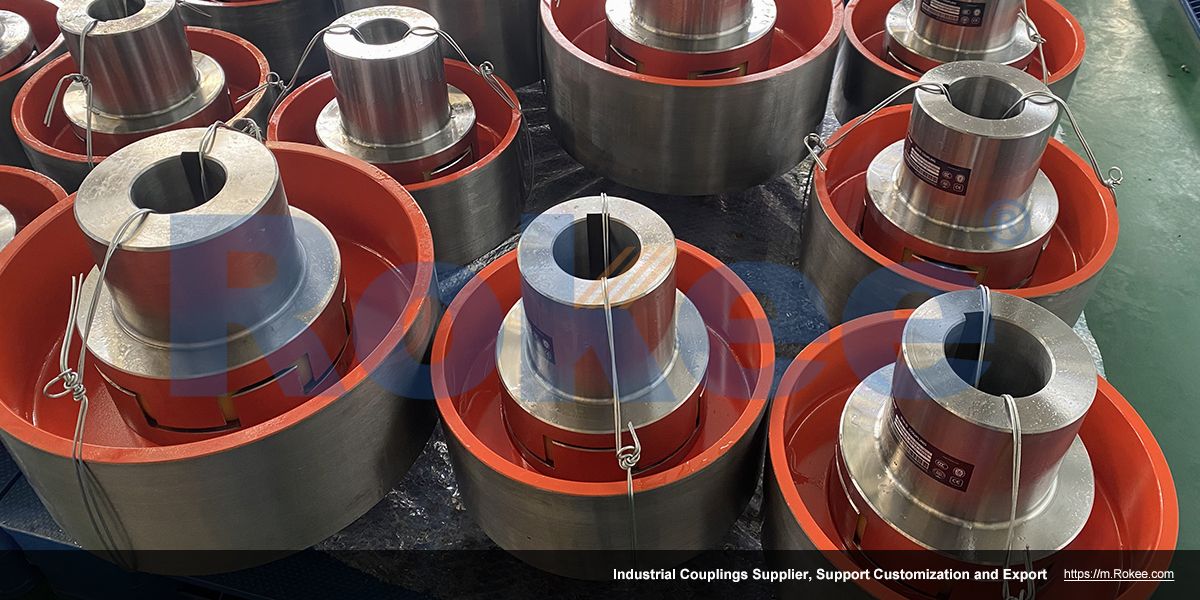
Jaw Flex Couplings
Rokee is a chinese Jaw Flex Couplings Manufacturer, provide Jaw Flex Couplings processing and customization services, Over the years, with excellent quality, we have been continuously providing many coupling products of various categories and uses complying with multiple standards and a full range of services, from the Jaw Flex Couplings selection to final installation and operation, for the industry fields of ferrous metallurgy, nuclear power, gas turbine, wind power, ropeway construction, lifting transportation, general equipment, etc. We strictly comply with quality system requirements and implement the whole process control to become a reliable and trustworthy partner of customers.
Providing customers with better Jaw Flex Couplings is always our driving force. Our aim is to transmit power for you and generate value for both of us. We look forward to joining you and becoming your partner for common progress.
-
![LM Jaw Flex Couplings,LM/ML Flexible Plum Jaw Coupling]()
LM/ML Flexible Plum Jaw Coupling
LM Plum-shaped Flexible Coupling is the basic form of this series of couplings.View More -
![LMD Jaw Flex Couplings,LMD/MLZ Flexible Plum Jaw Coupling With Single Flange]()
LMD/MLZ Flexible Plum Jaw Coupling With Single Flange
LMD Plum-shaped Flexible Coupling is added with transition connection, which eliminates the need of axially moving the semi-coupling when replacing the elastomer.View More -
![LMS Jaw Flex Couplings,LMS/MLS Flexible Plum Jaw Coupling With Double Flange]()
LMS/MLS Flexible Plum Jaw Coupling With Double Flange
LMS Plum-shaped Flexible Coupling adopts double transition flange connection, which eliminates the need of axially moving the semi-coupling when replacing the elastomer.View More -
![LMZ-I Jaw Flex Couplings,LMZ-I/MLL-I Flexible Plum Jaw Coupling With Split Brake Wheel]()
LMZ-I/MLL-I Flexible Plum Jaw Coupling With Split Brake Wheel
LMZ-I Plum-shaped Flexible Coupling adopts split brake wheel design, suitable for situations where braking is required.View More -
![LMZ-II Jaw Flex Couplings,LMZ-II/MLL-II Flexible Plum Jaw Coupling With Integral Brake Wheel]()
LMZ-II/MLL-II Flexible Plum Jaw Coupling With Integral Brake Wheel
LMZ- II Plum-shaped Flexible Coupling adopts integral brake wheel design, suitable for situations where braking is required.View More -
![LMPK Jaw Flex Couplings,LMPK/MLPK Flexible Plum Jaw Coupling With Split Brake Disc]()
LMPK/MLPK Flexible Plum Jaw Coupling With Split Brake Disc
LMPK Plum-shaped Flexible Coupling adopts split brake disc design, suitable for situations where braking is required and eliminating the need of axially moving the semi-coupling when replacing the elastomer.View More
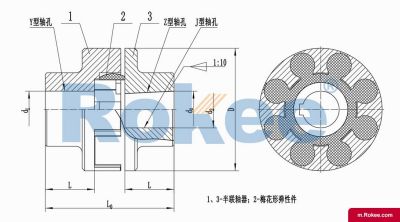
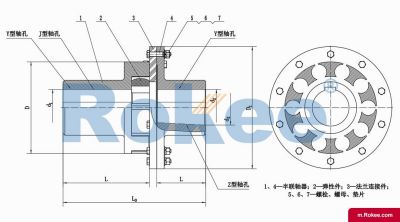
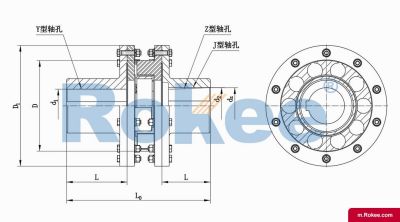
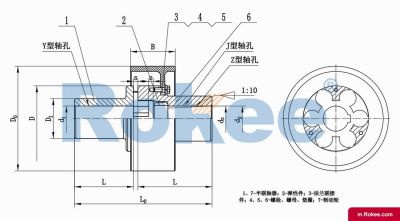
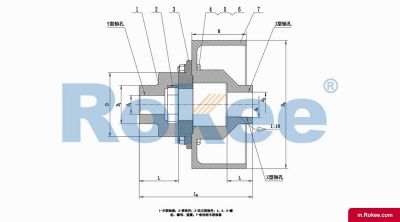
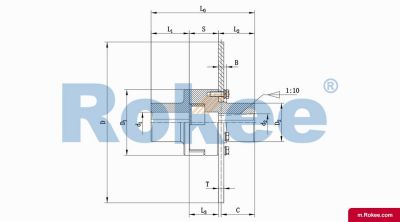
Jaw Flex Coupling is a special mechanical transmission device mainly used to compensate for the relative displacement between two shafts, while also having the functions of buffering and vibration reduction.
Jaw Flex Couplings can effectively absorb and adjust axial, radial, or angular offsets between two shafts through their special internal structural design. This type of coupling typically includes a series of elastic elements (such as elastic blocks, elastic pins, etc.) or mechanical structures (such as sliders, gear rings, etc.) that can deform when subjected to external forces, thereby compensating for the offset between the two shafts.
Jaw Flex Couplings can be classified into various types based on their structural design and working principles, such as claw type elastic couplings, claw type slider couplings, etc. These types have their own characteristics and are suitable for different working conditions and needs.
Claw type elastic coupling: small size, light weight, simple structure, easy installation, and low price. Commonly used in low-power and unimportant situations.
Claw type slider coupling: compensates for radial offset through slider structure, suitable for transmission systems that require compensation for large radial offsets.
Jaw Flex Couplings are widely used in various transmission systems with axial, radial, or angular offsets, especially in working conditions with stable loads and minimal impact. Its application scenarios include but are not limited to:
Shaft connections in heavy equipment such as steel mills and cement machinery.
Deep sea drilling equipment, lifting and deceleration equipment, woodworking equipment, machine tool equipment, petroleum equipment, textile equipment, etc. require high-precision and high load capacity transmission systems.
Advantages and Functions
Displacement compensation capability: Jaw Flex Couplings can effectively compensate for various offsets between two shafts, ensuring the stable operation of the transmission system.
Vibration control capability: Partial Jaw Flex Couplings (such as those with elastic elements) can reduce the vibration amplitude of the transmission system and improve the smooth operation of the equipment.
High load operation capability: Jaw Flex Couplings have the ability to adapt to high load operation in different environments, and can maintain excellent mechanical performance and service life under harsh conditions such as humid and hot environments and low temperatures.
Easy to install and maintain: The Jaw Flex Coupling has a simple structure, easy installation, and low maintenance costs.
In order to ensure the long-term stable operation of the Jaw Flex Coupling, regular maintenance and upkeep are required. This includes checking the wear of the coupling, replacing damaged elastic components or mechanical structures, adjusting the alignment accuracy of the coupling, etc. At the same time, it is also necessary to pay attention to keeping the transmission system clean and lubricated to avoid debris entering the interior of the coupling and causing damage.
Jaw Flex Coupling is a powerful and widely used mechanical transmission device. When selecting and using, appropriate selection and maintenance work should be carried out according to specific working conditions and needs.
In the realm of mechanical power transmission, the jaw flex coupling stands as one of the most widely adopted and versatile flexible coupling solutions, engineered to bridge rotating shafts, transfer torque efficiently, and mitigate operational challenges that plague rigid mechanical connections. Unlike rigid couplings that offer no tolerance for shaft misalignment or vibration, jaw flex couplings strike a balanced blend of torsional rigidity and adaptive flexibility, making them indispensable across countless industrial settings.
At its core, the jaw flex coupling features a streamlined, three-piece structural composition that prioritizes simplicity, durability, and ease of assembly, with no overly complex components that complicate installation or upkeep. The foundational elements consist of two metallic hub halves and a central elastic spider insert, each engineered to fulfill a specialized role in power transmission and misalignment compensation. The metallic hubs, typically crafted from high-strength forged steel, cast iron, or lightweight aluminum alloy, are precision-machined with evenly spaced, protruding jaw-like lugs around their inner faces; these jaws are designed to interlock seamlessly with the lobes of the elastic spider, creating a secure meshing interface that facilitates torque transfer. The material selection for the hubs is dictated by operational demands: steel hubs deliver exceptional tensile strength and load-bearing capacity for heavy-duty applications, aluminum hubs offer reduced weight and corrosion resistance for lightweight or high-speed systems, and cast iron hubs provide cost-effective rigidity for general-purpose industrial use. The central elastic spider, the heart of the coupling’s flexibility, is manufactured from resilient elastomeric materials such as polyurethane, nitrile rubber, nylon, or other engineered polymers, shaped with multiple lobes that fit snugly between the metallic jaws. This elastomeric component is not merely a connecting piece but a critical buffer that enables the coupling to absorb shock loads, dampen torsional vibration, and accommodate minor shaft misalignments that are inevitable in real-world mechanical setups. Some advanced jaw flex coupling designs incorporate minor structural refinements, such as tapered jaw profiles or reinforced spider lobes, to enhance load distribution and extend service life, but the fundamental three-piece framework remains consistent across most variants, ensuring universal compatibility and straightforward replacement of worn components.
The structural integrity of jaw flex couplings directly translates to their standout performance characteristics, which set them apart from other flexible coupling types and solidify their utility across diverse operating conditions. Foremost among these performance traits is exceptional torque transmission capability, with the interlocking jaw-spider design enabling efficient power transfer even under moderate to high torsional loads, minimizing energy loss during rotation. Unlike some flexible couplings that sacrifice torque capacity for flexibility, jaw flex couplings maintain high torsional stiffness, ensuring precise power delivery without excessive wind-up or backlash, making them suitable for applications requiring consistent rotational accuracy. A defining performance feature is their ability to compensate for multiple forms of shaft misalignment, including parallel misalignment, angular misalignment, and axial end float. The elastomeric spider deforms slightly under load to accommodate these deviations, preventing excessive stress on shaft bearings, gearboxes, and drive motors that would otherwise lead to premature wear and component failure. This misalignment tolerance is particularly valuable in industrial environments where shaft alignment is difficult to maintain due to thermal expansion, mechanical settling, or assembly inaccuracies.
Beyond misalignment compensation, jaw flex couplings excel in shock absorption and vibration damping, critical for protecting sensitive drive train components from sudden load spikes and resonant vibration. The elastomeric spider acts as a natural shock absorber, dissipating impact energy and reducing noise levels generated by mechanical operation, fostering smoother and quieter system performance. Additionally, these couplings offer inherent fail-safe operation: in the event of elastomeric spider degradation or failure, the metallic jaws come into direct contact, allowing the coupling to continue transmitting torque temporarily and preventing catastrophic system shutdown, a vital safety feature for continuous-operation industrial machinery. Maintenance-wise, jaw flex couplings are inherently low-maintenance, as they require no lubrication, unlike gear couplings or other complex flexible designs; routine inspections focus solely on checking the condition of the elastomeric spider for signs of wear, cracking, or compression set, with replacement being a quick, tool-light process that minimizes downtime. They also exhibit strong resistance to common environmental stressors, including oil, grease, moisture, and moderate temperature fluctuations, though performance may vary slightly based on the elastomeric material used for the spider, ensuring reliable operation in harsh industrial settings without rapid deterioration.
Jaw flex couplings are categorized into distinct types based on three primary criteria: jaw profile design, elastomeric spider material, and structural configuration, each tailored to address specific operational requirements and environmental conditions. The most fundamental classification revolves around jaw profile, with two dominant variants: straight jaw couplings and curved jaw couplings. Straight jaw couplings feature flat, linear jaw surfaces, a simplistic design that reduces manufacturing complexity and cost; they deliver reliable torque transmission and basic misalignment compensation, ideal for general-purpose applications with moderate loads and minimal misalignment. Curved jaw couplings, by contrast, boast contoured, radiused jaw surfaces that match the curvature of the spider lobes, creating a larger contact area between metal and elastomer. This enhanced contact distribution reduces stress concentration on the spider, boosts torque capacity, improves misalignment tolerance, and enables smoother, backlash-free rotation, making them preferred for high-precision, high-load, or high-speed applications such as automated machinery and precision drive systems.
Classification by elastomeric spider material further refines performance suitability, as each polymer formulation imparts unique mechanical properties to the coupling. Polyurethane spiders are the most common, offering a balanced mix of hardness, flexibility, abrasion resistance, and temperature tolerance, suitable for a broad spectrum of general industrial applications. Nitrile rubber spiders excel in oil and chemical resistance, making them ideal for machinery operating in lubricant-rich or chemically exposed environments, such as hydraulic systems and industrial pumps. Nylon spiders provide enhanced rigidity and load-bearing capacity, with good resistance to wear and deformation, suited for heavy-duty, high-torque applications. Specialized engineered polymer spiders, such as those made from heat-resistant or low-compression-set materials, cater to extreme operating conditions, including high-temperature industrial processes or continuous heavy-load operation. This material diversity allows engineers to customize jaw flex couplings to match specific environmental and performance needs without altering the core structural design.
Structural configuration-based classification includes standard solid hub couplings, split hub couplings, and flanged couplings, each addressing unique installation and operational constraints. Standard solid hub couplings feature a one-piece hub design, offering maximum rigidity and torque capacity for permanent installations where shaft access is unobstructed. Split hub couplings feature a two-piece, clamp-style hub that can be mounted or removed without disturbing adjacent components or disassembling the entire drive train, streamlining maintenance and replacement in confined spaces or complex machinery setups. Flanged jaw flex couplings integrate a flanged hub design, enabling secure mounting to larger drive components or machinery frames, enhancing stability for heavy-duty or high-vibration applications. Some variants also feature a closed housing or shroud to protect the internal jaw-spider assembly from dust, debris, and physical damage, extending service life in rugged industrial environments. Collectively, these classifications ensure that a jaw flex coupling variant exists for nearly every power transmission scenario, from small-scale precision equipment to large industrial drive systems.
The versatility of jaw flex couplings, rooted in their robust structure, adaptable performance, and diverse classifications, translates to an extensive range of industrial applications across countless sectors, where reliable torque transmission, misalignment tolerance, and vibration damping are non-negotiable. In the fluid handling industry, jaw flex couplings are extensively used in centrifugal pumps, positive displacement pumps, compressors, and blowers, connecting drive motors to rotating shafts to ensure consistent fluid flow and pressure. Their ability to dampen pump-induced vibration and compensate for shaft misalignment caused by fluid pressure fluctuations reduces wear on pump bearings and seals, extending equipment lifespan and reducing maintenance frequency. In HVAC and ventilation systems, they link fan motors to fan shafts, delivering quiet, efficient operation while accommodating thermal expansion in ductwork and motor mounts, maintaining performance in commercial and industrial heating, cooling, and air circulation setups.
Material processing and manufacturing machinery rely heavily on jaw flex couplings for power transmission, including conveyors, mixers, grinders, and extruders. In conveyor systems, they absorb shock loads from start-stop cycles and heavy material loads, preventing damage to drive motors and conveyor rollers, while ensuring smooth, uninterrupted material movement. In mixing and grinding equipment, they dampen torsional vibration generated by uneven material loads, protecting gearboxes and drive shafts from excessive stress. The packaging and automation industry utilizes jaw flex couplings, especially curved jaw variants, in automated assembly lines, robotic arms, and packaging machinery, where precise, backlash-free rotation and high-speed operation are critical for consistent production quality and accuracy. These couplings maintain positional precision in automated systems while absorbing minor vibrations from robotic movement, ensuring reliable performance in high-volume manufacturing environments.
Heavy industrial sectors, including mining, construction, and agriculture, also depend on jaw flex couplings for rugged, reliable power transmission. In mining equipment, such as crushers, screens, and conveyors, they withstand heavy shock loads, dust, and debris, delivering consistent torque transfer in harsh operating conditions. Agricultural machinery, including tractors, harvesters, and irrigation systems, uses jaw flex couplings to connect engine power to implement drives, tolerating field-induced misalignment and vibration for durable, low-maintenance performance. In power generation and renewable energy systems, they link small turbines, generators, and motor-driven auxiliary equipment, ensuring stable power output while compensating for thermal misalignment in generator sets. Even in precision engineering and aerospace support equipment, lightweight aluminum hub jaw flex couplings provide low-inertia, high-precision power transmission for test equipment, small actuators, and precision drive systems, balancing accuracy and flexibility.
In summary, the jaw flex coupling remains a cornerstone of mechanical power transmission, its enduring popularity driven by a harmonious fusion of simplistic structural design, robust performance capabilities, adaptable classification options, and broad industrial applicability. By efficiently transmitting torque, accommodating unavoidable shaft misalignment, dampening vibration, and offering fail-safe reliability, these couplings address core challenges in mechanical drive systems across every major industry. The ability to customize jaw profiles, elastomeric materials, and structural configurations ensures that jaw flex couplings can be tailored to meet the unique demands of diverse operating environments, from light-duty precision automation to heavy-duty industrial processing. As manufacturing and engineering technologies continue to evolve, the fundamental design and performance advantages of jaw flex couplings ensure their sustained relevance, solidifying their status as a go-to solution for reliable, efficient, and cost-effective power transmission in modern mechanical systems.
« Jaw Flex Couplings » Update Date: 2026/3/6
URL: https://m.rokee.com/tags/jaw-flex-couplings.html