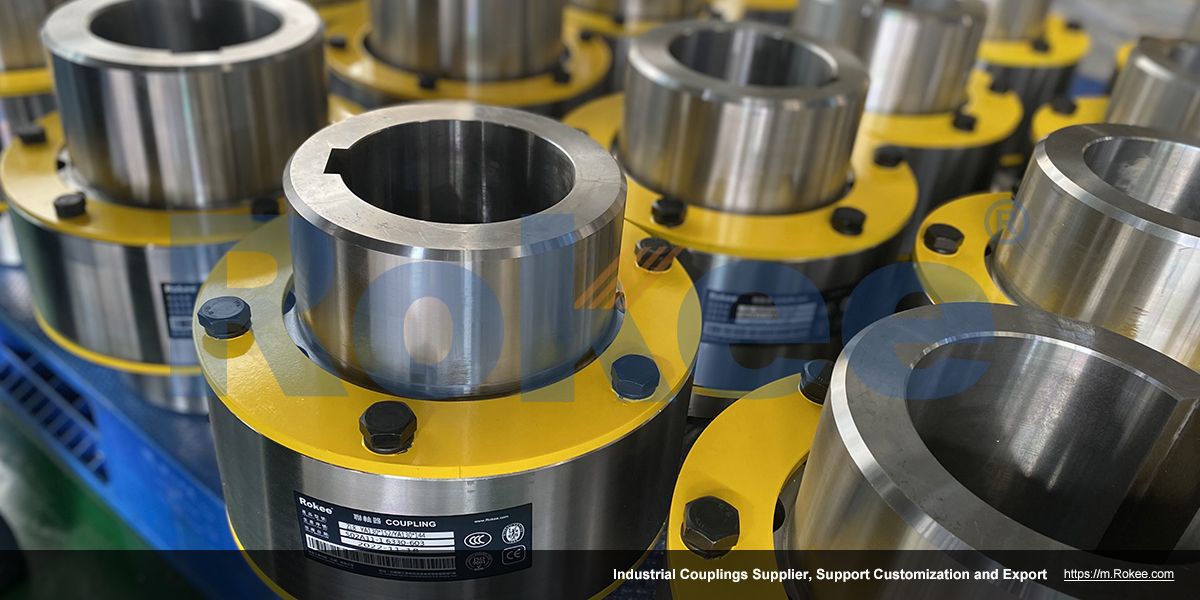
Pin & Bush Couplings
The Flexible Pin Gear Coupling is designed with non-metallic flexible pin, two toothed semi-couplings and a toothed sleeve ring with an outer ring. It uses non-metallic flexible deformation to transfer torque and cushion shock and compensate angular displacement.
The Flexible Pin Coupling is a basic transmission parts that has simple structure, needs no lubrication, and is easy to manufacture, install and disassemble the flexible pin. It uses two semi-couplings with flange holes and a non-metallic flexible pin for crane to transmit torque, suitable for low-to-medium speed and low-to-medium torque occasions.

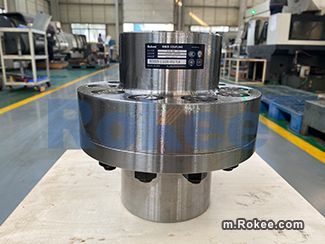
The design of the Elastic Sleeve Pin Coupling is simple and clever in design and has wide applicability. It uses the pin with elastic sleeve to connect two semi-couplings with pin holes to realize torque transmission and larger angular compensation. At the same time, Pin Bush Coupling has good shock absorption and buffering performance, which can be used in high-speed occasions without lubrication and requiring easy pin sleeve replacement.

Model of Pin & Bush Couplings
In the realm of mechanical transmission systems, couplings serve as indispensable components that bridge rotating shafts, enabling the transfer of torque while accommodating various forms of misalignment. Among the diverse types of couplings available, elastic pin coupling, elastic sleeve pin coupling, and flexible pin bush coupling stand out for their unique combination of elasticity, simplicity, and cost-effectiveness. These couplings find widespread application across numerous industries, from manufacturing and agriculture to automotive and aerospace, playing a crucial role in ensuring the smooth and reliable operation of machinery.
To begin with, it is essential to understand the fundamental role of elastic couplings in mechanical systems. Unlike rigid couplings, which are designed to maintain precise alignment between shafts and transmit torque without any flexibility, elastic couplings incorporate elastic elements that allow for a certain degree of axial, radial, and angular misalignment. This elasticity not only helps to compensate for misalignments that may occur due to installation errors, shaft deflection, or thermal expansion but also serves to absorb shock loads and dampen vibrations. These properties are critical in protecting other components of the transmission system, such as bearings, gears, and motors, from premature wear and damage, thereby enhancing the overall reliability and service life of the machinery. Elastic pin coupling, elastic sleeve pin coupling, and flexible pin bush coupling all leverage these elastic properties but differ in their structural design, the type of elastic elements used, and their specific performance characteristics, making each suitable for distinct applications and operating conditions.
Let us first examine the elastic pin coupling. As the name suggests, this type of coupling utilizes elastic pins as the core elastic element. The basic structure of an elastic pin coupling typically consists of two half-couplings, which are connected to the driving and driven shafts respectively, and a series of elastic pins that pass through the holes in the flanges of the half-couplings to fasten them together. The elastic pins are usually made of high-quality rubber, polyurethane, or other elastic materials that exhibit excellent flexibility and wear resistance. The design of the half-couplings can vary, with common configurations including flange-type, claw-type, or disc-type structures, depending on the specific application requirements. One of the key features of the elastic pin coupling is its simple and compact structure, which makes it easy to manufacture, install, and maintain. The elastic pins act as the primary torque-transmitting components, and their elasticity allows for the compensation of radial, axial, and angular misalignments to a certain extent.
The working principle of the elastic pin coupling revolves around the deformation of the elastic pins under torque and misalignment. When torque is transmitted from the driving shaft to the half-coupling, the elastic pins are subjected to shear and compression forces, causing them to deform elastically. This deformation not only transfers the torque to the driven half-coupling but also accommodates any misalignment between the two shafts. Additionally, the elastic properties of the pins enable the coupling to absorb shock loads generated during the operation of the machinery, such as those caused by sudden starts, stops, or load fluctuations. The damping effect of the elastic pins also helps to reduce the transmission of vibrations between the driving and driven shafts, minimizing noise and preventing resonance in the system. It is important to note that the amount of misalignment that can be compensated by an elastic pin coupling is limited by the material and dimensions of the elastic pins. Excessive misalignment can lead to premature wear or failure of the pins, thereby affecting the performance and reliability of the coupling.
Elastic pin couplings offer several notable performance advantages. Firstly, their simple structure results in low manufacturing and maintenance costs, making them an economical choice for many applications. Secondly, the use of elastic pins provides effective shock absorption and vibration damping, which helps to protect the associated machinery components. Thirdly, they can accommodate a moderate degree of misalignment, reducing the precision requirements for shaft installation and alignment. Fourthly, elastic pin couplings have a high torque transmission capacity relative to their size, making them suitable for medium to high torque applications. However, they also have certain limitations. For instance, the elastic pins are prone to wear over time, especially in high-speed or high-load operating conditions, which requires regular inspection and replacement. Additionally, they may not be suitable for applications that require extremely high precision or where there is a risk of oil contamination, as certain elastic materials can be degraded by oil.
Moving on to the elastic sleeve pin coupling, this type of coupling is a variation of the elastic pin coupling, with the key difference being the use of an elastic sleeve that covers the pins. The basic structure of an elastic sleeve pin coupling includes two half-couplings, pins, and elastic sleeves. The pins are fixed to one of the half-couplings, and the elastic sleeves are fitted over the pins. The other half-coupling has holes that receive the elastic sleeves, forming a flexible connection between the two half-couplings. The elastic sleeves are typically made of rubber or synthetic elastomers, which provide enhanced elasticity and damping capabilities compared to the elastic pins used in the elastic pin coupling. The design of the elastic sleeve pin coupling is also relatively simple, but the addition of the elastic sleeve offers several performance improvements.
The working principle of the elastic sleeve pin coupling is similar to that of the elastic pin coupling, but the elastic sleeve plays a more prominent role in absorbing shocks and vibrations. When torque is transmitted, the elastic sleeves are compressed and sheared between the pins and the holes in the half-couplings, deforming elastically to transfer the torque and compensate for misalignments. The elastic sleeves provide a greater degree of flexibility, allowing for a higher level of misalignment compensation, particularly in terms of angular misalignment. Additionally, the elastic sleeves act as a buffer between the pins and the half-couplings, reducing metal-to-metal contact and minimizing wear on the pins and the half-coupling holes. This not only extends the service life of the coupling but also reduces the generation of noise during operation.
One of the main performance advantages of the elastic sleeve pin coupling is its superior shock absorption and vibration damping capabilities. The elastic sleeve, with its larger contact area and higher elasticity, can absorb more significant shock loads and dampen vibrations more effectively than the elastic pins in the elastic pin coupling. This makes the elastic sleeve pin coupling particularly suitable for applications where there are frequent start-stop operations or significant load fluctuations. Another advantage is its ability to accommodate a higher degree of misalignment, which reduces the need for precise shaft alignment and simplifies installation. Additionally, the elastic sleeve helps to protect the pins and half-couplings from wear, resulting in a longer service life and lower maintenance requirements. However, like the elastic pin coupling, the elastic sleeve is susceptible to wear and degradation, especially in high-temperature or oil-contaminated environments. The torque transmission capacity of the elastic sleeve pin coupling is generally lower than that of the elastic pin coupling of the same size, making it more suitable for low to medium torque applications.
Next, we turn our attention to the flexible pin bush coupling. This type of coupling is characterized by the use of a flexible pin bush (also known as a rubber bush or elastomeric bush) as the elastic element. The structure of a flexible pin bush coupling typically consists of two half-couplings, pins, and flexible pin bushes. The half-couplings are usually made of cast iron, steel, or aluminum alloy, and are designed with a series of holes around their circumference. The flexible pin bushes are inserted into these holes, and the pins pass through the bushes to connect the two half-couplings. The flexible pin bushes are made of high-quality elastomeric materials, such as natural rubber, neoprene, or polyurethane, which are engineered to provide excellent flexibility, wear resistance, and chemical resistance. The design of the flexible pin bush coupling is more robust compared to the previous two types, making it suitable for more demanding operating conditions.
The working principle of the flexible pin bush coupling involves the deformation of the flexible pin bushes under torque and misalignment. When the driving shaft rotates, it transmits torque to the half-coupling, which in turn applies force to the flexible pin bushes through the pins. The flexible bushes deform elastically, transferring the torque to the driven half-coupling and accommodating any misalignment between the shafts. The flexible pin bushes are designed to withstand both shear and compression forces, allowing for effective compensation of radial, axial, and angular misalignments. Additionally, the elastomeric material of the bushes provides excellent shock absorption and vibration damping, reducing the impact of shock loads on the transmission system and minimizing noise. The robust design of the flexible pin bush coupling also enables it to withstand higher temperatures and harsher environmental conditions compared to the elastic pin and elastic sleeve pin couplings.
Flexible pin bush couplings offer several key performance advantages. Firstly, they have a high torque transmission capacity, making them suitable for heavy-duty applications with high torque requirements. Secondly, the flexible pin bushes provide excellent misalignment compensation, accommodating larger radial, axial, and angular misalignments than the elastic pin and elastic sleeve pin couplings. Thirdly, they exhibit superior shock absorption and vibration damping capabilities, protecting the machinery components from damage caused by shock loads and vibrations. Fourthly, the flexible pin bushes are highly wear-resistant and can withstand a wide range of temperatures and chemical environments, making them suitable for use in harsh operating conditions such as those found in mining, construction, and industrial manufacturing. Finally, the robust structure of the flexible pin bush coupling ensures a long service life and low maintenance requirements, reducing the overall operational costs of the machinery.
Having examined the structural characteristics and working principles of each coupling type, it is important to explore their respective application scenarios. Elastic pin couplings are widely used in medium to high torque applications where moderate misalignment compensation is required. Common applications include electric motors, pumps, compressors, fans, and conveyors in the manufacturing, automotive, and aerospace industries. They are also suitable for use in power transmission systems where cost-effectiveness and simplicity are key considerations. Elastic sleeve pin couplings, on the other hand, are more commonly used in low to medium torque applications with frequent start-stop operations or significant load fluctuations. Typical applications include small electric motors, gearboxes, pumps, and agricultural machinery such as tractors and harvesters. Their superior vibration damping capabilities make them ideal for use in equipment where noise reduction is important, such as in residential or commercial areas.
Flexible pin bush couplings are designed for heavy-duty applications with high torque requirements and harsh operating conditions. They are commonly used in mining machinery, construction equipment, steel mills, cement plants, and marine propulsion systems. These couplings are also suitable for use in power generation systems, such as in wind turbines and hydroelectric power plants, where reliable torque transmission and misalignment compensation are critical. Additionally, their resistance to high temperatures and chemical contaminants makes them suitable for use in industrial processes involving oil, gas, or other corrosive substances.


Proper installation and maintenance are essential for ensuring the optimal performance and service life of elastic pin coupling, elastic sleeve pin coupling, and flexible pin bush coupling. When installing these couplings, it is important to ensure that the shafts are aligned as accurately as possible, even though the couplings can accommodate misalignment. Excessive misalignment can lead to premature wear of the elastic elements and other components. The installation process typically involves cleaning the shaft ends, ensuring that the half-couplings are properly fitted onto the shafts (using keys, set screws, or hydraulic fittings), and then connecting the half-couplings using the elastic pins, sleeves, or bushes. It is also important to ensure that the fasteners are tightened to the recommended torque specifications to prevent loosening during operation.
Regular maintenance of these couplings involves inspecting the elastic elements for signs of wear, damage, or degradation. For elastic pin couplings, the elastic pins should be checked for cracks, tears, or excessive deformation. For elastic sleeve pin couplings, the elastic sleeves should be inspected for wear, hardening, or brittleness. For flexible pin bush couplings, the flexible pin bushes should be checked for wear, cracking, or separation from the pins or half-couplings. If any of these issues are detected, the affected components should be replaced immediately to prevent coupling failure. Additionally, the half-couplings and pins should be inspected for signs of wear, corrosion, or damage, and lubrication should be applied to the pins and other moving parts as recommended by the manufacturer. Regular maintenance not only extends the service life of the coupling but also helps to prevent unexpected downtime and costly repairs.
When selecting between elastic pin coupling, elastic sleeve pin coupling, and flexible pin bush coupling, several key factors need to be considered. The first factor is the torque requirements of the application. Elastic pin couplings are suitable for medium to high torque, elastic sleeve pin couplings for low to medium torque, and flexible pin bush couplings for high torque. The second factor is the degree of misalignment between the shafts. Flexible pin bush couplings can accommodate the largest misalignment, followed by elastic sleeve pin couplings, and then elastic pin couplings. The third factor is the operating environment, including temperature, humidity, and the presence of contaminants such as oil, dust, or chemicals. Flexible pin bush couplings are the most resistant to harsh environments, while elastic sleeve pin couplings are more susceptible to oil and high temperatures. The fourth factor is the level of shock loads and vibrations in the system. Elastic sleeve pin couplings and flexible pin bush couplings offer superior shock absorption and vibration damping compared to elastic pin couplings. The fifth factor is cost, with elastic pin couplings being the most economical, followed by elastic sleeve pin couplings, and then flexible pin bush couplings. Finally, the ease of installation and maintenance should also be considered, with all three types being relatively simple to install and maintain, but elastic pin couplings being the simplest.
In addition to these factors, it is also important to consider the rotational speed of the shafts. High rotational speeds can generate centrifugal forces that can affect the performance of the coupling. Elastic pin couplings and elastic sleeve pin couplings are suitable for moderate rotational speeds, while flexible pin bush couplings can withstand higher rotational speeds due to their robust design. Another consideration is the type of shaft connection, such as keyed connections, splined connections, or tapered connections, which may influence the selection of the half-coupling design.
To illustrate the practical application of these couplings, let us consider a few examples. In a manufacturing plant, an electric motor is used to drive a conveyor belt. The motor and conveyor belt shafts are subject to moderate torque and a small degree of misalignment due to the long length of the conveyor. An elastic pin coupling would be a suitable choice here, as it offers cost-effective torque transmission and moderate misalignment compensation. In an agricultural setting, a tractor is used to drive a pump for irrigation. The tractor's engine generates significant shock loads during start-up and operation, and the pump shaft may have a certain degree of angular misalignment. An elastic sleeve pin coupling would be ideal in this case, as it provides excellent shock absorption and can accommodate angular misalignment effectively. In a mining operation, a large diesel engine is used to drive a crusher. The crusher operates under heavy load and high torque, and the shafts are subject to significant misalignment and harsh environmental conditions, including dust and high temperatures. A flexible pin bush coupling would be the best choice here, as it offers high torque transmission, superior misalignment compensation, and resistance to harsh environments.
It is also worth noting that advancements in material science have led to improvements in the performance of these couplings. For example, the development of high-performance elastomers, such as polyurethane and silicone rubber, has enhanced the wear resistance, temperature resistance, and chemical resistance of the elastic elements. These materials also offer better elasticity and damping properties, further improving the performance of the couplings. Additionally, advancements in manufacturing technologies, such as precision casting and CNC machining, have enabled the production of half-couplings with higher precision and better surface quality, reducing friction and wear and improving the overall efficiency of the coupling.
Despite their many advantages, elastic pin coupling, elastic sleeve pin coupling, and flexible pin bush coupling are not suitable for all applications. In applications requiring extremely high precision, such as in machine tools or aerospace components, rigid couplings or more advanced elastic couplings, such as diaphragm couplings or bellows couplings, may be more appropriate. These couplings offer higher precision and lower backlash, ensuring accurate torque transmission and shaft alignment. Additionally, in applications where there is a risk of fire or explosion, couplings made of fire-resistant materials may be required.
In conclusion, elastic pin coupling, elastic sleeve pin coupling, and flexible pin bush coupling are three important types of elastic couplings that play a vital role in mechanical transmission systems. Each type has its own unique structural characteristics, working principles, performance advantages, and application scenarios. Elastic pin couplings are simple, cost-effective, and suitable for medium to high torque applications with moderate misalignment. Elastic sleeve pin couplings offer superior shock absorption and vibration damping, making them ideal for low to medium torque applications with frequent start-stop operations. Flexible pin bush couplings are robust, high-performance couplings suitable for heavy-duty, high-torque applications in harsh operating conditions. Proper selection, installation, and maintenance of these couplings are essential for ensuring the smooth and reliable operation of machinery, reducing downtime, and minimizing operational costs. As material science and manufacturing technologies continue to advance, it is likely that these couplings will become even more efficient, durable, and versatile, further expanding their range of applications in various industries.
Engineers and technicians should carefully evaluate the specific requirements of their applications, including torque, misalignment, operating environment, rotational speed, and cost, when selecting between these three coupling types. By understanding the strengths and limitations of each coupling, they can make informed decisions that optimize the performance and reliability of their mechanical transmission systems. Whether in manufacturing, agriculture, mining, or any other industry that relies on mechanical power transmission, elastic pin coupling, elastic sleeve pin coupling, and flexible pin bush coupling will continue to be indispensable components, contributing to the efficiency and productivity of modern machinery.