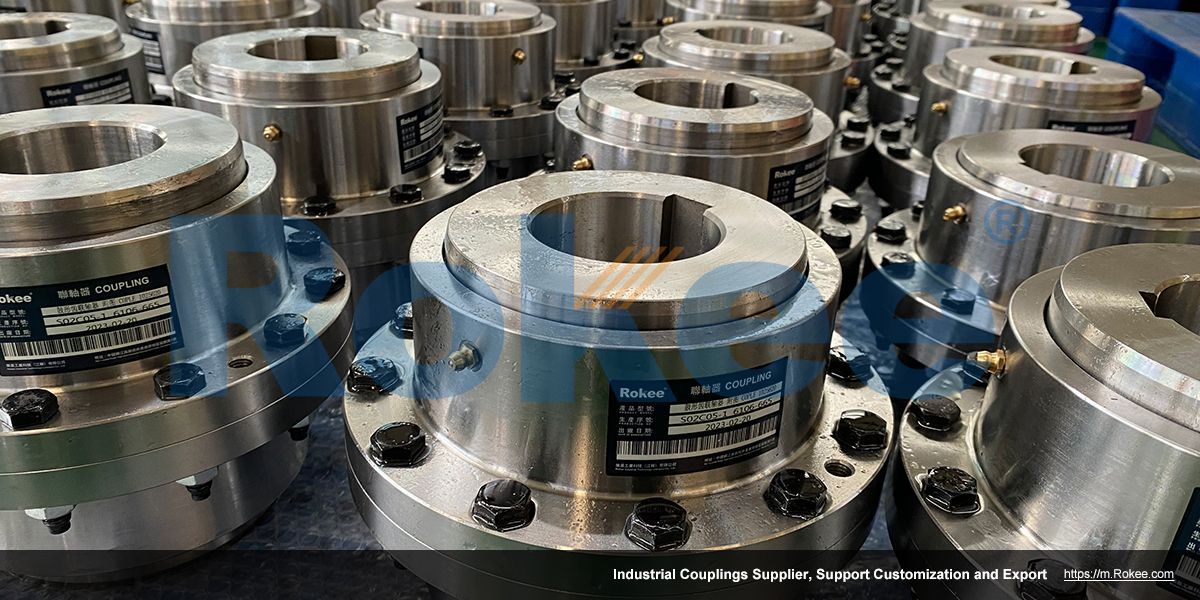
Analysis Of Drum Gear Coupling
Drum gear couplings play an important role in the field of transmission due to their unique structure and excellent performance. By gaining a deeper understanding of its structure, working principle, performance characteristics, and application fields, it is possible to better utilize its transmission function in industrial equipment, and improve the stability and reliability of the equipment.
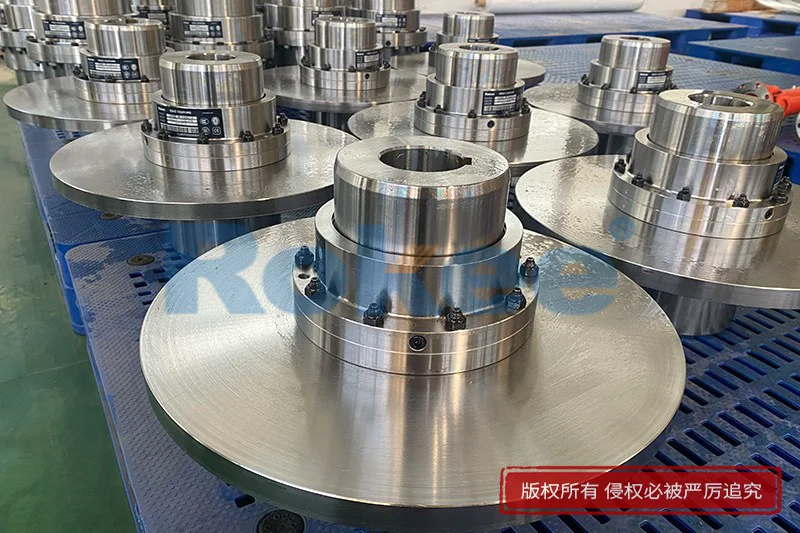
As a key component in the field of transmission, drum gear couplings play an indispensable role in modern mechanical transmission systems. The following is a detailed analysis of the drum gear coupling:
The crown gear coupling mainly consists of the following parts:
Internal gear ring: It meshes with the external gear shaft sleeve and transmits torque through the contact of the tooth surface.
External gear shaft sleeve: Its tooth tip is made into a drum shape, and the tooth surface is in a circular arc shape. This special drum design is a key feature that distinguishes it from other gear couplings.
End cap: used to secure and protect internal components.
Sealing device: It can effectively prevent dust, impurities, etc. from entering the interior of the coupling, ensuring its normal operation.
The working principle of drum tooth coupling is relatively simple but efficient. During operation, the torque of the driving shaft is transmitted to the inner gear ring through the outer gear shaft sleeve, which in turn drives the driven shaft to rotate. Due to the presence of drum shaped teeth, when there is relative displacement between the two axes, the contact point between the tooth surface of the drum shaped teeth and the tooth surface of the inner ring gear will change, allowing the coupling to adapt to certain angular, radial, and axial displacement compensation. This displacement compensation capability enables the drum type gear coupling to maintain stable transmission performance under complex working conditions.
Performance characteristics
High torque transmission capability: The tooth profile design of the drum gear coupling is reasonable, with a large contact area on the tooth surface, which can withstand large torque and is suitable for heavy-duty transmission applications.
Good displacement compensation capability: drum gear couplings can effectively compensate for angular displacement, radial displacement, and axial displacement between two shafts, reduce additional loads caused by misalignment of the shaft system, and improve equipment reliability and service life.
Smooth operation and low noise: The meshing process of the drum shaped teeth is relatively smooth, and compared to other couplings, the noise generated during operation is lower, making it particularly suitable for work environments with strict noise requirements.
Easy installation and maintenance: The drum gear coupling structure is relatively simple, and the requirements for the alignment of the two shafts during installation are not as strict as those for rigid couplings. In terms of maintenance, the sealing device is easy to replace, and the maintenance of internal components is also relatively convenient.
Drum toothed couplings have been widely used in various industrial fields due to their unique performance and structural characteristics
Metallurgical industry: In large equipment such as rolling mills and blast furnaces, drum gear couplings are used to connect motors and reducers, reducers and working machines, etc., to meet their heavy-duty and high impact working conditions.
Mining machinery, such as crushers, ball mills, and other equipment, work in harsh environments and are prone to shaft displacement. drum gear couplings, with their excellent displacement compensation capabilities and high reliability, ensure the stable operation of the equipment.
Petrochemical industry: drum gear couplings are used to transmit power in equipment such as pumps and compressors. Their corrosion resistance and stable transmission performance ensure the continuity and safety of chemical production.
In the power industry, drum toothed couplings provide reliable power transmission for power production in equipment such as steam turbine generators and fans.
Although crown gear couplings have many advantages, they may still encounter some malfunctions in practical applications. Here are some common faults and corresponding solutions:
Excessive center deviation: The relative displacement of the tooth surface is large, which can be solved by correcting the center.
Poor material or low tooth surface hardness: Choose suitable materials, and the tooth surface hardness should reach around HRC50-60 after treatment.
Insufficient lubrication or dry grinding: Check the oil level to ensure that the lubrication oil pipe is aligned and maintain sufficient lubrication.
Unclean oil quality: Filter the oil to make the particle size of impurities in the oil smaller than 25 μ m.
« Analysis Of Drum Gear Coupling » Post Date: 2023/8/14
URL: https://m.rokee.com/blog/analysis-of-drum-gear-coupling.html
- Center Deviation Of Drum Gear Coupling
- Causes Of Fracture Of Drum Gear Coupling
- Causes Of Damage To Drum Gear Couplings
- Causes Of Abnormal Noise In Drum Gear Couplings
- Can The Drum Gear Coupling Retract And Retract
- Can The Drum Gear Coupling Be Disassembled
- Calibration Of Drum Gear Coupling
- Calculation Of Drum Gear Coupling
- Mechanical Drawing Of Drum Gear Couplings
- Calculation Method For Drum Gear Coupling