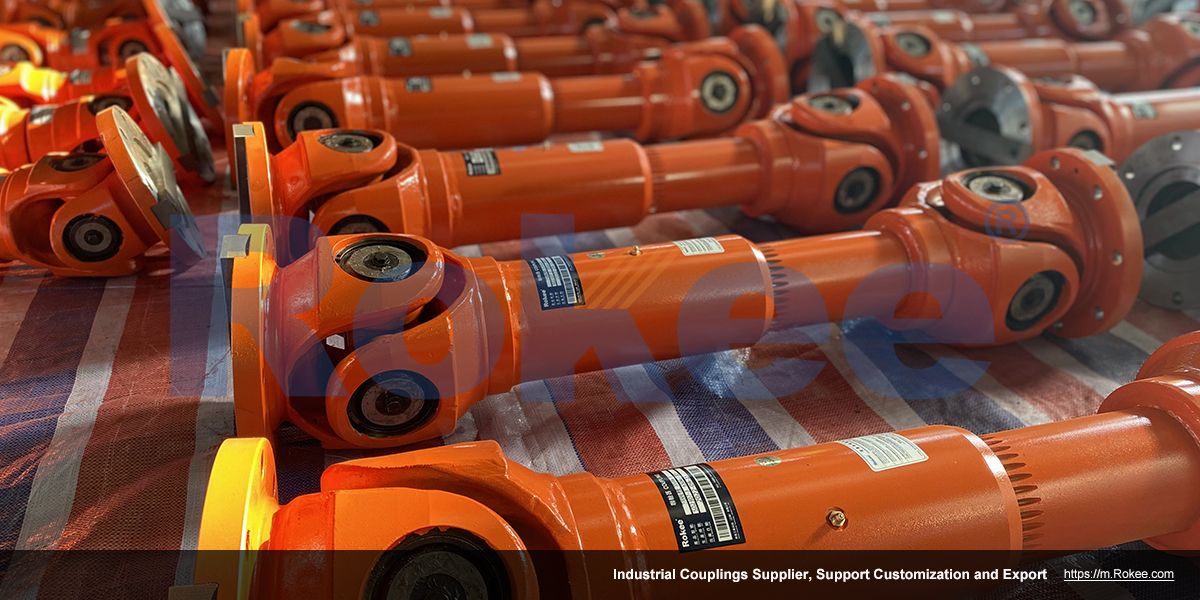
Cardan Shaft Couplings
The Cardan Universal Coupling uses cross bearings to connect the flanges at both ends, which can transmit torque that is not on the same axis. The diagonal compensation can reach more than 25°, and the spline connection can compensate for the axial displacement in a large distance. With high carrying capacity and excellent transmission efficiency, Cardan Shaft is widely used in modern industrial fields.
![ROWS Small Duty Cardan Shaft]()
ROWS Small Duty Cardan Shaft
Mainly used in transmission occasions with high speed requirements, excellent dynamic balance performance and small torque.View More![ROWM Medium Duty Cardan Shaft]()
ROWM Medium Duty Cardan Shaft
Mainly used in transmission occasions with high speed requirements, dynamic balance performance requirements, and medium torque.View More![ROWH Heavy Duty Cardan Shaft]()
ROWH Heavy Duty Cardan Shaft
Mainly used in heavy-duty transmission occasions with large torque, complex load and low speed.View More![ROWL Supper Heavy Duty Cardan Shaft]()
ROWL Supper Heavy Duty Cardan Shaft
Mainly used in large equipment machinery with particularly heavy load, large torque and complex working conditions.View More![SWC Cardan Shaft Couplings]()
SWC Cardan Shaft Couplings
SWC universal coupling adopts integrated fork head layout, with the rotary diameter of 1600mm and torque transmission distance of more than 30m. It is widely used in steel rolling machinery, crane transport machinery and other heavy equipment fields.View More![SWP Cardan Shaft Couplings]()
SWP Cardan Shaft Couplings
SWP universal coupling adopts integrated fork head layout. Similar to the use of the SWC universal coupling, it is mainly used in the field of heavy-duty large equipment, with a rotary diameter of up to 1200mm.View More


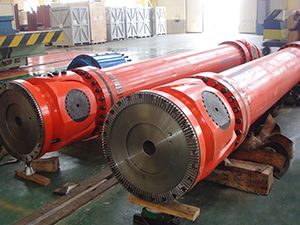
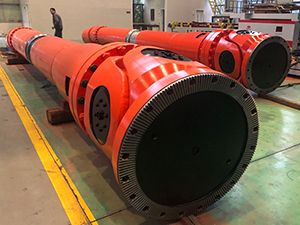


Rokee has always adhered to the road of innovation. Using our full understanding of this unique product and years of manufacturing experience, we have continuously optimized the design and manufacture of our universal joint shaft products to supply various industrial fields with our Cost-effective and high-performance products.
Our Universal Joint Couplings are widely used and have many impressive records. From micro products for modern logistics, artificial intelligence machinery, light products used in the paper industry, high speed and high performance products for engineering and railway vehicles, to super heavy duty products used in metallurgical rolling system systems, Rokee has won us with mature products and quality Long-term trust of customers, widely exported to Europe, America and other parts of the world.
We have 4 series of nearly 100 standard models and various extended design products based on this for our customers to choose, Torque from *** to ***, diameter from 58mm to 1200mm, ranging from light products to super heavy-duty products, the service field covers almost all transmission occasions.
All standard Cardan Couplings of Rokee are optimized design products based on the combination of decades of experience and computer design technology.,The products we are proud of are not only different from the national technical standards of China but also the standards of other manufacturers in the world. Unique design ideas and make perfection more perfect sprit drive our products find a better balance between lower price and rotational and transmission torque performance.
Rokee's standardized Universal Joints also mean faster delivery and easier spare parts availability as well as quick maintenance service.
The Cardan Shaft Couplings used in important equipment and core industrial fields have not only undergone careful design, but also comprehensive torque, stiffness, balance performance and life tests.
Due to its unique structure, cardan shaft can realize the connection of two axes when the drive shaft and the driven shaft are not on the same axis, and there is a large axial angle error, reliably transmit torque and compensate for angular, axial and radial errors. Excellent comprehensive compensation ability makes cardan shaft become irreplaceable transmission components in the field of industrial drives, which are widely used in various torque transmission systems.
Small design universal shafts are mainly used in precision machinery and control mechanisms, medium-sized cardan shafts are used in most locomotives, light industrial machinery, precision metallurgical industry and lifting industries, heavy and supper heavy cardan shafts are mostly used in metallurgical industry, heavy machinery and large-scale test equipment.
In addition to the necessary functions, the selection of cardan shafts must also take into account all personal and equipment safety and service life factors. In addition, under the premise of ensuring reliability, try to choose a smaller size to further reduce the weight of the equipment and improve the economy. For products larger than a certain specification and beyond the length standard, it is also necessary to consider and check the critical speed.
Following the following selection principles and steps, you can find suitable cardan shaft products in most applications. For particularly complex products that require more precise sizing, consult a Rokee engineer for additional assistance.
In the realm of mechanical power transmission, the ability to transfer rotational motion and torque between misaligned shafts is a critical requirement across countless industrial, automotive, and aerospace applications. Among the various components designed to meet this need, Cardan Shaft Coupling, Cardan Drive Shaft, Universal Shaft Coupling, Universal Joint Coupling, Universal Coupling, and Cardan Coupling stand out as essential elements that enable efficient and reliable power transfer even when shafts are not perfectly aligned. These components, though often used interchangeably in casual terminology, possess distinct design features and operational characteristics that make them suitable for specific scenarios.


To begin with, it is essential to clarify the terminology and fundamental definitions of these related components. A Universal Coupling, in its broadest sense, refers to any coupling device that allows for the transmission of torque between two shafts that are not collinear. This category encompasses several subtypes, including the Universal Joint Coupling, which is characterized by the presence of a joint mechanism that accommodates angular misalignment. The Cardan Coupling, named after the Italian mathematician and physicist Gerolamo Cardano who first described the mechanism, is a specific type of universal coupling that typically consists of two yokes connected by a cross-shaped intermediate member, known as a spider. This design is also the foundation for the Cardan Shaft Coupling and Cardan Drive Shaft, where the coupling is integrated with a shaft to form a complete assembly capable of transmitting power over longer distances while accommodating both angular and axial misalignment. The Universal Shaft Coupling, on the other hand, is a term that often overlaps with the Cardan Shaft Coupling, referring to a shaft assembly equipped with universal joints at either end to facilitate power transfer between misaligned shafts. While these terms may vary slightly in their usage across different industries and regions, their core function remains consistent: to bridge the gap between misaligned shafts and ensure efficient torque transmission without excessive wear or energy loss.
The design and working principle of these couplings are rooted in the need to accommodate three main types of misalignment: angular misalignment, where the shafts intersect at an angle; parallel misalignment, where the shafts are offset but parallel; and axial misalignment, where the shafts move along their axial direction relative to each other. The basic universal joint, a key component of all these couplings, consists of two yokes (also called forks) attached to the ends of the shafts, and a cross (spider) with four pins that connect the yokes. Each pin is fitted with bearings to allow the yokes to rotate relative to the cross, enabling the transmission of torque even when the shafts are at an angle. However, a single universal joint has a limitation: it causes a fluctuation in the angular velocity of the driven shaft, even if the driving shaft rotates at a constant speed. This phenomenon, known as angular velocity variation, can lead to vibration, noise, and increased wear in the system. To mitigate this issue, most practical applications use a double universal joint configuration, where two universal joints are connected by an intermediate shaft (as in Cardan Drive Shafts). When the two joints are properly aligned, the angular velocity variations from the first joint are canceled out by the second joint, resulting in a constant angular velocity of the driven shaft. This double-joint design is a hallmark of Cardan Shaft Couplings and Universal Shaft Couplings, making them suitable for high-speed and high-torque applications where smooth operation is essential.
The construction of Cardan and Universal Shaft Couplings involves several key components, each playing a vital role in ensuring the overall performance and durability of the assembly. The yokes, which are attached to the input and output shafts, are typically made from high-strength materials such as steel or aluminum alloys to withstand the torque and bending forces encountered during operation. The cross (spider) is another critical component, often manufactured from hardened steel to resist wear and fatigue. The pins and bearings that connect the cross to the yokes are essential for allowing smooth rotation and accommodating misalignment; these bearings are usually lubricated to reduce friction and extend their service life. In the case of Cardan Drive Shafts, the intermediate shaft (also known as the propeller shaft in automotive applications) is designed to be lightweight yet strong, often featuring a hollow construction to reduce weight while maintaining structural integrity. This hollow design is particularly beneficial in automotive and aerospace applications where weight reduction is a key priority, as it helps to improve fuel efficiency and overall performance.
The applications of Cardan Shaft Coupling, Cardan Drive Shaft, Universal Shaft Coupling, Universal Joint Coupling, Universal Coupling, and Cardan Coupling are diverse and span across numerous industries, each leveraging the unique capabilities of these components to meet specific operational requirements. In the automotive industry, for example, Cardan Drive Shafts are a fundamental part of rear-wheel-drive and four-wheel-drive vehicles, where they transmit torque from the transmission to the rear axle. In these applications, the drive shaft must accommodate the angular misalignment between the transmission and the axle, which changes as the vehicle travels over uneven terrain and the suspension compresses and extends. Universal Joint Couplings are also used in steering systems, where they allow for the transmission of rotational motion from the steering wheel to the steering gear, even though the steering column and gear are often misaligned. Additionally, in heavy-duty vehicles such as trucks and buses, larger and more robust Cardan Shaft Couplings are used to handle the high torque generated by the engine, ensuring reliable power transmission to the wheels.


Beyond the automotive sector, these couplings find extensive use in industrial machinery. In manufacturing plants, Universal Shaft Couplings are commonly used in conveyor systems, where they connect the drive motor to the conveyor belt, accommodating any misalignment between the motor and the conveyor shaft. They are also essential components in pumps, compressors, and generators, where they ensure efficient power transfer between the prime mover (such as an electric motor or diesel engine) and the driven equipment. In the mining industry, where equipment operates in harsh and demanding conditions, heavy-duty Cardan Couplings are used in crushers, excavators, and conveyor systems, capable of withstanding high torque, shock loads, and extreme environmental conditions such as dust, moisture, and temperature fluctuations. The ability of these couplings to accommodate misalignment is particularly crucial in mining applications, as the large size and weight of the equipment can lead to significant shaft misalignment over time.
The aerospace industry also relies heavily on Cardan and Universal Shaft Couplings, albeit in more specialized and high-precision applications. In aircraft, these couplings are used in engine systems, where they transmit power from the turbine to various accessories such as fuel pumps, hydraulic pumps, and generators. The couplings used in aerospace applications must meet strict performance and reliability standards, as they operate in extreme conditions of high temperature, high pressure, and high rotational speed. They are also designed to be lightweight to minimize the overall weight of the aircraft, which is critical for fuel efficiency and range. Additionally, in spacecraft, universal couplings are used in various propulsion and attitude control systems, where they enable precise control of rotational motion while accommodating the misalignment that may occur due to the harsh space environment.
Another important application area is in agricultural machinery, where Cardan Shaft Couplings are widely used in tractors and other farm equipment. Tractors often use power take-off (PTO) shafts, which are a type of Cardan Drive Shaft, to transmit power from the tractor's engine to various implements such as plows, harvesters, and mowers. These PTO shafts must accommodate the angular misalignment between the tractor and the implement, which can vary significantly as the implement is raised, lowered, or moved across uneven terrain. The durability and reliability of these couplings are essential in agricultural applications, as downtime can result in significant losses during critical farming seasons.
When selecting the appropriate Cardan or Universal Shaft Coupling for a specific application, several key factors must be considered, with material selection being one of the most critical. The choice of material depends on the application's requirements, including the torque capacity, operating speed, environmental conditions, and weight constraints. Steel is the most commonly used material for these couplings due to its high strength, durability, and resistance to wear and fatigue. Carbon steel is often used for general-purpose applications, while alloy steels (such as chrome-molybdenum steel) are preferred for high-torque and high-temperature applications, as they offer superior strength and heat resistance. Aluminum alloys are used in applications where weight reduction is a priority, such as automotive and aerospace, as they are lightweight yet possess sufficient strength for many applications. In some cases, non-metallic materials such as reinforced plastics are used for low-torque, low-speed applications, offering benefits such as corrosion resistance, noise reduction, and lower cost.


In addition to material selection, the design parameters of the coupling must be carefully matched to the application's requirements. This includes the torque capacity, which is the maximum torque that the coupling can transmit without failure. The torque capacity depends on the size and material of the coupling components, as well as the design of the joint mechanism. The operating speed is another important parameter, as high-speed applications require couplings that are balanced to minimize vibration and prevent premature wear. The amount of misalignment that the coupling must accommodate is also a key consideration; some couplings are designed for small angular misalignments (up to 5 degrees), while others can handle larger misalignments (up to 30 degrees or more) depending on the design. Axial and parallel misalignment capabilities also vary between different coupling types, so it is essential to select a coupling that can accommodate the specific misalignment conditions of the application.
Installation and alignment of Cardan and Universal Shaft Couplings are critical steps that directly impact the performance and service life of the coupling and the entire power transmission system. Proper installation ensures that the coupling is correctly attached to the shafts, and that the shafts are aligned within the coupling's specified limits. Misalignment beyond the coupling's capabilities can lead to increased vibration, noise, excessive wear on the bearings and other components, and even premature failure of the coupling or the driven equipment. To achieve proper alignment, several methods can be used, including visual alignment, feeler gauge alignment, and laser alignment. Laser alignment is the most accurate method, particularly for high-speed and high-precision applications, as it provides real-time measurements of the shaft alignment and allows for precise adjustments.
During installation, it is also important to ensure that the coupling is properly torqued to the manufacturer's specifications. Over-torquing can lead to damage to the coupling components or the shafts, while under-torquing can result in loose connections, which can cause vibration and wear. Additionally, the coupling should be inspected for any damage or defects before installation, such as cracks in the yokes, worn bearings, or bent pins. Any damaged components should be replaced before installation to prevent failure during operation.
Regular maintenance and inspection are essential to ensure the long-term reliability and performance of Cardan and Universal Shaft Couplings. Maintenance activities typically include lubrication, inspection for wear and damage, and alignment checks. Lubrication is critical for reducing friction between the moving components (such as the pins and bearings) and preventing corrosion. The type and frequency of lubrication depend on the coupling design and the operating conditions; some couplings require regular greasing, while others are sealed and lubricated for life. It is important to use the correct type of lubricant specified by the manufacturer, as using the wrong lubricant can lead to reduced lubrication effectiveness and increased wear.
Inspection for wear and damage should be performed regularly, particularly in harsh operating environments. During inspection, the coupling components should be checked for signs of wear, such as worn bearings, damaged pins, or cracks in the yokes. The intermediate shaft (in Cardan Drive Shafts) should also be inspected for bending or fatigue cracks, which can occur due to excessive torque or misalignment. If any wear or damage is detected, the affected components should be replaced immediately to prevent further damage to the coupling or the system. Alignment checks should also be performed periodically, as shaft alignment can change over time due to thermal expansion and contraction, vibration, or wear of the equipment mounts. Re-alignment as needed ensures that the coupling operates within its specified limits and minimizes wear and vibration.


Despite their robust design, Cardan and Universal Shaft Couplings can experience various issues during operation, which can be attributed to factors such as misalignment, improper lubrication, overloading, or manufacturing defects. Common problems include vibration, noise, excessive wear, and coupling failure. Vibration is often caused by misalignment, unbalanced shafts, or worn bearings. To resolve vibration issues, the shafts should be re-aligned, the coupling components should be inspected for wear, and the shafts should be balanced if necessary. Noise, such as clicking or squeaking, is typically a sign of worn or dry bearings, which can be resolved by lubricating or replacing the bearings. Excessive wear on the pins, bearings, or yokes can be caused by misalignment, overloading, or improper lubrication; addressing these root causes and replacing the worn components is essential to prevent further damage. Coupling failure, which can result in catastrophic damage to the power transmission system, is often caused by overloading, fatigue, or severe misalignment. To prevent failure, it is important to select a coupling with the appropriate torque capacity, ensure proper installation and alignment, and perform regular maintenance.
Looking to the future, the development of Cardan and Universal Shaft Couplings is likely to be driven by several technological trends, including the demand for higher efficiency, lighter weight, and increased durability. Advances in materials science, such as the development of high-strength, lightweight composites and advanced alloys, are expected to lead to the development of couplings that are both stronger and lighter than traditional steel couplings. These materials offer the potential to improve fuel efficiency in automotive and aerospace applications, as well as reduce the overall weight of industrial machinery.
Another trend is the integration of smart technologies into coupling design, such as sensors for monitoring temperature, vibration, and wear. These smart couplings can provide real-time data on the condition of the coupling, allowing for predictive maintenance and reducing the risk of unexpected failure. Predictive maintenance enables operators to schedule maintenance activities before a failure occurs, minimizing downtime and reducing maintenance costs. Additionally, the use of simulation and modeling software in the design process is expected to lead to more optimized coupling designs that are tailored to specific applications, improving performance and reducing material waste.
The growing focus on sustainability and environmental responsibility is also expected to influence the development of Cardan and Universal Shaft Couplings. Manufacturers are likely to develop couplings that are more energy-efficient, with reduced friction and energy loss, as well as couplings that are easier to recycle at the end of their service life. Additionally, the use of environmentally friendly lubricants and materials will become more prevalent, reducing the environmental impact of the coupling throughout its lifecycle.
In conclusion, Cardan Shaft Coupling, Cardan Drive Shaft, Universal Shaft Coupling, Universal Joint Coupling, Universal Coupling, and Cardan Coupling are essential components in modern power transmission systems, enabling efficient and reliable torque transfer between misaligned shafts across a wide range of applications. Their design, which is based on the universal joint mechanism, allows them to accommodate various types of misalignment while minimizing vibration and wear when properly designed and installed. The selection of the appropriate coupling depends on a variety of factors, including torque capacity, operating speed, misalignment requirements, environmental conditions, and weight constraints. Proper installation, alignment, and maintenance are critical to ensuring the long-term performance and reliability of these couplings, while advances in materials science and smart technologies are expected to drive future innovations in coupling design, leading to higher efficiency, lighter weight, and increased durability. As industries continue to evolve and demand more efficient and reliable power transmission solutions, the importance of these couplings in enabling the smooth operation of machinery and equipment will only continue to grow.